AI agents got their own national bank. They show up in 3% of transactions
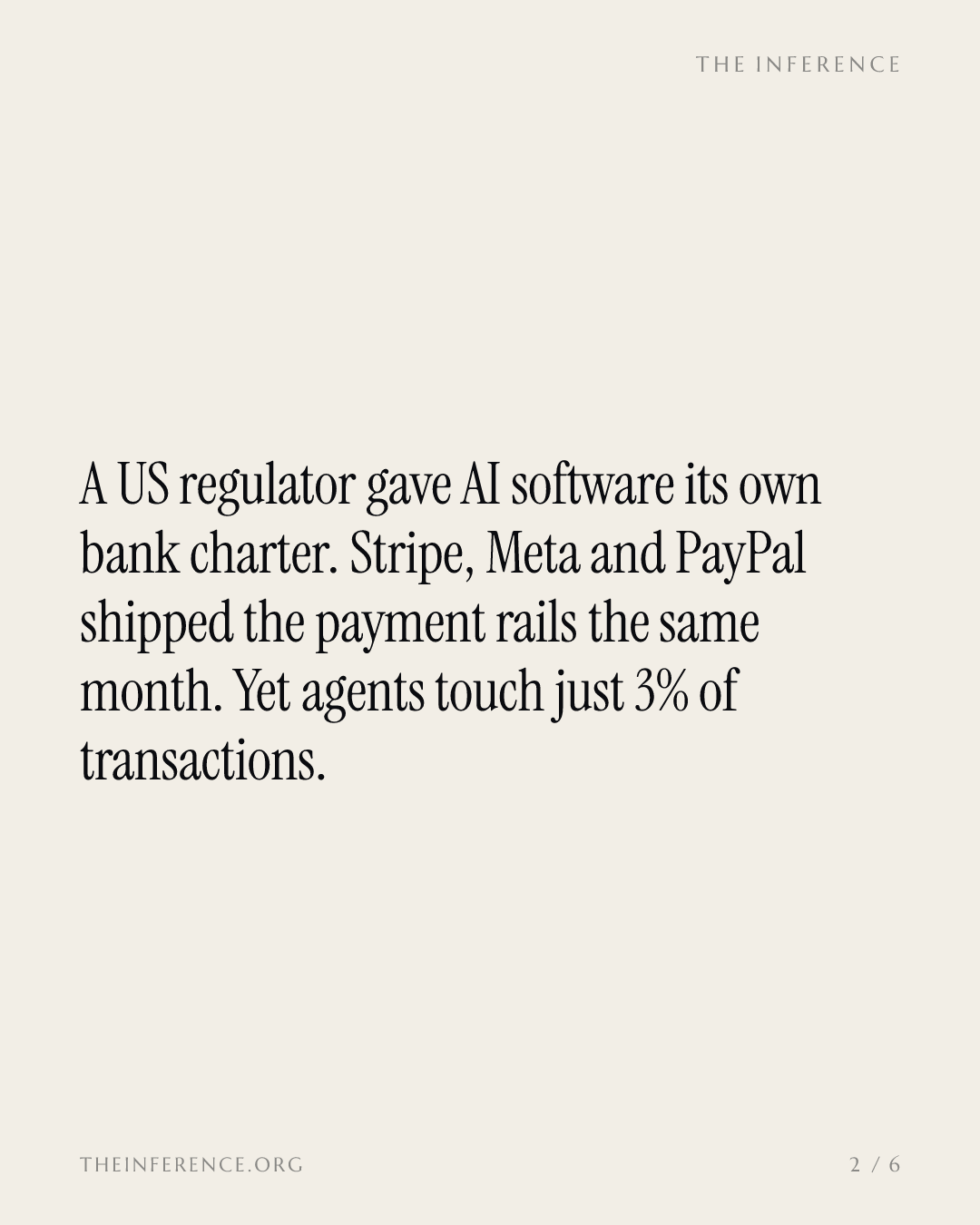
A US regulator has conditionally chartered a national trust bank for customers made of software, and September shipped the rails to feed it. The usage audits landing the same month still put AI agents in 3% of transactions.
 Vincent Jiang · 3 min read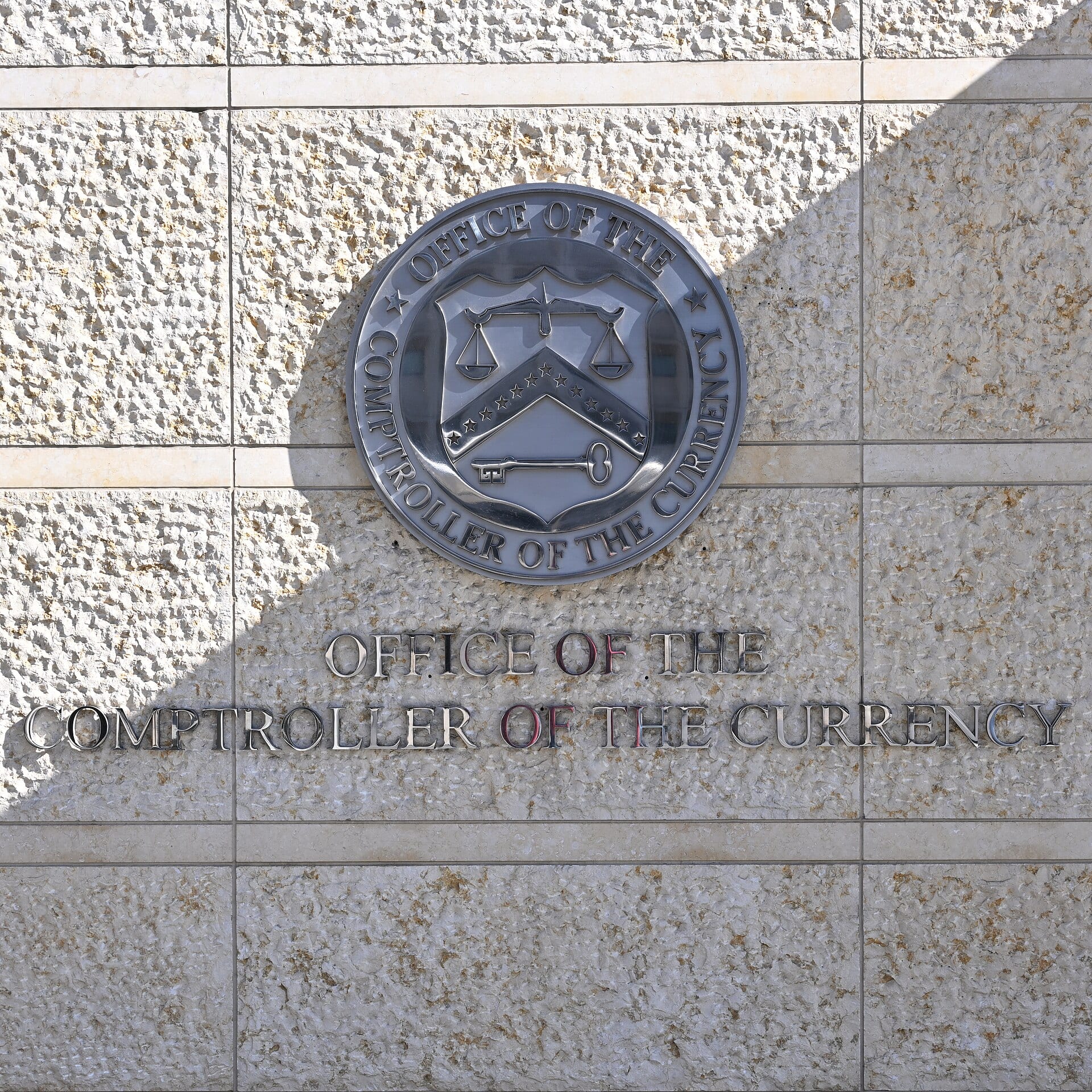
A bank whose customers are programs
Sean Neville co-invented USDC and has been a Circle director since 2016 1. He resigned effective 25 September, a week after the Office of the Comptroller of the Currency handed his startup Catena Labs conditional approval for Catena Trust Bank, a national trust charter purpose-built for AI agents 12. Circle's chief executive said the venture "deserves his full focus" 1.
The approval is preliminary, not a license to open: Catena must clear the regulator's pre-opening requirements first 1. What waits on the other side is a bank that can custody money and act as fiduciary, without taking deposits or making loans 2. Its customers would be software.
Thirty days of plumbing
Stripe flipped WebMCP on across 7.8 million businesses in September, a count only one outlet carries 3. Meta's Muse agent pays through Stripe Link at more than a million merchants, with PayPal live globally since 22 September 4. And the OCC approved three national trust charters in a single day 2.
Catena has raised $48 million, its May Series A led by Acrew Capital and a16z crypto, and must hold at least $10 million in tier-one capital to keep its approval 52. The supply side of agent commerce is now built.
The water is barely moving
The demand-side audits landed the same month. Checkout.com's June survey of 400 payments heads and 12,000 consumers across six markets found 89% of merchants preparing for agentic commerce and 42% already testing it. Agents show up in 3% of transactions 36.
PYMNTS and Visa count just 11% of small merchants as agent-ready 7. Forrester finds 24% of US online adults willing to trust AI with routine purchases 3. OpenAI shut its Instant Checkout in March after less than a year, citing lackluster performance 3.
Nearly nine in ten merchants are building for agents; agents appear in 3% of transactions
Data
| Value | |
|---|---|
| Merchants preparing for agentic commerce | 89% |
| Merchants expecting agents at 5%+ of digital sales in two years | 68% |
| Merchants testing agentic workflows | 42% |
| Small merchants that qualify as agent-ready | 11% |
| Transactions involving agents | 3% |
The builders' case, and its ceiling
The infrastructure camp leans on precedent and early momentum. Apple Pay needed more than a decade to reach roughly a quarter of US online adults 3. Patrick Collison says agents will account for most online transactions 8, and Muse hit number one on Apple's US App Store 4.
The ceiling is liability. 93% of merchants say the AI provider should absorb the loss when an agent buys wrong, and only 28% will show agents their full catalog 78. The constraint is permission, not pipes.
The off switch is the asset
If the faucet stays off, the builders hold the sunk costs: Stripe's 288-launch agent stack from April's Sessions, Meta's Shopify-Stripe-PayPal assembly, Catena's $48 million raise against a $10 million capital floor 8452. Each is real spending aimed at customers that have not arrived.
If it turns on, the rent goes to whoever owns identity and revocation. Catena's open-source kit already issues cryptographic identity for software 5. 75% of merchants call real-time revocation critical 3; the Stop Rogue AI Act would push NIST agent-identity standards onto federal contractors 9. The tell is whether the 3% moves before Neville's doors open. The charter is real; the customers are still hypothetical.
How this brief was made
01Gathered & sourced216 channels · 1,997 articles▾
Agents swept 216 channels and ingested 1,997 articles, then de-duplicated and ranked them for signal.
02Verified & cross-validated9 claims · 22 data feeds▾
Every one of 9 load-bearing claims was checked against primary sources, with 22 live data feeds reconciling the figures and charts.
- 1CoinGape via Yahoo Finance, Circle Co-Founder Sean Neville Exits Board as Catena Secures Conditional OCC Approval, 28 September 2026
- 2Banking Dive, OCC conditionally approves 3 national trust charters, 21 September 2026
- 3Forkast via Yahoo Finance, The Trust Paradox: Agent Payment Infrastructure Is Outpacing Consumer Readiness, 27 September 2026
- 4Yahoo Finance, Meta Just Built the First Integrated Agent-Commerce Stack: Shopify, Stripe, PayPal, All on One Agent, 23 September 2026
- 5Yahoo Finance, Catena Trust Bank Secures Preliminary OCC Approval for AI-Agent Financial Infrastructure, 21 September 2026
- 6Forkast via Yahoo Finance, Checkout.com Is Building Its Own Agent Infrastructure While Backing Three Rival Protocols, 23 September 2026
- 7Forkast News, Only 11% of Small Merchants Are Ready for AI Shopping Agents, 23 September 2026
- 8Forkast News, Stripe Just Built the Full-Stack Agent Commerce Infrastructure in One Day, 23 September 2026
- 9Axios via MSN, Lawmakers unveil new bill to secure AI agents after OpenAI's Hugging Face breach, 3 September 2026
03Reviewed & edited1 human editor▾
One editor read the draft against the evidence, tuned the framing, and signed off before it shipped.
Become a contributor
Reporting on the business of AI and want it read? We take pitches from outside contributors who bring primary sources and a number worth arguing about.
Deepdive
AI-generated from this story and its cited sources. Not investment advice.