Anduril cleared the Pentagon's weapons test, then its founder got a seat on the war study
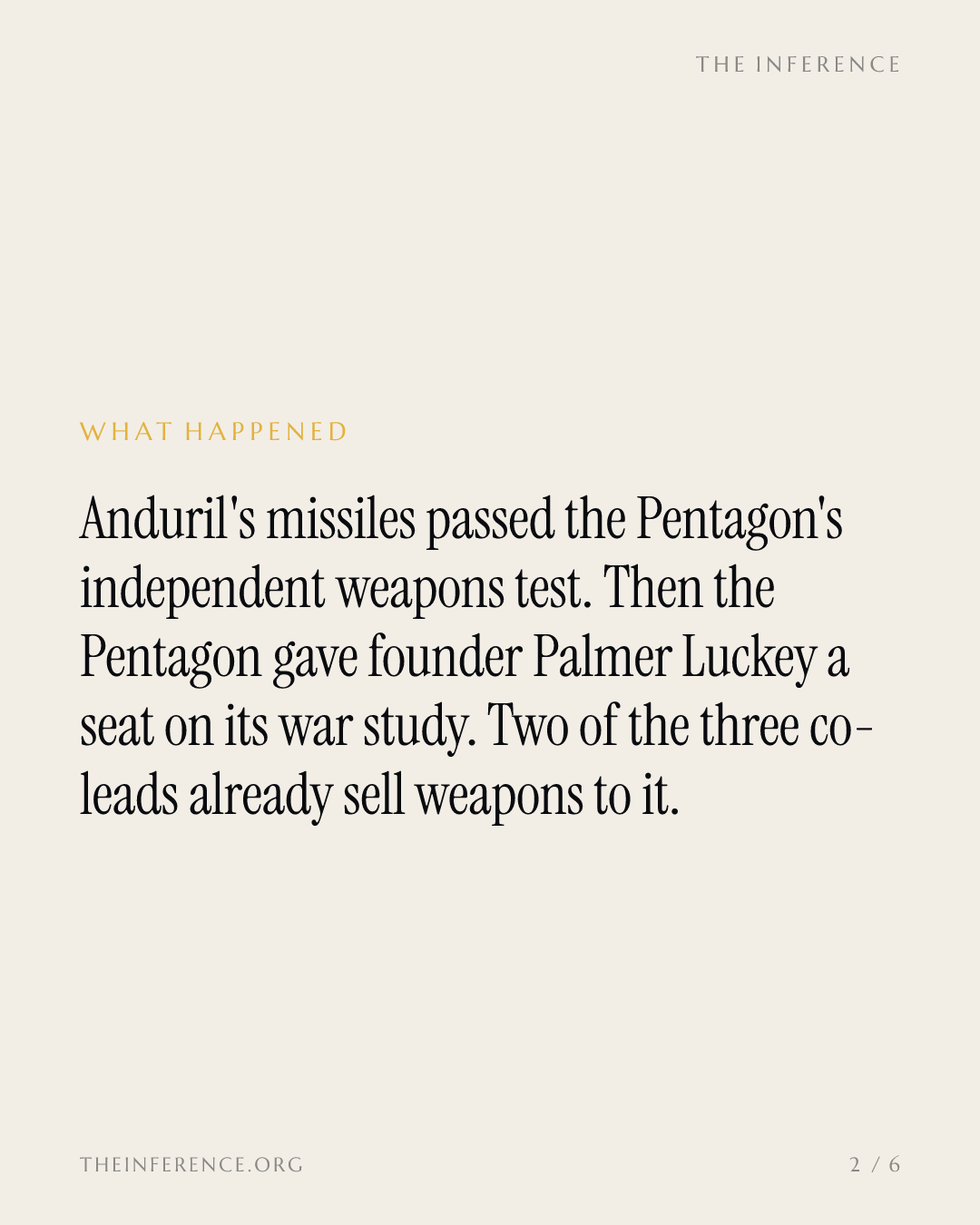
AFRL independently verified Anduril's Barracuda-M cruise missiles against the Air Force's open-systems standard, Voyager formalized its propulsion supply role, and Hegseth seated Luckey and Musk on a 120-day war study. The doctrine of cheap, open, modular weapons now has its authors inside the building.
 Vincent Jiang · 3 min read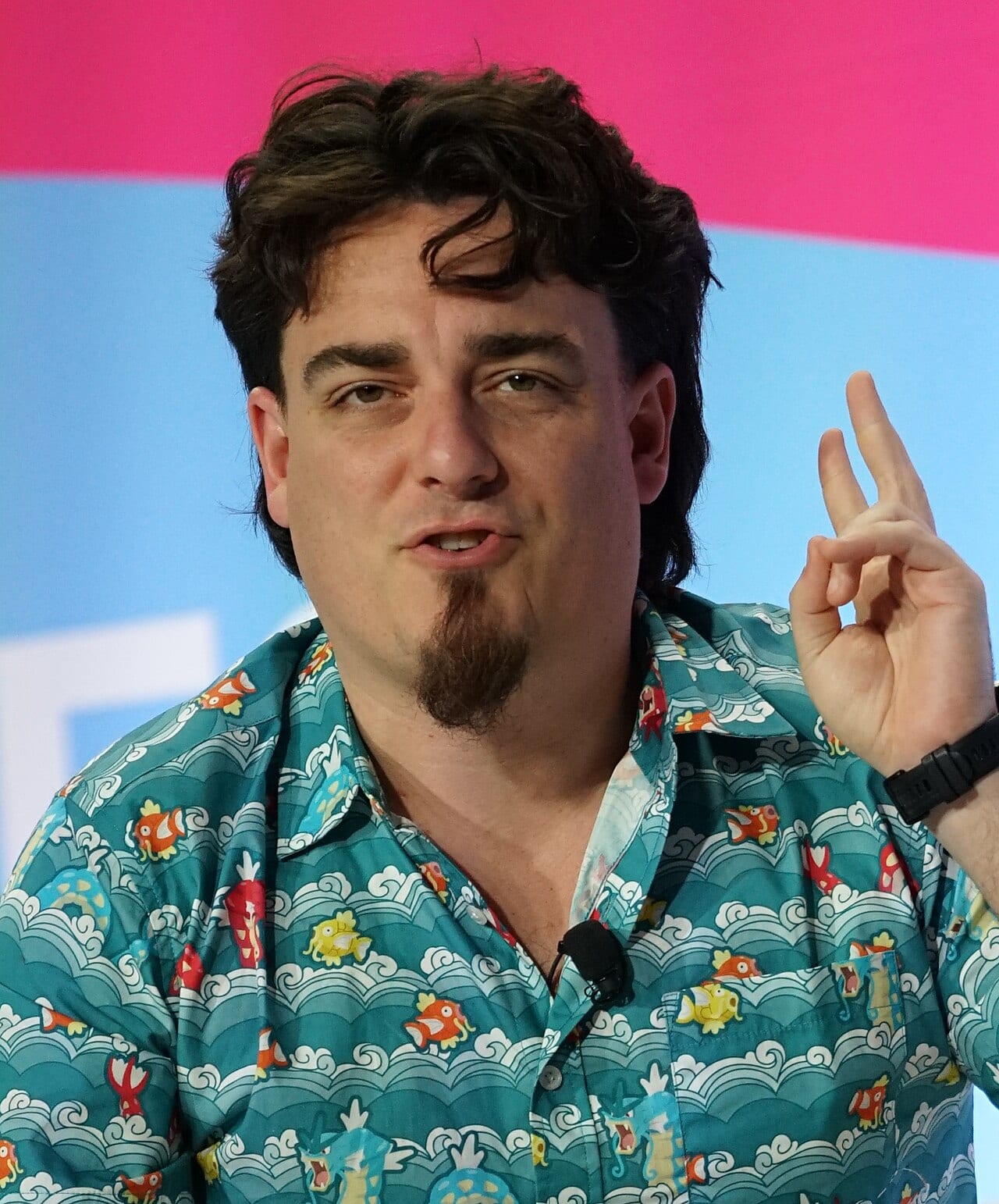
The Pentagon stopped grading homework
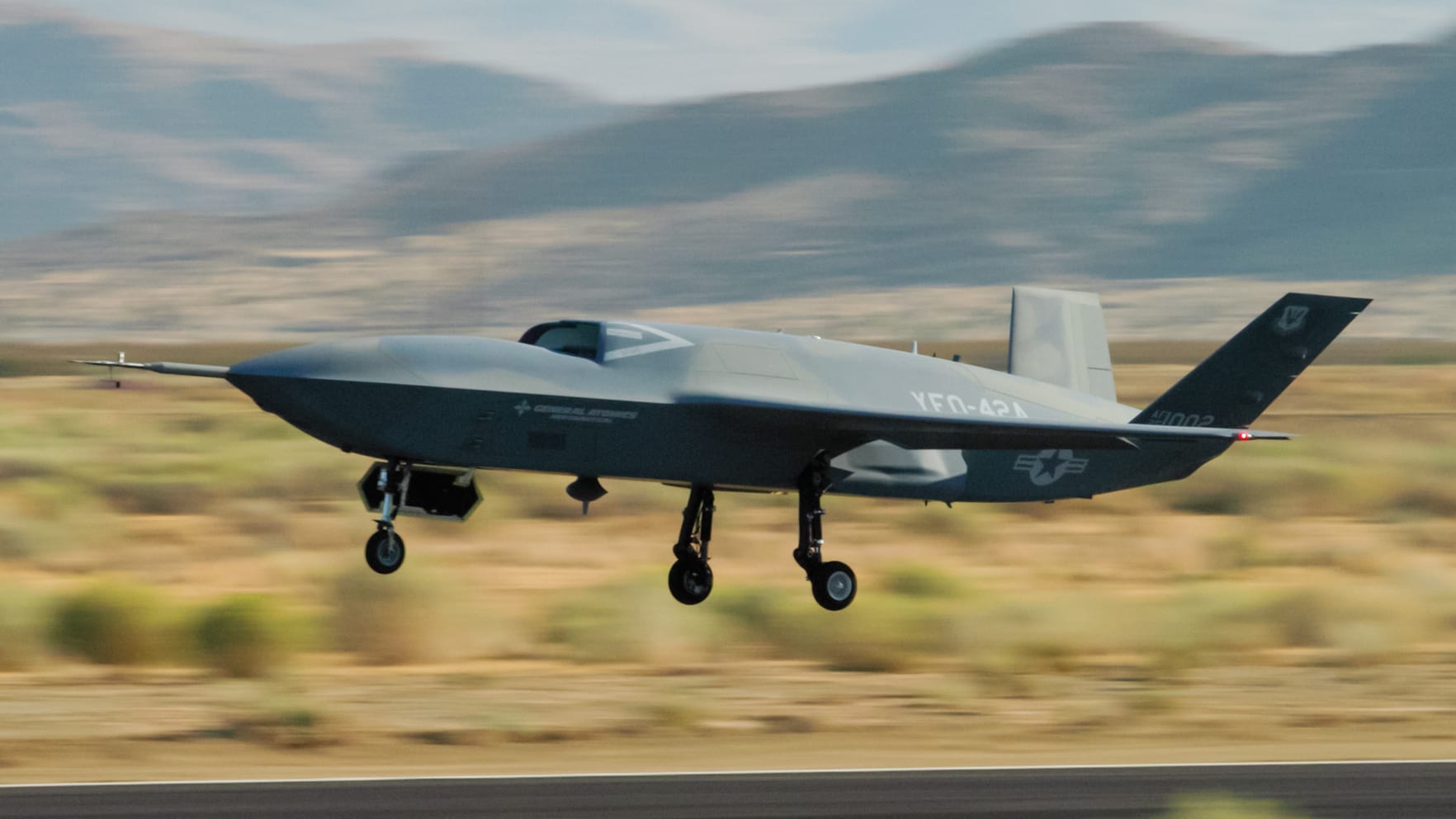
On 28 September the Air Force Research Laboratory certified Anduril's Barracuda-M cruise-missile family compliant with the Weapons Open Systems Architecture standard, after a four-day independent trial that verified 14 weapon-systems domains, from seeker to guidance. 1 The lab's point was process: open architecture is only meaningful when independently verified, not accepted as vendor self-assessment. The Pentagon has stopped grading its weapons makers on their own homework.
Anduril says Barracuda is the first weapon in large-scale production to complete that verification. The Army has bought 3,000 surface-launched rounds, and a separate production agreement sets a floor of 1,000 all-up rounds a year. 1
Voyager holds the listed exposure
The supply chain formalized the next day. On 29 September Anduril and Voyager Technologies (NYSE: VOYG) signed a strategic partnership, with Voyager already contracted for more than $60 million of solid rocket motors and divert and attitude control systems feeding Anduril's weapons programs. 23 Voyager says it has sunk more than $500 million into propulsion, energetics and manufacturing capacity, including a Pueblo, Colorado complex sized for 15,000 to 20,000 propulsion systems a month once fully scaled. 2
That is the listed way to own the ramp: the $60 million is demand already booked, Pueblo's monthly ceiling is the capacity to fill it, and the 1,000-round floor and 3,000-round Army buy are the volumes that pull both through. 12 VOYG traded 4.28 percent higher at $34.60 on the announcement. 4
Two of the study's three co-leads sell to the Pentagon
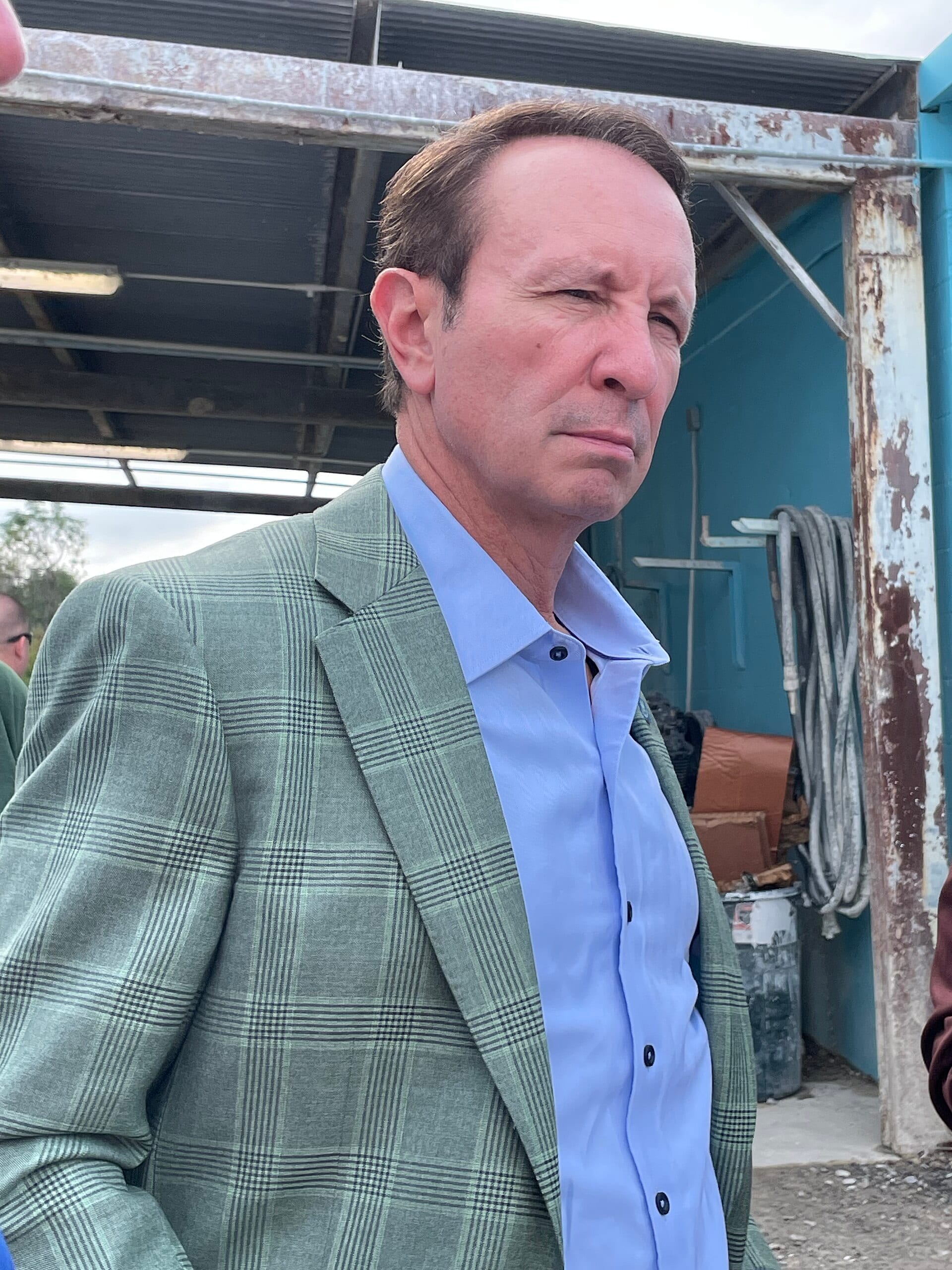
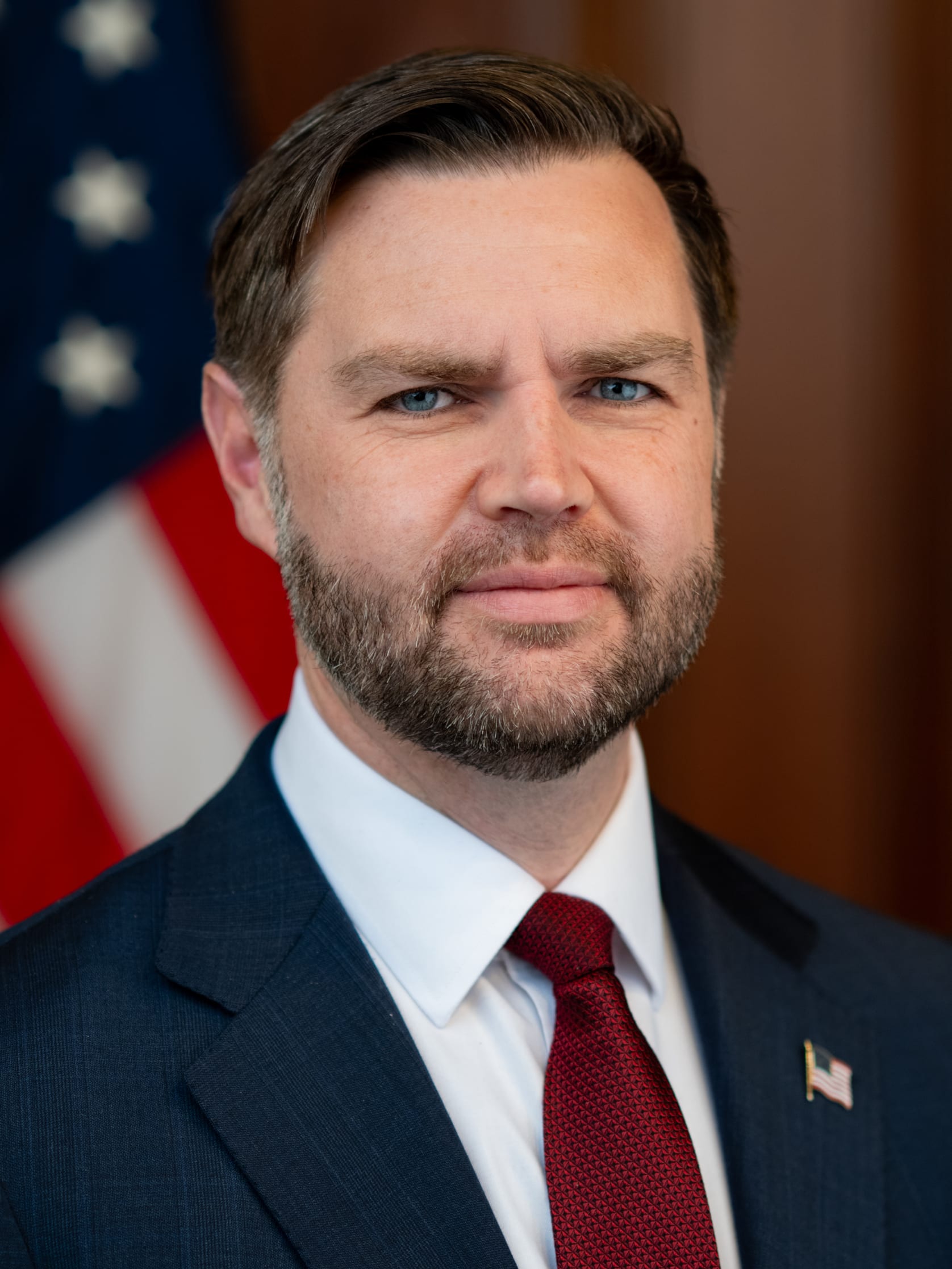
On 30 September, Defense Secretary Pete Hegseth used his State of the Force address at Marine Corps Base Quantico to unveil Project Meridian, a 120-day effort to identify the domains and capabilities future wars will demand. 5 Pentagon technology chief Emil Michael will run it, with Elon Musk, Newt Gingrich and Palmer Luckey as co-leads. 56
The panel's first meeting ran the same day in a classified facility nearby. 7 Two of the three co-leads run companies that already sell to the Pentagon. 5
Buyers and sellers at one table
The complication is the roster. SpaceX took a $4.16 billion Space Force satellite-tracking award in May, days after a $2.29 billion military satcom deal. 5 Anduril holds a Marine Corps counter-drone contract worth up to $642 million, and this month the corps awarded it a further $15.7 million, sole-source, to fit Pulsar-L electronic warfare onto the BAE-built Amphibious Combat Vehicle: the incumbent builds the hull, the newcomer rides inside. 58
The war study's co-leads already hold billions in Pentagon contracts
Data
| Value | |
|---|---|
| SpaceX missile-tracking satellites | $4.16B |
| SpaceX military satcom network | $2.29B |
| Anduril Marine counter-drone | $0.64B |
Two clocks decide the next contracts
AFRL says the Barracuda assessment is a production-scale example of a verification process it will keep applying as further weapons programs move through development and production. 1 Project Meridian is due to report in 120 days, an unclassified document with a classified annex, alongside a new four-star Autonomous Warfare Command. 57 The primes still hold the existing contracts. Open architecture decides the next ones.
Deepdive
AI-generated from this story and its cited sources. Not investment advice.