Kaiser says Medicare's contractor ban reaches inside its own walls
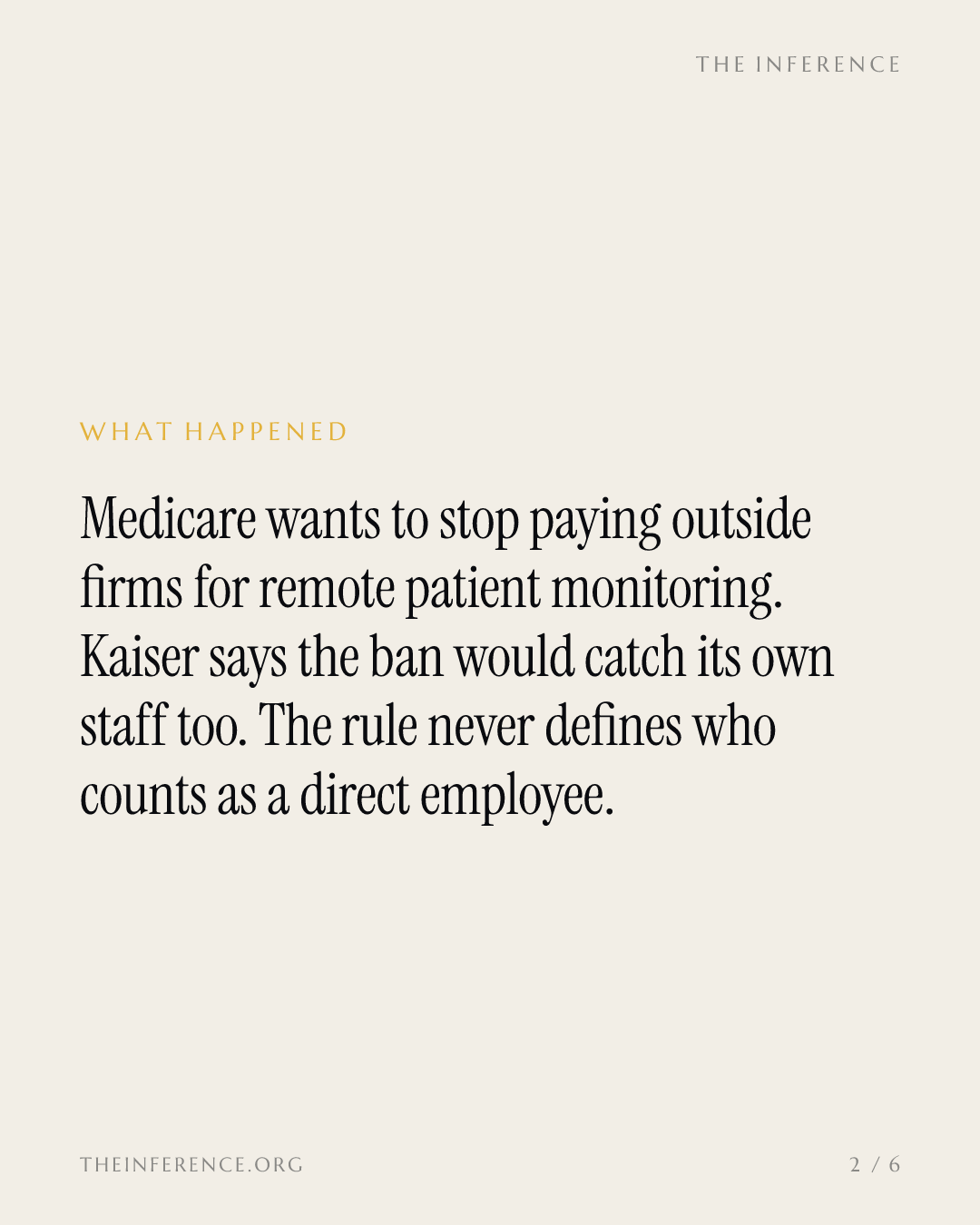
CMS's draft 2027 fee schedule would bar Medicare payment for monitoring delivered by anyone but the billing practice's direct employees. The $536 million billing line splits the industry, and Kaiser, the insurer most integrated with its own care delivery, says the ban captures its own payroll.
 Vincent Jiang · 3 min read
A rule that fires the middlemen
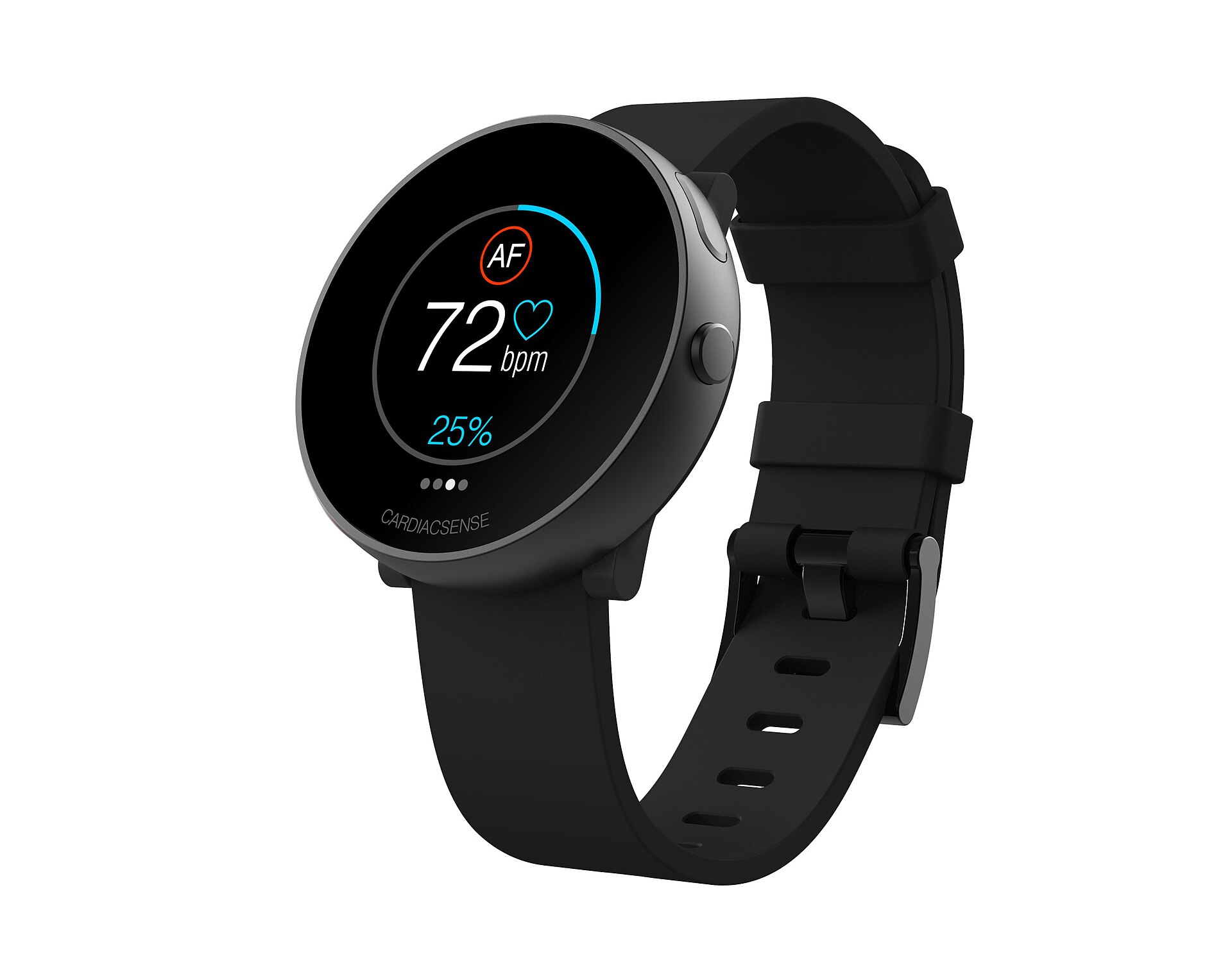
Medicare's draft 2027 physician fee schedule, released July 14, would pay for remote physiologic and therapeutic monitoring only when the clinical staff delivering it are direct employees of the practice that bills 12. As of January 1, 2027, work contracted to third-party companies stops being billable; practices may still buy devices and software from vendors, but not the clinical labor that earns the fee 3. Running these programs takes devices, data integration, machine-learning analytics and monitoring teams 4, and most providers buy that stack rather than build it: the American Telemedicine Association estimates 60 to 70 percent of hospitals using monitoring rely partly or fully on vendor models 1.
The money CMS is chasing
Medicare paid $15 million for these codes in 2019. By 2024 the bill was $536 million, up 31 percent in a single year, covering nearly 1 million enrollees 5. The HHS inspector general's 2024 review found about 43 percent of monitored enrollees missed at least one of the three required components, setup and education, device supply, or treatment management 12. Its fraud cases were uglier: unsolicited enrollment calls, monthly billing for monitoring never performed, devices never delivered 2. One practice signed roughly 3,400 new monitoring patients in a single month 5.
Medicare's remote monitoring bill grew 35-fold in five years
Data
| Medicare RPM payments | |
|---|---|
| 2019 | $15M |
| 2022 | $300M |
| 2023 | $408M |
| 2024 | $536M |
The self-ban paradox
Kaiser Permanente "strongly opposes" the rule and wants it withdrawn. Its letter argues the ban would restrict "clinical staff directly employed by separate business units within the same organization" from furnishing monitoring to their own patients 67. The rule never defines "direct employee," and industry lawyers flag precisely this gray zone: staff employed by an affiliated entity that does not hold the billing number 3. Medicare wrote a rule against outside contractors, and the company that owns every layer of care says it captures Kaiser's own payroll.
The camps split along the org chart
UnitedHealth warns the requirement could "unintentionally restrict beneficiary access to high-value vendors"; CVS wants accountability standards instead of a ban 67. Humana and the Blue Cross Blue Shield Association back CMS, writing that the change "is consistent with CMS's goals of improving program integrity" 6. "Plans without large employed care delivery organizations or partnerships in place can support a ban on contracted staff without major disruption," said Jared Augenstein of Manatt Health 6. UnitedHealth's own insurer has flipped before: last year it threatened to stop paying for most monitoring in Medicare Advantage over "insufficient evidence of efficacy," then delayed after public pushback 6.
A Sept. 14 coalition letter signed by more than 230 organizations, 35 health systems among them, says the proposal could disrupt care for roughly 1 million beneficiaries 78.
The case for the ban, and its limits
CMS argues outsourced monitoring "can fragment care" and dilute the billing practitioner's oversight 14. Fair, as far as it goes. The inspector general flagged abuse but never recommended banning third parties outright, and the Alliance for Connected Care calls the fix "cutting off the arm to fix a broken nail" 1.
What to watch this fall
The final rule lands this fall. CMS asked commenters how often third-party billing even occurs, a question that invites a narrower answer, and it is consulting on collapsing 17 monitoring codes into four bundled ones 234. The tell is the definition of "direct employee": keep it narrow and the vendor channel goes dark on New Year's Day; define it loosely and the paradox dissolves.
How this brief was made
01Gathered & sourced333 channels · 1,902 articles▾
Agents swept 333 channels and ingested 1,902 articles, then de-duplicated and ranked them for signal.
02Verified & cross-validated8 claims · 19 data feeds▾
Every one of 8 load-bearing claims was checked against primary sources, with 19 live data feeds reconciling the figures and charts.
- 1Becker's Hospital Review, "CMS' proposed remote patient monitoring ban, explained," July 28, 2026
- 2MedCity News, "Why CMS Is Trying to Ban Third-Party Remote Patient Monitoring," July 16, 2026
- 3Shumaker, Loop & Kendrick client alert via JD Supra, "CMS 2027 Physician Fee Schedule Proposed Rule Would Upend Third-Party RPM and RTM Arrangements," September 18, 2026
- 4FierceHealthcare, "CMS proposal to block third-party vendors will upend remote monitoring services, health tech leaders say," July 16, 2026
- 5TechTarget, "Medicare RPM payments spike spurs HHS-OIG oversight," September 5, 2025
- 6The Boston Globe (republished from STAT), "UnitedHealth, CVS push back on Medicare plan to curb remote patient monitoring," September 23, 2026
- 7Becker's Hospital Review, "CVS, UnitedHealth, Kaiser challenge proposed Medicare remote monitoring restrictions," September 26, 2026
- 8Becker's Hospital Review, "35 health systems urge CMS to drop proposed remote patient monitoring ban," September 18, 2026
03Reviewed & edited2 human editors▾
2 editors read the draft against the evidence, tuned the framing, and signed off before it shipped.
Become a contributor
Reporting on the business of AI and want it read? We take pitches from outside contributors who bring primary sources and a number worth arguing about.
Deepdive
AI-generated from this story and its cited sources. Not investment advice.