OFAC Blocked Seven Wallets and Counted $6.1 Million. The Cash Left Two Hops Ago
Treasury's 30 September designation of a Tren de Aragua jackpotting network blocks seven Tron deposit addresses. The money figures around them are TRM Labs': $6.1 million received, none of it confirmed jackpotting cash, while wallets downstream sent about $35 million toward an alleged $1 billion laundering network.
 Vincent Jiang · 3 min read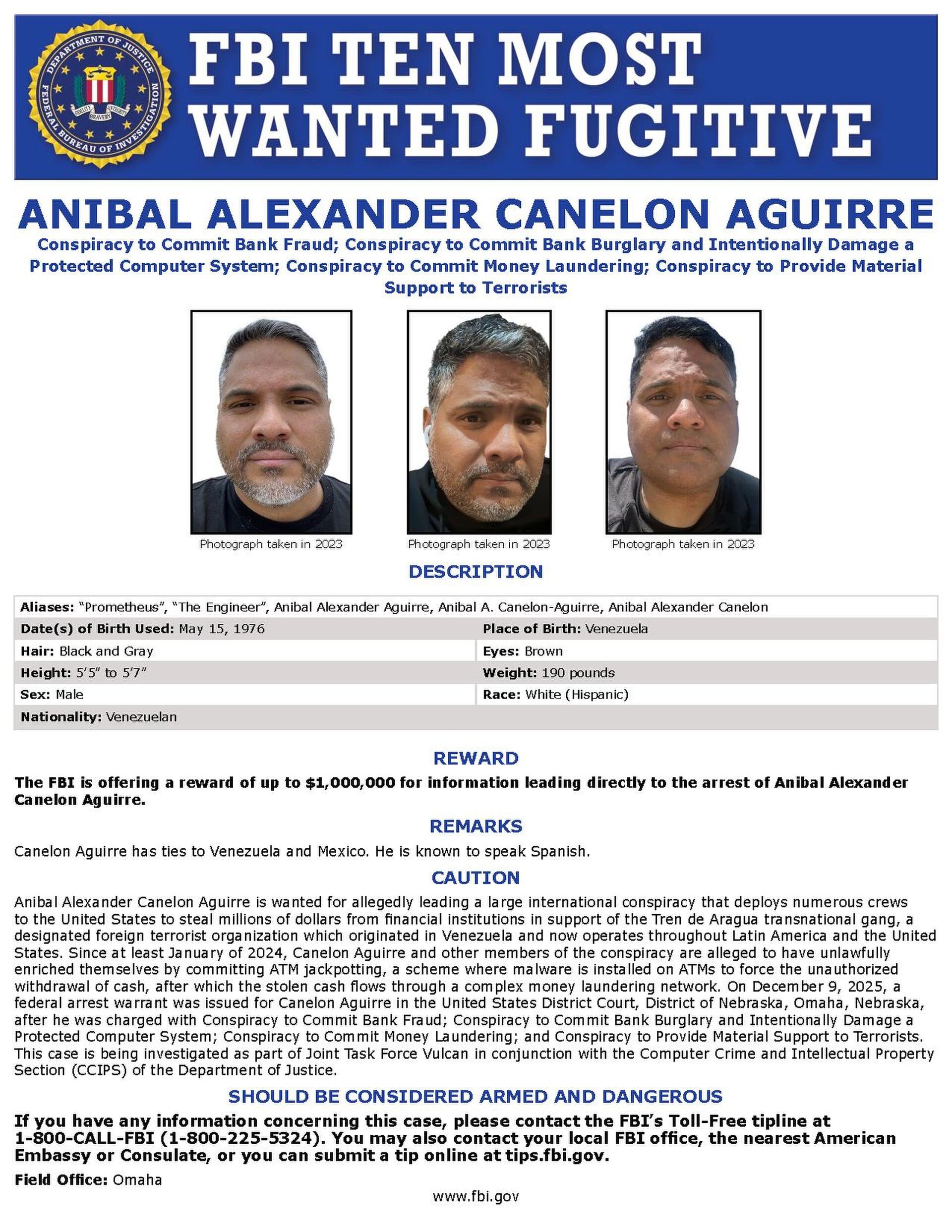
The most-wanted coder behind the cash machines
On 30 September the Treasury's sanctions office designated 10 targets tied to the alleged Tren de Aragua ATM jackpotting scheme, eight people and two Mexico-based companies, plus a gold-mining gang leader sanctioned alongside them 1. The principal target, Anibal Alexander Canelon Aguirre, known as Prometheus, is the alleged engineer of the jackpotting malware and the first figure on the FBI's Ten Most Wanted list wanted for cybercrime 2. Treasury ties the scheme to $40.73 million in reported losses across more than 1,500 US incidents through August 2025 13.
Seven wallets, $6.1 million, one caveat
The crypto leg of the action is seven Tron deposit addresses, one attributed to each named associate and all hosted at a single unnamed centralized exchange 14. TRM Labs counts about $6.1 million in inflows since March 2022; the largest address took about $2.1 million, and the last inflow landed in July 2026 14. TRM's caveat does the honest work: none of that sum is confirmed jackpotting proceeds 14.
The blacklist stops where the money used to be
The seven addresses were pass-throughs: they forwarded funds to other TdA-linked wallets, and it was those downstream addresses that sent roughly $35 million on to a network US authorities tie to Jorge Figueira, a Venezuelan charged with laundering about $1 billion and not convicted 14. The blacklist stops at seven strings of characters; the cash keeps moving two hops beyond them.
The blocked addresses' inflows are the smallest pile in the case
Data
| Value | |
|---|---|
| Inflows to the 7 blocked addresses | $6.1M |
| Sent on by downstream TdA wallets | $35M |
| US jackpotting losses, TdA-linked | $40.7M |
TRM is advising counterparties to screen exposure one and two hops out, and the threat gives the advice teeth: foreign financial institutions that process significant transactions for the designees risk secondary sanctions 124.
The second OFAC action this week priced off a private ledger
This is the second designation in days running on TRM's counts. A screener running TRM Labs data refused more than $50 million of Bitget-theft transfers, and the firm's figures now sit beside OFAC's newest designations, as The Inference reported on 1 October 5. Here the addresses, the inflows and the onward hop all carry TRM's attribution 14; rival Chainalysis drew the wider network, finding the wallets' counterparties exposed to laundering networks used by Colombian and Mexican cartels and Venezuelan launderers, which rely heavily on stablecoins 4.
What Treasury holds anyway
The case does not rest on wallet arithmetic: property under US jurisdiction is blocked and US persons are generally barred from dealing with the designees 12. The published indictment counts disagree. Treasury's announcement puts 98 people indicted since 21 October 2025, facing maximum penalties of 20 to 335 years 16; later reporting puts the running total at 119 2. The longest jackpotting sentence so far, 96 months, came down in August 2. Tether has already frozen USDT on wallets exposed to the sanctioned addresses 4.
The bill lands on the exchange
Because the addresses are exchange-hosted, the firms running them may identify underlying account holders and related accounts, in TRM's wording, and that is where the screening bill now sits 1. No report in the record names that host, so the risk is located by role, not by company 14. The watch ahead is the onward network: Treasury blocked the wallets that fed it, not the network that banked the bigger sums.
Deepdive
AI-generated from this story and its cited sources. Not investment advice.