100 rejections, 356 million applications, and a bid to make Workday pay for AI bias
Job seekers have asked a federal court to certify a discrimination class against Workday itself, not the employers that use its screening. The decision would land on a vendor that is shipping AI agents ever deeper into hiring and benefits.
 Vincent Jiang · 3 min read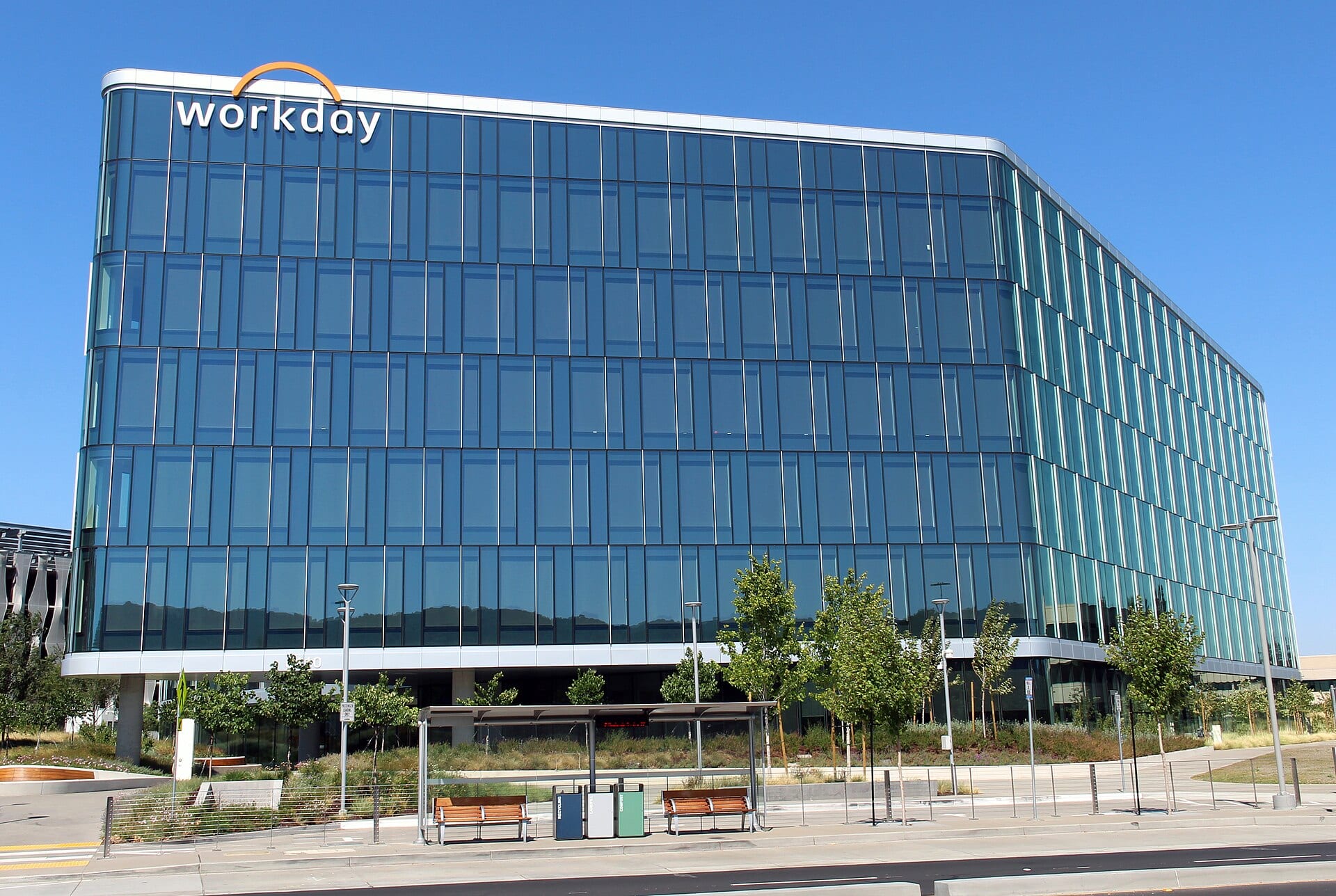
A plaintiff who sued the software, not the employers
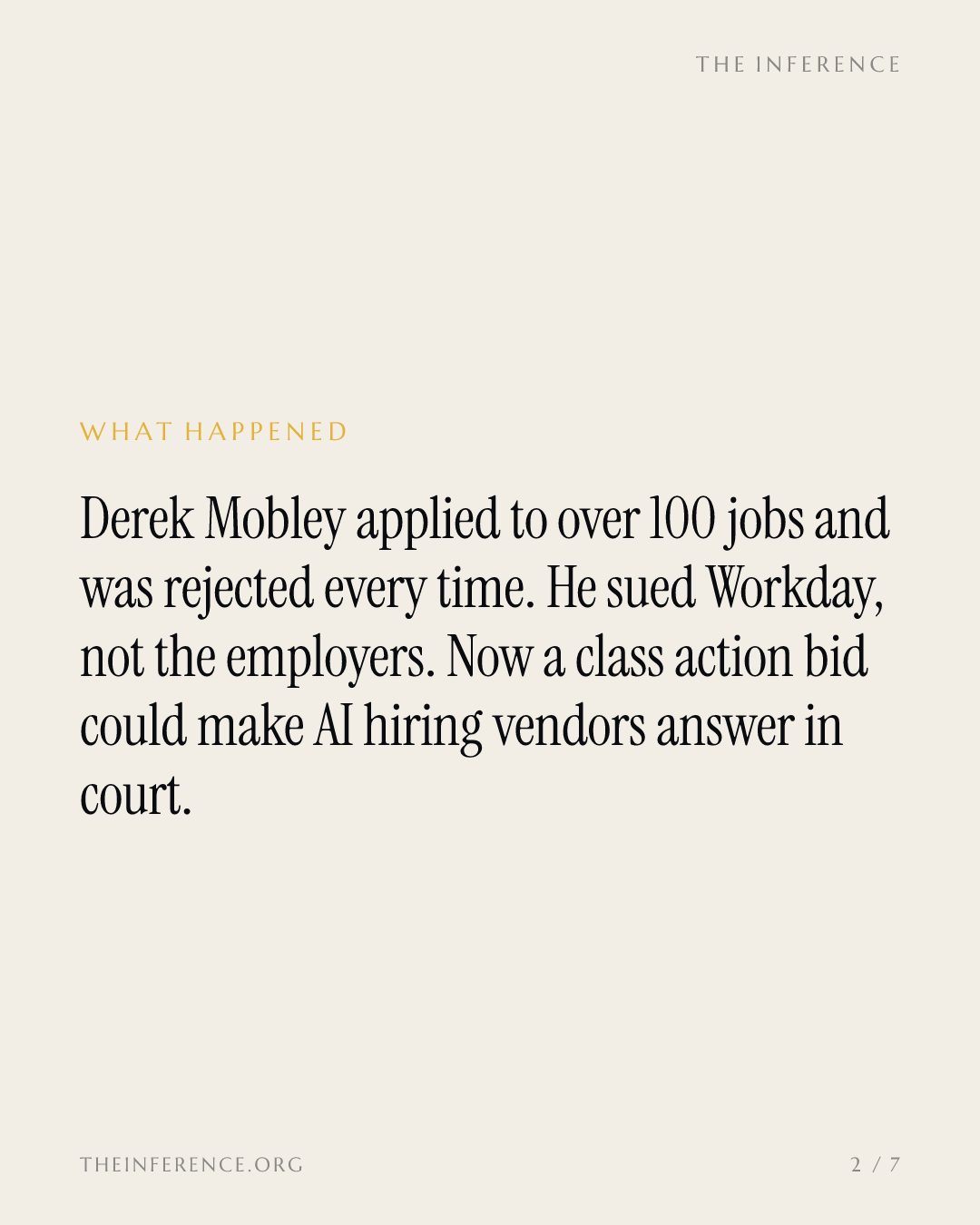
Derek Mobley, a Black man over 40 who reports anxiety and depression, applied for more than 100 jobs at companies running Workday's hiring tools and was rejected every time, sometimes within minutes overnight 12. In 2023 his lawyers skipped the employers and sued the software maker 1. This month, job seekers asked US District Judge Rita Lin in San Francisco to certify the case as a class action for African Americans, women, people over 40 and people with disabilities 13.
The scale the class wants to reach
More than 356 million applications and 27 million job offers ran through Workday Recruiting in 2024 alone, figures the plaintiffs attribute to Workday's own witness 1. Two-thirds of the Fortune 500 are customers, and more than 80% of US employers now use AI somewhere in hiring 1. Plaintiffs also cite an external bias audit of 724,352 applicants at 10 of Workday's largest customers, which they say showed statistically significant disparities for women, African American and over-40 applicants 3. Lin let the disparate-impact claims proceed in 2024, warning that splitting "software decision-makers" from "human decision-makers" would "potentially gut anti-discrimination laws," and in 2025 approved an opt-in collective on age 1. The EEOC has separately argued that a vendor can be liable under the ADEA 3.
Workday's answer: the tool decides nothing
The recruiting tools "don't make hiring decisions," the technology "looks only at job qualifications, not protected traits," and every tool is rigorously tested, Workday says 2. The product is highly customizable, and each customer decides how to sort, review and reject 1. The plaintiffs "have not, and cannot, meet their burden to proceed as a class" 1. Their counsel's reply: no rogue AI is required, because a system "can operate exactly as designed and trained while perpetuating patterns of past discrimination" 1.
The agents shipped while the question stayed open
On 24 September 2026 Workday launched Total Benefits across a base of more than 11,500 organizations, with a Self-Service Agent that starts answering benefits questions in October 2026 on a roadmap of agents that "anticipate, act, and advise" 45. The company says it was named a Leader in Gartner's 2026 Magic Quadrant for Talent Acquisition for helping organizations "scale recruiting with AI-powered agents" 5. That machine was paid for by a February 2025 cut of 1,750 jobs, 8.5% of the workforce, made as spending steered toward AI 7, and the stock's bull case leans on the rollout, with baseline narratives near $13.8 billion of 2029 revenue 8. Revenue has climbed in every quarter the suit has been alive 6.
Workday's revenue rose in every quarter the bias suit has been alive
Data
| Revenue | |
|---|---|
| Q3 '23 | $1.87B |
| Q4 '23 | $1.92B |
| Q1 '24 | $1.99B |
| Q2 '24 | $2.09B |
| Q3 '24 | $2.16B |
| Q4 '24 | $2.21B |
| Q1 '25 | $2.24B |
| Q2 '25 | $2.35B |
| Q3 '25 | $2.43B |
| Q4 '25 | $2.53B |
| Q1 '26 | $2.54B |
| Q2 '26 | $2.65B |
What the 9 March 2027 hearing decides
The certification hearing is set for 9 March 2027 13. The battleground is commonality: whether shared features of Workday's technology, not its customers' individual choices, did the excluding 1. A plaintiff win would "create a blueprint" for claims against AI vendors and their clients, says Gerald Maatman, a class-action defense chair at Duane Morris 1. The exposure cuts both ways: some HR vendor contracts cap liability at $10,000 and skip compliance warranties, so customers that leaned on Workday's sorting may find no one to pass the bill to 2. If the vendor becomes the defendant of record, every hiring agent it ships arrives with a liability tail the price list never carried. Nobody has priced that tail yet; the hearing decides whether anyone must.
How this brief was made
01Gathered & sourced284 channels · 1,797 articles▾
Agents swept 284 channels and ingested 1,797 articles, then de-duplicated and ranked them for signal.
02Verified & cross-validated8 claims · 10 data feeds▾
Every one of 8 load-bearing claims was checked against primary sources, with 10 live data feeds reconciling the figures and charts.
- 1Reuters, "These workers say an AI hiring platform discriminated against them. But who should pay?", 21 September 2026
- 2American Banker, "The risks of the Workday AI lawsuit for banks", 13 July 2026
- 3The Legal Examiner, "Workday Discrimination Lawsuit: Who's Liable if AI Hiring Software is Biased?", 22 September 2026
- 4Workday press release via MarketScreener/PRNewswire, "Workday Launches Total Benefits, Bringing Health, Wealth, and Wellbeing Support Together in One Place", 24 September 2026
- 5Workday blog, "Workday Brings Employee Benefits Into The Agentic Era", 24 September 2026
- 6Sharadar quarterly fundamentals from Workday's SEC filings, retrieved 27 September 2026
- 7TheGrio, "Black workers challenge AI hiring platform in case that could reshape workplace discrimination law", 24 September 2026
- 8Yahoo Finance UK (Simply Wall St), "Does Workday's New AI Benefits Hub and Partner Network Reshape The Bull Case For Workday (WDAY)?", 24 September 2026
03Reviewed & edited1 human editor▾
One editor read the draft against the evidence, tuned the framing, and signed off before it shipped.
Become a contributor
Reporting on the business of AI and want it read? We take pitches from outside contributors who bring primary sources and a number worth arguing about.
Deepdive
AI-generated from this story and its cited sources. Not investment advice.