AI Is Rewriting the Power Bill. These Six Companies Collect Different Pieces.
Aaron Jagdfeld has a new way to explain Generac's future: the company expects initial backup-generator deliveries to Amazon worth $2.4 billion in 2027 and 2028. The agreement, disclosed on September 16, puts the company best known for keeping homes running during outages deeper inside the AI infrastructure build-out.
 Vincent JiangSeptember 17, 2026 · 7 min read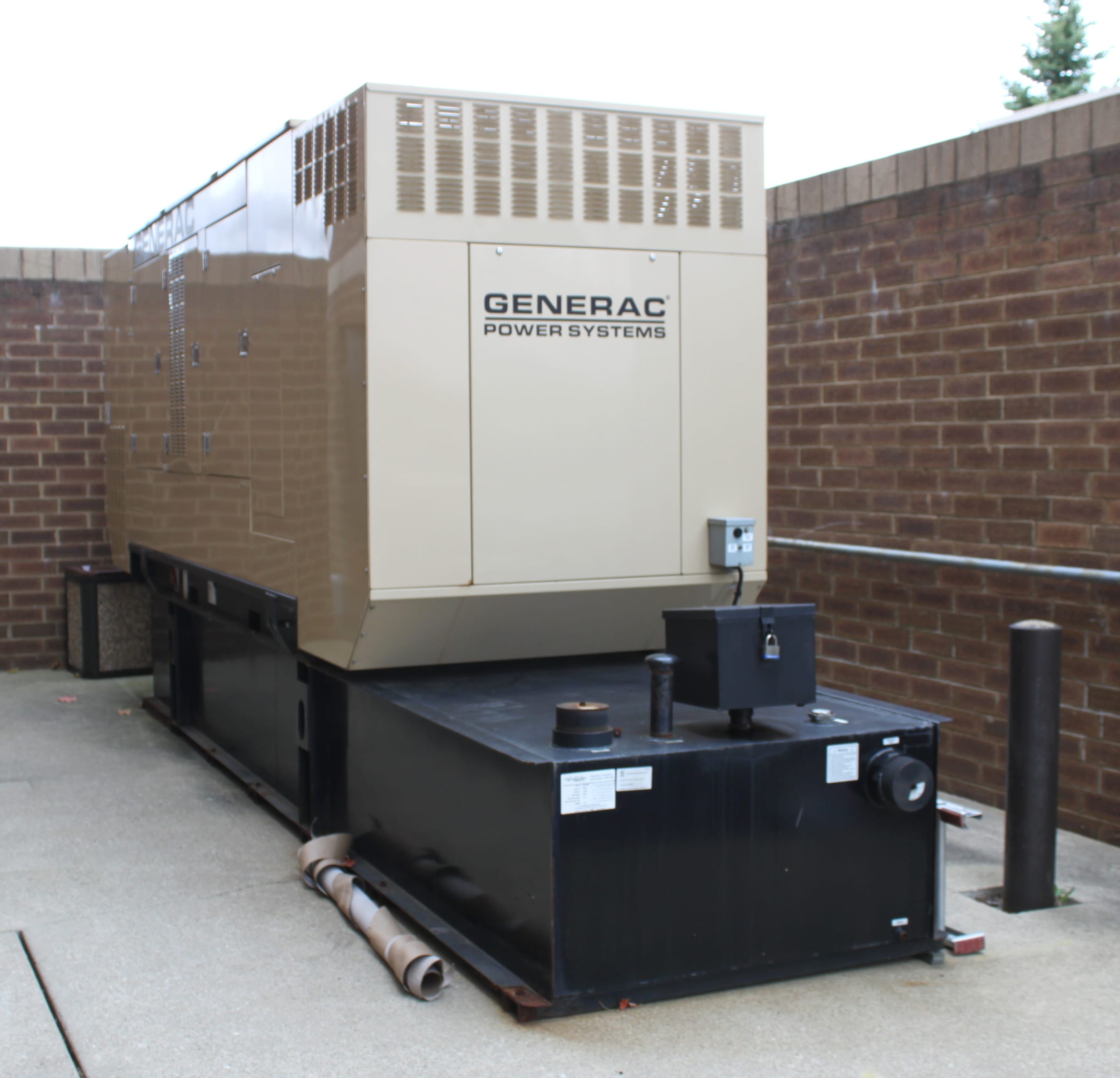
There is a catch worth reading. Amazon also received a warrant for up to roughly 1.69 million Generac shares. Full vesting depends on cumulative qualifying payments reaching $8 billion. That larger number is a warrant threshold, not guaranteed generator revenue. Generac gains a major customer; Amazon gains potential participation in the supplier's upside. Contract profitability remains undisclosed.
That bargain makes a useful starting point for comparing Generac, Cummins, Eaton, NRG, Vistra and Talen. All can benefit from AI's appetite for power. They collect different pieces of the same bill, on different schedules, with different obligations.
One campus, several businesses
A data center needs electricity, equipment to distribute it, and protection when something fails. The companies supplying those layers do not earn money in the same way.
| Company | What it supplies | The economic test |
|---|---|---|
| Generac (GNRC) | Large backup generators | Turn hyperscaler orders into profitable shipments |
| Cummins (CMI) | Standby and prime-power generators, service | Sustain equipment margins and capture service demand |
| Eaton (ETN) | Switchgear, busway and uninterruptible power supplies | Deliver growing orders without sacrificing returns |
| NRG (NRG) | Generation, retail electricity and proposed new plants | Make customer demand support financeable projects |
| Vistra (VST) | Nuclear, gas and other generation plus retail | Convert contracts into earnings after hedges and costs |
| Talen (TLN) | Nuclear, gas and other generation, including AWS supply | Deliver contracted power while maintaining plant availability |
Equipment suppliers can recognize revenue during construction and installation. Generators selling electricity depend on delivery schedules and plant operations. A campus can buy from both groups. Counting generator orders and contracted megawatts as interchangeable measures of AI demand obscures who gets paid, and when.
Generac: orders are accelerating; margin quality matters
Generac's commercial and industrial external sales rose 29% to $556 million in the second quarter. Residential sales fell 2% to $617 million. The business mix is changing, but the residential franchise still matters. On July 29, Generac reported a $1.6 billion data-center backlog, excluding committed volumes from its second hyperscaler. That dated backlog should not simply be added to September's Amazon announcement. July 29 results 1
The profit detail is more revealing. Commercial and industrial adjusted EBITDA margin increased from 12.4% to 14.6%. However, tariff refunds contributed approximately two percentage points. Most of the reported improvement therefore came from that benefit. It does not yet demonstrate a large structural improvement in generator economics.
Generac must now expand production while meeting demanding delivery and performance obligations. Its filing specifically flags cancellation rights and liability associated with data-center contracts. The test is margin and cash conversion after expansion costs, alongside shipments. Generac quarterly filing 2
Cummins: standby is established; prime power changes the job
Cummins brings an existing industrial engine business to this market. Its Power Systems segment reported second-quarter sales of $2.255 billion, up 19%, and EBITDA margin of 24.5%, versus 22.8% a year earlier. Those are broad segment figures, including business outside data centers. Truck demand also remains relevant to the overall company. August 4 results 3
The more consequential development is its agreement to supply natural-gas generators for Circe Energy campuses. Deliveries are scheduled for 2026 through 2030, with phased energization at its West Texas campus planned from 2027. These machines are intended for behind-the-meter prime power: supplying the campus's primary electricity, rather than waiting for an outage. June 16 announcement 4
More operating hours can create more service demand. They also make fuel availability, maintenance and system integration central to the economics. Circe and its engineer retain final design and implementation responsibility; Cummins is not underwriting the entire campus.
Backup equipment cannot automatically become continuous generation. Equipment ratings and air-quality requirements differ by use. The EPA's data-center guidance distinguishes emergency engines from other operating configurations. This is why “install generators while waiting for the grid” requires more analysis than adding up nameplate capacity. EPA guidance 5
Eaton: the electricity still has to reach the rack
Eaton offers the broadest equipment exposure of these six. Switchgear controls and protects the system, busway distributes power, and UPS equipment bridges interruptions. Those functions remain necessary whether electricity comes from a utility, a contracted nuclear plant or onsite generation. Eaton technical overview 6
The company reported approximately 85% growth in Electrical Sector data-center orders and 65% growth in related revenue in the second quarter. Those company-reported growth rates are not labeled organic. Q2 presentation 7
This is the clearest business-model attraction in the group: Eaton can participate across competing ways of powering AI. Yet order growth does not remove manufacturing constraints. Electrical Americas operating margin was 27.5%, down from 29.5% a year earlier but up from 25.6% in the first quarter. This is a wider segment, and its operating margin is not directly comparable with Cummins' EBITDA or Generac's adjusted EBITDA. July 31 results 8
Data
| Operating margin | |
|---|---|
| Q2 2025 | 29.5% |
| Q1 2026 | 25.6% |
| Q2 2026 | 27.5% |
Preferring that exposure is an operating judgment. Whether ETN is an attractive investment also depends on the price paid for it.
Vistra and Talen: existing nuclear power buys time
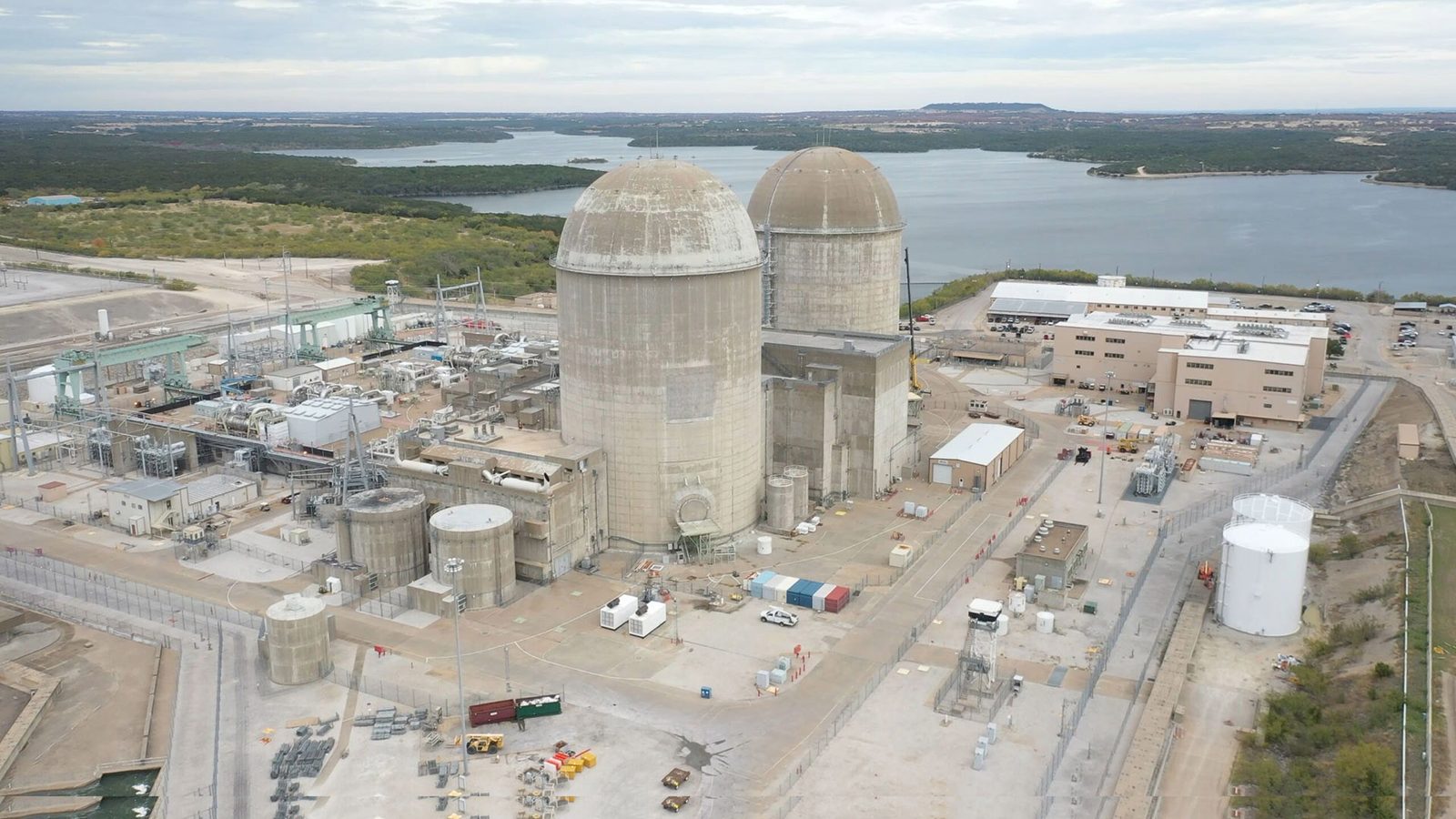
Vistra's Meta agreements cover 2,609 megawatts for 20 years. Only 433 megawatts represent planned additions through plant uprates; 2,176 megawatts come from existing output. Purchases start in late 2026, with the full amount expected by 2034. Meta independently confirms that the electricity continues flowing onto the grid. Vistra agreement 9, Meta announcement 10
That distinction explains the value and the limit. Existing nuclear plants offer substantial output without waiting to build an entirely new station. Contracting that output can improve revenue visibility. It does not create an equivalent amount of new system supply.
Talen's AWS agreement reaches 1,920 megawatts at full volume and runs through 2042. The announced ramp reaches full quantity no later than 2032. Its revised grid-connected arrangement took effect in April 2026: Susquehanna supplies the grid, Talen supplies Amazon commercially, and transmission infrastructure delivers the electricity. AWS agreement 11, latest quarterly filing 12
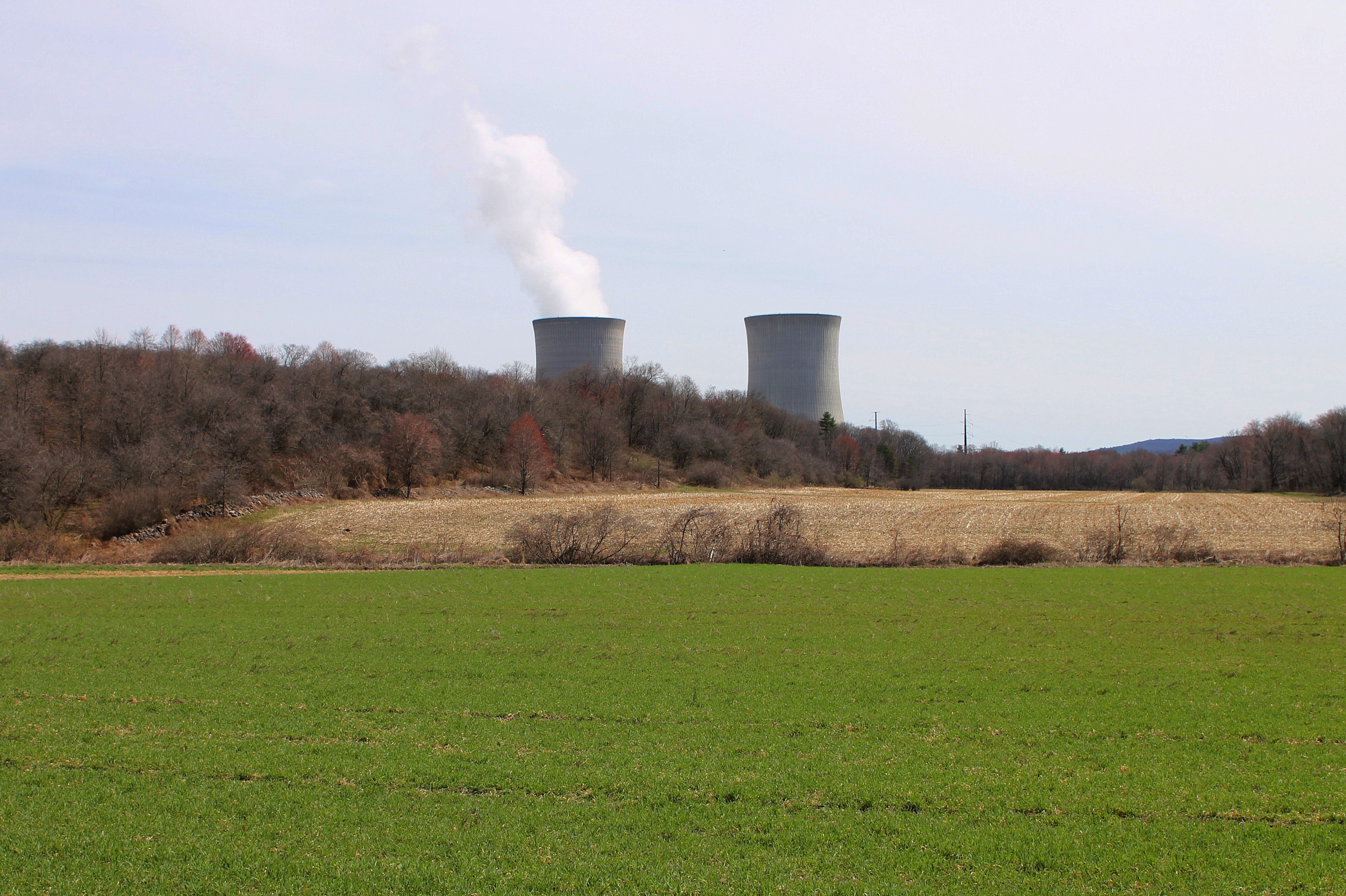
Vistra adds substantial retail exposure and extensive hedging. As of August 3, approximately 100% of expected 2026 generation and 94% of 2027 generation were hedged. Higher spot prices therefore do not immediately flow through to earnings from hedged output. August 7 results 13
For both companies, long contracts trade some market uncertainty for obligations around delivery and availability. Plant outages, maintenance spending and financing still determine what shareholders retain.
NRG: the new plant must become a financeable contract
NRG's existing generation can offset electricity purchases for its retail customers. That gives it a different exposure from simply selling every megawatt at the market price: higher wholesale prices can also increase retail supply costs. NRG quarterly filing 14
NRG's opportunity combines generation, retail customers and new development. In August, it disclosed alignment on principal commercial terms with an investment-grade hyperscaler for a 1.2-gigawatt Texas gas plant. Management targeted late-2029 operation, approximately $3.2 billion of project costs and $500 million of annual adjusted EBITDA at full operation. Final documentation and approvals remained outstanding. These are project forecasts, not current earnings. August 4 disclosure 15, Q2 presentation, slide 5 16
A September 8 update placed the proposed project conditionally into ERCOT's Batch Zero study process. That is progress, but study inclusion does not equal final interconnection approval. ERCOT describes the process as a system-wide assessment of reliability and available transmission capacity. NRG update 17, ERCOT notice 18
The next questions are contractual: who bears construction overruns, fuel costs and delayed customer demand? An attractive forecast becomes valuable when those obligations are allocated on terms that support financing and acceptable returns.
Demand is real. The timetable is the variable.
The strongest counterargument to excessive caution is that electricity demand is already broadening. The EIA's September forecast projects U.S. commercial electricity sales rising 3.3% in 2026 and 2.7% in 2027. Those forecasts extend beyond AI, but they support a market larger than a handful of speculative campuses. September energy outlook 19
The six companies still need different scorecards. For Generac and Cummins, watch shipped equipment, service revenue and margins after unusual benefits. For Eaton, watch whether orders become revenue without further margin pressure. For Vistra and Talen, watch contracted delivery ramps, plant availability and cash after maintenance. For NRG, watch definitive agreements, interconnection and the construction budget.
Jagdfeld has secured a place in Amazon's build-out. The next proof arrives when the generators leave the factory and the economics survive delivery.
How this brief was made
01Gathered & sourced412 channels · 2,382 articles▾
Agents swept 412 channels and ingested 2,382 articles, then de-duplicated and ranked them for signal.
02Verified & cross-validated19 claims · 24 data feeds▾
Every one of 19 load-bearing claims was checked against primary sources, with 24 live data feeds reconciling the figures and charts.
- 1investors.generac.com, "July 29 results"
- 2sec.gov, "Generac quarterly filing"
- 3investor.cummins.com, "August 4 results"
- 4investor.cummins.com, "June 16 announcement"
- 5epa.gov, "EPA guidance"
- 6eaton.com, "Eaton technical overview"
- 7eaton.com, "Q2 presentation"
- 8sec.gov, "July 31 results"
- 9investor.vistracorp.com, "Vistra agreement"
- 10about.fb.com, "Meta announcement"
- 11ir.talenenergy.com, "AWS agreement"
- 12ir.talenenergy.com, "latest quarterly filing"
- 13investor.vistracorp.com, "August 7 results"
- 14sec.gov, "NRG quarterly filing"
- 15sec.gov, "August 4 disclosure"
- 16investors.nrg.com, "Q2 presentation, slide 5"
- 17publicnow.com, "NRG update"
- 18ercot.com, "ERCOT notice"
- 19eia.gov, "September energy outlook"
03Reviewed & edited1 human editor▾
One editor read the draft against the evidence, tuned the framing, and signed off before it shipped.
Become a contributor
Reporting on the business of AI and want it read? We take pitches from outside contributors who bring primary sources and a number worth arguing about.
Deepdive
AI-generated from this story and its cited sources. Not investment advice.