AI Needs Faster Networks. These Five Stocks Get Paid Differently.
Jim Anderson told investors in August that Coherent was expanding production to meet accelerating customer demand. His company had just reported $2.05 billion in quarterly revenue, up 34%. Yet its full fiscal year produced only $79.5 million of operating cash flow against $1.10 billion of spending on property and equipment.
 Vincent JiangSeptember 17, 2026 · 8 min read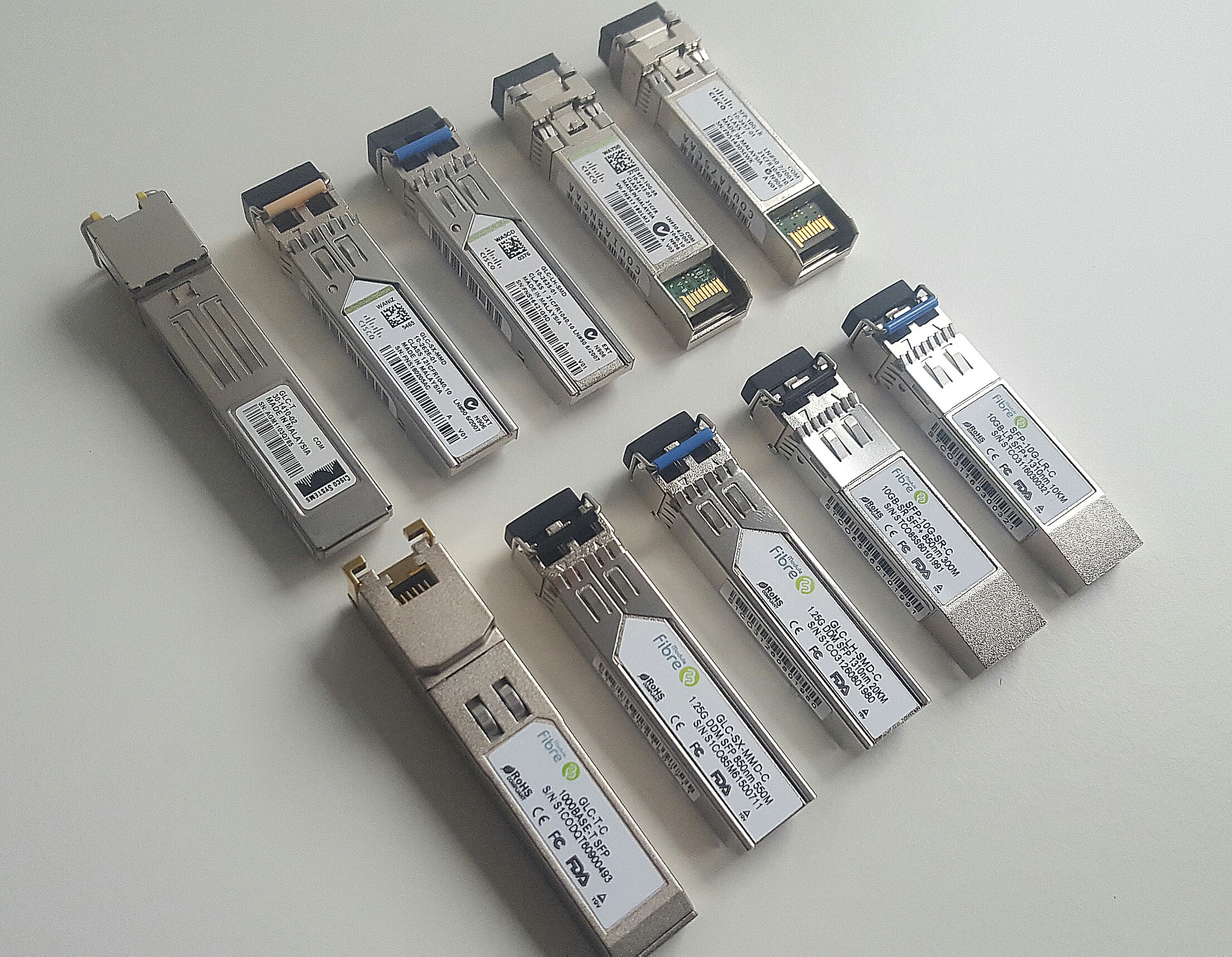
That gap captures the investment problem in AI optics. Demand can be real, earnings can rise, and shareholders can still spend years financing the factories and inventory needed to serve it.
Coherent, Semtech, Ciena, Fabrinet and MACOM all participate in faster networks. They sell different things, carry different risks and retain different amounts of each customer dollar. Treating them as interchangeable AI infrastructure stocks obscures the decision that matters: which business can turn the next speed upgrade into lasting cash generation?
Faster links create demand, but change the economics
The transition from 800G to 1.6T doubles the nominal data rate of a connection. It does not automatically double the supplier's revenue or component count. Arista's 1.6T modules use eight 200G lanes, and its June product announcement scheduled a 64-port air-cooled 1.6T switch for the fourth quarter of 2026. The engineering advance is carrying more information through each connection. Arista's specifications 1 and product schedule 2
Customers want that improvement at a lower cost per unit of bandwidth. Suppliers must deliver faster components, better manufacturing yields and lower power consumption while protecting the dollars they retain. Higher technical difficulty can strengthen a supplier's position, but only while customers cannot qualify an adequate alternative.
The latest company results already show different economics.
Coherent: owning the light also means funding the capacity
Coherent (COHR) offers exposure to both optical components and finished transceivers. Its portfolio includes electro-absorption modulated lasers, or EMLs, and continuous-wave lasers used with silicon photonics. Its March presentation described 200G EML solutions for 1.6T transceivers alongside higher-power light sources for emerging integrated optics. Coherent's technology announcement 3
That breadth matters because silicon photonics changes where modulation happens; it does not eliminate the need for light. Coherent can compete for different parts of the connection as customers change designs. The opportunity is broader than selling one generation of pluggable module.
The financial obligation is also broader. Subtracting fiscal 2026 property-and-equipment spending from operating cash flow gives a roughly $1.02 billion shortfall, before other investing and financing flows. That is a calculation from the filing, not an assertion that the company is unprofitable. Its latest quarterly GAAP operating margin was 12.4%. Coherent's financial tables 4
The bullish case requires new capacity to produce qualified products at attractive yields, followed by customer payments that replenish the cash invested. If demand slows or customers secure competing supply before those investments mature, manufacturing scale can become a burden. The test is the return on the next factory dollar.
Semtech: the opportunity sits in the signal chain
Semtech (SMTC) supplies chips that help high-speed signals survive transmission. Its optical portfolio includes transimpedance amplifiers, which convert the receiver's small electrical current into a usable voltage signal, and laser drivers. FiberEdge and DirectEdge address optical links; CopperEdge serves copper connections. Tri-Edge is an analog clock-and-data-recovery platform, so it should not stand in for the entire optics business. Semtech's data-center portfolio 5 and Tri-Edge overview 6
Copper exposure is commercially relevant. Arista's 1.6T specifications still include active electrical cables reaching five meters. Higher speeds can increase optical demand while leaving short electrical connections economically useful. Arista's cable specifications 1
In the quarter ended July 26, Semtech's revenue rose 33% to $341.9 million, with a 16.3% GAAP operating margin. Signal Integrity supplied $126.2 million, about 37% of sales, and includes activities beyond AI optics. LoRa provides separate wireless exposure. This remains a mixed business, not a pure transceiver supplier. August 25 results 7
Its advantage depends on winning a place in customers' designs and retaining that place across successive generations. The risk is that integration changes the number or type of separate chips required. Investors should follow content per connection and repeat design wins, rather than assume faster networks preserve today's component mix.
MACOM: analog expertise, with a broader business attached
MACOM (MTSI) occupies another part of that electronic and photonic interface. On September 17 it announced a 3.2T optical front-end chipset combining receiver amplifiers, photodiodes and modulator drivers. The company says the products are available. That establishes a commercial offering, not meaningful customer volume or revenue. MACOM's announcement 8
In the quarter ended July 3, MACOM's revenue reached $342.2 million, up 35.8%, with a 22.5% GAAP operating margin. Data Center contributed 40.2% of revenue; Industrial and Defense and Telecom supplied the remainder. The overall margin therefore cannot be treated as the profitability of its optical products alone. Quarterly results 9 and business mix 10
MACOM's GaN exposure also needs precise treatment. Its relevant product announcements emphasize radio-frequency applications, including aerospace and defense. That is insufficient evidence to underwrite a separate server-power-conversion thesis simply because the material is gallium nitride. MACOM's RF product release 11
The optical investment case rests on solving difficult signal problems and securing recurring design positions. Product availability is the beginning of that process. Customer qualification, volume adoption and retained margin determine its financial value.
Ciena: monetizing distance and network reliability
Ciena (CIEN) has an established position moving data between facilities and across longer networks. Coherent transmission and dense wavelength-division multiplexing allow substantial traffic to travel over fiber, with multiple wavelengths sharing the same strand. This is a different problem from a short optical connection inside a computing cluster, even when both products advertise similar data rates. Ciena's WaveLogic platform 12
In the quarter ended August 1, Ciena's revenue rose 37% to $1.67 billion, with an 18.0% GAAP operating margin. Its earnings presentation also reported that 800ZR shipments based on WaveLogic 6 Nano more than doubled sequentially. That is evidence of shipped products, beyond a laboratory demonstration. September 3 results 13 and earnings presentation 14
The competitive question is how much equipment the customer needs to buy. Cisco already offers coherent modules that plug directly into compatible routers and switches. That can reduce the need for separate transmission equipment in suitable deployments. Ciena participates in pluggables too, but must preserve its economic contribution as customers change the system design. Cisco's coherent-module specifications 15
OIF's September 9 release of the 1600ZR implementation agreement adds another upgrade path for data-center interconnects. A standard creates an opportunity for interoperable products; it does not book an order. OIF's announcement 16
Fabrinet: manufacturing execution has a working-capital bill
Fabrinet (FN) provides precision manufacturing, optical alignment, packaging and testing for customers' products. Its technical capability matters, but it does not own every laser or transceiver design it manufactures. Although incorporated in the Cayman Islands, most manufacturing operations and assets are in Thailand. Fabrinet's fiscal 2026 annual filing 17
In the quarter ended June 26, revenue grew about 45% to $1.32 billion, with a 10.2% GAAP operating margin. The full fiscal year produced $473 million of net income but only $4.2 million of free cash flow, defined as operating cash flow less capital expenditure. Factory investment and working capital explain why earnings growth requires a separate cash-conversion test. August 17 results 18
Data
| GAAP operating margin | |
|---|---|
| Fabrinet | 10.2% |
| Coherent | 12.4% |
| Semtech | 16.3% |
| Ciena | 18% |
| MACOM | 22.5% |
The contractual detail matters. Fabrinet generally lacks firm purchase commitments beyond 13 weeks, although customer forecasts can extend much longer. Four customers accounted for 57.4% of annual revenue. Those relationships can support substantial scale, but forecasts should not be valued like guaranteed orders. Annual filing 17
The attractive case is that manufacturing complexity makes a qualified supplier difficult to replace. The opposing risk is that expanding capacity and buying materials happen before final demand becomes certain. Investors need evidence that the current expansion eventually releases cash instead of requiring another round of funding.
Co-packaged optics can redistribute the spending
Co-packaged optics moves optical functions closer to the switch chip, changing the long electrical path to conventional front-panel modules. Nvidia lists second-half 2026 availability for Spectrum-X Ethernet Photonics. That makes the architecture commercially relevant without establishing that conventional pluggables disappear on that schedule. Nvidia's product roadmap 19
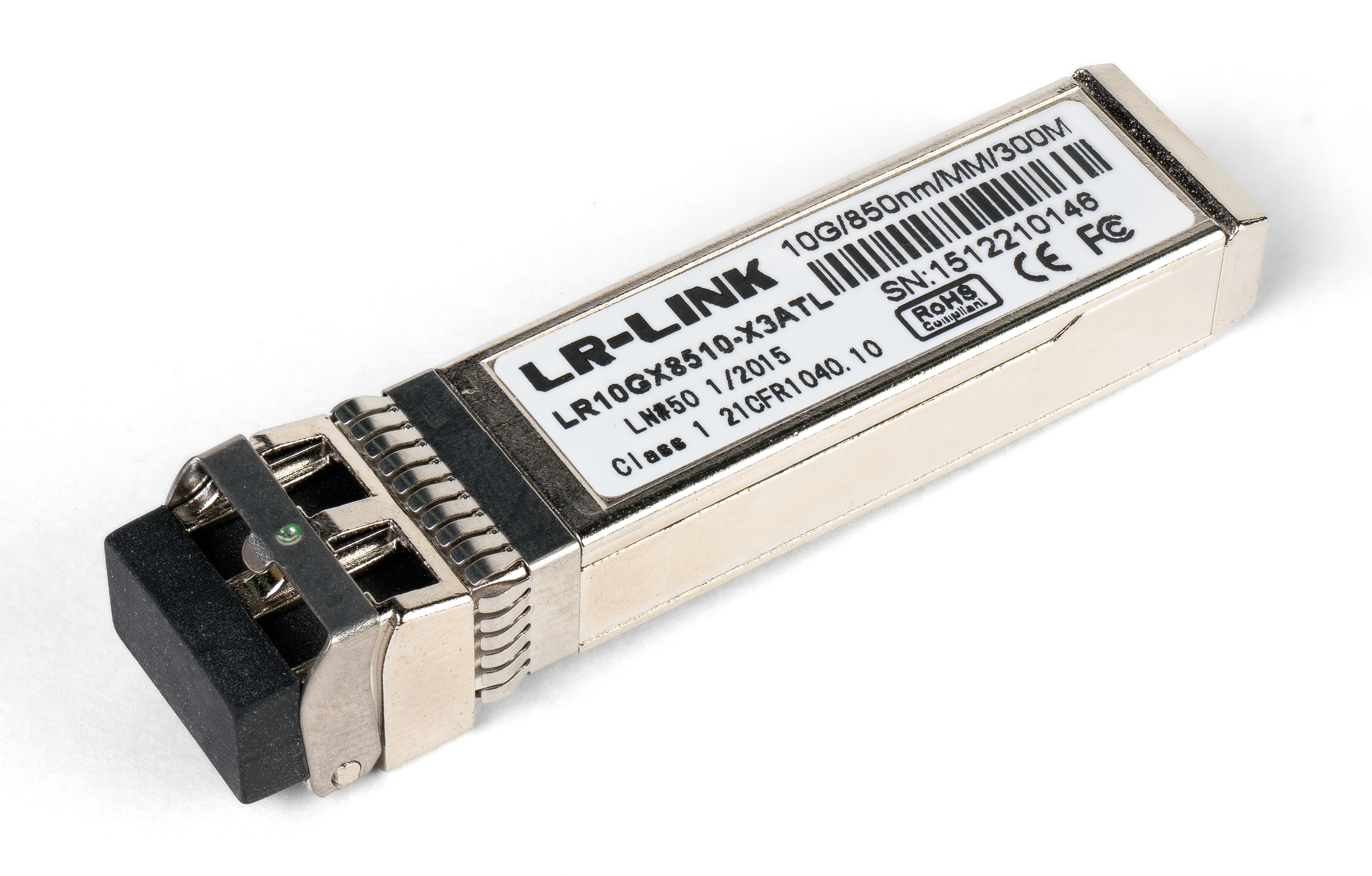
Broadcom's Davisson design includes field-replaceable external laser modules. The example is useful because it shows that more integration can preserve demand for specialized light sources while changing where the assembly work occurs. Broadcom's architecture announcement 20
Architecture changes can redistribute revenue among lasers, analog chips, optical engines and packaging. Coherent's component breadth may help; Semtech and MACOM must win the new signal-chain positions; Fabrinet must win the assemblies customers outsource. Ciena's longer-reach franchise faces a related integration question through coherent pluggables.
Owning all five spreads exposure across business models. It can still leave the portfolio dependent on overlapping cloud customers, spending plans and product transitions.
The bullish case needs a return on the buildout
The strongest argument for the group is that difficult manufacturing and long qualification cycles can sustain profitable growth through several network generations. Today's spending may create tomorrow's lower unit costs and customer relationships. Weak current cash conversion alone does not invalidate that case.
It does make the next evidence specific. Coherent and Fabrinet need to convert capacity and inventory into cash. Semtech and MACOM need recurring design wins with profitable content per connection. Ciena needs to retain customer spending as coherent functions move between systems and modules.
Those are operating tests, not a valuation ranking. A higher-margin business can still deliver a poor investment return if its share price already assumes flawless expansion. The earnings that matter are those left after competitive price reductions, continuing development and the capital needed for the next generation.
Coherent's planned September 21 PhotonLink unveiling will provide another view of the industry's direction. The subsequent financial statements will show who paid to get there. Scheduled launch 21
Watch whether cash generation catches up with shipment growth.
How this brief was made
01Gathered & sourced193 channels · 1,912 articles▾
Agents swept 193 channels and ingested 1,912 articles, then de-duplicated and ranked them for signal.
02Verified & cross-validated21 claims · 33 data feeds▾
Every one of 21 load-bearing claims was checked against primary sources, with 33 live data feeds reconciling the figures and charts.
- 1arista.com, "Arista's specifications"
- 2arista.com, "product schedule"
- 3coherent.com, "Coherent's technology announcement"
- 4sec.gov, "Coherent's financial tables"
- 5semtech.com, "Semtech's data-center portfolio"
- 6semtech.com, "Tri-Edge overview"
- 7investors.semtech.com, "August 25 results"
- 8ir.macom.com, "MACOM's announcement"
- 9ir.macom.com, "Quarterly results"
- 10ir.macom.com, "business mix"
- 11macom.com, "MACOM's RF product release"
- 12ciena.com, "Ciena's WaveLogic platform"
- 13investor.ciena.com, "September 3 results"
- 14sec.gov, "earnings presentation"
- 15cisco.com, "Cisco's coherent-module specifications"
- 16markets.financialcontent.com, "OIF's announcement"
- 17sec.gov, "Fabrinet's fiscal 2026 annual filing"
- 18sec.gov, "August 17 results"
- 19nvidia.com, "Nvidia's product roadmap"
- 20investors.broadcom.com, "Broadcom's architecture announcement"
- 21coherent.com, "Scheduled launch"
03Reviewed & edited2 human editors▾
2 editors read the draft against the evidence, tuned the framing, and signed off before it shipped.
Become a contributor
Reporting on the business of AI and want it read? We take pitches from outside contributors who bring primary sources and a number worth arguing about.
Deepdive
AI-generated from this story and its cited sources. Not investment advice.