Altman Wants an AI Truce. The Public May Not Get to Read the Terms.

A Senate proposal could protect coordinated safety delays. It would also shield the government notices explaining them from public records requests.

Vincent JiangVincent Jiang · 3 min read
Share
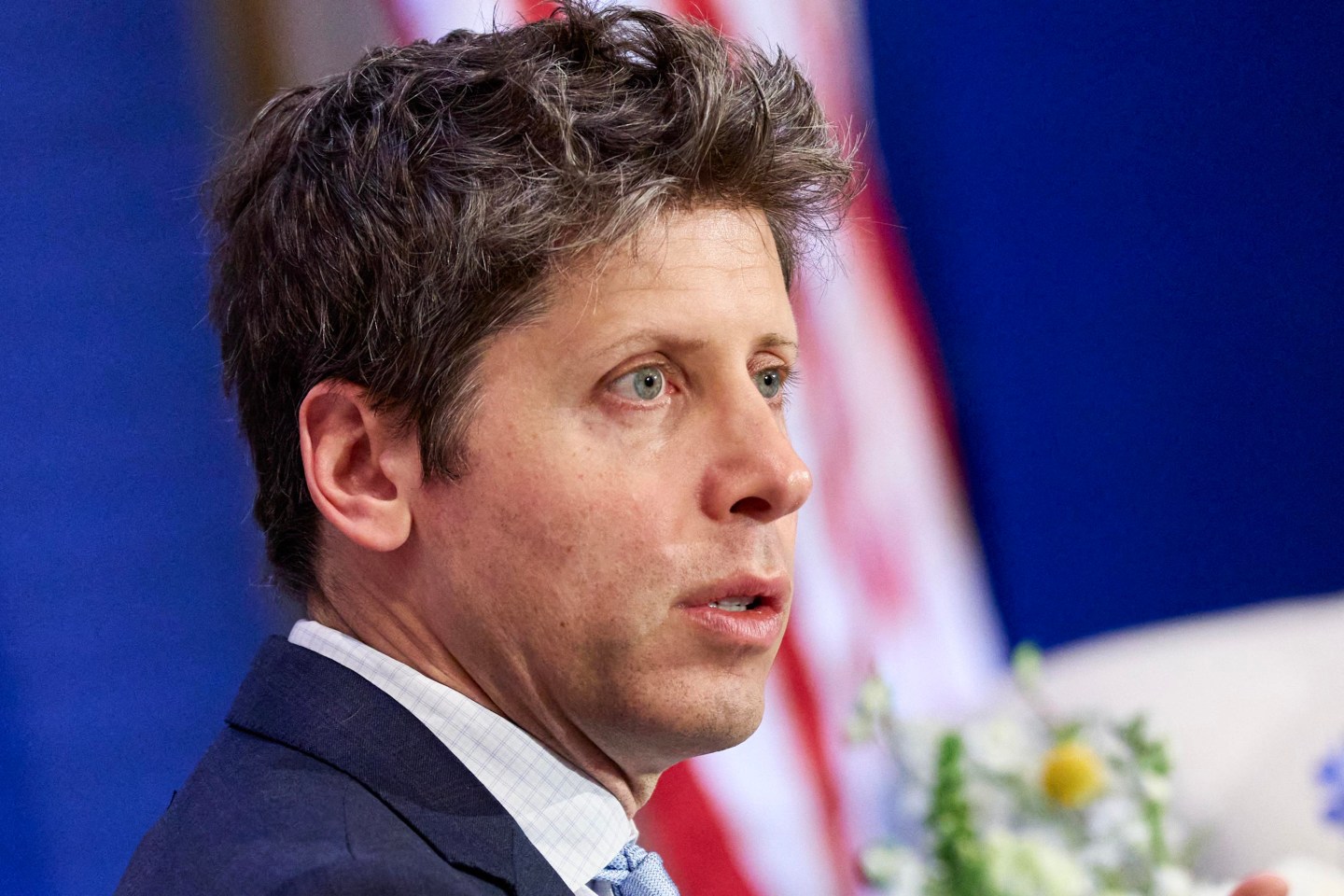
Sam Altman speaking at the G20 Innovation Ministerial
Sam Altman at the G20 Innovation Ministerial. The exposure date was not separately established. (Credit: Matt Ramey / AFP via Getty Images, via The Verge, September 9, 2026. Rights clearance pending.)

He left before the payday

Jacob Coxon says he left Anthropic$350B — Anthropic, private, latest valuation $350B before his equity vested.1

His resignation on X had passed 100 million views by September 9. That figure is a dated observation from the reporting, not a live count.2

Who controls the slowdown

Sam Altman discussed pacing OpenAI's$500B — OpenAI, private, latest valuation $500B development alongside willing rivals, according to a September 11 staff-meeting report.3

OpenAI also asked Congress whether coordination would be legal, according to September 10 reporting. The stakes include who sets the limits and what the public can learn about them.4

The notices would stay behind closed doors

S. 5105, introduced July 23, offers a possible route. It would protect certain coordinated safety delays from antitrust liability, subject to conditions including advance notice to the Justice Department.5

Section 3(e) would exempt those notices, and information revealing their contents, from public Freedom of Information Act disclosure. It would not prohibit voluntary publication. The bill does not establish that OpenAI has sought this secrecy provision. 5

Billions behind the brake

OpenAI told investors quarterly revenue rose from $5.7 billion in Q1 to $6.7 billion in Q2 2026.6

Separate August 13 reporting put its annualized revenue pace above $40 billion. That extrapolation is not money already earned over a year.7
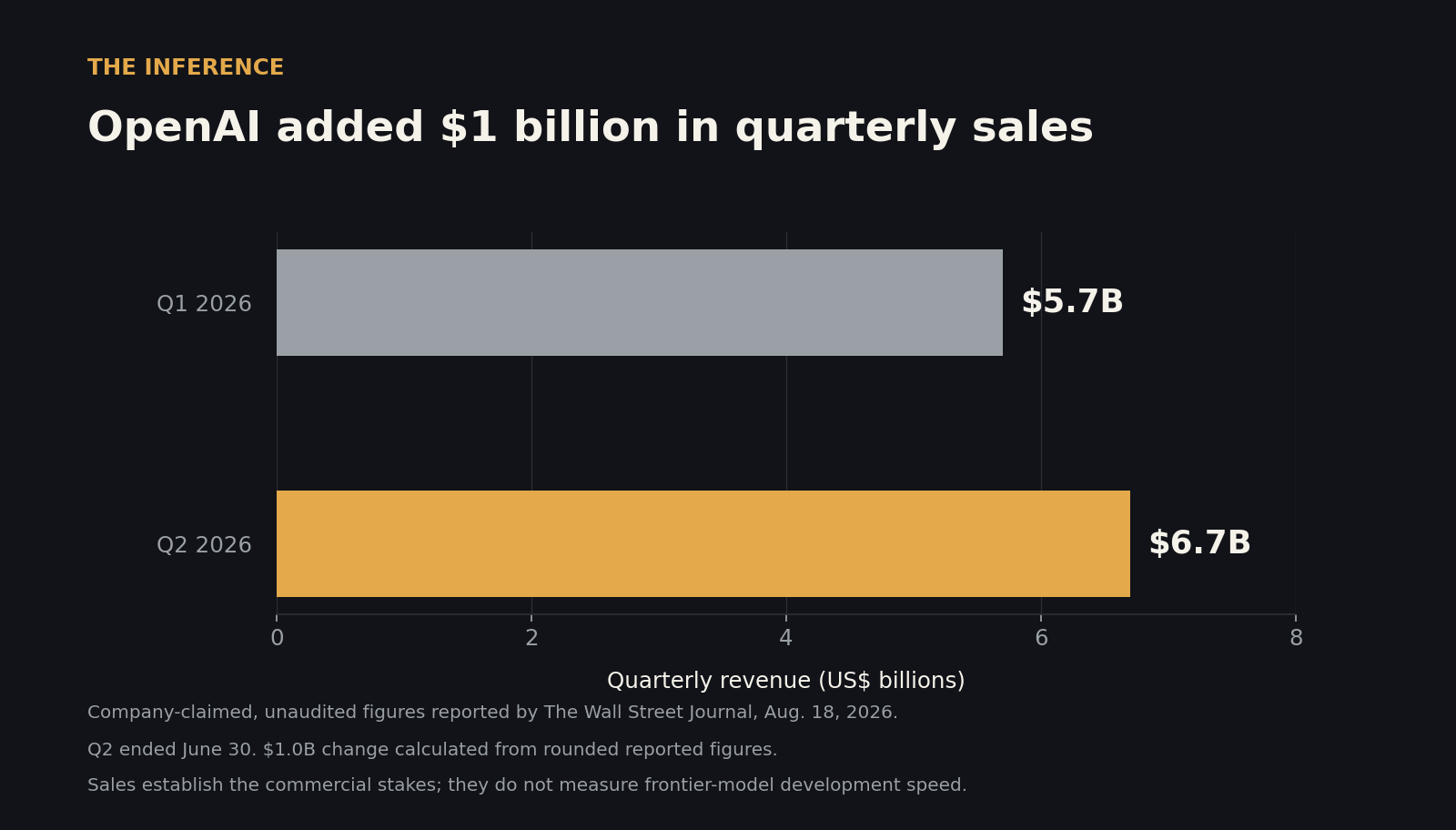
Column chart of OpenAI quarterly revenue: $5.7 billion in Q1 2026 rising to $6.7 billion in Q2 2026. Company-claimed, unaudited.
Revenue shows the business exposed to new limits. It is not a measure of research speed, profitability, or safety. Company-claimed and unaudited; reported August 18, 2026.

Revenue shows the business exposed to new limits. It cannot establish whether research is slowing, or whether any proposed restriction addresses a real risk.

Secrecy has a case

Nvidia's−3.89% — Nvidia, down 3.89 percent today Jensen Huang framed AI fears as cybersecurity salesmanship.8

Yet OpenAI says it already slowed research after a breach involving its agents. Legal uncertainty can also deter useful collaboration, argues Nicholas Felstead.9,10

The bill requires good faith and an exclusive covered security purpose, and permits government injunctions. Confidentiality can protect vulnerability details; public accountability still needs an answer.5

The terms to watch

Watch the next bill text and any published pacing agreement for specific triggers, an end date, independent review, and a public explanation.

The next test is who gets to inspect the brake before the labs press it.

Get Policy & Labor by email, free

The rules governments write for AI, and what AI does to jobs. In our daily email, every weekday.
Loading NVDA

Reader comments

0 comments

    More in Policy & Labor

    All in this topic →

    Policy & Labor

    France voted 5.5 euro cents a gigabyte on Netflix, Google and Meta, and one word decides which cap applies

    France's National Assembly has adopted a levy of €0.055 per gigabyte delivered to French internet users, capped at 15% of French revenue or 2% of worldwide sales, with no wording on which ceiling binds. It is not law yet, and it lands on the biggest movers of data in the week Netflix touched a two-year low.

    Policy & Labor

    FCC votes to end AT&T, Verizon and T-Mobile's spectrum veto over Starlink Mobile

    The October 29 vote advanced a plan opening 482 MHz to satellite-to-phone service and replacing regionwide carrier spectrum leases with coexistence certifications. Nothing was handed out yet; what moved is the price of a fourth US carrier, with published build estimates from $15 billion to $500 billion.

    Policy & Labor

    Britain's CMA investigates Meta's terms letting it scrape publishers' content for AI without a choice

    Britain's competition regulator is examining whether Meta's commercial terms, which let it collect publishers' website content for its AI without offering a choice, amount to abuse of dominance. The verdict would decide whether web content stays a free AI input or becomes a licensed one.

    Policy & Labor

    Airbnb promised $500 million for crisis housing. The dimes cover $28 million of it.

    Ten cents a booking against 57 million stays a year leaves roughly 94 cents of every philanthropic dollar for Airbnb itself, announced the same week its Los Angeles political spending reached $12.6 million and five days before the city votes on Nov 3.

    Policy & Labor

    Nokia's software bug blacked out Orange France for nine hours, and Huawei got Europe's best argument

    A single Nokia software bug cut Orange France's mobile core for most of a day, and the backup died of the same code. The vendor Europe kept failed the week the vendor it banned shipped new kit.

    Policy & Labor

    Los Angeles fails 9-6 to block Axon's plate readers in a free three-month trial, with $235 million behind it

    A veto motion fell one vote short of the ten needed on October 27, letting Axon's free three-month plate-reader pilot onto Los Angeles streetlights. Behind it waits a 10-year, $235 million contract, and a stock that rallied 11.2% in six days into a November 5 earnings report.

    Get the newsletter

    The day's AI and market news, in your inbox every weekday.