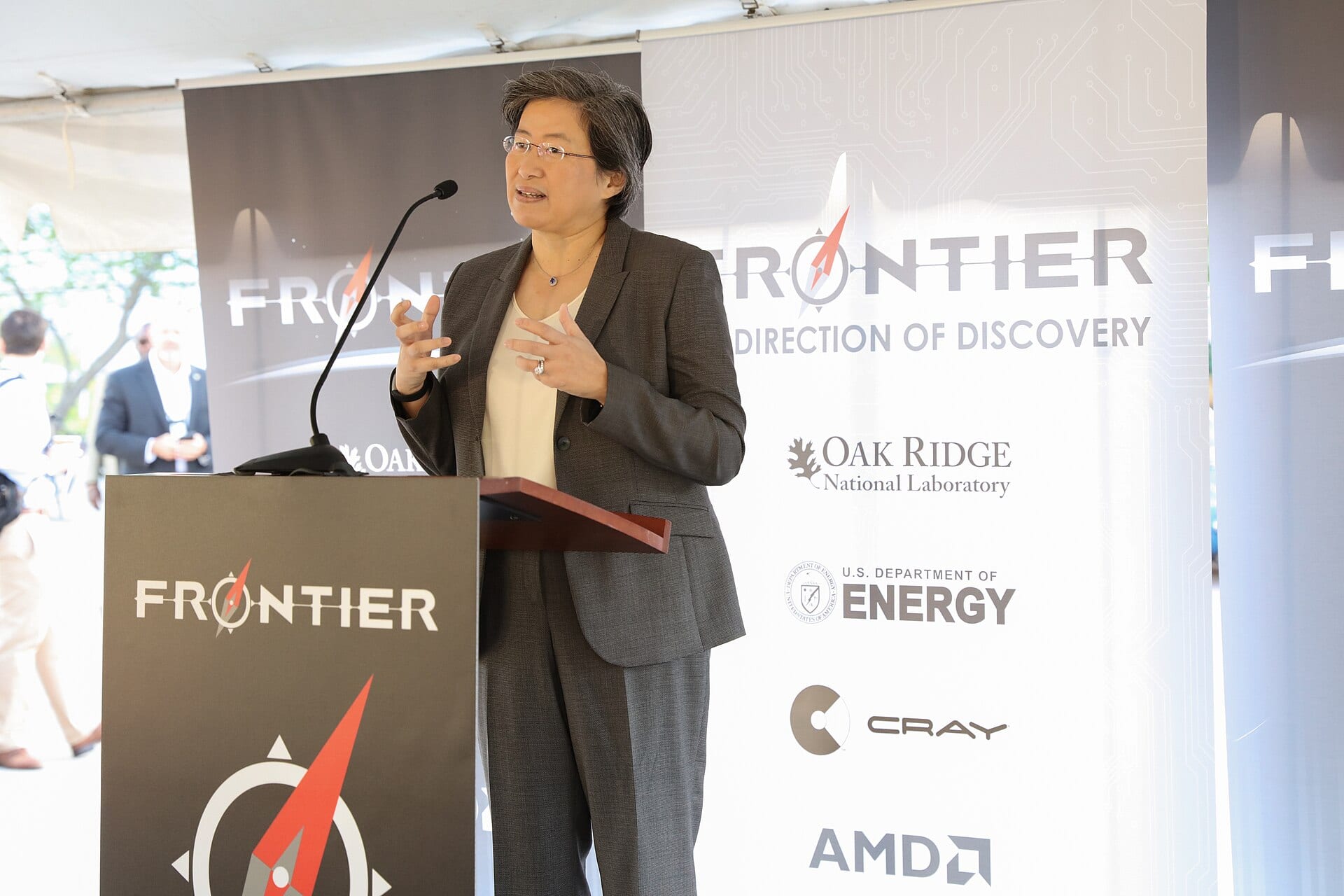
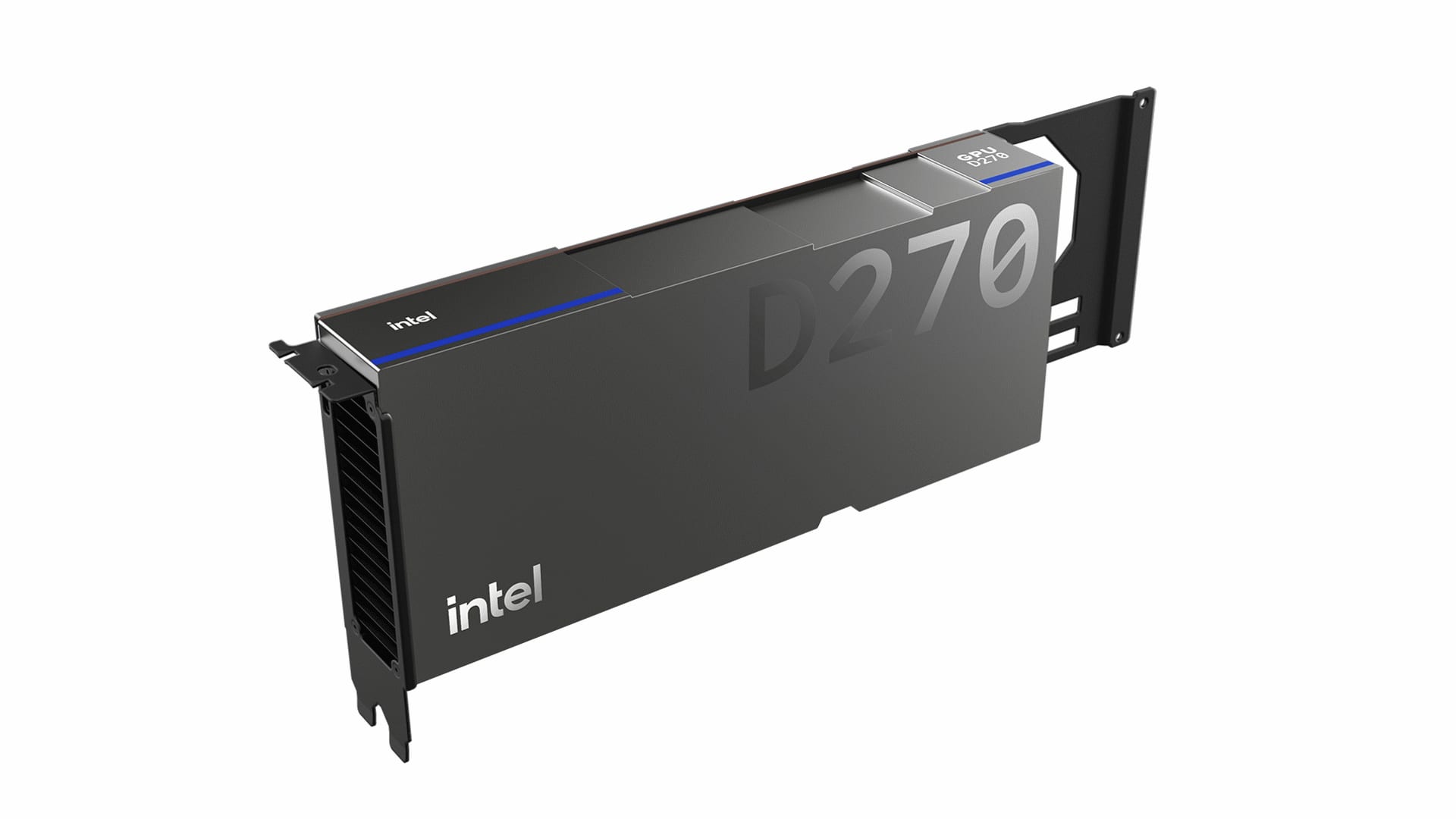
AMD's inference software caught up with Nvidia's, and its stock still fell 5.57%
Two independent testers found AMD's inference software closing on Nvidia's; in the same week more than $1 trillion came off the most valuable AI and chip stocks on financing fears. The two moves price different things, and only one of them is about AMD's product.
 Richard Tang · 3 min read
Two independent testing shops re-scored AMD's−2.62% — AMD, down 2.62 percent today Instinct MI355X accelerator this week, and both found the software gap with Nvidia−1.68% — Nvidia, down 1.68 percent today closing 12. The stock fell anyway: the most valuable AI and semiconductor names shed more than a trillion dollars during the week on borrowing-cost fears, and AMD fell harder than Nvidia 3. It was down 5.57% in early trading on October 15 4. The benchmark results measure what the chip can do, while the sell-off prices the cost of financing the data centers that buy such chips 3. Only one of those moves is about AMD's product.
The software link finally moved
Artificial Analysis added the MI355X to AA-AgentPerf, its benchmark for agentic workloads where AI takes multi-step action instead of answering one prompt, and reported on October 14 that the chip's results had improved substantially since the benchmark's June launch on hardware that never changed: every gain came from software 1. The split result survives. Nvidia still leads on efficiency on the lighter DeepSeek model, but on the larger DeepSeek V4 Pro the MI355X beats the B200 outright, an edge the testers credit to its 288 GB of memory per GPU 1.
On the lighter model, Nvidia still leads on tokens per megawatt
Data
| Value | |
|---|---|
| AMD MI355X | 128M tokens/s/MW |
| Nvidia B200 | 193M tokens/s/MW |
| Nvidia B300 | 220M tokens/s/MW |
By September, AMD was the cheaper chip to run
SemiAnalysis, whose own host admits the firm was long anti-AMD, watched AMD's ATOM inference engine catch and briefly overtake some Nvidia configurations on the GLM 5.3 coding model as engineers optimized it over weeks 2. Its September work put the MI355X about 9% cheaper to run than Nvidia's B200 when responses must begin within two seconds 2. On MLPerf, an industry benchmark suite, AMD reported squeezing up to 38% more work from the same chips 2. Cloud operators paying the inference bill finally have a benchmarked second source.
The gap is being closed by AMD's own engineers, who now ship updates to ROCm, the company's software platform for its GPUs, roughly every six weeks, with AI agents helping write the code 2. The company's Helios racks entered production in September and are installed at OpenAI$1.18T — OpenAI, private, latest valuation $1.18T, Meta+0.40% — Meta, up 0.40 percent today, Microsoft+1.28% — Microsoft, up 1.28 percent today and Oracle+2.86% — Oracle, up 2.86 percent today 5.
Routing decides who serves the agents
Agentic work multiplies model calls, so cost per token decides whose silicon serves them. AMD's answer is Helion, a rack blueprint it published at the Open Compute Project summit on October 12 and handed to the open-hardware community instead of selling it 6. The blueprint embeds a model router in the rack: routine agent calls go to a cheap open-source model hosted locally, hard ones go to a frontier system, and AMD claims a 43% cut in token costs from internal testing that no one has verified at rack level 5.
The Taalas purchase, confirmed the same week, points the same way: split inference across specialized chips, each doing the part it does best. Taalas is a startup that bakes one model's weights into chip circuitry so the model can be served cheaply, mirroring Nvidia's $20 billion purchase of the inference-chip maker Groq$3.5B — Groq, private, latest valuation $3.5B in December 2025 7.
The limiting link is now the balance sheet
AMD's software, its weakest argument for two years, moved this week. The limit now is money. Investors are asking whether higher borrowing costs will slow the capital spending that buys these racks, a worry that applies to every chip vendor's customers at once 3. As Dan Ives, tech analyst at Yorkville Ives, put it, rates are "a financing question, not a demand question" 3.
AMD shareholders carry the sharper version of that risk. They pay 22.6 times sales for the stock, a price that assumes the operating margin keeps climbing from the 17.3% of the June quarter 4. The next report, due around November 3, lands in the middle of the scare 4.
AMD's operating margin has climbed from near zero to 17.3% of sales
Data
| Operating margin | |
|---|---|
| Q3 '23 | 3.9% |
| Q4 '23 | 5.5% |
| Q1 '24 | 0.7% |
| Q2 '24 | 4.6% |
| Q3 '24 | 10.6% |
| Q4 '24 | 11.4% |
| Q1 '25 | 10.8% |
| Q2 '25 | -1.7% |
| Q3 '25 | 13.7% |
| Q4 '25 | 17.1% |
| Q1 '26 | 14.4% |
| Q2 '26 | 17.3% |
AMD's benchmark numbers improved this week without a new chip. What the share price rests on now is the margin, and the November report is the first reading of it.
Deepdive
AI-generated from this story and its cited sources. Not investment advice.