Aurora needs 1,000 trucks in 2027. Volvo expects 300. Waabi says it can fill every one.
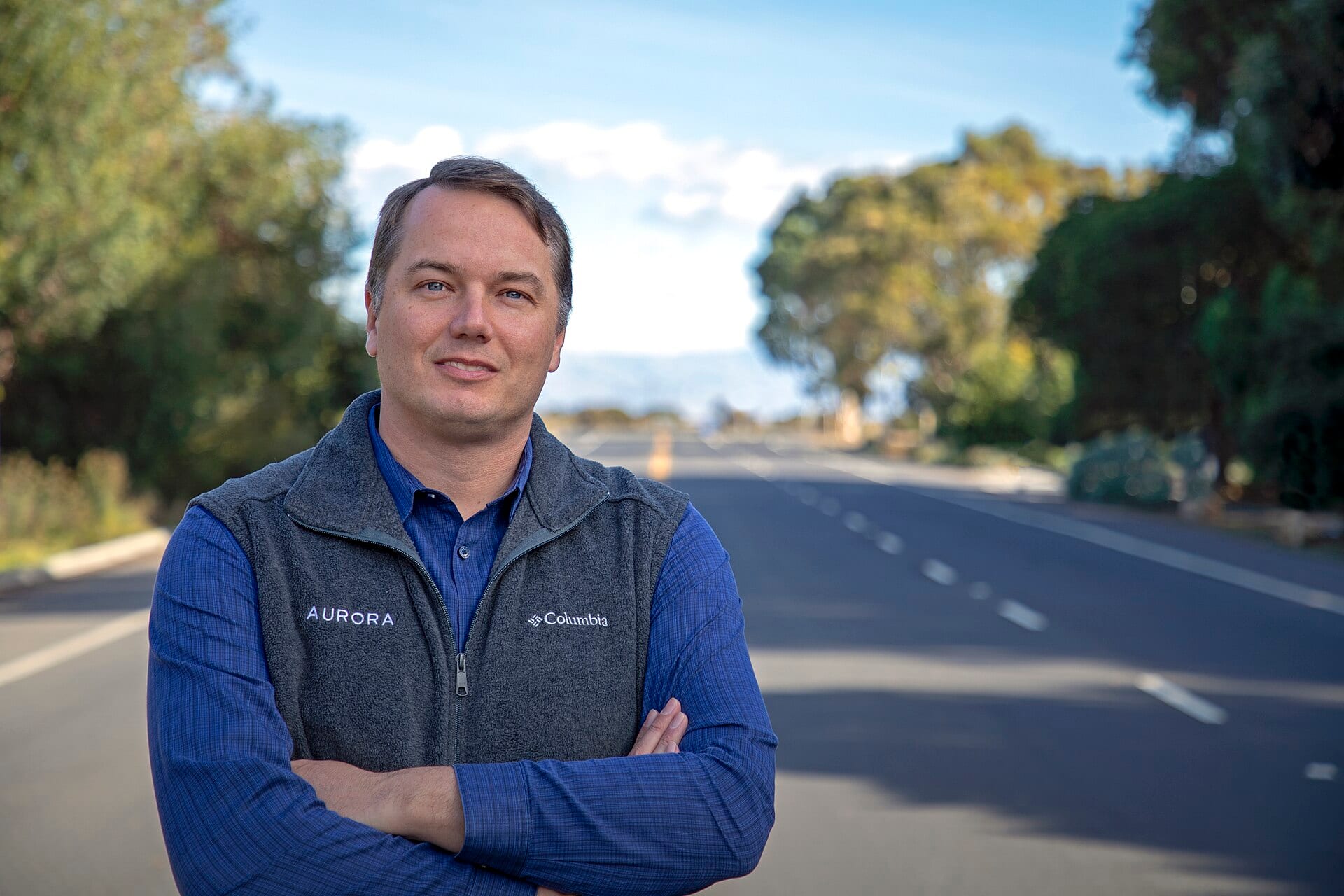
Waabi's chief operating officer says his company can fill every autonomous Volvo truck built in America for two years. Aurora's October 28 review has to show how its promised $80 million quarterly run rate survives the one plant both rivals depend on.
 Vincent Jiang · 3 min read
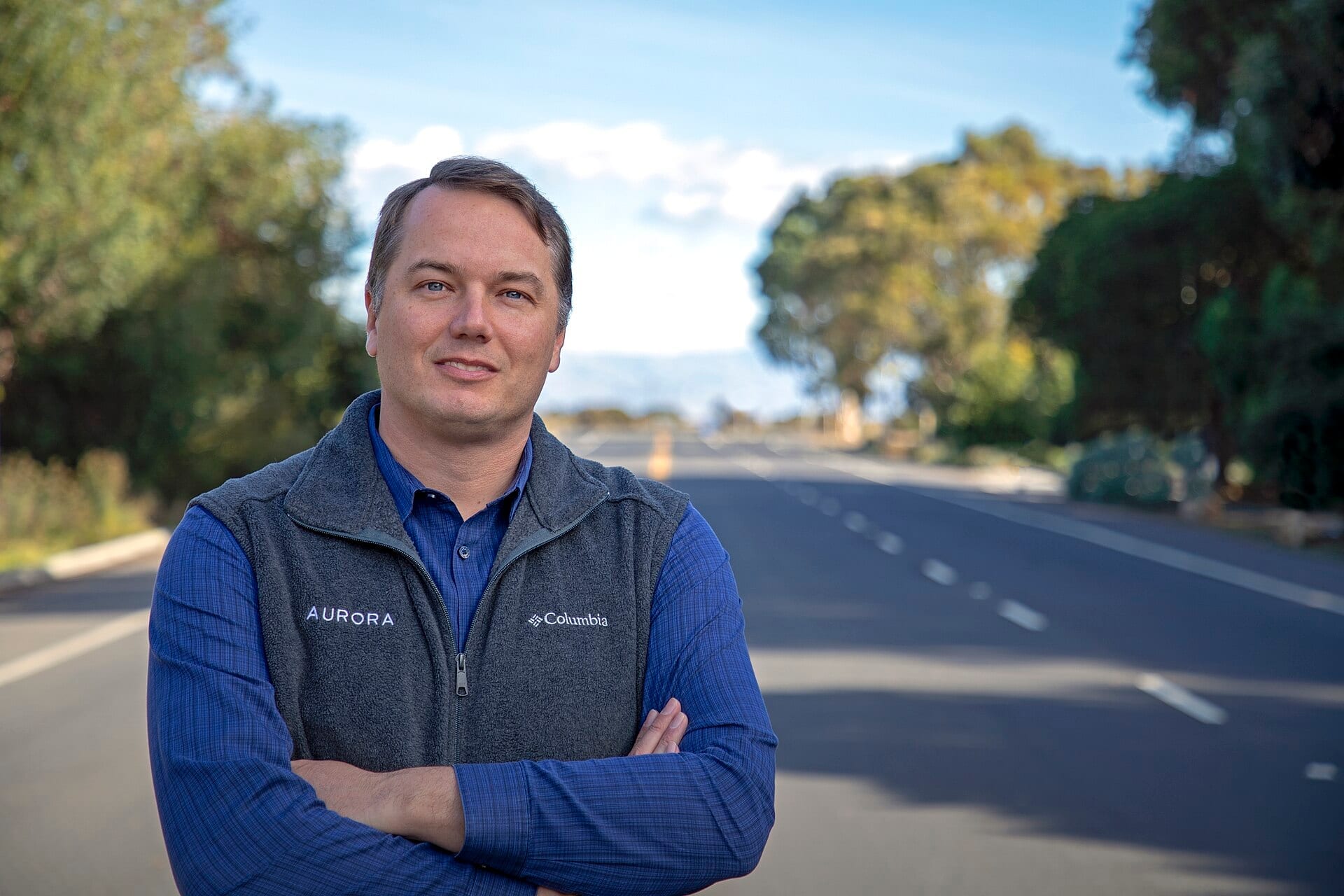
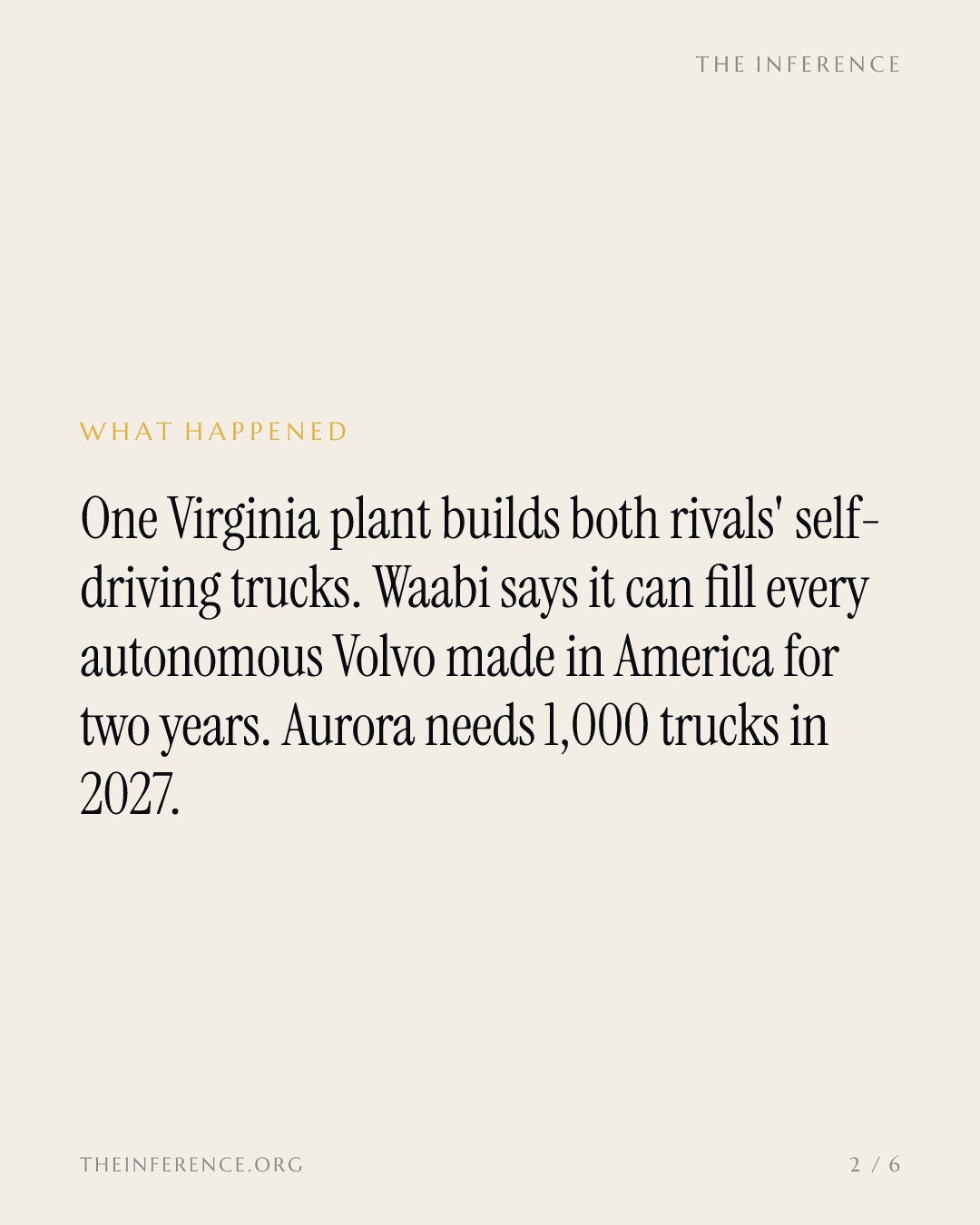
Two rival self-driving systems now come off the same assembly line. Volvo's New River Valley plant in Virginia builds the VNL Autonomous tractor with Aurora Innovation's+3.36% — Aurora Innovation, up 3.36 percent today (Nasdaq: AUR) software integrated lineside, and assembles the Waabi-equipped version of the same truck alongside it 12. For now it is the only American plant building autonomous tractors; Aurora's own chief financial officer expects production-level autonomous installation at other truck makers only by 2030 7. The tractor already works both sides of the Dallas-Houston corridor: Volvo has hauled DSV freight between Aurora's own terminals with Aurora's software since May, and on October 5 the same truck running Waabi's software began moving freight for the logistics network Warp with an observer aboard 3.
The rival on the lane claims the whole output
On October 14, Waabi, the Toronto-based autonomous trucking company, added Warrior Logistics, a Texas carrier with more than 200 trucks, as a customer on the same lane, using retrofitted Peterbilt tractors with safety drivers aboard; its Dallas-Houston load volumes are up more than 80% this year 24. Chief operating officer Lior Ron then claimed the entire supply: "we can fill every [autonomous] Volvo truck produced in the United States … for the next two years today" 2. Waabi refuses to remove drivers until factory-built Volvos arrive, expected from early 2027, with installs set to begin in the first quarter of that year 25.
Aurora's 2027 target is triple the factory's stated fleet
Aurora told its September 23 investor day it would exit 2026 with about 200 fully allocated driverless trucks and an $80 million quarterly revenue run rate, reach more than 1,000 trucks and about $200 million of revenue in 2027, and 30,000 trucks with more than $5 billion by 2030 16. Volvo expects just over 300 factory-built autonomous trucks in operation by the end of 2027 6. Aurora's own arithmetic points the same way: chief financial officer David Maday says 2026 production is fully committed and 2027 demand runs two to three times what Aurora can deliver, against $2 million of second-quarter revenue 78.
An $80 million quarterly run rate is forty times last quarter's revenue
- Revenue
- Estimate
Data
| Revenue | |
|---|---|
| Q2 2026 actual | 2M |
| Q4 2026 run rate (estimate) | 80M |
| 2027 full year (estimate) | 200M |
Aurora's end-2027 fleet target is triple what Volvo expects on the road
- Estimate
Data
| Value | |
|---|---|
| Aurora guided, end-2026 (estimate) | 200 trucks |
| Volvo expects in operation, end-2027 (estimate) | 300 trucks |
| Aurora guided, end-2027 (estimate) | 1,000 trucks |
The queue has other doors
Volvo Autonomous Solutions president Nils Jaeger calls the truck "a purpose-built vehicle platform designed to integrate autonomous driving technologies from different partners," not one customer's line 2. Aurora's 2026 ramp runs on upfitted International LT trucks through Roush, targeted at 20 a week from October, with PACCAR defining a path onto its own assembly lines 1. Maday's wider answer is scale: the four major truck makers build 250,000 to 300,000 trucks a year, with autonomous installation spreading across manufacturers by 2030, though timing "has taken longer than some observers expected" 710. How the line's autonomous slots are split, no party has said publicly.
October 28 names the trucks or it does not
Aurora's third-quarter business review on October 28 has to show how 200 trucks turn into the promised run rate, with insiders having sold $44.8 million of stock in the preceding ninety days 9. Werner Enterprises' chief information officer Daragh Mahon, still negotiating terms, gave the customer's view in two words: "We have a gap" 6. The tell is a single number: how many 2027 trucks get named, and which plant builds them. In driverless trucking the scarce asset is no longer the software; it is the slot on the assembly line.
Deepdive
AI-generated from this story and its cited sources. Not investment advice.