BWXT jumped 7.4% on a Canadian reactor selection with no contract, price or license
BWXT shares jumped 7.4% after its BANR microreactor was picked to power Canada's first transportable nuclear plant. No regulator holds a live file on the reactor, and the win becomes money only when a definitive agreement, a CNSC application or a Fort Campbell groundbreaking lands.
 Vincent Jiang · 3 min read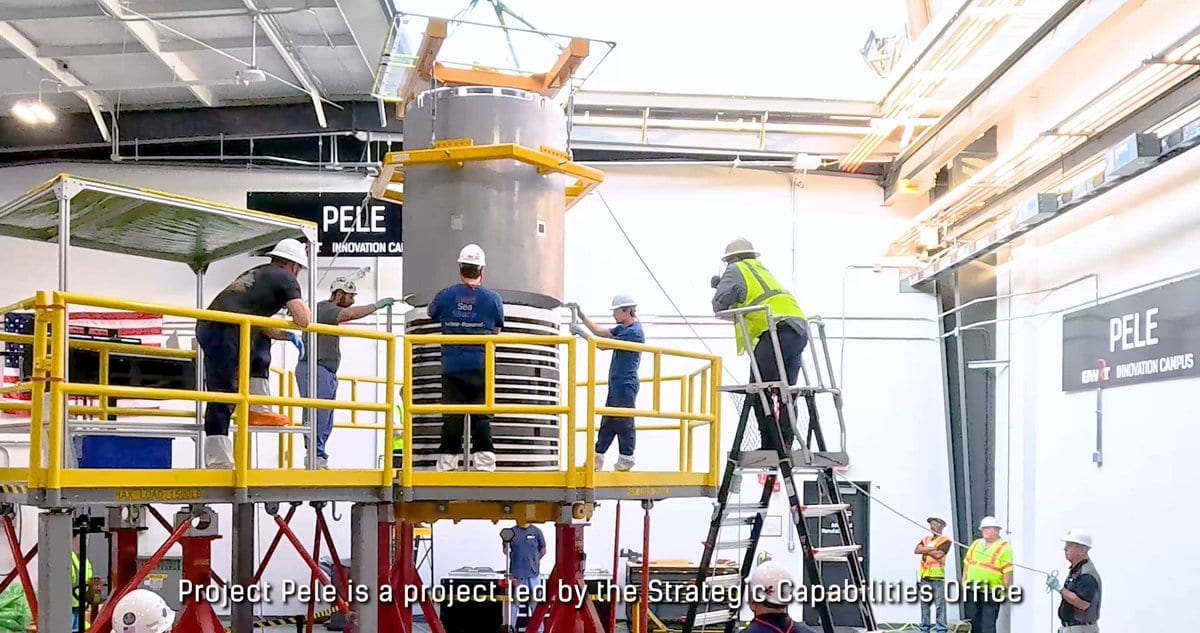
A 7 percent morning for a plant that does not exist
BWX Technologies+1.11% — BWX Technologies, up 1.11 percent today said on October 5, 2026, that Prodigy Clean Energy, Pabineau First Nation and Eel River Bar First Nation had picked its BANR microreactor for a transportable nuclear power plant in Belledune, New Brunswick, Canada's first 1. The next morning the stock jumped 7.4% to $146.53, a real move for a name that has swung more than 5% twenty times in the past year and still sits 38.5% below its April 2026 high of $238.42 2.
What a "selection" actually contains
Two BANR units would deliver up to 50 MWe to as many as 40,000 homes, with more than 150 development jobs and about 40 permanent ones, in service by the early 2030s behind a New Brunswick letter of intent to buy the power 13. It would be BANR's first commercial and first international deployment 4.
The announcement itself contains no order, no price and no revenue line. BWXT and Prodigy are "working toward a definitive agreement" covering development, engineering, licensing, supply chain, financing and deployment, and BWXT's own risk language lists the "execution of definitive agreements" and possible "termination of the project" among the uncertainties 1.
No regulator holds a live file
That is the part the victory lap skipped. BANR's last US licensing step was a 2022 regulatory engagement plan filed with the Nuclear Regulatory Commission, for a smaller 50 MWt design, and no milestone has followed 4. No public engagement with Canada's CNSC exists either 4.
The reactor is being sold in three sizes, and none has been built 4. A 20 MWe version is earmarked for the Army's $2.2 billion Janus program at Fort Campbell, with groundbreaking targeted for late 2028 45. The unit bound for Canada is the uprated 75 MWt, 22 MWe version, sized up from that 50 MWt filing 14.
The cash behind BANR so far is government money: $106.6 million of DOE risk-reduction funding in 2020, and a $4 million NNSA award in September to design a lithium processing facility at Y-12 48.
BWXT's revenue is up 53% since Q3 2023, and none of it is BANR
Data
| Revenue | |
|---|---|
| Q3 '23 | $589.99M |
| Q4 '23 | $725.52M |
| Q1 '24 | $603.97M |
| Q2 '24 | $681.47M |
| Q3 '24 | $671.96M |
| Q4 '24 | $746.27M |
| Q1 '25 | $682.26M |
| Q2 '25 | $764.04M |
| Q3 '25 | $866.29M |
| Q4 '25 | $885.84M |
| Q1 '26 | $860.22M |
| Q2 '26 | $901.63M |
The revenue is real; none of it is BANR
The business that pays those bills is real and compounding: $901.6 million of revenue last quarter, up 18% year over year 6. None of it comes from a BANR power plant, because none exists 4.
The bull case is genuine, and it is also unpriced
New Brunswick wants the electricity, the Army is backing a $2.2 billion microreactor program, and Prodigy's chief executive calls the pilot a credible path to "the G7's first commercially operating" transportable plant, built through Ontario's CANDU supply chain 135. But a letter of intent is not a power contract, a program selection is not an order, and neither is a license. The promised 18-month installation clock assumes a regulator who has not yet opened a file 14.
What converts the option into money
Three dated events would make Belledune real: a definitive agreement with a number in it, a CNSC licensing application, and shovels in the ground at Fort Campbell in late 2028 5. Until one lands, the 7.4% bought the render, not the reactor 2. Both sides are still drafting final agreements; the market has already paid 17.
Deepdive
AI-generated from this story and its cited sources. Not investment advice.