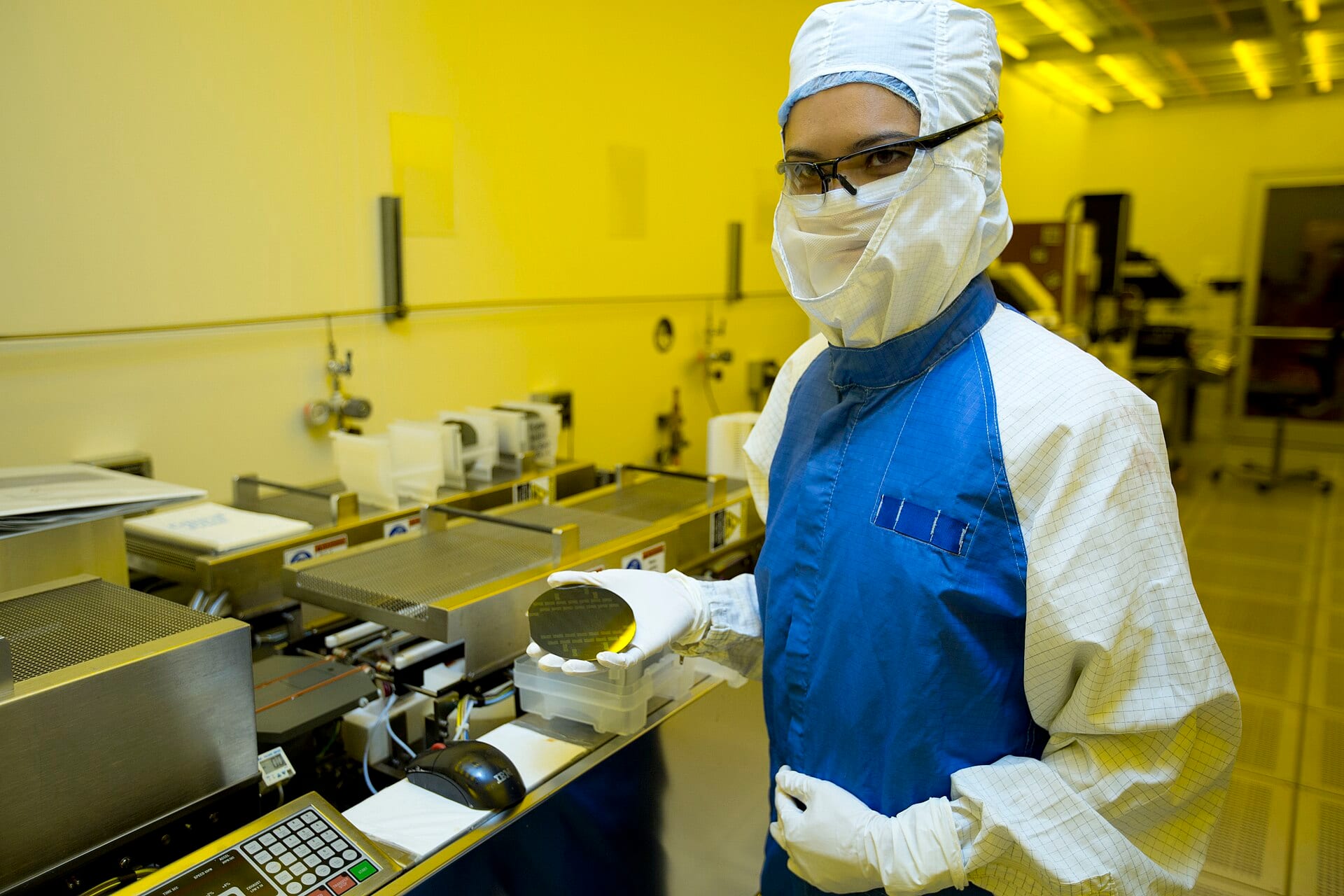
Cerebras rallied 9% on Altman's praise, but OpenAI's $20 billion revenue gap sets a November test
OpenAI's annualized revenue came in about $20 billion under the estimate widely reported in September, and Cerebras, the listed supplier most exposed to that customer, rallied 9% on a reassurance post. The real test arrives with a 30-million-share lock-up expiry in November.
 Vincent Jiang · 3 min read
Cerebras closed at $181.55 on Monday, up 9.08%, clawing back part of a 20% slide that had taken the chipmaker to its lowest level since a May debut that valued it at $95 billion, against roughly $43 billion now 1. The spark was a post: OpenAI chief Sam Altman wrote on X that "Cerebras is a close partner, and we have a deep engagement pushing on the frontiers of speed," lifting the stock nearly 3% after hours and 9% the next session 1. The question is whether the customer's own numbers can keep the price up.
The number behind the wobble
OpenAI told investors its annualized revenue approached $50 billion at the end of September, roughly $20 billion below the $70 billion estimate widely reported a month earlier, based on data initially supplied to investors 2. The gap is mostly accounting, not demand: investors had "grossed up" OpenAI's$1.18T — OpenAI, private, latest valuation $1.18T figures to match Anthropic's$350B — Anthropic, private, latest valuation $350B method, which counts sales through cloud partners like AWS and Google Cloud that OpenAI excludes 2. But the number sizes every take-or-pay compute deal in AI, and the tape moved on it: Nvidia fell 2.94%, AMD 3.9%, Oracle more than 5%, with semiconductor ETFs down 2% to 3% 32.
OpenAI's $50B annualized revenue sits $20B under the $70B estimate widely reported in September
- OpenAI annualized revenue ($B)
- Estimate
Data
| OpenAI annualized revenue ($B) | |
|---|---|
| Aug 2026 (grossed-up est.) (estimate) | $40B |
| End Sept (told investors) | $50B |
| Late Sept 2026 (prior est.) (estimate) | $70B |
Cerebras rallied 9% while Nvidia, AMD and Oracle all fell on OpenAI's revenue gap
Data
| One-session move (%) | |
|---|---|
| Cerebras | 9.08% |
| Nvidia | -2.94% |
| AMD | -3.9% |
| Oracle | -5% |
Who carries the OpenAI risk
The arithmetic points at Cerebras. Its equity case rests on a $10 billion January agreement for 750 megawatts of compute through 2028 1, described in filing-era coverage as a roughly $20 billion commitment for about 5,000 CS-3 systems 5, all sitting on a second quarter of roughly $210 million revenue and a $450 million net loss 4. A contract worth up to $20 billion against $210 million of quarterly revenue makes Cerebras, by this arithmetic, the most OpenAI-exposed listed supplier per dollar of market cap. Against that promise, the balance sheet holds about $7.5 billion in cash against $0.8 billion of debt 4. If OpenAI steps back, someone else has to absorb the compute it committed to buy, and Nvidia+0.34% — Nvidia, up 0.34 percent today, by contrast, took the GPT-6.1 Ultrafast workloads Cerebras lost while posting $96.22 billion in revenue last quarter 63. MarketIV adds that Jane Street bought up the committed Cerebras compute; that detail is uncorroborated 6.
The November test
Altman's post and Citi's unchanged 2026 to 2028 revenue view bought the stock time 1. Camp two rests on the workload shift, not just the revenue gap: OpenAI routed GPT-6.1's Ultrafast mode to Nvidia GPUs rather than Cerebras chips 13. Four weeks out sit harder facts: roughly 30 million shares unlock in early November, insiders have sold over $400 million in the past year, and the stock trades near 54 times sales 4. Citi says the sentiment key is gross-margin stabilization 1. The bounce is Altman's words; the November test is OpenAI's numbers.
Deepdive
AI-generated from this story and its cited sources. Not investment advice.