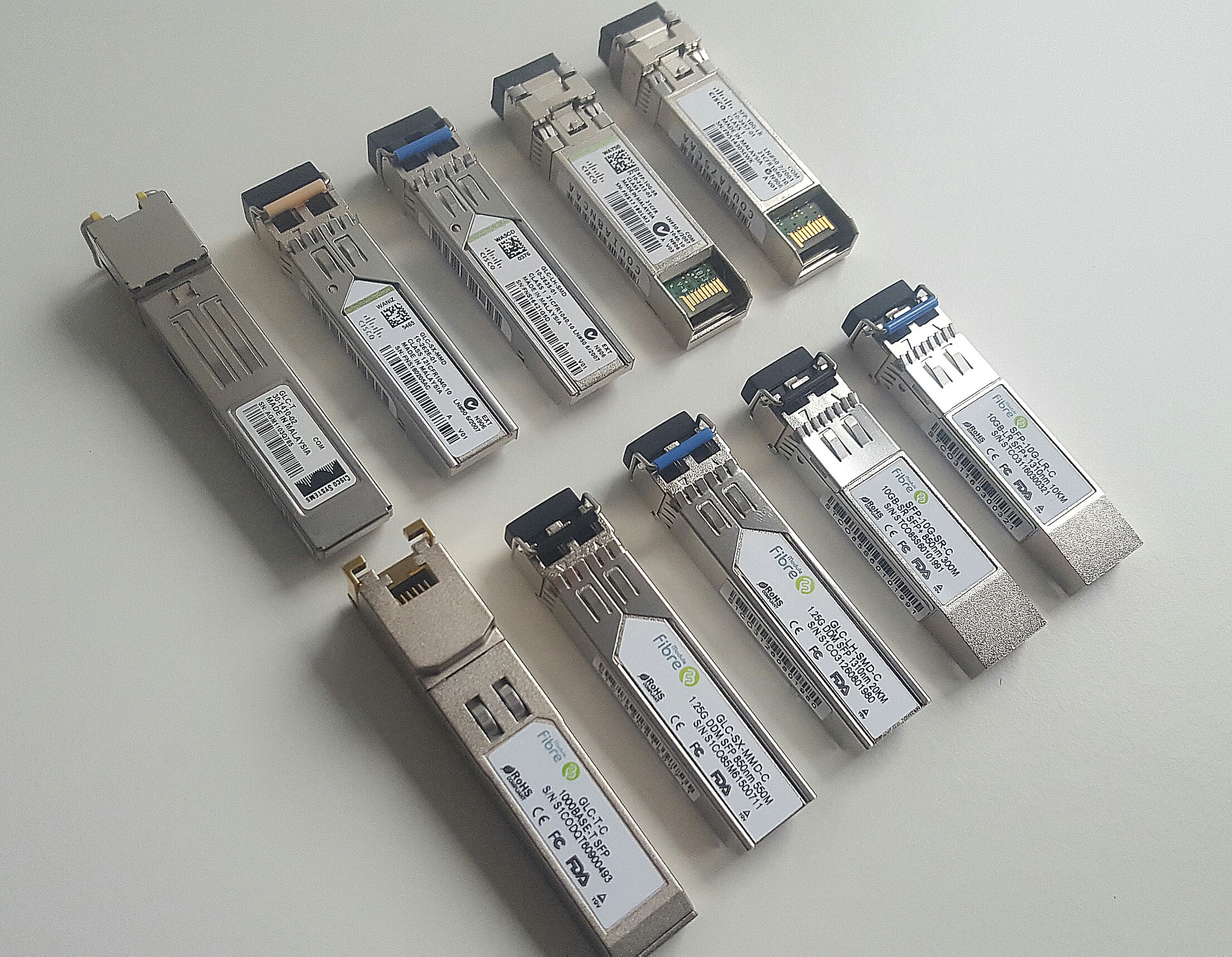
China audited its state data centers and found Broadcom in as much as 90% of the switches
SASAC's survey found Broadcom in as much as 90% of the switches at China's state-run data centers, and informal guidance to phase the hardware out may follow, the same door Nvidia was shown. Broadcom's AI engine runs on US hyperscalers, and the market treated the news as a flinch.
 Vincent Jiang · 3 min read
Chinese regulators spent recent weeks doing the one thing no vendor survives comfortably: an inventory. SASAC, the commission that oversees China's state-owned enterprises, surveyed how deeply Broadcom's network switches sit inside state-controlled data centers, and the preliminary answer was as much as 90% of the equipment in use 1. No ban has been ordered. What may come is quieter: informal guidance telling state-run sites to scale back Broadcom hardware under Beijing's "domestic chips for domestic use" campaign 1. The report has not been independently verified, and neither Broadcom nor SASAC has commented 1.
The count came back at nine in ten
The precedent is fresh. Nvidia's products are already barred from state-backed data centers 1, and the lockout has teeth: Nvidia booked $19.7 billion of China revenue in its fiscal year through January 2026, then shipped zero Hopper data-center chips to China the following quarter 2. A 2 trillion yuan national computing grid plan now carries an 80% domestic-technology mandate 2. AVGO indicated near $363 in premarket trading against a $364.54 close 3: a flinch, not a fall.
A US company still owns the plumbing
Here is what should not be true after years of chip war. A US supplier still controls the plumbing of Chinese state compute, and SASAC is probing whether Broadcom used that position to bundle products and force large orders, keeping Huawei, H3C Technologies and Ruijie Networks out of the cabinet 4. Those three are the touted successors in government procurement guidelines 5, feeding a self-sufficiency drive, roughly 80% by the start of the next decade, that this year's 15th Five-Year Plan made a central tenet 5.
The receipts sit in California, not Beijing
Broadcom just printed the quarter that explains the shrug. Q3 revenue was $29.6 billion, up 86%, with AI semiconductor revenue of $16.7 billion, up 221%, and a fourth-quarter AI guide of $21.7 billion 6. Management outlined $58 billion of AI revenue for fiscal 2026, $115 billion for 2027 and $230 billion for 2028 7, demand carried by Meta, OpenAI and Anthropic 3.
Management's AI roadmap: $58B this year, doubling twice to $230B by 2028
- AI semiconductor revenue, management projection
- Estimate
Data
| AI semiconductor revenue, management projection | |
|---|---|
| FY '26 (estimate) | $58B |
| FY '27 (estimate) | $115B |
| FY '28 (estimate) | $230B |
Broadcom's quarterly revenue has tripled since 2023, and the slope keeps steepening
Data
| Revenue | |
|---|---|
| Q4 '23 | $9.3B |
| Q1 '24 | $11.96B |
| Q2 '24 | $12.49B |
| Q3 '24 | $13.07B |
| Q4 '24 | $14.05B |
| Q1 '25 | $14.92B |
| Q2 '25 | $15B |
| Q3 '25 | $15.95B |
| Q4 '25 | $18.02B |
| Q1 '26 | $19.31B |
| Q2 '26 | $22.19B |
| Q3 '26 | $29.59B |
No public figure puts a dollar value on what Chinese state data centers actually contribute to Broadcom, and that gap is the honest limit of this story: the exposure is real, the number is not. Sites run by Alibaba or ByteDance sit outside SASAC's reach 5, and any phase-out would ride normal upgrade cycles rather than rip-and-replace 3.
Two doors to watch
SASAC turning an audit into procurement policy is the first door; guidance that reaches commercial facilities would carry the real bite 3. The second is Washington, where officials are weighing a ban on Chinese optical transceivers 5, the same loop tightening from both ends. Nvidia was walked out of China's machine rooms; Broadcom's switches are the last foreign furniture left in them, and Beijing has finished counting.
How this brief was made
01Gathered & sourced287 channels · 2,202 articles▾
Agents swept 287 channels and ingested 2,202 articles, then de-duplicated and ranked them for signal.
02Verified & cross-validated8 claims · 14 data feeds▾
Every one of 8 load-bearing claims was checked against primary sources, with 14 live data feeds reconciling the figures and charts.
- 1Reuters, China surveys Broadcom switch use in state data centers, FT reports, 23 September 2026
- 2TechTimes, China AI Data Center Grid Locks Out Nvidia With $295 Billion Domestic Chip Mandate, 22 June 2026
- 3CoinCentral, Broadcom (AVGO) Stock Slips as China Reviews Switch Use in State Data Centers, 23 September 2026
- 4Benzinga, Broadcom faces China data center threat as Beijing finds its switches in up to 90% of state-owned firms: report, 23 September 2026
- 5SDxCentral, Broadcom data center network switches under state microscope in China: report, 24 September 2026
- 6Pulse 2.0, Broadcom: Q3 Fiscal 2026 Revenue Jumps 86% To $29.6 Billion As AI Semiconductor Revenue Reaches $16.7 Billion, 3 September 2026
- 7Seeking Alpha, Broadcom forecasts $58B fiscal 2026 AI revenue and outlines $115B in 2027, $230B in 2028, 2 September 2026
- 8Sharadar quarterly fundamentals from Broadcom's SEC filings, retrieved 24 September 2026
03Reviewed & edited1 human editor▾
One editor read the draft against the evidence, tuned the framing, and signed off before it shipped.
Become a contributor
Reporting on the business of AI and want it read? We take pitches from outside contributors who bring primary sources and a number worth arguing about.
Deepdive
AI-generated from this story and its cited sources. Not investment advice.