Gumloop's browser clears CAPTCHAs as JPMorgan and Schwab block AI agents and Amazon sues Perplexity
Gumloop has spent the two weeks since October 6, 2026, hardening its Agent Browser past the web's anti-bot checks, just as JPMorgan Chase, Schwab, Yelp and Amazon pushed agents off the consumer web. The investor question is which route to agent access survives: the armed browser or the permissioned protocol.
 Richard Tang · 4 min read
The bottleneck has moved from model capability to site access
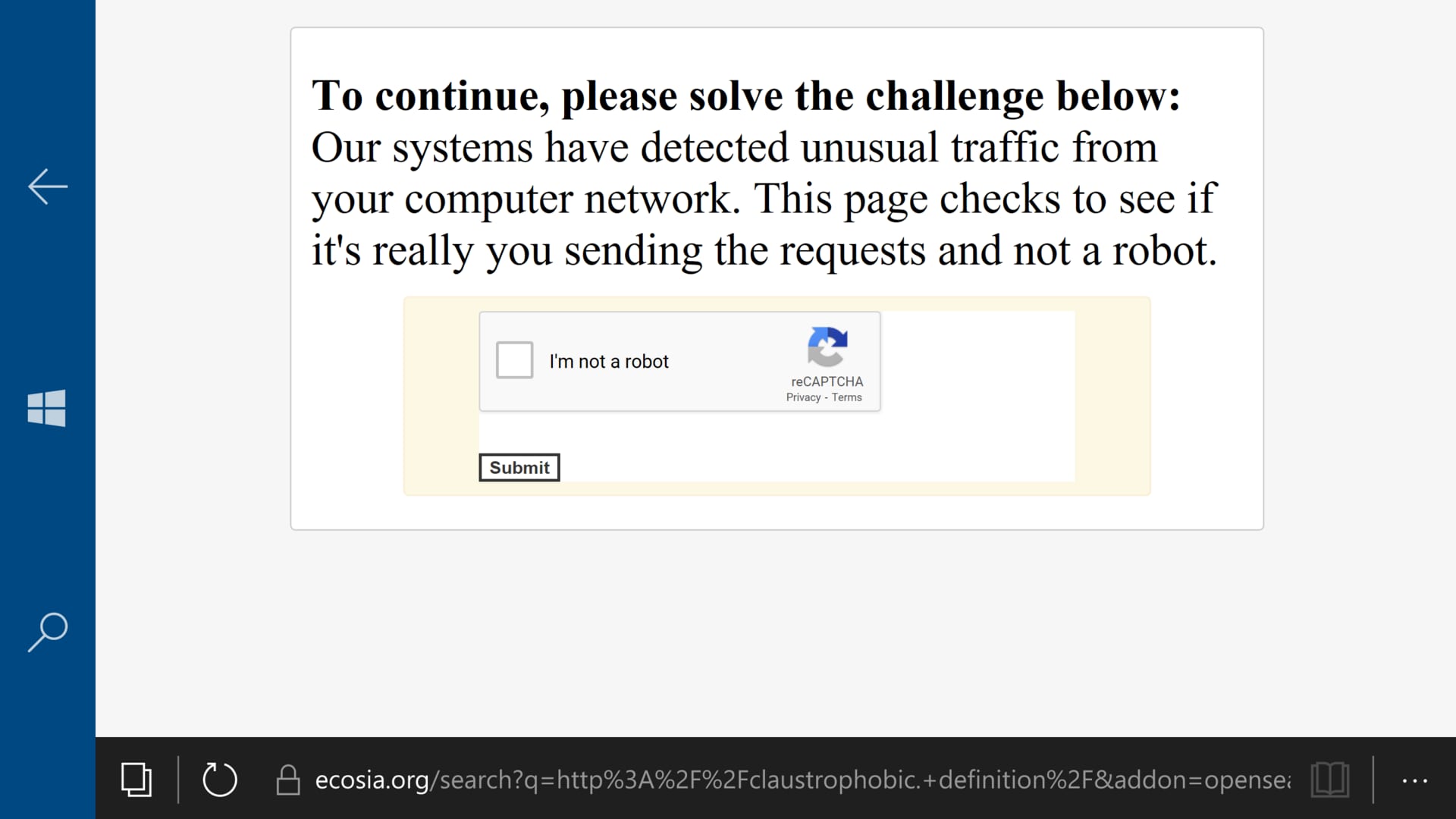
Gumloop launched its Agent Browser on October 6, 2026: agents open a real browser, sign in with saved logins, and click, type and fill forms on any site, with or without a connector 1. The two weeks since have hardened that browser into a tool for getting past the web's anti-bot checks. For AI agents the bottleneck now sits there: the models can already do the work, and what is missing is a web that lets them in.
Release by release, past the checks
The October releases are the tell. On October 9 came always-incognito agents for enterprise administrators; on October 13, a mobile view of a site and browsing from another country when a site needs it; on October 19, more reliable sign-ins and form-filling on pages embedded from third parties like Persona and Stripe 1. The homepage now sells the point outright: agents browse from the region you choose and clear CAPTCHAs on their own, with masked passwords, recorded sessions and every handoff in an audit log 2.
The walls went up in the same two weeks
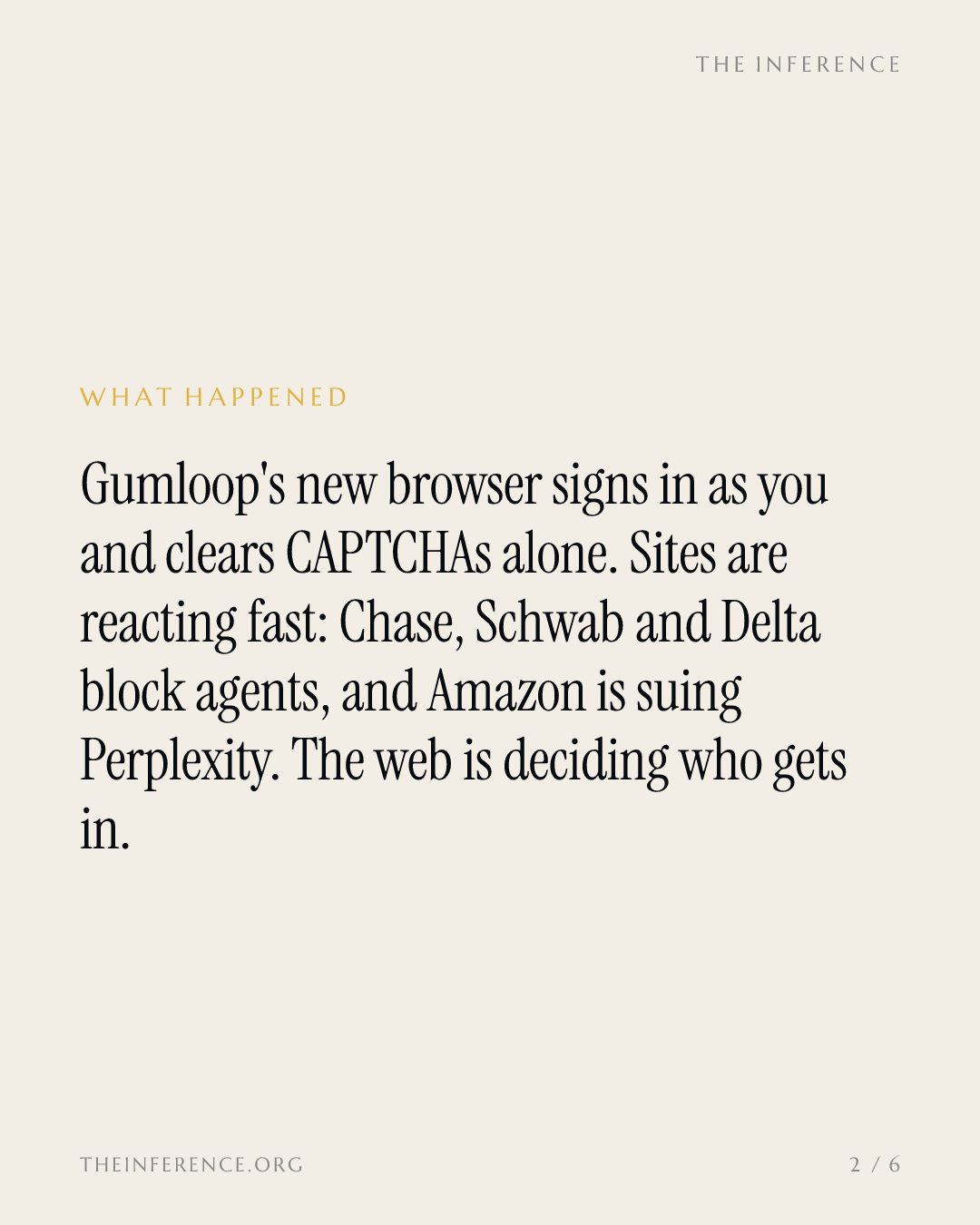
The closing web became front-page news in the same fortnight. On October 17 The Verge reported that JPMorgan Chase+0.44% — JPMorgan Chase, up 0.44 percent today and Charles Schwab confirmed they block agents from customer accounts, that Delta Air Lines+2.44% — Delta Air Lines, up 2.44 percent today prevents agents from booking tickets, and that Amazon+0.55% — Amazon, up 0.55 percent today has filed an amended complaint against Perplexity$20B — Perplexity, private, latest valuation $20B after an appeals court overturned its shopping-agent order in August 3. Yelp admits non-human traffic only under paid data licensing 4. Agentic web traffic tripled from August to September 5.
Gumloop shipped four browser releases as sites shut agents out
- Gumloop browser releases
- Companies restricting or suing agents
Data
| Gumloop browser releases | Companies restricting or suing agents | |
|---|---|---|
| 6 Oct | 1 | 2 |
| 9 Oct | 1 | 0 |
| 13 Oct | 1 | 0 |
| 17 Oct | 0 | 3 |
| 19 Oct | 1 | 0 |
The industry's other answer is consent. Meta−1.37% — Meta, down 1.37 percent today, Walmart−1.31% — Walmart, down 1.31 percent today, Stripe and the agent startup Sierra are among the partners drafting an open standard for agent-to-agent commerce 4, and Shopify+1.43% — Shopify, up 1.43 percent today now gives agents their own checkout lanes 5. The Inference covered that protocol split on October 7; what is new since is Gumloop's counter-move, shipped release by release while the headlines landed (our earlier piece) 45.
The browser is rational for work software and exposed on the consumer web
For work software, the browser is the honest route: the login an agent uses belongs to someone the site already bills. Teams at Shopify, Gusto and Instacart already run Gumloop agents 6, though no one has published figures on Agent Browser use, and the browser is two weeks old 1.
The bet behind it is that most vendor portals and internal tools will never ship an agent interface; the changelog itself sells the browser for sites "with or without a connector", a pitch that only pays off if the no-connector case is common 1. Gumloop hedges toward permission where it can: an agent that needs an unconnected app now asks you to connect it before falling back to the browser 1.
The consumer web is the exposure, and the money is on both sides
The exposure is the consumer web, where a CAPTCHA-clearing agent is indistinguishable from the bots the checks were built for. Amazon argues that agents threaten its advertising business by blurring ads seen by humans with ads served to machines 5, and its amended complaint targets Perplexity's shopping agent, not CAPTCHA-clearing as such 3.
The listed money sits on both sides of the door: Amazon litigating; Cloudflare−1.20% — Cloudflare, down 1.20 percent today, the web-infrastructure firm, selling sites the means to keep AI visitors out 34; and Shopify and Meta holding doors open 35. Private money is still arriving: Town, whose assistants hand work to colleagues' assistants, raised $108 million at a $1 billion valuation this week 7. Gumloop stays the cleanest exposure to the browser route, private after a $50 million March round led by Benchmark, the venture firm behind eBay+0.77% — eBay, up 0.77 percent today and Uber−1.33% — Uber, down 1.33 percent today, with Shopify itself among the investors 6.
Amazon's case against Perplexity is the live legal test
The live legal test is the Ninth Circuit's August holding that the user, not the AI company, was the one accessing Amazon's computers 8. Amazon's amended complaint alleges that Perplexity's shopping browser runs in Perplexity's cloud with no user device touching Amazon, and Perplexity had not answered it as of late September 8.
Gumloop's agents also browse from Gumloop's "trusted connections", not the customer's own device 2, which puts them on the same fault line. Watch Perplexity's reply. If a cloud-run browser using your saved login stops counting as you, Gumloop's homepage promise turns from feature into liability, and the durable business goes to whoever turns forced access into agreed access, because what a site yields to a proxy it can take back with the next update.
The daily newsletter