Meta's headset share fell to 52%, a five-quarter low, as AR glasses shipments rose 72%
Meta holders are being paid for the Muse shopping agent while the headset franchise behind its AI-glasses story loses share in a VR market that shrank 5%. The growth went to rival AR glasses makers on one side and to enterprise buyers training robots on the other.
 Richard Tangthree-minute read
Drafted with AI from the documents listed under Sources, then edited and fact-checked by Richard Tang. How we work
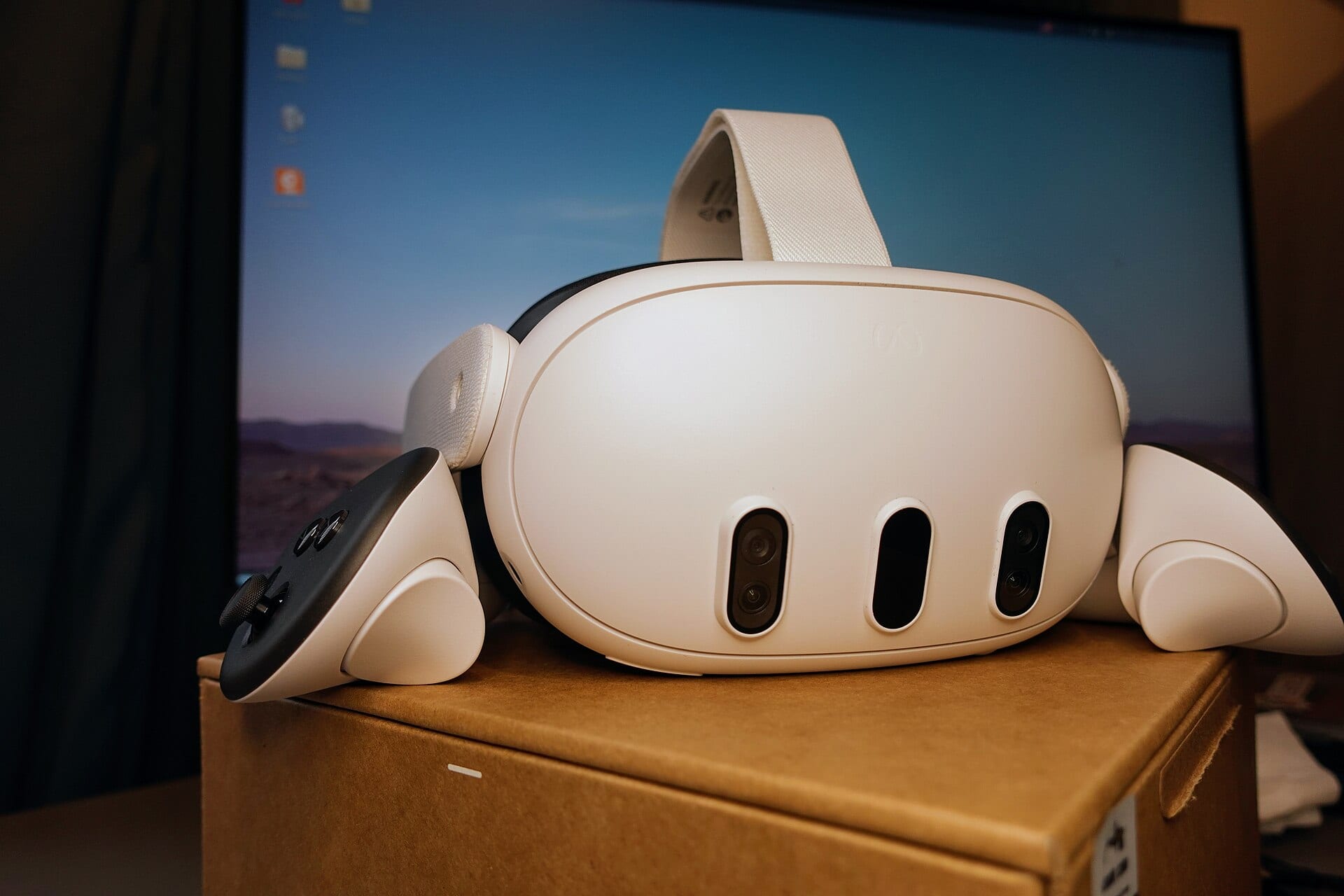
Counterpoint Research's quarterly table, published on November 27, 2026, puts Meta's+2.36% — Meta, up 2.36 percent today share of XR, the combined market for virtual reality and augmented reality headsets, at 52% in the third quarter, its lowest in five quarters 1. That is still first by a wide margin: the nearest rival, RayNeo, holds 9% 1. Meta shares rose almost 3% in premarket trading the same morning the company launched its Muse shopping agent in Britain with retailers such as Marks and Spencer 2.
Meta's XR share fell from 66% to 52% in three quarters while RayNeo and VITURE climbed
- Meta
- RayNeo
- VITURE
- XREAL
- Pico
Data
| Meta | RayNeo | VITURE | XREAL | Pico | |
|---|---|---|---|---|---|
| Q3 2025 | 58% | 6% | 3% | 4% | 5% |
| Q4 2025 | 66% | 5% | 3% | 3% | 4% |
| Q1 2026 | 58% | 6% | 5% | 3% | 5% |
| Q2 2026 | 54% | 7% | 6% | 4% | 6% |
| Q3 2026 | 52% | 9% | 7% | 5% | 5% |
Investors are paying for the agent while the hardware loses ground. The hardware is the half to watch, because the growth in this market has moved to glasses.
Higher prices and no new headset pushed VR down together
Counterpoint names the causes together: rising component costs, higher headset prices, a lack of major new launches, limited compelling use cases and no hardware refresh from the leading makers, which lengthened replacement cycles 1. The Quest line, Meta's headset range, shows the price half: in April 2026 Meta raised prices on all three Quest models, citing memory chip costs that AI data centers had bid up 34.
The refresh half: Meta's VR Glasses, a separate product line rather than a cheaper Quest, are not due until spring 2027 35. So the holiday shelf holds old headsets at new prices, and the shopper buying a Quest is the one paying the AI boom's memory bill.
The growth moved to AR glasses, and rival brands took it
AR glasses were the one segment that grew, with shipments up 72% from a year earlier 1. They now make up 35% of XR shipments, against 23% a year ago 1. Waveguide glasses, the lightweight kind built for everyday AI assistance rather than film viewing, rose to 46% of AR devices, helped by RayNeo's iO and Meta's Ray-Ban Display 1.
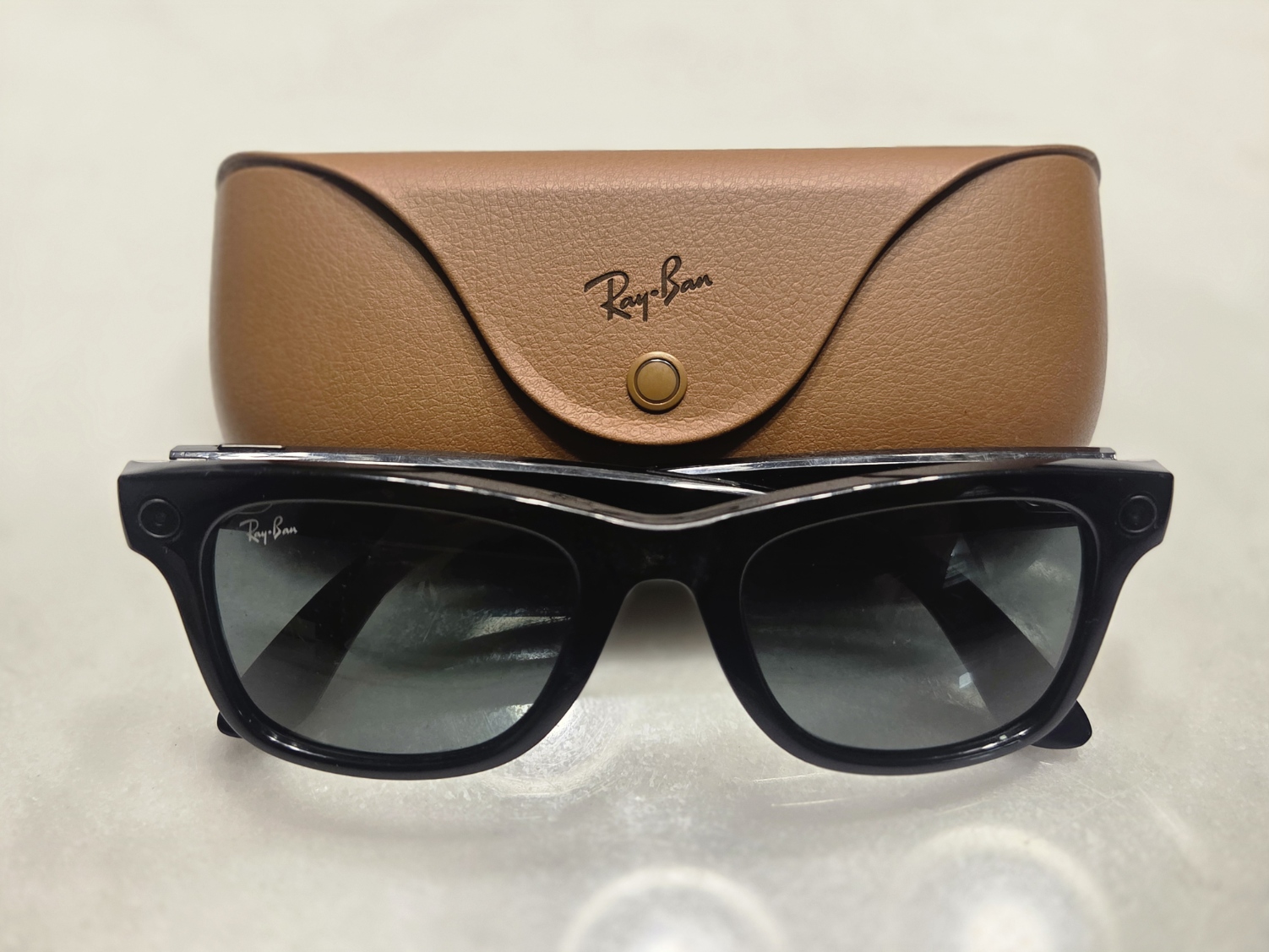
Meta's Ray-Ban Display, built with eyewear giant EssilorLuxottica 5, is one of the waveguide glasses Counterpoint names, but in the table it is three rivals that gained: RayNeo 6, VITURE 7 and XREAL 8, all AR glasses makers. Counterpoint credits new product launches, international market and distribution channel expansion, and seasonal back-to-school promotions 1. RayNeo's iO went on sale in September with a built-in AI assistant 6.
The one VR buyer that held up is a robot school
Counterpoint attributes the enterprise resilience to robotics training, AI training-data collection and remote robot operation, particularly in China, lifting headset makers Pico and DPVR, a Shanghai company that sells into training centers and industrial simulation 19. At a center run by Wuwen AI near Shanghai, workers use a headset and controllers to pilot humanoid robots through tasks repeatedly to generate training data; NPR reports most humanoids sold in China have gone to such centers 10.
China built more than 95% of the humanoids shipped in the first half of 2026, mostly for research, exhibitions and government data centers rather than jobs 11. Those orders are a demand read that consumer VR no longer gives, with one caution: some enterprise buyers moved purchases into Q3 ahead of expected price rises 1, so Q4's robot demand may look thinner than the underlying trend.
The holiday quarter decides whether 52% is a floor
Reality Labs, the Meta division that builds its Quest headsets and Ray-Ban glasses, lost $4.13 billion in the third quarter 5. Holders are paying that bill for a franchise whose share is falling. The plan that could change it is already announced: Meta says a rollout of Muse to its AI glasses is expected in the coming months 2.
If the agent sells glasses, Meta has a product in the one segment that is growing, and 52% is likely to hold as a floor 1. If not, the holiday quarter is another step down. Meta peaked at 66% in last year's holiday quarter 1; this one is the test.
Sources
- 1Counterpoint Research, Global XR (AR & VR Headsets) Market Share: Quarterly, Q3 2026 highlights (collected 27 November 2026)
- 2Just Style via Yahoo Finance, Meta launches AI shopping agent Muse in UK, 27 November 2026
- 3Technobezz, Is the Meta Quest 3 Worth It?, updated 13 November 2026
- 424/7 Wall St., PC Sales Just Crashed 21% as AI Eats the World's Memory Chips, 24 October 2026
- 5CNBC, Meta reports third-quarter revenue beat and issues strong guidance (Q3 2026 earnings live coverage), 21 October 2026
- 6PR Newswire via Yahoo Finance, RayNeo Expands Consumer AR Lineup: Unveiling RayNeo iO Smart Glasses and Cinematic RayNeo GT Series, 21 August 2026
- 7VITURE, company website (Next Gen XR Glasses), accessed 27 November 2026
- 8XREAL, company website (Building Augmented Reality for Everyone), accessed 27 November 2026
- 9DPVR press release via EIN Presswire (Democrat and Chronicle), DPVR Introduces P1 Max Enterprise VR Headset for Scalable XR Deployments, 22 July 2026
- 10NPR, Circuit training: How China is teaching humanoid robots to do useful things, 15 September 2026
- 11Forbes, Humanoid Robot Shipments Jump 432%, China Has 95% Market Share, 30 September 2026
Get Applications by email, free
How AI is changing the software people and companies use. In our daily email, every weekday.




Reader comments
0 comments