Nvidia Got Groq's Founders. Regulators Now Want the Fine Print.
Nvidia disclosed $17 billion of consideration for a deal that left Groq independent. Newly reported scrutiny asks whether the licensing structure avoided merger review.
 Vincent Jiang · 2 min read
A Christmas transfer
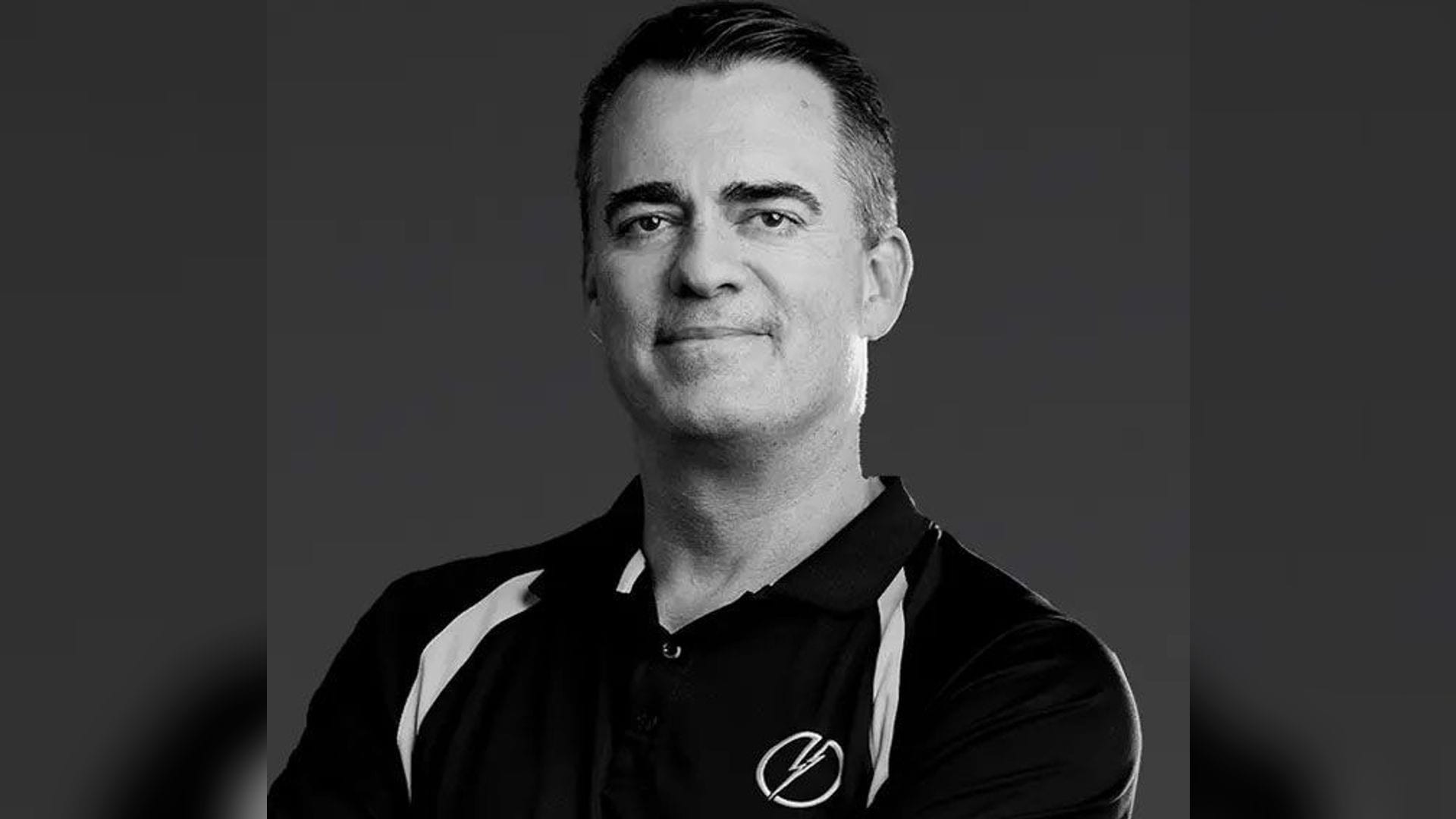
Jonathan Ross started work at Jensen Huang's company on Christmas Day 2025. The founder of chip challenger Groq$3.5B — Groq, private, latest valuation $3.5B had become an Nvidia−3.89% — Nvidia, down 3.89 percent today employee.3
On September 9 and 10, reports revealed Justice Department scrutiny, including a formal information demand. The inquiry was already months old.1,2
Seventeen billion, no shares
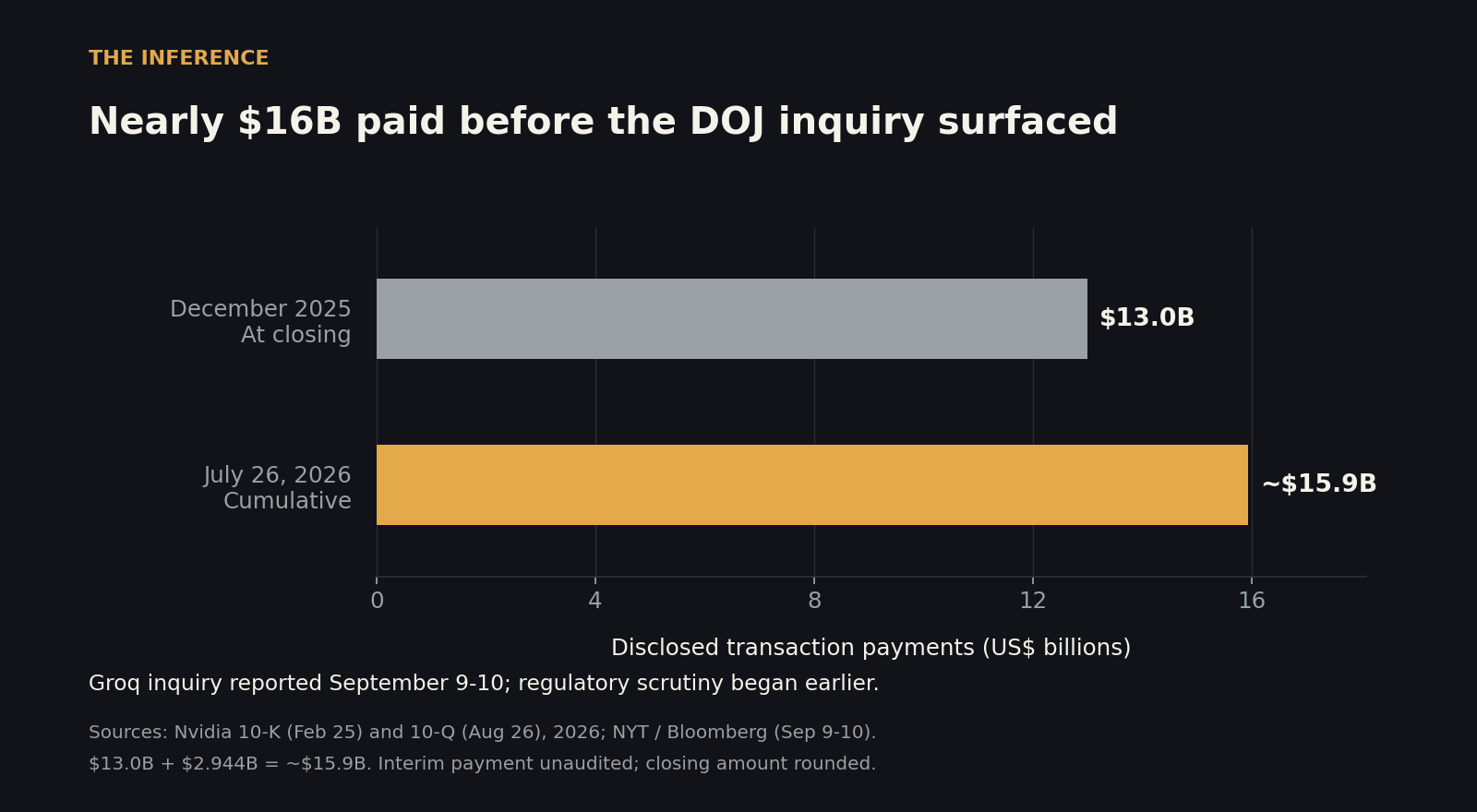
Nvidia's annual filing describes $13 billion paid at closing and $4 billion deferred, including imputed interest. It says no equity, customer contracts or existing products were purchased.4
That is $17 billion of disclosed consideration, alongside a widely reported $20 billion deal value.1,4 The reviewed sources do not reconcile the difference. What Nvidia obtained is clearer: technology rights and people who could develop them.3,4
Independence after the exit
Senators Elizabeth Warren and Richard Blumenthal argued in March that hiring Groq's key employees could weaken the value of its technology to other licensees.5
That allegation has not become a finding. Nonexclusive rights alone do not answer who retains the engineering capacity to compete. Federal guidance says arrangements designed to evade required merger notifications can still attract penalties.6
Money and machinery moved
By July 26, Nvidia had paid another $2.944 billion toward the Groq transaction. Added to closing cash, that brings disclosed payments to about $15.9 billion before the DOJ inquiry became public.4,7
By March, Nvidia had also shown products incorporating Groq's chips.8 For customers weighing supplier dependence, the question is whether this expands their options.
Rivals see opportunity
Nvidia says the deal rewards entrepreneurs and benefits consumers; the inquiry could end without action.1 Groq later raised $350 million for its cloud pivot.9
Vsora's Sandra Rivera and SambaNova's$11B — SambaNova, private, latest valuation $11B Rodrigo Liang saw the transaction as validation for alternative chip architectures.10 These competitors have businesses to promote, but their argument is substantial: a lucrative exit can encourage the next challenger.
Follow the next chip
Watch whether investigators challenge the structure, and whether rival chip developers turn that validation into products customers can choose. A regulatory outcome and a competitive outcome are separate tests.
Competition needs rival engineers shipping rival chips.
Get Policy & Labor by email, free
The rules governments write for AI, and what AI does to jobs. In our daily email, every weekday.