Nvidia's China chip share falls to 34% as homegrown accelerators pass GPUs
China's accelerator market still grew, to 2.008 million units in the first half of 2026, and four Chinese designers now hold 95% of the non-GPU segment that overtook GPUs. Huawei names design software, not lithography, as the bottleneck in the chip-stacking strategy it built around export controls.
 Vincent Jiang · 3 min read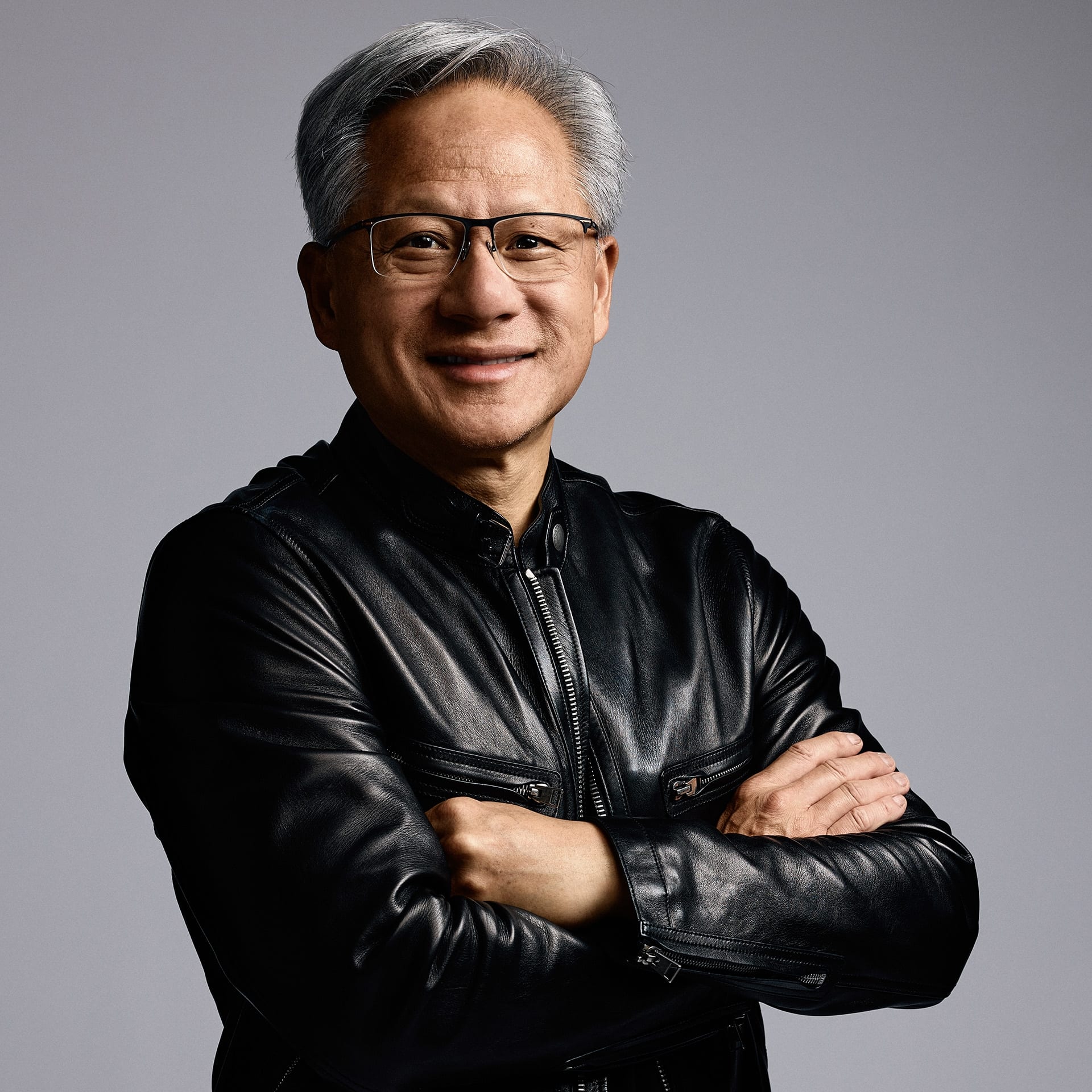
Homegrown accelerators outsold GPUs for the first time
China bought 2.008 million AI accelerators between January and June 2026, and for the first time non-GPU accelerators, chips built for jobs such as running models already trained, outsold the graphics processing units used to train them. GPU shipments fell 26% to 991,000 units while non-GPU chips rose nearly 80% to 1.016 million, an IDC ledger reported by Reuters on October 13, 2026, shows 12. IDC, a market-research firm, says government agencies, internet companies and telecoms providers are the buyers 2.
Huawei, Alibaba's−0.15% — Alibaba, down 0.15 percent today chip-design unit T-Head, Baidu's−1.45% — Baidu, down 1.45 percent today Kunlunxin unit and Cambricon (688256.SS), a Shanghai-listed AI-chip designer, hold 95% of that non-GPU segment 1. On IDC's numbers, the export controls shifted who supplies China's market rather than shrinking it: the firm still expects total 2026 shipments to grow 19% even as GPUs fall 9% 2.
Non-GPU accelerators passed GPUs in China in H1 2026
Data
| Value | |
|---|---|
| Non-GPU accelerators | 1,016k units |
| GPUs | 991k units |
| Nvidia, all chip types | 678k units |
| Huawei, all chip types | 572k units |
Nvidia lost units and share; Huawei took the growth
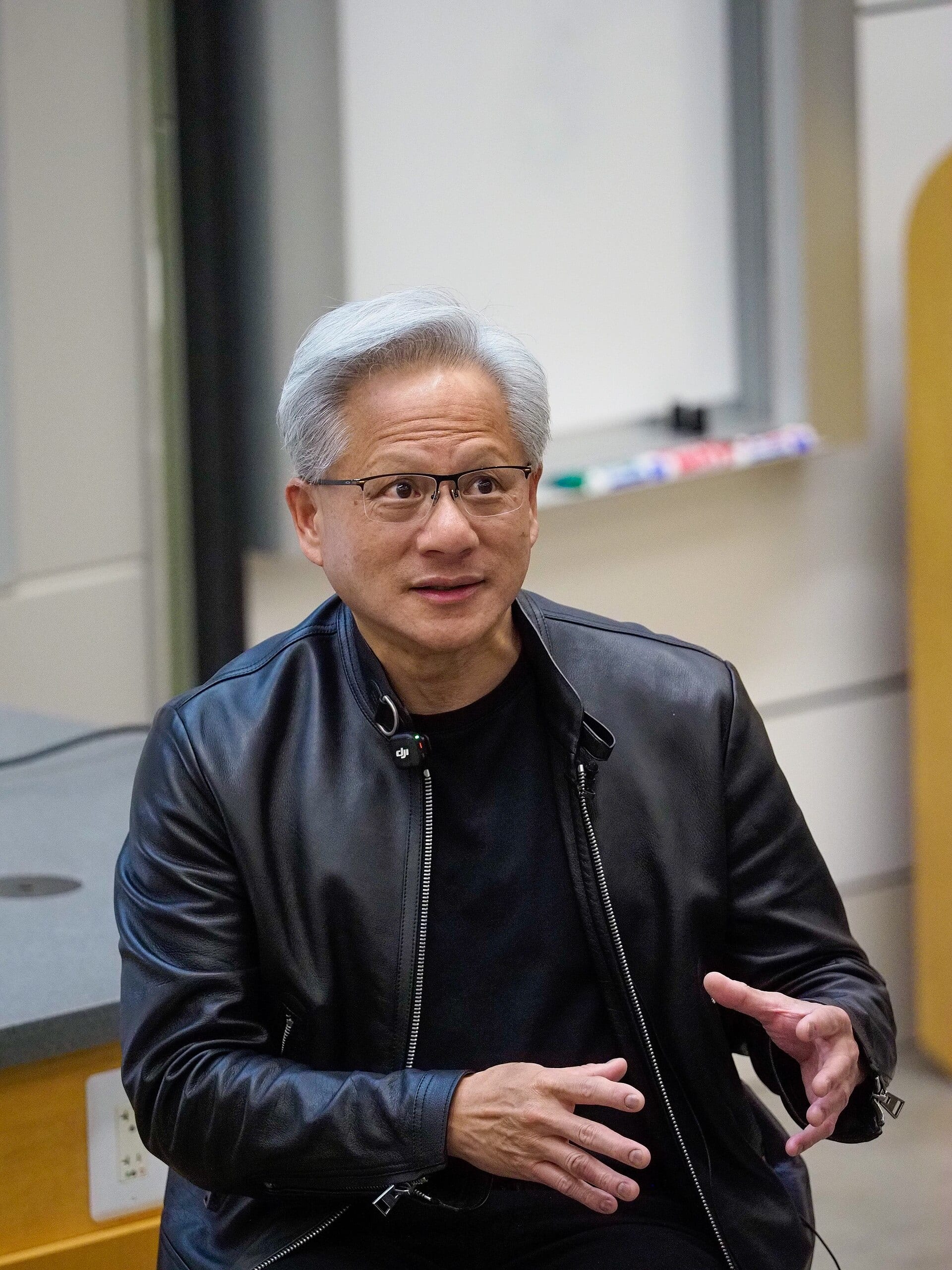
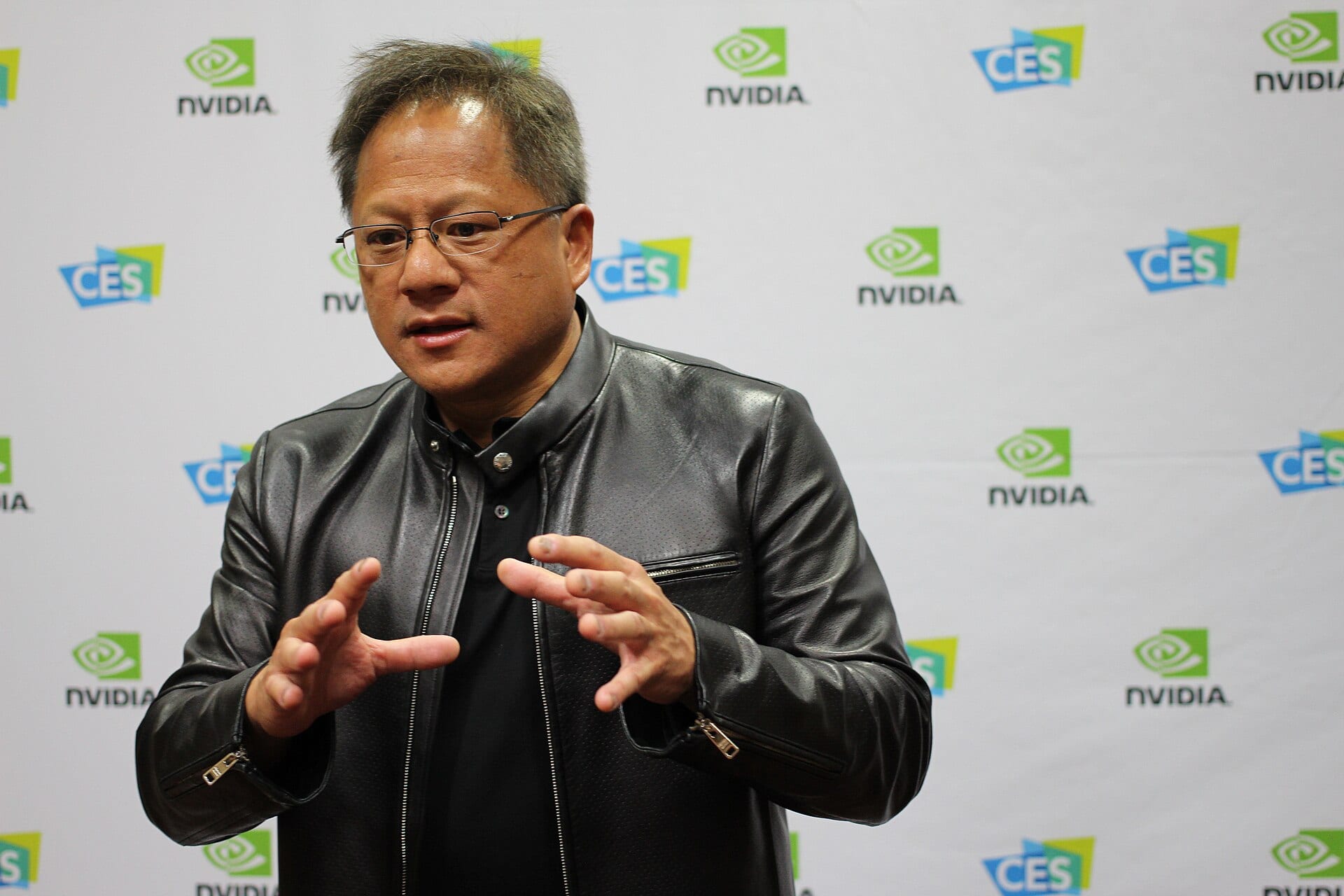
Nvidia+0.08% — Nvidia, up 0.08 percent today (NVDA.O) shipped 678,000 accelerators into China, down 44% year on year, and its share of the data-center AI chip market fell to 34% from 44% 13. Huawei shipped 572,000, up from more than 300,000, for 28%, and nine of the 11 Chinese chipmakers IDC tracked grew shipments 1. T-Head holds 7% of the overall market, Cambricon 5%, Kunlunxin 4%, and Hygon (688041.SS), a server-chip designer, 3% 1.
The ledger points the market's growth to Huawei and the domestic designers and cuts Nvidia's unit volume and share, but it counts units, not dollars. It cannot price what Nvidia still earns in China, and IDC did not say whether smuggled B200 and B300 chips sit inside the count 1. Nvidia chief executive Jensen Huang says the curbs hand China's $50 billion AI chip market to Huawei 1. The figure that settles the dollar question is Nvidia's own China revenue line, not this count.
Huawei sits six points behind Nvidia in China's AI accelerator market
Data
| Value | |
|---|---|
| Nvidia | 34% |
| Huawei | 28% |
| T-Head (Alibaba) | 7% |
| Cambricon | 5% |
| Kunlunxin (Baidu) | 4% |
| Hygon | 3% |
Stacking works; the design software lags
Huawei's route around the leading-edge lithography it cannot buy is the Tau Scaling Law, unveiled in Shanghai in May 2026: fold and stack chips to shorten signal paths instead of shrinking transistors 4. Its Kirin 9050, the first mass-produced chip built this way, carries more than 50 million hybrid bonds and 53.5% higher transistor density, and Huawei has shipped more than 100 million Kirin-powered devices since 2023 3. Bernstein puts the Kirin 9050 Pro within about three years of Apple's silicon, down from four 5.
The bottleneck Huawei itself names is EDA, electronic design automation, the software used to lay out chips 6. Peking University's true-3D EDA prototype is years from production grade, and Huawei calls the toolchain its most important enabling investment of the next decade 7. On October 16, 2026, Digitimes reported China's largest equipment makers are buying into hybrid bonding, the packaging step stacking depends on, because denser stacking is one of the few routes left to narrow the performance gap 8.
Three readings decide whether the substitution holds
First, IDC's full-year print, which tests whether total shipments grow 19% while GPUs fall 9%, as the firm forecasts 2. Second, any progress Huawei shows on EDA tooling; testing of its next Kirin 2027 processor is already meeting internal targets, an early signal on the design side 3. Third, whether the toolmakers' hybrid-bonding orders convert into shipped equipment, the point where orders become capability 8.

More about NVIDIA
NVDA · Fiscal Q2 2027Revenue rose 106% to $96.2B, 92.5% of it from Data Center, “driven by the ramp of our Blackwell Ultra infrastructure”. Gains on equity stakes of $7.8B lifted net income to $59.7B.
Show as a table
| Line | Value |
|---|---|
| Revenue | $96.2B |
| Gross margin | 75.0% |
| Operating margin | 66.2% |
| Net income | $59.7B |
| Hyperscale | $48.7B |
| AI clouds & enterprise | $40.3B |
| Data Center | $89.0B |
| Edge Computing | $7.2B |
| Gross profit | $72.1B |
| Cost of revenue | $24.1B |
| Other income | $7.8B |
| Operating income | $63.7B |
| Operating expenses | $8.4B |
| Tax | $11.8B |
| R&D | $7.1B |
| SG&A | $1.4B |
Deepdive
AI-generated from this story and its cited sources. Not investment advice.