Razorpay opens checkout to Perplexity as agents bring 15-20% of leads, under 1% of checkouts
The payment layer opened to buying agents before anyone priced the fee: agents drive 15-20% of Cashfree's payment leads but under 1% of its checkouts, five big US banks are cutting agents off, and from January 1, 2027 India's rules leave the customer liable when an agent spends wrongly.
 Vincent Jiangthree-minute read
Drafted with AI from the documents listed under Sources, then edited and fact-checked by Vincent Jiang. How we work
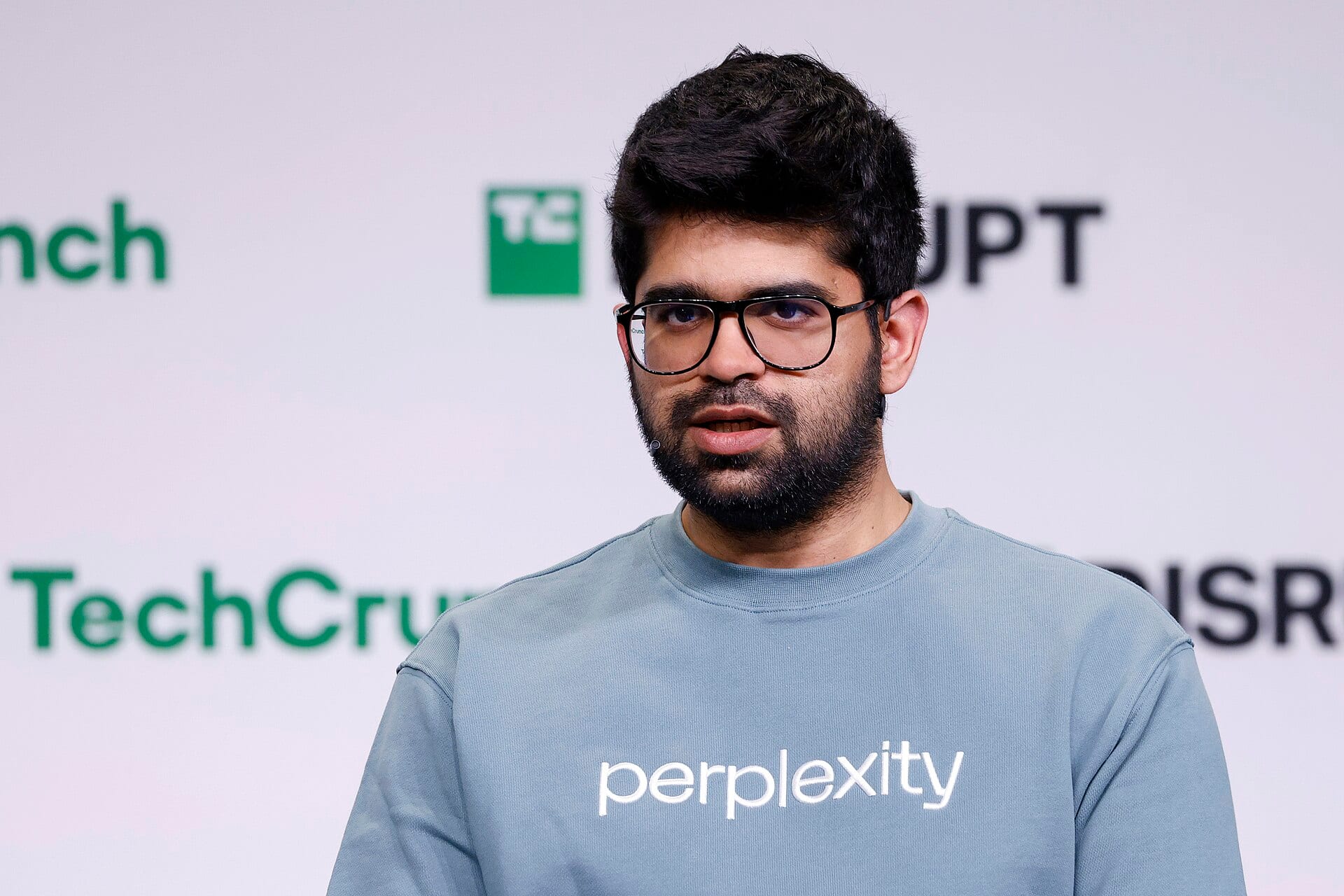
Razorpay, the Indian payments company, runs an Agentic Commerce Engine that lets outside assistants discover products, compare options, build carts and start purchases on merchant sites over the Model Context Protocol, the standard for one piece of software calling another. Perplexity$30.00B — Perplexity, private, latest valuation $30.00B is named on the rail alongside ChatGPT, Claude and Gemini 1.
Rival Cashfree opened its checkout to agents this month on the same protocol, with the customer still approving the final payment 2. Swiggy runs 66 tools across Food, Instamart and Dineout for external agents 1.
Amazon's+4.20% — Amazon, up 4.20 percent today answer is a wall: it blocked Meta's+3.06% — Meta, up 3.06 percent today Muse in September 1 and sued Perplexity after its Comet agent bought on the site 3. The Inference counted last week's agent shopping orders and the fee nobody books on them; the payment layer underneath is only now surfacing.
Agents bring demand the checkouts cannot take
Agents drive 15-20% of the leads Cashfree generates for its payment gateway, but under 1% of its checkout traffic 1. Agent traffic on Cashfree's checkout is up 16 times since the start of the Indian financial year, and on November 24 it launched a wallet that lets agents pay from a prepaid balance without seeing bank details; more than 100 agents are integrated 4.
In the US, Adobe+1.22% — Adobe, up 1.22 percent today expects AI-assisted traffic to retail sites to more than double this season, and Amazon collects nearly 40 cents of every online dollar plus an $81.9 billion ad business that agents would walk past 5.
Roughly one in four US consumers plans to start their shopping in an AI assistant like ChatGPT or Gemini, per an August Bain survey 5. Completed agent purchases still run at 0.4% of global e-commerce transactions, per Bain 3.
Agents drive a fifth of Cashfree's payment leads and under 1% of its checkouts
- Low end of reported share
- High end of reported share
Data
| Low end of reported share | High end of reported share | Change | |
|---|---|---|---|
| Agent-driven share of Cashfree's gateway leads | 15% | 20% | +33.3% |
| Agent share of Cashfree's checkout traffic | 0% | 1% | — |
From January 1, the customer holds the loss
The Reserve Bank of India's directions, effective January 1, 2027, classify sharing transaction credentials with another person as customer negligence, and they do not address software agents, so a customer whose agent mishandles net banking credentials can be left holding the loss 1. Relief is capped at ₹25,000, once in a lifetime, with a five-day reporting window 6.
The US is not kinder: five of the biggest banks, including JPMorgan Chase+2.51% — JPMorgan Chase, up 2.51 percent today and Bank of America+1.26% — Bank of America, up 1.26 percent today, are restricting agents after detecting them using customer credentials 7. In Visa's test of 22 models, agents failed 43% of shopping tasks 3. Best Buy's+0.53% — Best Buy, up 0.53 percent today terms count an agent purchase as one the customer performed; American Express+1.72% — American Express, up 1.72 percent today alone promises protection from agent error 3.
Trust is the first bill, and nobody has priced it
The platforms' suspicion has receipts. CERT-In, India's cybersecurity agency, reported in October that agents had read live systems and personal records of Indian organizations through exposed credentials and permissive cloud roles, and not one affected organization caught it; the AI providers disclosed it themselves 8.
No fee exists to fight over: Meta may charge a commission eventually, Google leans on advertising, OpenAI$1.18T — OpenAI, private, latest valuation $1.18T is exploring both 5.
Three things decide what these rails are worth: whether Amazon and Meta end their Muse standoff, with product search and ads on the table 9; whether NPCI's Unified Agentic Protocol on UPI sets the pattern 4; and whether Perplexity, which may file US IPO papers as early as Q1 2027, a year ahead of its old plan 10, becomes a payer on rails it does not control. Investors get to price that question soon.
Sources
- 1Inc42, Personal AI Agents Are Coming: Who Owns The Customer Now?, 27 November 2026
- 2Inc42 via MSN, Cashfree launches 'Checkout for Agents' to enable AI-led payments, 5 November 2026
- 3CNBC, Annie Palmer, AI shopping agents are having a moment, but Amazon and a growing number of sites threaten to stunt their growth, 27 November 2026
- 4Business Standard, Cashfree launches wallet that lets AI agents make payments for users, 24 November 2026
- 5Bloomberg, Spencer Soper, AI Shopping Bots Get a Shot at Proving $1 Trillion Hype This Holiday Season (Spanish edition), 27 November 2026
- 6Hindustan Times, Hitesh Agrawal, RBI's new fraud safety net: what ₹25,000 in compensation really means for digital India, 10 July 2026
- 7Yahoo Finance, Nikshep Myle, Five Major Banks Are Blocking AI Agents From Logging Into Customer Accounts (on Axios reporting), 22 October 2026
- 8The Hindu BusinessLine / PTI, CERT-In issues 'critical' alert after autonomous AI agents access live systems of Indian organisations, 16 October 2026
- 9TechRepublic, Amazon and Meta Reportedly Discuss Restoring Muse Shopping Access (on Fortune reporting), 26 November 2026
- 10Newspoint via MSN, Perplexity may launch IPO as early as Q1 CY27: CEO Aravind Srinivas, 17 November 2026
Get Economy by email, free
How AI moves rates, banks, payments and the wider economy. In our daily email, every weekday.
Reader comments
0 comments