Samsung's capacitor maker declares its own Moore's Law, and AI buyers are paying for it
Since May, Samsung Electro-Mechanics has locked in about 3.3 trillion won of long-term capacitor contracts, with roughly 700 billion won more in final negotiation. Its self-declared "MLCC's Law" says the capacitance each GPU needs doubles every year; if that holds, the bill lands with whoever has to build the megawatt rack.
 Vincent Jiang · 3 min read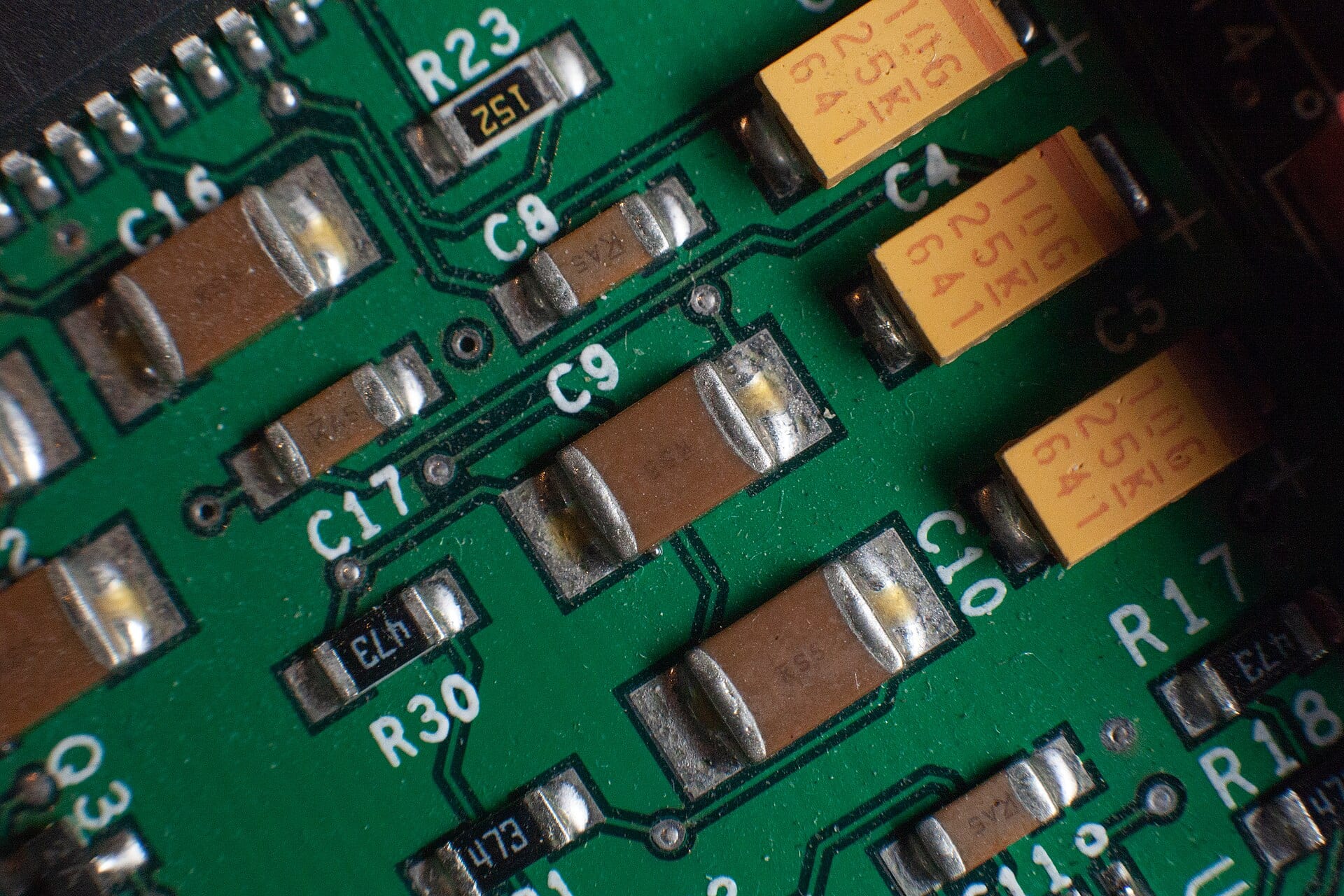
A supplier names its own law
At the Open Compute Project APAC summit in Taipei last month, Samsung Electro-Mechanics proposed "MLCC's Law": the capacitance required per GPU doubles every year 1. Moore had transistors, and Jensen Huang claims a "Hyper Moore's Law" for whole systems; now a maker of rice-grain-sized parts claims the pattern for power 1. It is a demand forecast from a supplier, and buyers are underwriting it with contracts.
Four months, four trillion won
Since May, the company has disclosed long-term agreements worth about 3.32 trillion won for silicon capacitors and AI-server MLCCs, with more than ten global customers 23.
The centerpiece, disclosed on 1 September 2026, is 1.072 trillion won, about 780 million dollars, from a single unnamed customer and covering all of calendar 2027: the largest MLCC contract in company history, worth 9.5 percent of a year's revenue 234. Industry observers believe the client is one of the world's major AI semiconductor companies 3.
Before that deal the disclosed book stood at about 2.25 trillion won; with the record contract it reaches the 3.32-trillion-won total reported the same day 35. Roughly 700 billion won more is in final negotiation with a global power and components company, which would take the four-month tally past 4 trillion won 67. Korea's securities industry sees component-division operating profit doubling this year to as much as 1.3 trillion won 6.
Four months of AI contracts build a 4-trillion-won capacitor book
- Estimate
Data
| Value | |
|---|---|
| Signed May to August | 2.25 trillion won |
| Record deal, calendar 2027 | 1.07 trillion won |
| In final negotiation (estimate) | 0.7 trillion won |
Why buyers sign at triple prices
AI servers carry more than ten times the MLCCs of standard servers, at prices at least three times mobile grade 67. TrendForce expects the high-capacity units on next-generation AI server boards to jump from 1,440 to 10,544, and certain MLCCs on NVIDIA's next Vera Rubin platform to rise from 320 to 500 a board 7.
Next-gen AI boards carry several times more capacitors, on TrendForce forecasts
- Current generation
- Next generation
Data
| Current generation | Next generation | Change | |
|---|---|---|---|
| High-capacity MLCCs per AI server board | 1,440 | 10,544 | +632.2% |
| Certain MLCCs per Vera Rubin board | 320 | 500 | +56.3% |
Rack power is heading from today's 100 to 120kW toward a forecast 1MW 1. Capacity is effectively sold out: utilization is nearing the high 90s percent 6, high-capacitance lead times run about 21 weeks as of August, five weeks longer than at the start of the year 8, and June book-to-bill hit 1.31, a post-pandemic high 9. TrendForce expects AI-server X6S prices to rise another 10 to 20 percent in the fourth quarter, an estimate the company has not confirmed 8.
Two suppliers, so buyers pay the premium
The bill lands downstream. Rack builders and equipment OEMs absorb the triple pricing and the 21-week waits, plus a forecast 25 to 30 percent on consumer-grade parts, because only a handful of manufacturers can make components that survive high temperature and voltage around the clock 578. Of those, only Samsung Electro-Mechanics and Murata are realistically positioned to meet AI demand 5.
A forecast wearing Moore's clothing
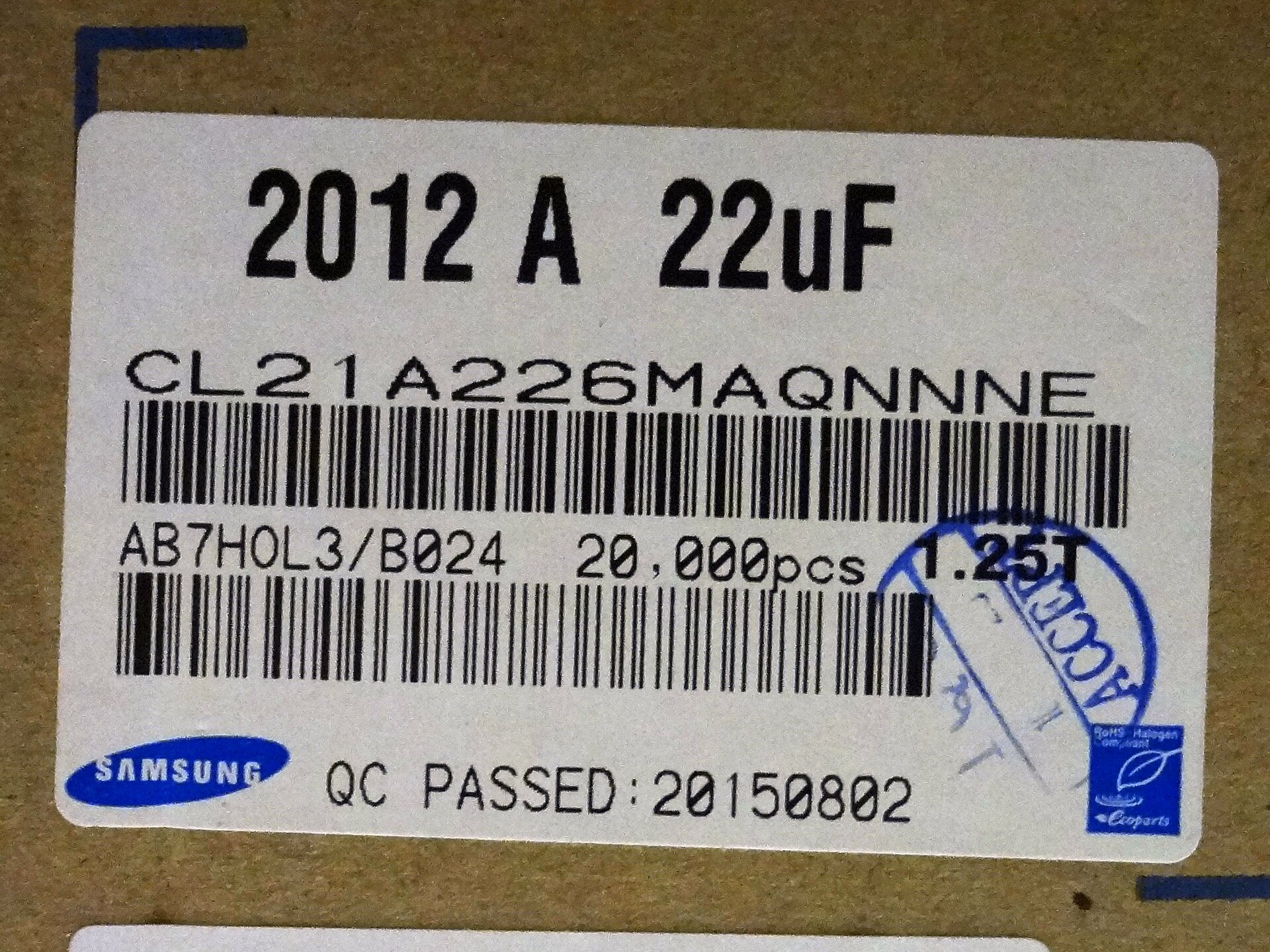
MLCC's Law is a supplier's claim, not physics. The company says it holds more than 40 percent of the AI-server MLCC market, split with Japan's Murata 35. Murata is cutting part numbers across nine series, with final orders to March 2028, to free capacity for higher-margin work; industry sources say the cuts will not hand Samsung direct orders, because the discontinued lines are not the ones it is chasing 9.
Goldman Sachs sizes the AI-server MLCC market at 5.8 billion dollars by 2030, up from 1.4 billion in 2025 25. Real growth, but a rounding error beside GPU budgets. If board designers route around the constraint, the law dies quietly.
Watch Busan
The bet behind the law is about 15 trillion won through 2040 for a Busan production and R&D hub; embedded MLCCs and low-ESL ceramics are slated for next year 17. The tell: whether the 700-billion-won agreement closes, and whether Vera Rubin boards ship at 21-week lead times. The AI boom spent two years paying the chipmakers; the toll has moved to a part smaller than a grain of rice.
How this brief was made
01Gathered & sourced250 channels · 2,057 articles▾
Agents swept 250 channels and ingested 2,057 articles, then de-duplicated and ranked them for signal.
02Verified & cross-validated9 claims · 15 data feeds▾
Every one of 9 load-bearing claims was checked against primary sources, with 15 live data feeds reconciling the figures and charts.
- 1Yonhap Infomax, "[Field Column] Samsung Electro-Mechanics Proposes 'MLCC's Law'", September 2026
- 2The Chosun Ilbo (via MSN), "Samsung Electro-Mechanics secures major AI server MLCC contract", 1 September 2026
- 3The Korea Times, "Samsung Electro-Mechanics wins $780 mil. AI server capacitor contract", 1 September 2026
- 4DigiTimes, "Samsung Electro-Mechanics discloses major MLCC supply deal tied to AI server demand", 1 September 2026
- 5The Herald Business, "Samsung Electro-Mechanics lands record W1.7tr MLCC deal with global tech giant", 1 September 2026
- 6The Chosun Ilbo (via MSN), "Samsung Electro-Mechanics nears 4 trillion won in AI MLCC contracts", 20 September 2026
- 7Aju Press, "Samsung Electro-Mechanics Nears 2.5 Trillion Won in AI MLCC Contracts", 20 September 2026
- 8The Korea Herald, "AI demand drives broader Samsung Electro-Mechanics MLCC price hikes", 30 August 2026
- 9The Korea Herald, "AI boom gives Samsung pricing power as MLCC supply tightens", 17 September 2026
03Reviewed & edited2 human editors▾
2 editors read the draft against the evidence, tuned the framing, and signed off before it shipped.
Become a contributor
Reporting on the business of AI and want it read? We take pitches from outside contributors who bring primary sources and a number worth arguing about.
Deepdive
AI-generated from this story and its cited sources. Not investment advice.