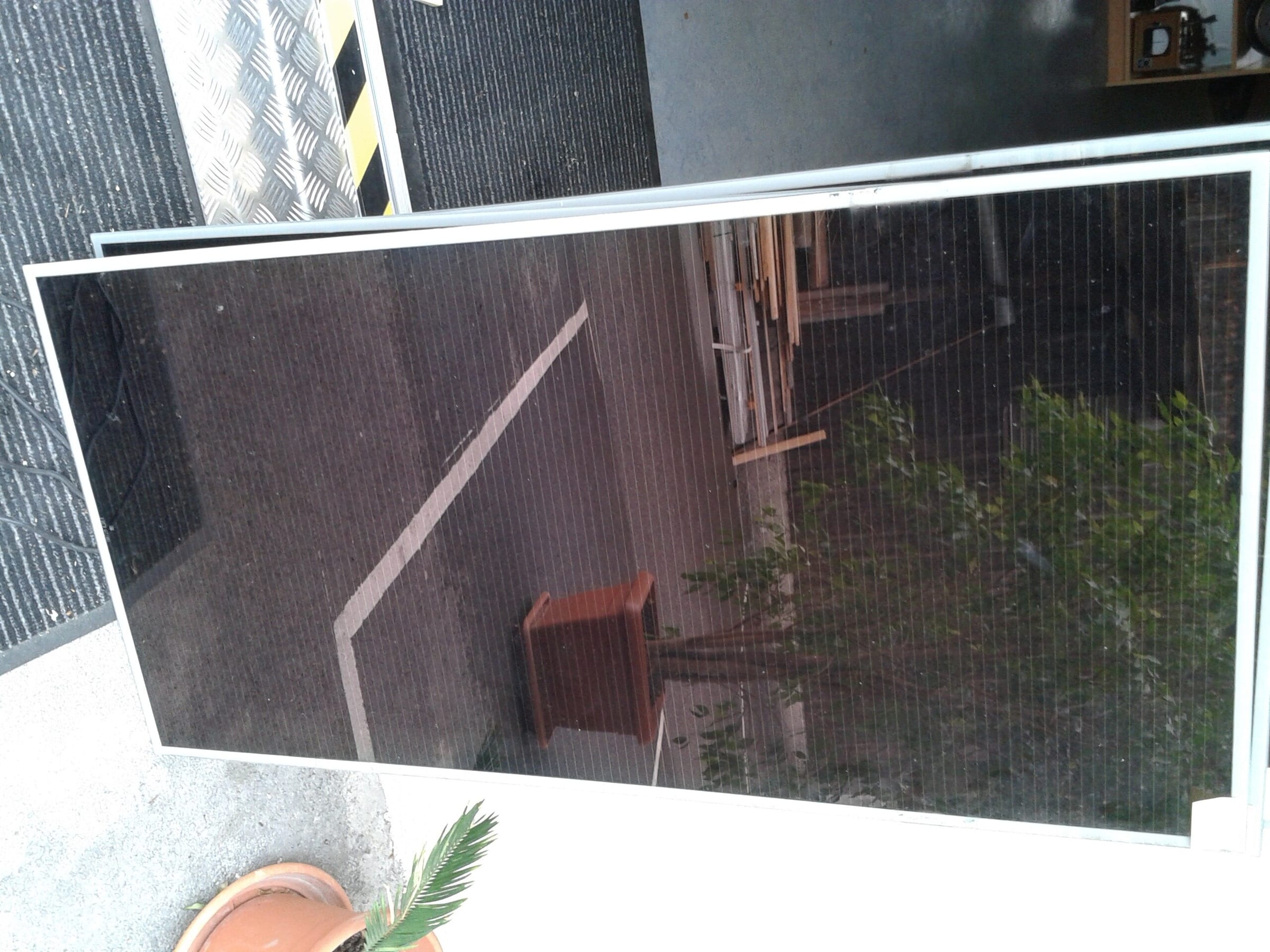
Swift Current's $360 million lawsuit says First Solar's modules never made their promised power
Swift Current Energy says 2.4 million modules it bought from First Solar for over $360 million never made their promised power, and that a secret factory test hides the gap. Wall Street's average target sits almost 60 percent above the share price; two dates this month test which story holds.
 Richard Tang · 3 min read
Swift Current Energy, the Boston developer behind the largest solar project east of the Mississippi, sued First Solar in New York state court last month, saying more than 2.4 million modules it bought for over $360 million across three sites have never produced their promised power 1. Wall Street has not repriced the question. Thirty-six analysts still carry a BUY consensus with a $273.80 average target, against Friday's $172.64 close 2. Two dates in the coming month force those stories together.
The complaint attacks the rating method itself
Two manufacturing flaws are named. One, an edge-grind defect in Series 7 glass that First Solar−3.39% — First Solar, down 3.39 percent today disclosed in October 2024 with a $50 million warranty charge, is the flaw it has admitted 1. The other, a substrate defect traced to a 2021 process change, has never been publicly acknowledged 1. A report First Solar itself commissioned from Leidos+0.69% — Leidos, up 0.69 percent today Engineering found roughly 8 percent average power loss after a year in the field 1. The widest allegation reaches further: that a proprietary preconditioning test, measuring output only after baking modules in heat, voltage and irradiance for eight hours, inflates the nameplate ratings that power purchase agreements and capacity payments are priced on 1.
A bad batch becomes a warranty reserve. A biased rating method touches every contract the company has priced.
First Solar's answer so far is procedural
Its fullest on-record position is a letter, not a rebuttal. In May 2025 First Solar wrote that system-level performance data cannot prove a claim under its warranty and offered to lab-test individual modules; Swift Current calls that remedy commercially impossible, since it would mean shipping back more than 1.5 million modules 1. The warranty claims themselves date to December 2024 1.
What the Street is pricing, and who sits behind the modules
The consensus owns something real: gross margin hit 57 percent in First Solar's last reported quarter 4, and October opened with the company on the offensive, suing JA Solar and American Panel Solutions over TOPCon patents 2. Behind the disputed hardware sit counterparties already carrying the exposure. Chicago's municipal buildings, O'Hare included, draw about 70 percent of their power from Swift Current's Double Black Diamond farm, and Google holds an investment in the project 3. If output is short, Swift Current says it is the one missing commitments to offtakers and losing capacity revenue 1.
The consensus owns something real: gross margin peaked at 57.3 percent last quarter
Data
| Gross margin | |
|---|---|
| Q1 '24 | 43.6% |
| Q2 '24 | 49.4% |
| Q3 '24 | 50.2% |
| Q4 '24 | 37.5% |
| Q1 '25 | 40.8% |
| Q2 '25 | 45.6% |
| Q3 '25 | 38.3% |
| Q4 '25 | 39.5% |
| Q1 '26 | 46.6% |
| Q2 '26 | 57.3% |
Every named bank target sits far above First Solar's actual share price
Data
| Price target | |
|---|---|
| Evercore ISI | $218 |
| Piper Sandler | $251 |
| Barclays | $259 |
| Goldman Sachs | $272 |
| Baird | $290 |
| Morgan Stanley | $326 |
Two dates will price what the consensus has not
The October 29 earnings report has to reconcile the warranty reserve with a defect set larger than the one the $50 million charge covered 1 2. The November 16 hearing before Justice Andrew Borrok in Manhattan's commercial division decides how far the testing-method claim travels 1. The consensus is a bet that this ends as a line item on the income statement. If the preconditioning allegation holds, the loss is not a charge; it is the label.
Deepdive
AI-generated from this story and its cited sources. Not investment advice.