Tower Semiconductor Builds $4B Japan AI Hub as Insiders Sell
Russell Ellwanger is expanding Tower Semiconductor's optical chip footprint in Japan with $1 billion in state grants, but insider selling complicates Wall Street's $300 targets.
 Vincent Jiang · 2 min read
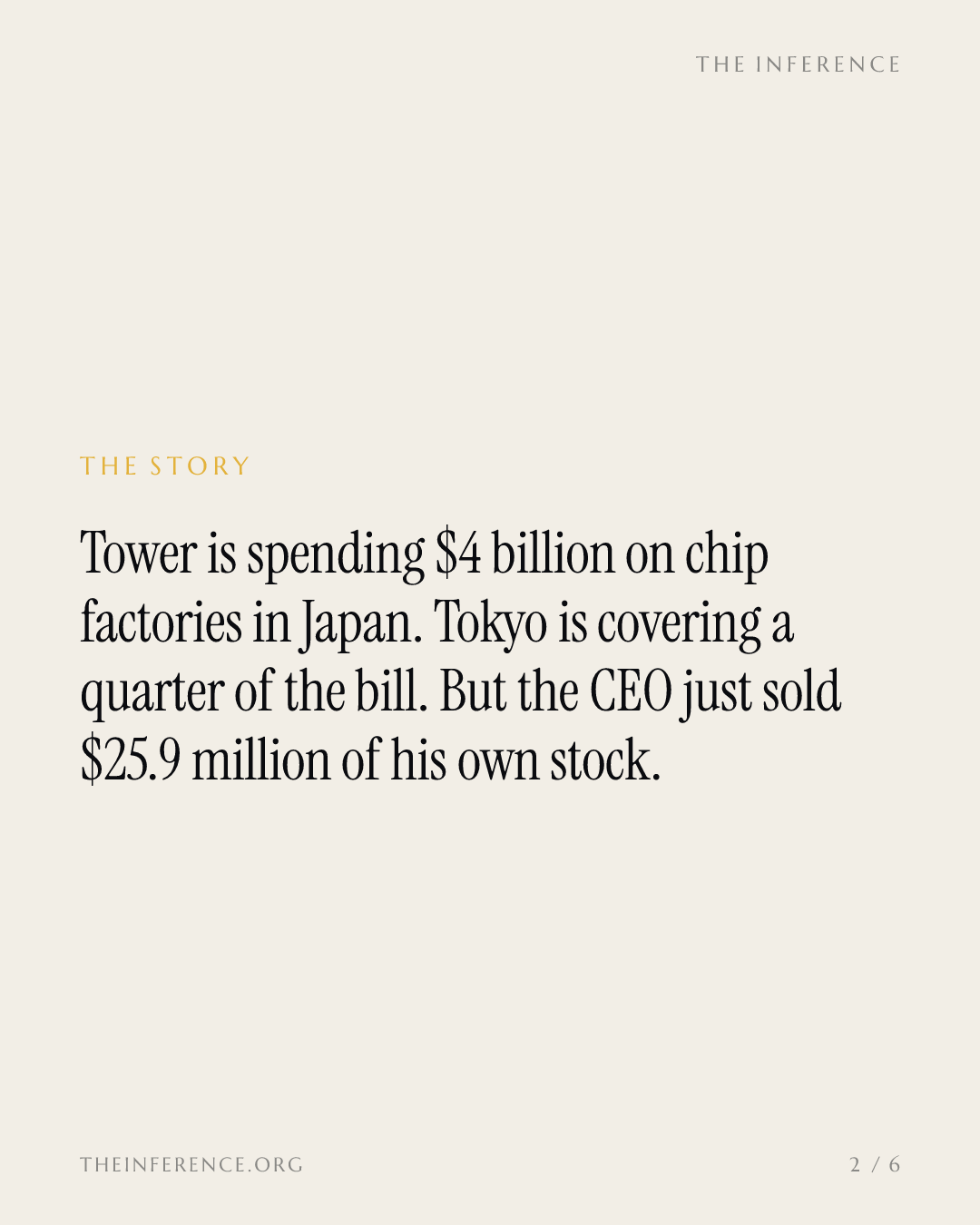
Tower Semiconductor surged 5.9% to $230.12 on Friday, September 25, 2026, after Mizuho initiated coverage with an Outperform rating and a $300 price target 4,5. Trading volume collapsed 87% below average as retail buyers chased the stock to 92 times earnings 5. Yet chief executive Russell Ellwanger had already moved the other way, selling 104,226 direct shares for $25.9 million on August 11 at $248.34, cutting his personal stake by 16.5% 5. Over the last three months, corporate insiders dumped $45.6 million in stock with zero open-market purchases 5.
Insiders sold $45.6M of Tower stock in three months and bought none
Data
| Value | |
|---|---|
| Ellwanger sale, Aug 11 | $25.9M |
| All insider sales, 3 months | $45.6M |
| Insider purchases, 3 months | $0M |
Tokyo covers one-fourth of the expansion tab
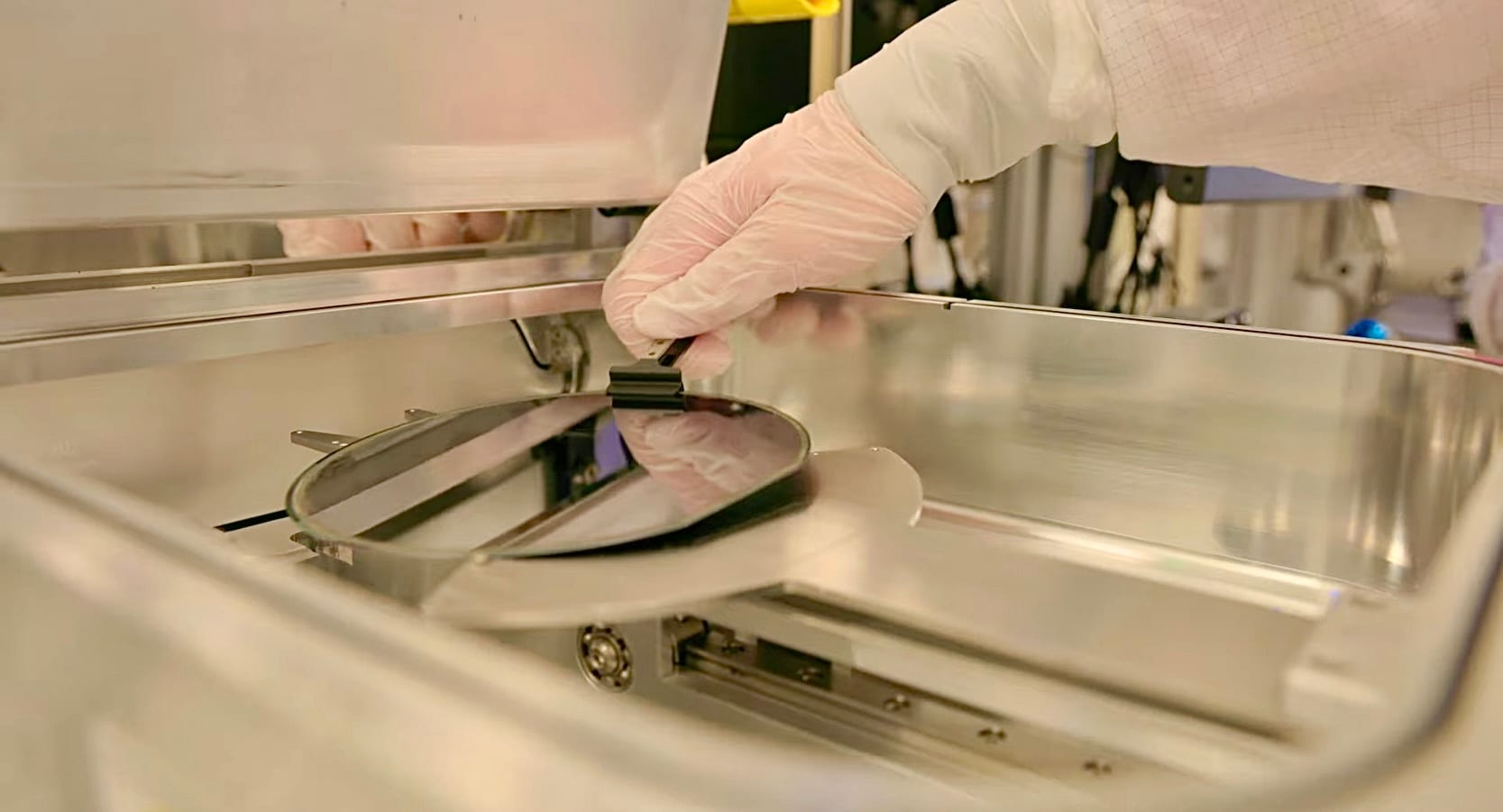
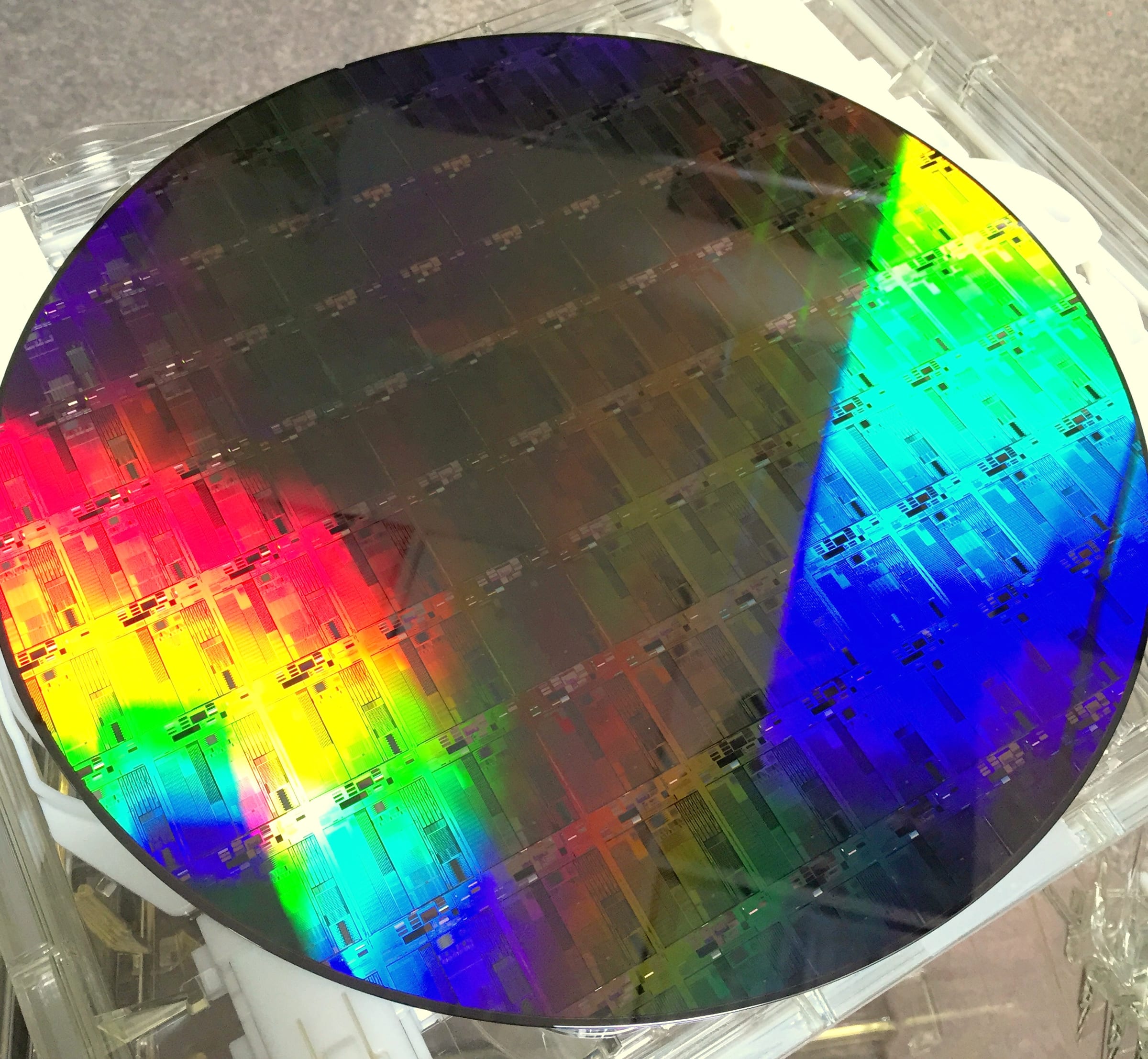
Ellwanger is directing a $4 billion capital buildout across Niigata and Toyama to establish Japan as Tower's primary production hub for optical communications semiconductors 1,2. As artificial intelligence clusters expand across tens of thousands of accelerators, standard copper connections run out of bandwidth, requiring silicon photonics to move data over light 1. The public balance sheet is absorbing substantial project risk: Japan's Ministry of Economy, Trade and Industry is providing $1 billion in grants, reducing Tower's net commitment to $3 billion 1,3.
Customers pre-fund the factory floor
Unlike speculative foundry expansions, Ellwanger secured binding commercial commitments before breaking ground 1. Customers signed contracts guaranteeing $1.3 billion in silicon photonics revenue for 2027 and deposited $290 million in upfront cash prepayments to lock down fabrication line capacity 1,3. Tower projects these commitments will lift company revenue to $3.6 billion and net profit to $1.2 billion in 2028 1,3.
Tower targets $3.6B in revenue by 2028 on contracted optical chip demand
- Revenue
- Estimate
Data
| Revenue | |
|---|---|
| 2025 | $1.6B |
| 2027 (estimate) | $1.3B |
| 2028 (estimate) | $3.6B |
| 2029 (estimate) | $4.9B |
Foundries race to control co-packaged optics
Tower commands more than 80% of the contract manufacturing market for server optical chips, leading Taiwan Semiconductor Manufacturing Company and GlobalFoundries 2. Mizuho forecasts the broader silicon photonics foundry market will compound 60% annually from $1.3 billion in 2025 to $8.5 billion by 2029 4. However, while Tower dominates pluggable optical transceivers, TSMC maintains an early lead in co-packaged optics architectures that fuse optical engines directly onto processor packages 2.
Execution must match multi-fold capacity targets
Tower plans to expand monthly Japan capacity fortyfold to 45,000 300mm-equivalent wafers by 2029, repurposing Fab 6 in Arai by late 2027 while erecting an adjacent facility at Fab 7 in Uozu 1,2,3. Tokyo subsidies and customer prepayments validate existing demand, but insider sales below current analyst targets signal caution at current multiples 1,5. Investors must watch fourth-quarter 2026 fab construction progress and 2027 yield ramps to determine whether Tower can defend its market share against TSMC before customer prepayments run dry 1,2,3.
How this brief was made
01Gathered & sourced397 channels · 1,262 articles▾
Agents swept 397 channels and ingested 1,262 articles, then de-duplicated and ranked them for signal.
02Verified & cross-validated5 claims · 35 data feeds▾
Every one of 5 load-bearing claims was checked against primary sources, with 35 live data feeds reconciling the figures and charts.
- 1AI Industry Today, "Tower Semiconductor to Make Japan Its Largest Optical Chip Production Hub", 27 September 2026
- 2Investment Monitor, "Tower Semiconductor plans $4bn Japan chip hub - report", 26 September 2026
- 3CTech by Calcalist, "Tower puts Japan at the center of its optical-chip strategy", 25 September 2026
- 4Investing.com / Yahoo Finance UK, "Mizuho bullish on Tower Semiconductor, points to AI optical growth", 25 September 2026
- 5MarketBeat, "Tower Semiconductor (NASDAQ:TSEM) Shares Climb 5.9% - What's Next?", 25 September 2026
03Reviewed & edited2 human editors▾
2 editors read the draft against the evidence, tuned the framing, and signed off before it shipped.
Become a contributor
Reporting on the business of AI and want it read? We take pitches from outside contributors who bring primary sources and a number worth arguing about.
Deepdive
AI-generated from this story and its cited sources. Not investment advice.