Unimicron targets up to 40% more AI substrate capacity, funded by no one but itself
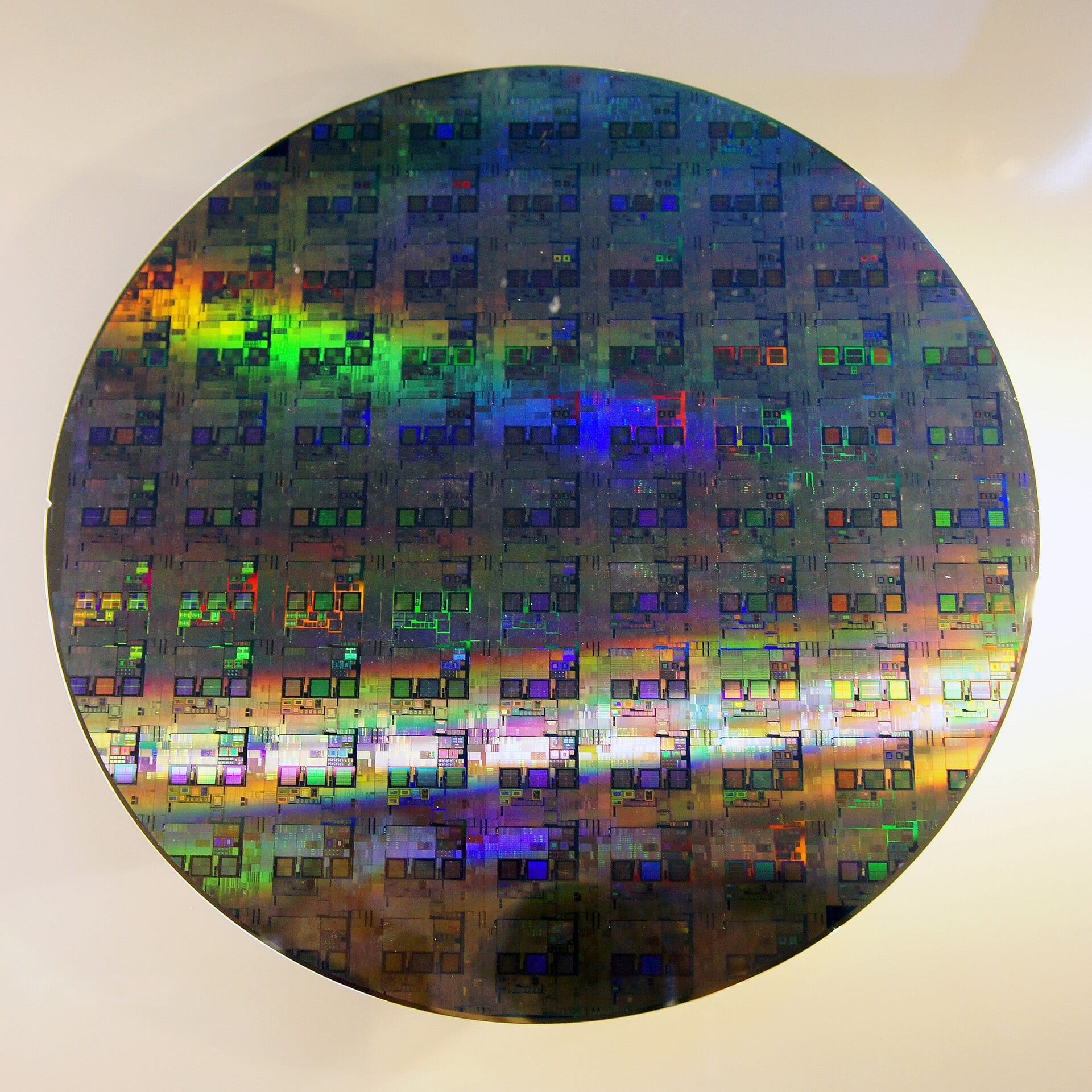
Days after big-tech customers agreed to co-fund Samsung Electro-Mechanics' $5bn substrate buildout, Unimicron put a number on its own answer to the same squeeze: 30 to 40 percent more ABF capacity by 2027, with no buyer money attached. The stock already trades above the average analyst target.
 Vincent Jiang · 3 min read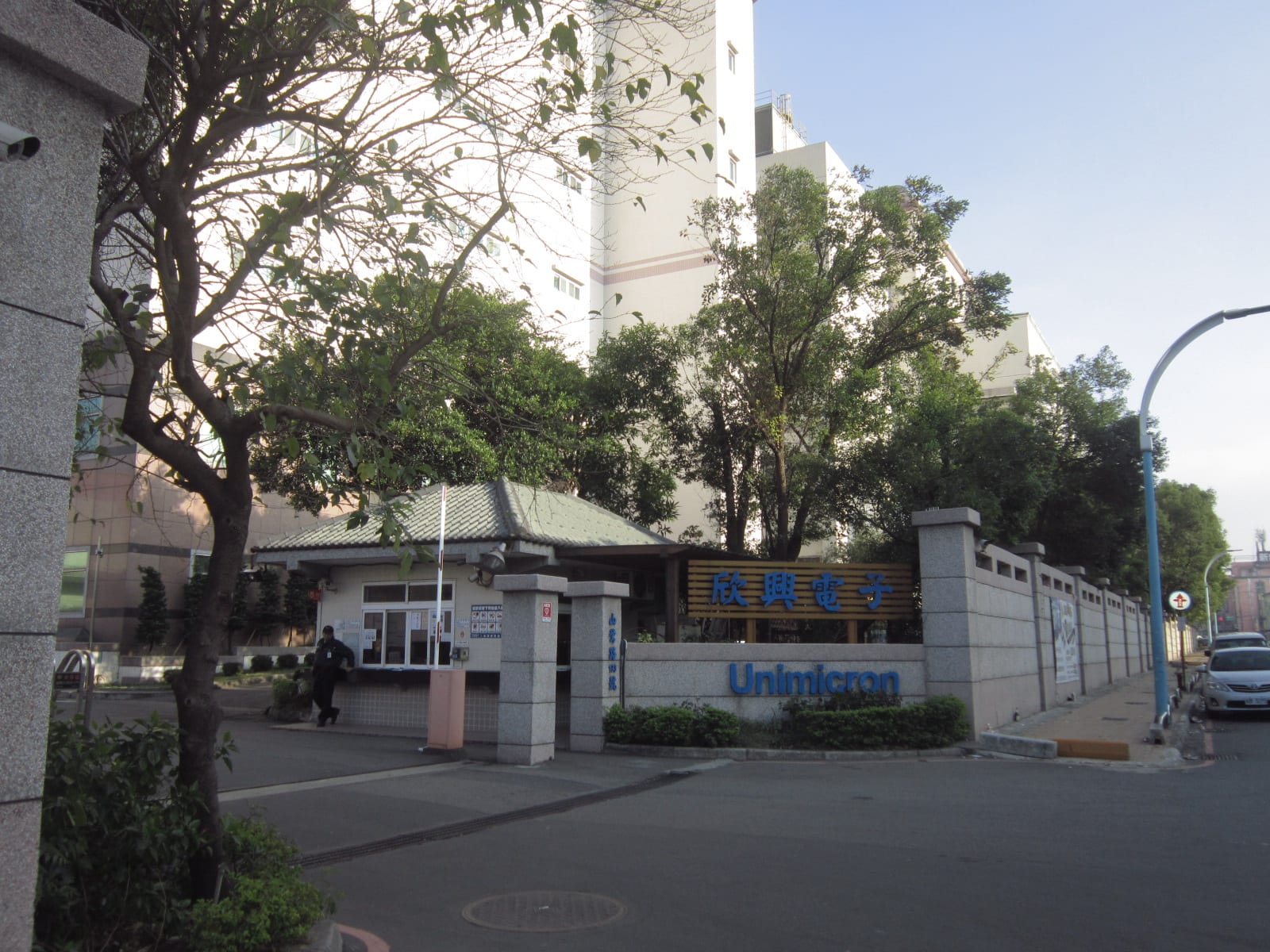
A tire maker's land, bought outright
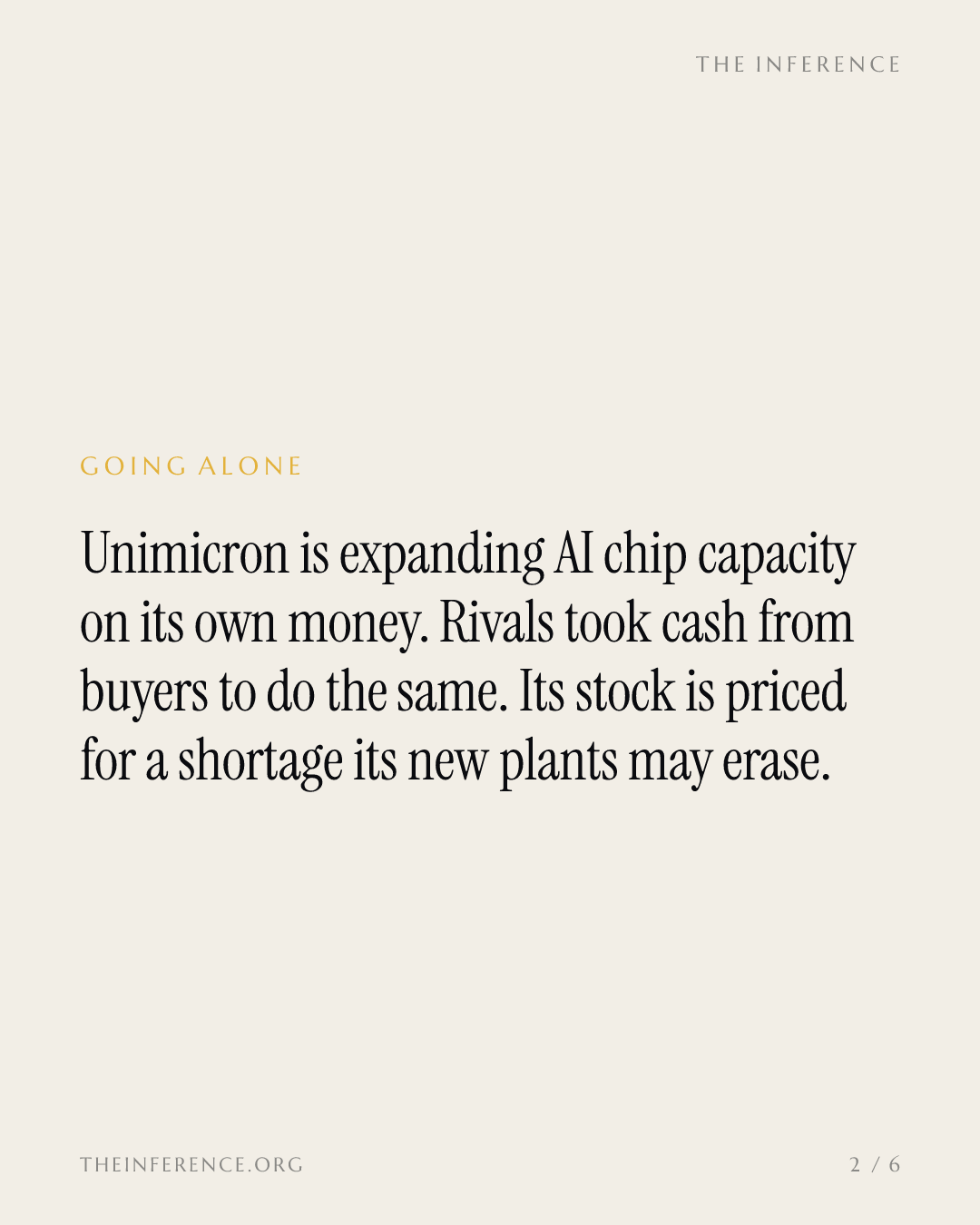
Unimicron's newest substrate site used to belong to Bridgestone. On 30 September the company disclosed a land and building purchase at Hukou from the tire maker's Taiwan unit for more than NT$10bn, about US$313.65m 12. Nothing in that filing, or in the capacity announcement that followed, shows a customer deposit, allocation agreement or supply contract attached to it 13.
Thirty to forty percent more capacity by 2027
The purchase sits under Unimicron's first quantified answer to the AI packaging squeeze: ABF capacity up 30 to 40 percent by 2027, from a new plant, line optimization and converted legacy BT equipment, with the Guangfu second plant in mass production in late 2027. The figure comes from a 16 September report by Gokhshtein Media, relayed by market pages on 2 October 3. The company's own 2026 budget is a record NT$34bn, aimed mostly at ABF 34.
TrendForce, cited by Tech Times, has since put the 2026 plan above NT$53.7bn, with 80 to 85 percent of the increase going to ABF 5. The margin engine is already running: second-quarter revenue of NT$42.9bn at a 24.8 percent gross margin, against 11.6 percent in the fourth quarter of 2024 3, and NT$18.2bn of first-half profit 2.
Rivals' customers are paying to hold their place
Every comparable buildout now ships with customer money attached. Samsung Electro-Mechanics' board approved 6.78tn won, about $5bn, on 29 September, in a filing stating that global big-tech customers will provide part of the capital and guarantee future volume 65. The company already supplies Nvidia, Google and Amazon, and says it is negotiating long-term supply agreements with top-tier chip customers 7.
Ibiden has committed 500 billion yen, about $3.1bn, toward 2.8 times its 2024 capacity 48. Chip buyers are paying advance deposits to secure output across the industry 5. Nothing in Unimicron's announcements carries a comparable clause: on the disclosures to date, its shareholders fund the entire bet 13.
Matched on annual spend, alone on funding: no buyer co-funds Unimicron's buildout
Data
| Value | |
|---|---|
| Samsung Electro-Mechanics (2026 to May 2028) | $1.66B |
| Unimicron (2026 capex) | $1.07B |
| Ibiden (FY2026 to FY2028) | $1.03B |
| Kinsus (three years) | $0.24B |
The film wall no capex climbs
All three buildouts laminate the same material. Ajinomoto controls more than 95 percent of ABF film, ran at full capacity through the second quarter, and notified customers of a roughly 30 percent price rise in May 48. Supply-chain analyses put the substrate shortfall at roughly 10 percent now, about 21 percent in 2027 and beyond 40 percent in 2028 48. If Unimicron's lines arrive on time, they help erase the very shortage the stock is priced on; if the film stays binding, the new lines wait for laminate.
The projected shortfall every buildout chases quadruples by 2028
- Projected ABF supply shortfall
- Estimate
Data
| Projected ABF supply shortfall | |
|---|---|
| Late 2026 (estimate) | 10% |
| 2027 (estimate) | 21% |
| 2028 (estimate) | 40% |
The market is already past consensus
The shares traded at NT$1,265 on the morning of 2 October, up 4.12 percent on the day, for a NT$1.99tn market value: above the NT$1,264.21 average target of the 19 analysts covering the stock, after a 452 percent rise this year through the 1 October close 32. Guangfu's late-2027 ramp decides the capacity story; an open prosecutors' probe into alleged product-origin violations, with searches in August, decides the other one 2. The market is paying 2028 shortage prices for a company that has promised to end the shortage 48.
Deepdive
AI-generated from this story and its cited sources. Not investment advice.