US trade office calls Korean chips overproduced, then proposes up to 15% tariffs that exempt them
Washington's Section 301 finding is a lever on Seoul's building plans, not a cap on memory prices: as drafted the tariff exempts the chips, and the market spent November pricing the 2028 downturn the report leans on.
 Richard Tangfive-minute read
Drafted with AI from the documents listed under Sources, then edited and fact-checked by Richard Tang. How we work

Washington's trade office has called South Korea's semiconductor industry a case of structural overproduction and proposed tariffs on Korean goods of up to 15 percent 3. If it judges Seoul's investment commitments unsatisfactory, the rate can rise to 25 percent 3. The industry being singled out says its product is sold out into the 2030s 3.
The two statements are not in conflict, because the finding is not a verdict on today's balance of supply and demand: it is a lever aimed at where the next memory fabs get built. The market has already priced the downturn Washington leans on; what it has not priced is whether the lever slows the capacity that ends the shortage.
What Washington proposed, and what the text does not touch
The Office of the US Trade Representative, which runs US trade enforcement, issued findings under Section 301, the trade law that lets Washington act against foreign practices it deems unfair, naming Korea among fourteen economies with semiconductors, automobiles and petrochemicals flagged 1. The proposed action is a tariff on all Korean goods of up to 15 percent, rising to up to 25 percent if USTR finds the commitments in the Korea Strategic Trade and Investment Deal unsatisfactory 5.
Written comments close on January 5, hearings begin on January 25, and the administration expects the earliest effect in January 14. Ambassador Jamieson Greer's stated rationale, on CNBC, is that Korea's summer support plans "increase overseas supply without boosting domestic consumption" 2.
An exemption that leaves the chips untouched
But the tariff as drafted does not reach the chips. The notices exempt articles already covered by Section 232 national-security tariffs, a list that includes semiconductor articles, in every economy of this round except China 56. What the finding can touch directly is Samsung's consumer products bound for the United States, and the Korean government's willingness to keep funding capacity at home.
The dispute is about 2028, not about today
The Korea report does not claim memory is oversupplied now. It warns that continued expansion could produce a capacity crisis once new plants come online, and it cites outside analysis that memory prices peak in 2027 and SK hynix's+1.45% — SK hynix, up 1.45 percent today sales fall 45 percent in 2028 2. The industry's own numbers run the other way. Samsung told its third-quarter call the shortage runs to 2028, SK hynix to 2030, and Micron's−2.11% — Micron, down 2.11 percent today chief executive says customers want stable supply beyond that 3.
HBM eats the wafers ordinary DRAM would use
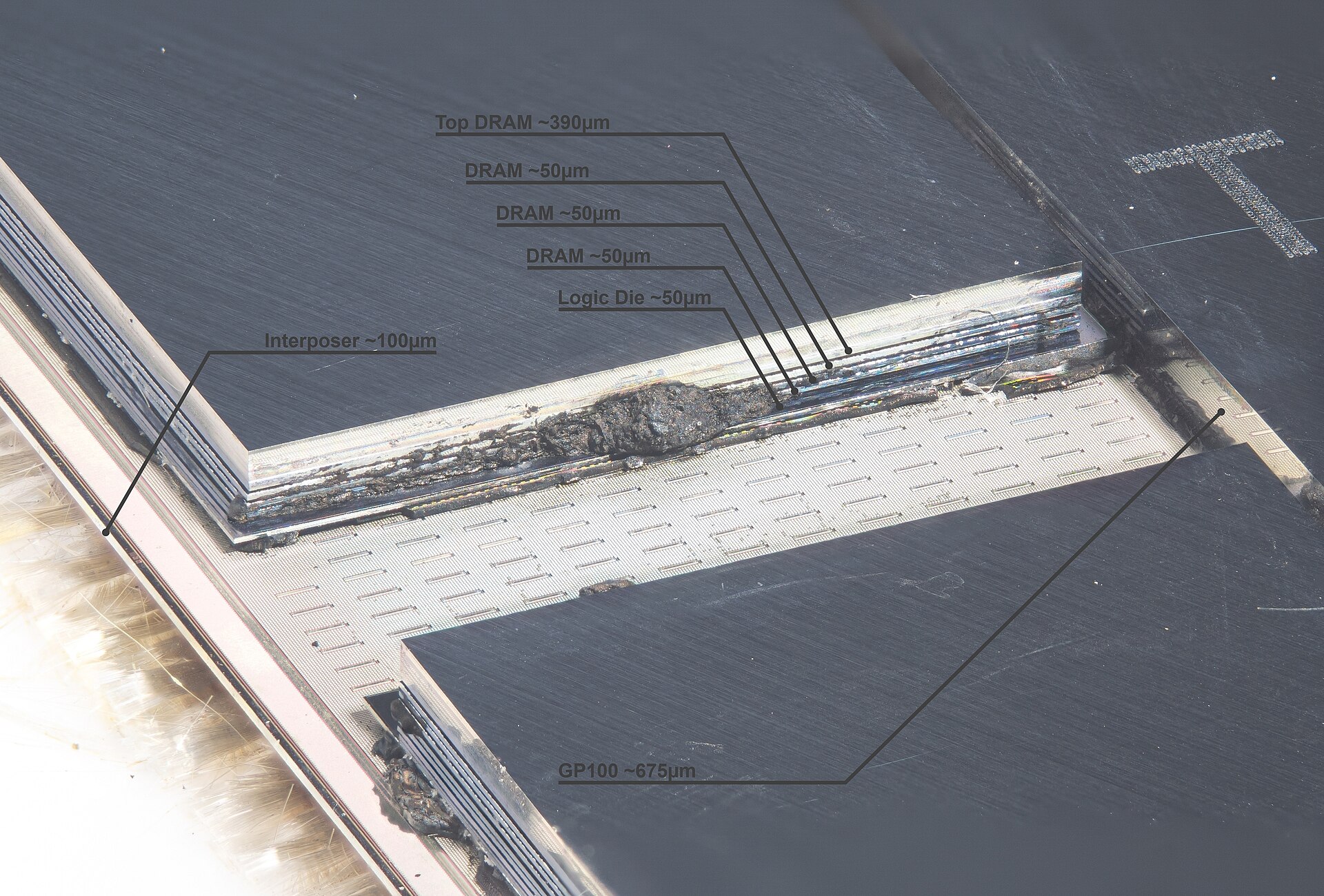
The mechanism behind the shortage is arithmetic rather than policy: high-bandwidth memory, the stacked memory packed beside AI accelerators, consumes three to four times the wafers of ordinary DRAM for the same capacity, and HBM4 takes more than half of HBM shipments next year, which starves every other product line 3. TrendForce expects average HBM prices to rise 122 percent next year and the DRAM shortage to persist through 2027 3. SK's chairman put the same point plainly after the Nasdaq listing: demand is outstripping the speed at which fabs can be built 11.
Wall Street had already walked USTR's side of that argument onto the tape. Goldman Sachs+0.34% — Goldman Sachs, up 0.34 percent today cut its 2028 DRAM and NAND price forecasts, and Morgan Stanley+0.40% — Morgan Stanley, up 0.40 percent today cut its SK hynix target by 38 percent on November 9, citing a 2028 earnings cliff 8.
The lever lands on Seoul, not on the order book
The report's pressure runs through Seoul's plans, not through SK hynix's sold-out order book. It cites the Honam cluster, the government-backed semiconductor belt in Gwangju and the southwest, built on corporate commitments of roughly 800 trillion won, SK hynix's share about 400 trillion won 2.
It pushes in the other direction too: SK hynix is building advanced packaging in Indiana and has no front-end fab in the United States, while Samsung's American footprint is foundry work in Austin and Taylor with no memory fab at all 3. A front-end memory fab takes years, so the lever can slow Korean capacity long before it adds American supply 11. Korean industry adds that any tariff that does land is likely to be passed on to US customers 3.
The market moved before the text did
Seoul absorbed the bear case before the text arrived. On November 25 the KOSPI fell more than 6 percent, close to half its June peak, with SK hynix down 11 percent and Samsung down 10; the USTR text reached Korean desks after that session closed 7124. SK hynix's US receipts, listed in July at $149 apiece, now sit 25 percent below the offer price 1011.
Chip stocks fell about twice as far as the KOSPI on 25 November
Data
| Value | |
|---|---|
| SK hynix | -11% |
| Samsung Electronics | -10% |
| KOSPI | -6% |
Korean brokers' average targets for both chipmakers still sit far above the market (chart): the market is pricing the cliff, the brokers are pricing the shortage, and capacity announcements, data-center capital plans and contract prices will settle which one is right 8.
Brokers still price the memory boom the market has stopped paying for
The market is pricing the 2028 cliff; Korean brokers' average targets are not
- 25 Nov close
- Broker target (est.)
Data
| 25 Nov close | Broker target (est.) | Change | |
|---|---|---|---|
| Samsung Electronics | ₩170,700 | ₩458,000 | +168.3% |
| SK hynix | ₩1,030,000 | ₩2,930,000 | +184.5% |
The buildout pays for politics that slows it
The AI buildout's scarce input right now is not compute; it is memory, and this finding aims its lever at the people building it.
A designation without a tariff changes nothing for a sold-out line, and the tariff as proposed does not touch the line. What the lever can do is slow the Honam buildout and redirect its rewards from Korea's neglected southwest toward Texas and Indiana, which is a distribution question more than an economics one.
If Washington succeeds in slowing the capacity that closes the shortage, the bill arrives exactly where the finding least intends it: in the cost and schedule of the AI products the United States is trying to win.
Sources
- 1USTR press release, USTR Makes Determinations and Proposes Actions in 14 Section 301 Investigations Relating to Structural Excess Capacity, 25 November 2026
- 2The Chosun Ilbo via MSN, US proposes tariffs on South Korea over semiconductor overproduction, 25 November 2026
- 3Maeil Business Newspaper, Memory chips unsellable due to shortages, yet U.S. presses 'overproduction' argument, 26 November 2026
- 4CNN, Trump targets China, EU in new round of tariffs, 25 November 2026
- 5Husch Blackwell via JD Supra, USTR Announces Proposed Section 301 Excess Capacity Tariffs on Fourteen Economies, 25 November 2026
- 6Baker McKenzie Global Import Blog, US: USTR Proposes Section 301 Tariffs on 14 Economies Over Structural Excess Capacity, 25 November 2026
- 7Maeil Business Newspaper, Samsung and SK hynix shares tumble, sending KOSPI down 6% and retail investors into a panic, 25 November 2026
- 8Crypto Briefing, Goldman Sachs lowers 2028 memory forecasts as Wall Street splits on Samsung and SK Hynix, 22 November 2026
- 9Maeil Business Newspaper, Shares trade at 780,000 won, but target price hits 2.3 million won, 26 November 2026
- 10Yahoo Finance (StockTwits), MU, SNDK, SKHY Jump As Nvidia Tests Kioxia Memory Fix, 26 November 2026
- 11The Korea Herald, What SK hynix's record Nasdaq listing means for Korea, 10 July 2026
- 12Yahoo Finance (beincrypto), Samsung and SK Hynix Drag KOSPI Down 6%, and Foreign Investors Are Running, 25 November 2026
Get Policy & Labor by email, free
The rules governments write for AI, and what AI does to jobs. In our daily email, every weekday.




Reader comments
0 comments