Washington's quantum stakes are small, discounted and locked up
September's filings show the Commerce Department collecting stakes of 0.9 to 2.3 percent in D-Wave, Rigetti, Quantinuum and GlobalFoundries at formula-fixed discounts, with IBM's $1 billion Anderon foundry award finalized on top.
 Richard Tangthree-minute read
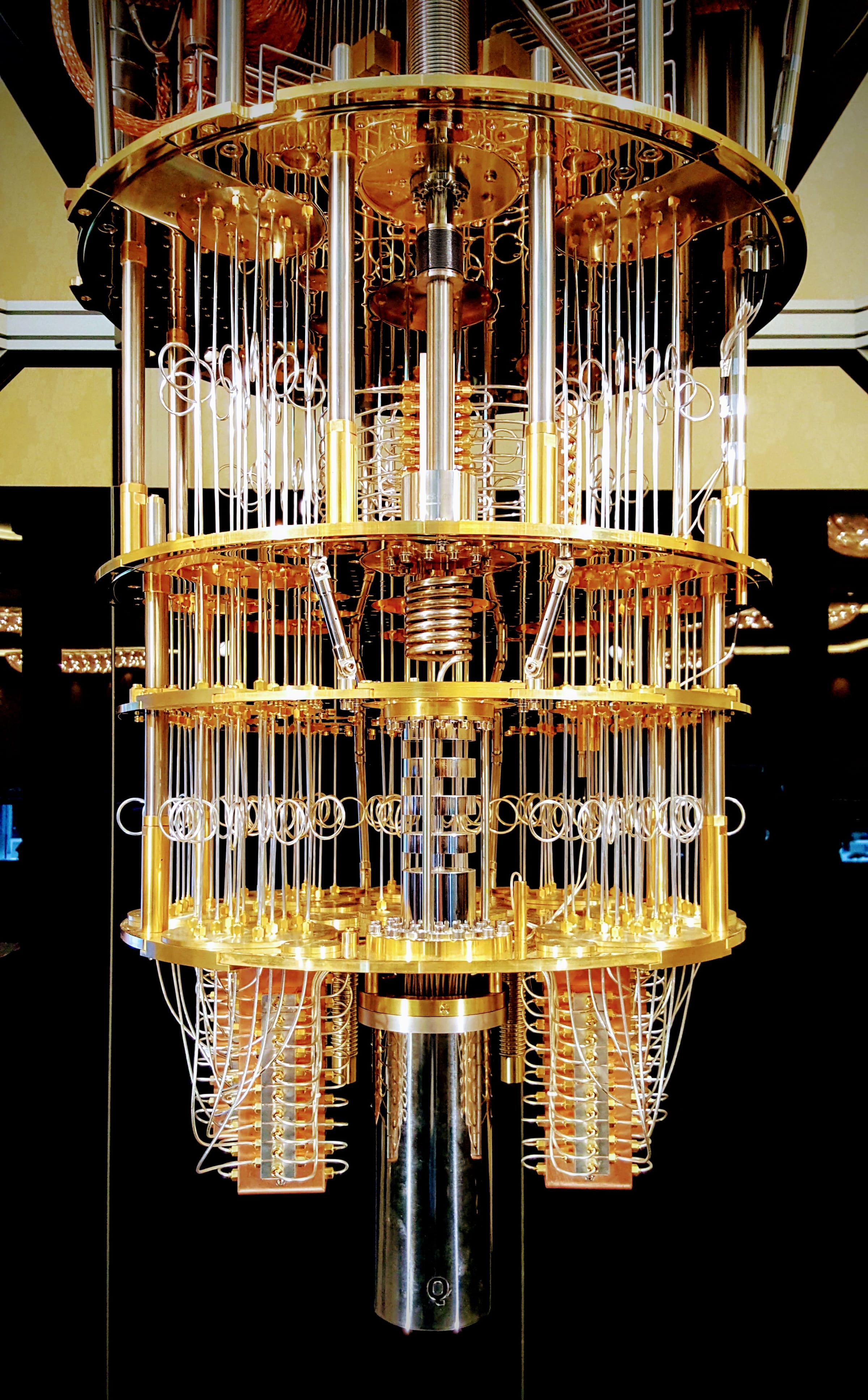
Washington stopped writing checks to the quantum industry and started buying into it. On 16 September 2026, Anderon, the quantum wafer foundry IBM+3.72% — IBM, up 3.72 percent today spun out in Albany, finalized a $1 billion CHIPS award from Commerce, with IBM adding $1 billion of its own 1.
The May letters of intent behind this were worth $2.013 billion across nine companies, on one condition: "a minority, non-controlling equity stake in each company," taken "to enhance the return for the U.S. taxpayer" 2. D-Wave, Rigetti+13.55% — Rigetti, up 13.55 percent today and Quantinuum each signed $100 million awards this month and issued shares, at prices fixed before the stocks jumped on the news 3456.
The stakes are small, and the prices were fixed by formula
Every entry price was set before the market could vote. D-Wave issued at $14.093, 15 percent below the lowest close across the three dates from letter-of-intent draft to award 37. Quantinuum's works out to about $42, roughly 30 percent below the $60 price of its June IPO 58.
That is industrial policy run as an investment account. Against the latest reported share counts, Commerce now holds about 2.3 percent of Rigetti, 1.9 percent of D-Wave, 1.8 percent of GlobalFoundries and 0.9 percent of Quantinuum: 6.4 percent of the Class A shares that actually trade 34589101112. The Intel+14.82% — Intel, up 14.82 percent today precedent, for scale, was 9.9 percent 13.
Data
| Value | |
|---|---|
| Intel (Aug 2025, for scale) | 9.9% |
| Rigetti | 2.3% |
| D-Wave | 1.9% |
| GlobalFoundries | 1.8% |
| Quantinuum | 0.9% |
The cash arrives only as milestones clear
The award is a schedule, not a check. Rigetti drew $43.9 million at signing; the remaining $56.1 million is held until Commerce is satisfied, "in its sole discretion," that milestones are met, and disbursed money becomes recoverable debt 4. D-Wave's own filing names the cost to holders: shares issued "at a discount to the current market price" are dilutive 3.
The protections run to the companies, not the taxpayer
Commerce cannot vote except on class-rights changes and mergers, cannot sell privately to a competitor, and can transfer only shares matching funds disbursed; if it walks away, the company buys back the undelivered portion for $1.00 45. For D-Wave and Rigetti, which financed years of losses by repeatedly selling stock 6, that is a patient shareholder. For the taxpayer, it is an illiquid stake in early-stage companies whose milestones are graded by the same department that owns the shares.
The gates decide what the taxpayer bought
The targeting is right. The awards fund cryostat architecture, miniaturized readout electronics, low-loss photonics and quantum-grade wafers: the manufacturing bottlenecks that gate quantum computing, not another benchmark demo 245. Quantinuum took the money with $2.1 billion of IPO cash already on hand 8; IonQ+15.06% — IonQ, up 15.06 percent today, the one big name left out, is linked by trade press to unresolved fallout from its SkyWater acquisition 6.
The verdict arrives with the tranches. Intel's 433.3 million shares, bought at $20.47 for $8.9 billion in August 2025, were worth about $41.5 billion after the stock closed near $96 this month, a press tally, not a filing 1314. Release the held-back tranches against real engineering results, and the taxpayer bought the sector's bottleneck cheap. Release them against press releases, and the discount was the point: a subsidy wearing a ticker. Watch the milestone releases, not the share price.
Get Policy & Labor by email, free
The rules governments write for AI, and what AI does to jobs. In our daily email, every weekday.


Reader comments
0 comments