A Delaware suit says Symbotic brass concealed a contractor's failures behind its Walmart backlog
Symbotic's top brass hid a contractor's delays and cost overruns until a restatement dropped the stock, according to a Delaware Chancery suit reported on the evening of October 9. Walmart's warehouses already show the bill: peak power above $800,000 a month, and January's automation targets missed.
 Vincent Jiang · 4 min read
The operations story is now a disclosure story
Symbotic's+1.24% — Symbotic, up 1.24 percent today top brass was sued in Delaware Chancery Court late on October 9 by a shareholder who claims they hid a contractor's delays and cost overruns until the company restated its financials and the stock dropped 1. The case listing names Fluor Corp. alongside Symbotic 1; a parallel securities class action alleges Symbotic's primary engineering, procurement and construction outsourcing partner was experiencing significant operational problems 2.
The trail is public record. In November 2024, Symbotic, on its audit committee's recommendation, said its first three fiscal 2024 quarterly filings could no longer be relied on: costs had been expensed before milestones were achieved, accelerating revenue, alongside errors tied to "cost overruns on certain deployments that will not be billable" 3.
CEO Rick Cohen told a February 2024 earnings call "we can go faster, we can go a lot faster"; in February 2025 the company disclosed deployments were "still averaging 24 months" 24. In July 2026, Chief Judge Denise Casper of the federal court in Massachusetts let the fraud claims proceed, finding the allegations sufficient to support a strong inference of scienter; a dismissal ruling tests plausibility, not truth 24.
Automation raised Walmart's costs before it cut them
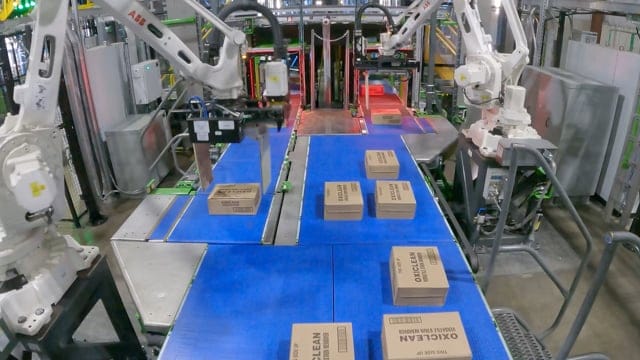
The warehouses put numbers on the struggle. Monthly power at Walmart's+0.65% — Walmart, up 0.65 percent today automated grocery warehouses can run $800,000 or more in peak months, against roughly $250,000 when the sites were mostly manual, and the engineers who keep the robots running cost more than the workers they replace 5. Kroger took a $2.6 billion charge last fall to close three automated fulfillment centers that were not meeting financial expectations 5.
Dust buildup knocks Symbotic's robots offline, robotic arms fumbled large frozen turkeys until Walmart had the shipping boxes reinforced, and jumbo bags of dog food still move by hand 5. More than 140,000 warehouse workers keep the buildings running 5.
Walmart pays, Symbotic books
Walmart has spent a decade and billions automating the 200 US supply-chain buildings that feed 5,200 stores 6. It invested nearly $1 billion more since 2016 trying to automate online orders inside stores, buying robotics firm Alert Innovation for $400 million in 2023 and selling it to Symbotic for $200 million last year 5.
Symbotic's order book stands at $22.5 billion 78, one customer is 90.5% of quarterly revenue 7, and Walmart owns 12.6% of the robot maker 5. The stock is down about 30% this year 9.
The targets slipped and the repairs continue
Walmart missed the automation targets it set for January 2026; by August, more than 65% of stores were receiving some automated freight and over half of e-commerce inventory moved through automated systems 6. About 5% of Symbotic's robots are in repair at any given moment, down from under 10% last year, by the company's count 5. A workable in-store model is not expected until 2028 510.
Symbotic's revenue is up 84% in three years; operating income still hugs zero
- Revenue
- Operating income
Data
| Revenue | Operating income | |
|---|---|---|
| Q3 '23 | $391.89M | -$53.93M |
| Q4 '23 | $359.94M | -$25.1M |
| Q1 '24 | $393.33M | -$64.89M |
| Q2 '24 | $470.34M | -$37.62M |
| Q3 '24 | $564.57M | $10.89M |
| Q4 '24 | $486.69M | -$22.97M |
| Q1 '25 | $549.65M | -$20.47M |
| Q2 '25 | $592.12M | -$25.8M |
| Q3 '25 | $618.46M | -$21.76M |
| Q4 '25 | $629.99M | $6.53M |
| Q1 '26 | $676.48M | $6.09M |
| Q2 '26 | $720.84M | $32.9M |
The financials underneath are the same story. Revenue is up 84% in three years; operating income was negative in eight of the past twelve quarters 11.
The bull case is real, and it is not the question
Fiscal third-quarter revenue hit $721 million, up 22%, and adjusted EBITDA more than doubled to $95 million 12. Automation "takes time, hard work, and a strong partnership defined by trust," Cohen said in a statement 5. "We know that if we wait till perfect," said Rob Montgomery, Walmart's head of supply-chain operations, "it'll take too long" 5.
The same week, Walmart opened its fifth next-generation fulfillment center, 900,000 square feet in Stockton, California 13. Needham kept its Buy rating while cutting its price target to $60, counting $5.8 billion of positive backlog repricing since late 2022 9.
None of that answers what the courts will ask: not whether the robots are improving, but whether investors were told the truth about the 24 months.
The next readings are legal, not robotic
Watch the Chancery docket: the plaintiff's name is behind a paywall, and no other outlet has the suit yet 1. Watch discovery in the Massachusetts class action, now that the fraud claims have survived dismissal 2. Watch SymMicro, the in-store system Symbotic expects to have running in about six months 13. And watch Walmart's automation spending, which the company says peaks this year and next 5.
However the dockets move, the split is already set: Walmart pays the electric bill, Symbotic books the backlog, and shareholders carry the difference.
Deepdive
AI-generated from this story and its cited sources. Not investment advice.