Groq's left-behind engineers sue to reprice Nvidia's $20bn deal
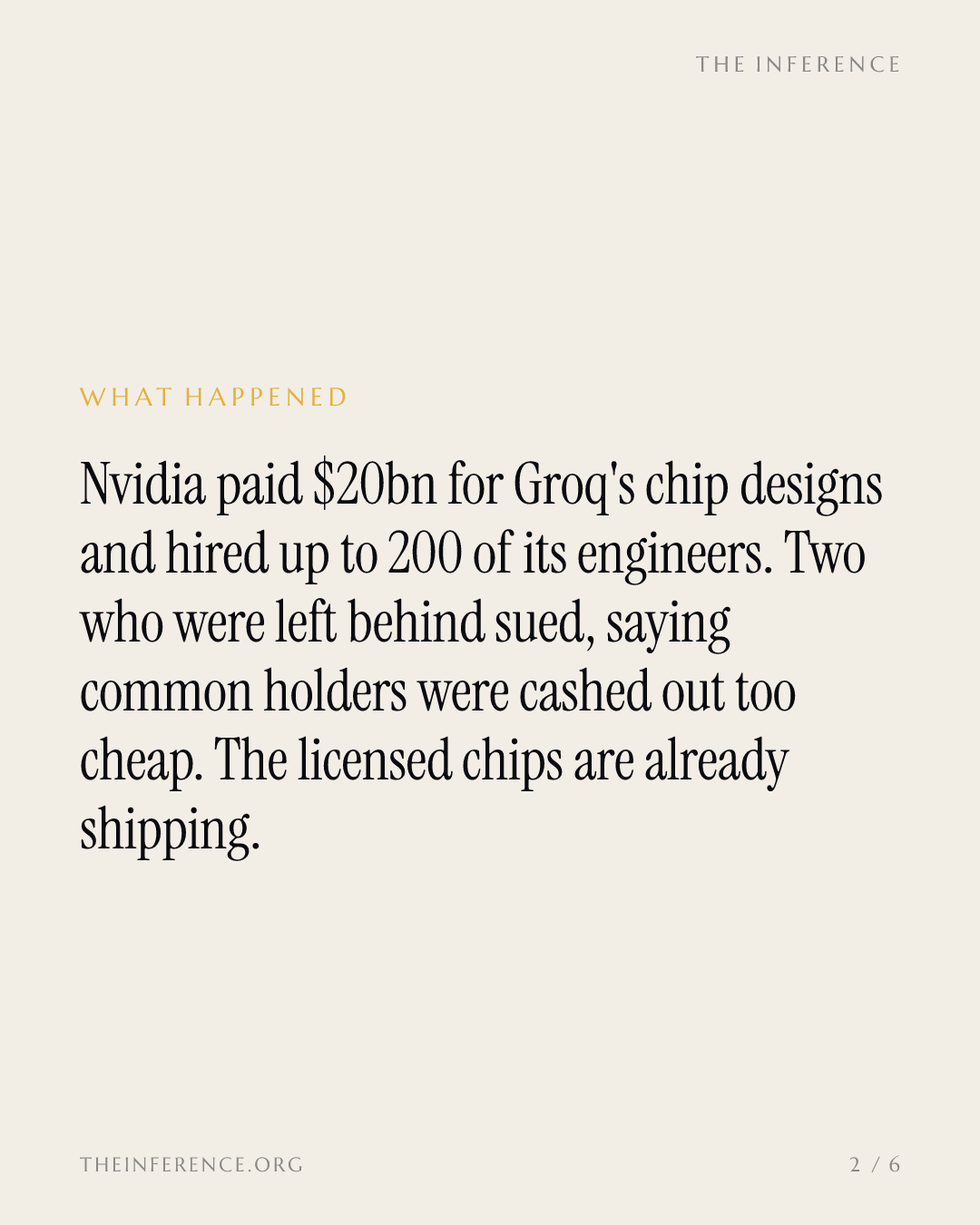
Two former Groq engineers told a Delaware court that Nvidia's transaction took the technology and the talent while common holders were cashed out cheap. The licensed silicon is already in full production.
 Vincent Jiang · 2 min read
Two engineers against a $5.4tn buyer
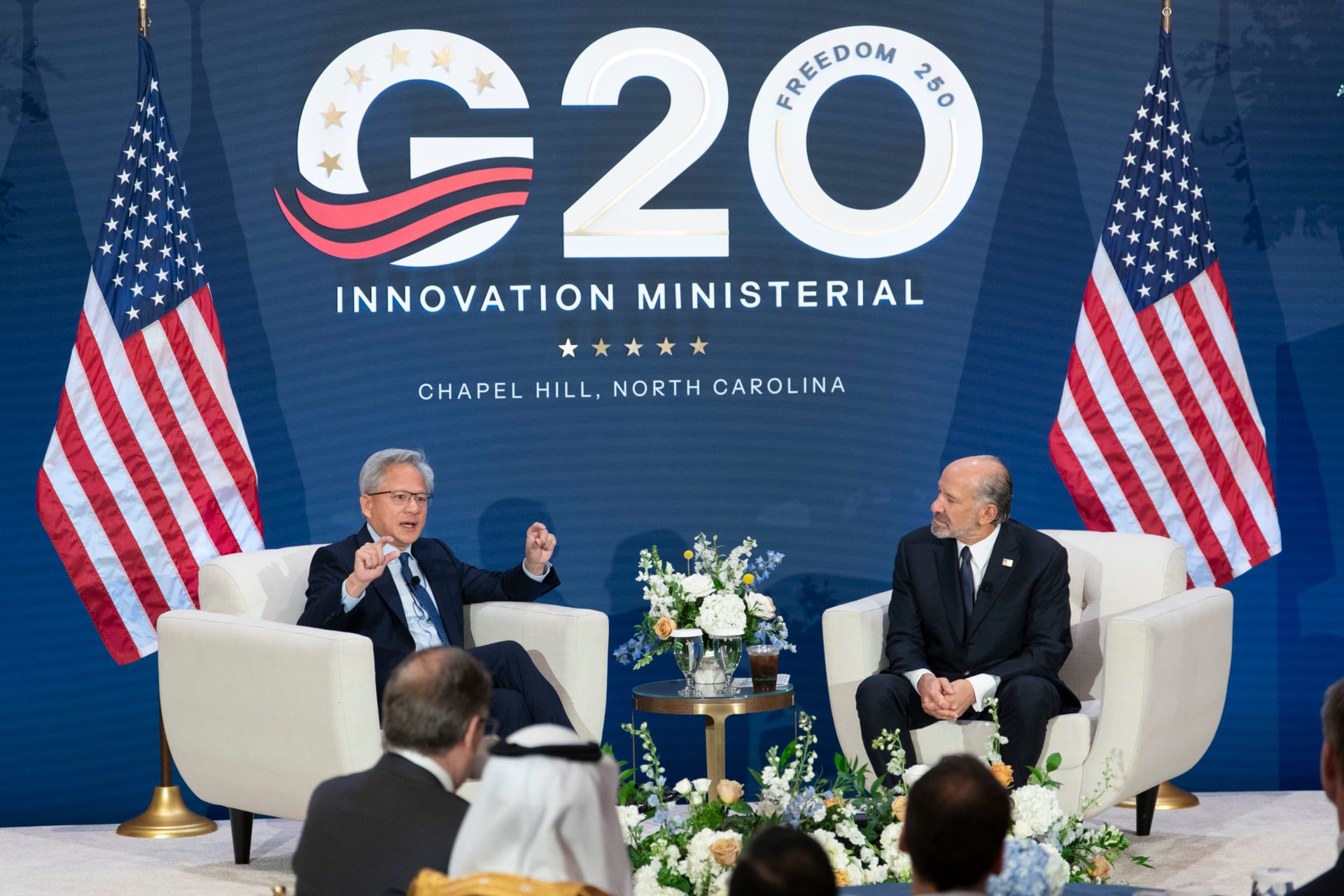
On Friday, former Groq engineers Benjamin Serebrin and Joshua Rubin sued in Delaware's corporate law court, alleging the board improperly moved Groq's core technology and top employees to Nvidia in 2025 and left other shareholders tied to a diminished business 1. Nvidia declined to comment; Groq did not respond 2.
One headline number, two different payments
The $20bn the tape treated as a single deal splits in two. A $17bn licence payment was shared among all backers, while a separate $3bn pool of Nvidia stock went only to certain engineers who joined, among them founder and board member Jonathan Ross, with Nvidia hiring as many as 200 Groq workers in all 2. Common stockholders, the complaint says, were bought out too cheaply, some were denied a vote, and the structure left the $17bn taxable inside Groq rather than inside a full acquisition 2.
The engineers' leaving pool nearly matches the whole company left behind
Data
| Value | |
|---|---|
| Licence payment to Groq | $17B |
| Surviving Groq valuation | $3.5B |
| Engineer stock pool | $3B |
What survived, and who benefited
The remaining Groq dropped chip design for AI cloud computing, and Nvidia later joined a round valuing the survivor at $3.5bn, above the price at which the plaintiffs say holders were cashed out 2. Four conflicted funds, BlackRock, Social Capital, Infinitum and Disruptive, stayed affiliated with the survivor and are not defendants 1. The plaintiffs admit they are asking for new law: "No Delaware decision has directly answered the question this case raises" 2.
The disputed silicon already ships
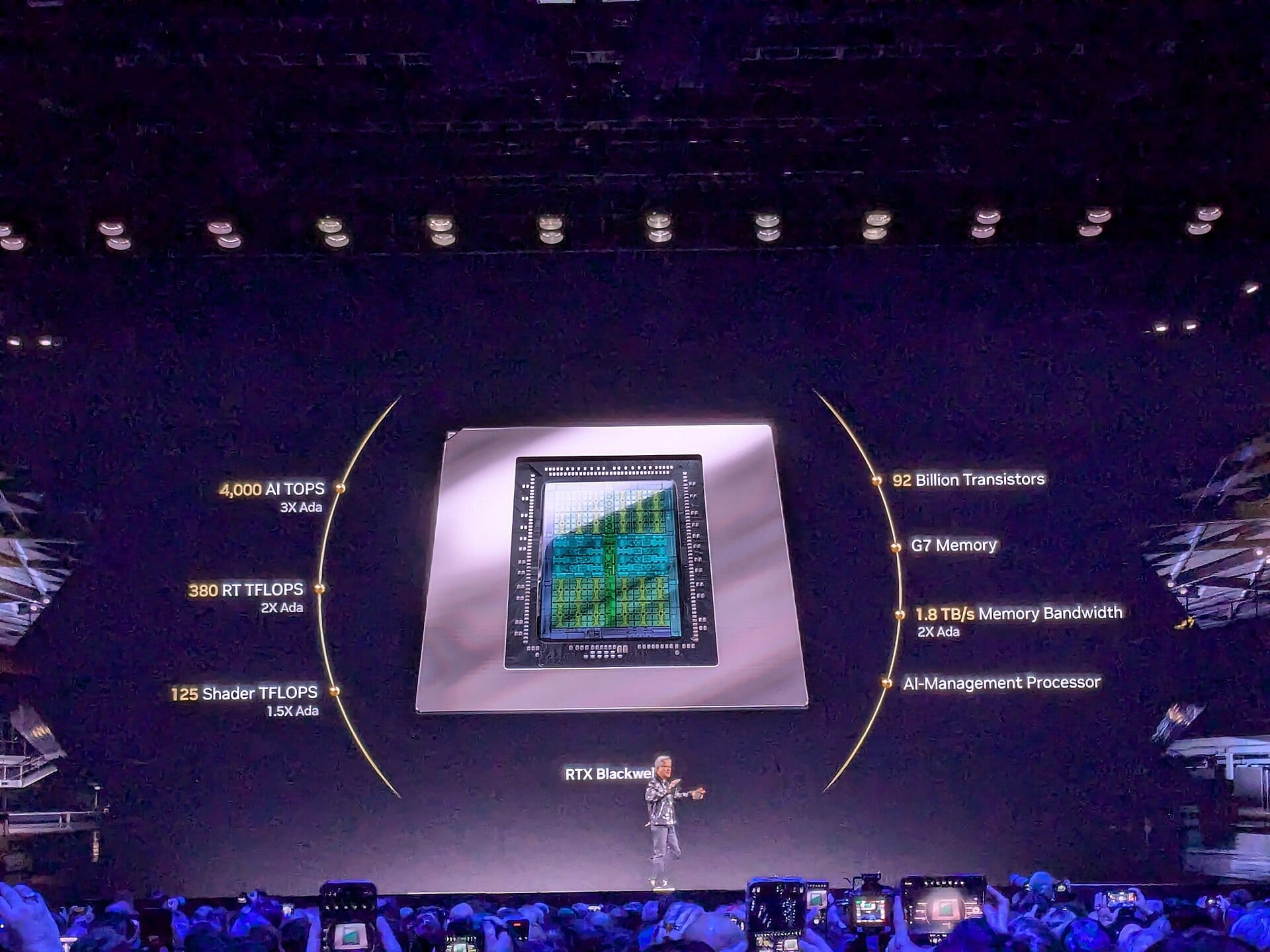
Nothing here waits on the docket. Nvidia's LPX inference rack, which carries 256 Groq 3 LPUs and was unveiled at GTC in March, entered full production in August, with Nebius among the first adopters 3. At GTC 2026, the LPX rack built on the $20bn licence shared the stage with the Vera-Rubin NVL72 and Spectrum-6 SPX racks 4.
Nvidia's answer, and what to watch
Nvidia calls the Groq story "a prime example of the American system working as designed" 5. A Justice Department inquiry reported in September opened shortly after the December announcement and has sent Nvidia a formal demand for information; a fine is possible, an unwind unlikely 6. Senators Warren, Blumenthal and Wyden call such deals built to evade antitrust scrutiny, and FTC chair Andrew Ferguson has promised review of structures that escape merger review 1. The stock absorbed the news: $223.67 at the 10 September close, about 5% below its 52-week high 7. The pattern is bigger than one deal, since Nvidia paid $6bn to license Poolside's model factory and hire 109 staff 8. Delaware must now decide whether a licence plus 200 hires is a merger in costume.
Deepdive
AI-generated from this story and its cited sources. Not investment advice.