AMD fell 8% on a short report; the deeper finding is $1.8 billion of packaging at Tongfu-run ventures
Hunterbrook's short report knocked AMD down 8% on November 19. The finding investors can actually size sits deeper in the document: most AMD chips are assembled, tested and packaged by two ventures 85% owned by Tongfu Microelectronics, whose profit just tripled.
 Vincent Jiangthree-minute read
An 8% fall that reaches into AMD's supply chain
Hunterbrook Media, an investigative outlet affiliated with the short-selling fund Hunterbrook Capital, published a report on AMD's China ties on November 19, and the fund disclosed a short position 1. AMD−9.16% — AMD, down 9.16 percent today fell 8% 1. The core claim: IEIT Systems, a Chinese server maker the US Commerce Department blacklisted in March 2025, has since posted BIOS updates containing at least six newer versions of AMD's startup firmware, and three companies tied to IEIT, including Aivres of California, posted files 99.94% identical to IEIT's 23.
Most AMD chips are finished in factories AMD does not control
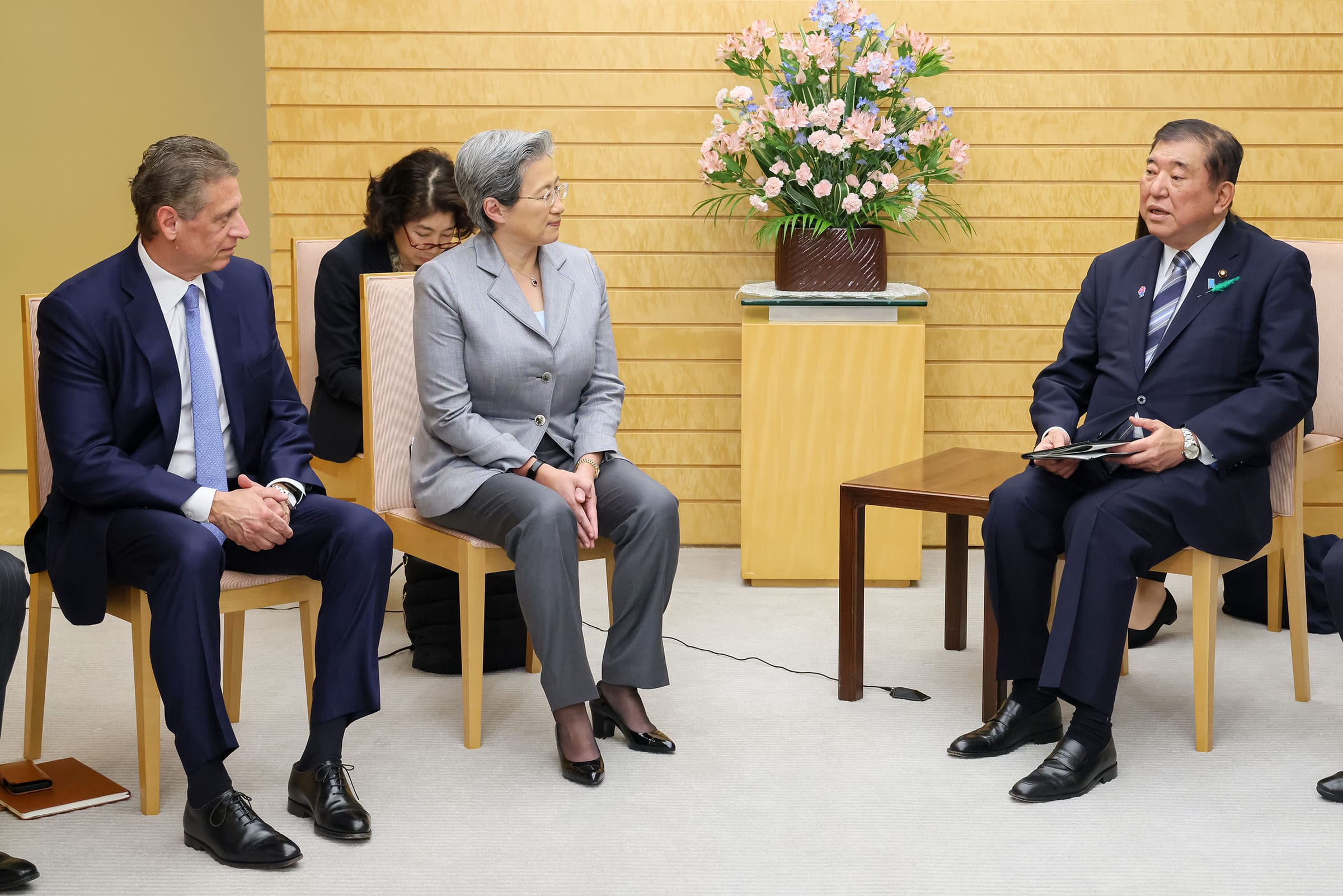
The finding that touches the most silicon is quieter. Two joint ventures, 85% owned by Chinese chip packager Tongfu Microelectronics with AMD holding 15% of each, perform the majority of AMD's assembly, test and packaging, the work that finishes chips before they ship 34. In May, AMD chief executive Lisa Su attended the launch of a new Suzhou factory alongside the city's Communist Party secretary 3.
AMD bought $2.0 billion of services from them in fiscal 2025, and $1.8 billion in this year's first nine months, up from $1.5 billion a year earlier; a $100 million AMD loan to one venture was still outstanding on September 26 45. Tongfu's nine-month revenue rose 23.7% to RMB24.89 billion, roughly $3.5 billion, and net income more than tripled to RMB3.06 billion 6.
AMD's packaging purchases from the Tongfu ventures rose 20% in this year's first nine months
- Full fiscal year
- First nine months
Data
| Full fiscal year | First nine months | |
|---|---|---|
| Fiscal 2024 | $1.7B | — |
| Fiscal 2025 | $2B | — |
| 9M to Sep 2025 | — | $1.5B |
| 9M to Sep 2026 | — | $1.8B |
Two dated rules now price that dependence
An interim final rule from the Commerce Department now requires licenses for advanced AI chips shipped to Singapore, Malaysia, Indonesia, Thailand and Brazil, and Hunterbrook notes it took effect the day of the report 28. AMD billed $4.28 billion to Singapore in fiscal 2025, 12.4% of revenue, and $7.75 billion to China and Hong Kong, 22.4% 24. A rule extending Entity List restrictions to any foreign company at least 50% owned by a listed entity is suspended through January 10, 2027 23. Those figures are by billing address, which says little about where the chips ended up 7.
China and Singapore were 35% of AMD's fiscal 2025 billings
- China and Hong Kong7.7522.4%
- Singapore4.2812.4%
- Rest of world22.6165.2%
Data
| Slice | Value | Share |
|---|---|---|
| China and Hong Kong | 7.75 | 22.4% |
| Singapore | 4.28 | 12.4% |
| Rest of world | 22.61 | 65.2% |
Tongfu is accused of nothing, and exposed anyway
The firmware allegations name IEIT and its affiliates, not the packager, and Hunterbrook does not establish how IEIT obtained the code or whether licenses covered it 3. CPUs, unlike AI accelerators, are not currently export-controlled, and the 50% rule, as written, would not reach ventures whose parent is not blacklisted 23. AMD says the claims misrepresent its business and that it complies with US export law 1.
No one has put a number on the exposure
The exposure is structural: pressure on AMD to thin its China footprint lands on packaging it cannot quickly move, and Tongfu's anchor customer becomes a policy variable. Neither the report nor AMD's filings puts a number on how much of the ventures' output a rule change could capture, or how much of that work AMD could realistically move elsewhere 24.
Watch January 10, 2027, when the suspension on the ownership rule lapses, AMD's answers on export licenses, and whether its filings still call the ventures its majority packager. Nothing changes for Tongfu unless a US rule reaches the ventures, or AMD decides to move its packaging.
Get Chips by email, free
How AI demand is reshaping chipmakers, memory and the fabs behind them. In our daily email, every weekday.


Reader comments
0 comments