Abridge lost AI scribing to Microsoft and Epic; its next market has a $100 million price from Wolters Kluwer
Microsoft and Epic took two of every three new AI-scribe dollars this year, and Abridge, which built that market, is selling what comes after the note. The decision-support category it is moving into just got a public price, Wolters Kluwer's $100 million AgileMD deal, and that price is what Abridge's $6.69 billion private mark has to outrun.
 Richard Tangthree-minute read

Abridge$6.69B — Abridge, private, latest valuation $6.69B created the market for AI medical scribes, and this year that market stopped being winnable: Microsoft−1.73% — Microsoft, down 1.73 percent today and Epic now capture about two of every three new scribe dollars 12. Abridge's answer, announced at the HLTH conference in Las Vegas this week, is to sell what comes after the note; its clinical Assistant answered more than 40,000 questions from Department of Veterans Affairs clinicians last month 3.
The catch is the door it is running through. On November 13 the category it is escaping into got a public price, Wolters Kluwer's+0.77% — Wolters Kluwer, up 0.77 percent today $100 million deal for a 23-person decision-support firm, and that is the number Abridge's $6.69 billion private valuation has to outrun 45.
The note became a feature of the record
Healthcare AI spending doubled to $3.7 billion this year, still the largest vertical market for AI 2. Scribing grew far more slowly, because every major electronic health record now ships its own scribe, Microsoft's Dragon Copilot and Epic's Art among them, and the AI-native vendors that pioneered the category lost share 26. A note is a byproduct of the record, so the record's owner wins on distribution; Menlo Ventures, which surveyed 550 healthcare and life-sciences executives, calls pure note-taking largely commoditized 7.
Clinical copilots grew 5.5x in 2026 while ambient scribing grew 1.6x
The money is moving to what follows the note, not the note
Data
| Value | |
|---|---|
| Clinical copilots | 5.5x |
| Patient engagement, front office | 4.5x |
| All healthcare AI | 2.5x |
| Ambient scribing | 1.6x |
The Assistant sells the answer, not the note
What is new this week is scale in the layer above documentation. The Assistant reads the chart, runs the risk scores, drafts the handoff and answers clinical questions with citations, on infrastructure more than 300 health systems have already security-cleared 89. Its new Local Pathways feature surfaces each health system's own care guidance, today buried in PDFs and intranets, beside the patient in front of the clinician 8, and Wiley will license nearly 10,000 Cochrane systematic reviews into those answers 10.
Meeting every clinical guideline would take a primary care clinician a 27-hour workday, one 2022 estimate found 3; the product bet is that the searching collapses into a question asked in place. Through the National Association of Community Health Centers, the Assistant also goes free to clinicians serving some 52 million people, many in rural areas, the deliberate counter to a divide this technology otherwise widens 3.
The escape route is where the money already is
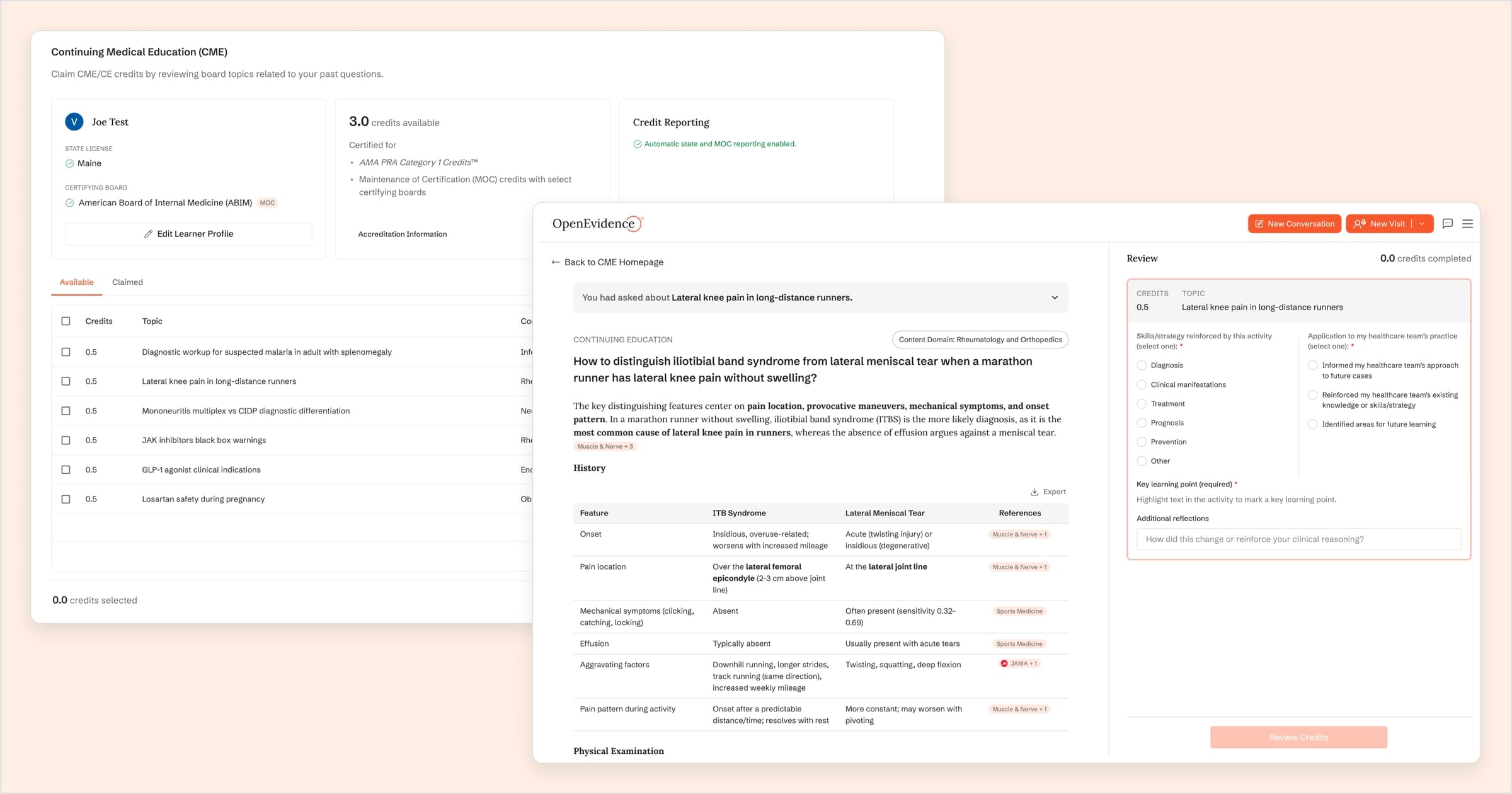
Wolters Kluwer, the Dutch publisher whose UpToDate reference tool is standard in US hospitals, agreed on November 13 to pay up to $100 million for AgileMD, a 23-person firm expected to book $7 million of annual revenue this year 4. Its own copilot, UpToDate Expert AI, is already in more than 2,700 US hospitals 4. An incumbent can buy into this category outright; Abridge has to earn it system by system, against OpenEvidence~$6B — OpenEvidence, private, latest valuation ~$6B, the clinical copilot providers already choose most 1.
Below it, OpenAI$1.18T — OpenAI, private, latest valuation $1.18T runs a prior-authorization task for 8.5 cents, as we wrote on November 17 5. Abridge is building computer-use agents, which drive other software the way a person does, for applications with no API, alongside a Menlo-reported Availity deal for real-time prior authorization 111; at CVS, one such agent cleared a months-long document backlog over a weekend 11.
The clinician's question is what is left to own
The chain is short to state: models made the note cheap, the EHR bundled it, and what stays defensible is the trusted answer at the moment of care, wired to the chart, the published evidence and the system's own guidance. Abridge holds more of that wiring than anyone, and the VA numbers say clinicians already use it.
The note was always going to ship free with the record; the question in front of the patient was not. For listed readers, the first pricing arrives at Wolters Kluwer, where the deal closes by early 2027 and must earn back its cost of capital within five years 4.
Get Health by email, free
AI in medicine, pharma and biotech. In our daily email, every weekday.



Reader comments
0 comments