AppLovin Opened Its Platform. The Advertiser Still Has Homework.
Adam Foroughi says the hardest part of AppLovin's ad system is still making the ad. That is the constraint on a business growing 53% a year as it tries to expand past game advertisers.
 Vincent JiangSeptember 14, 2026 · 2 min read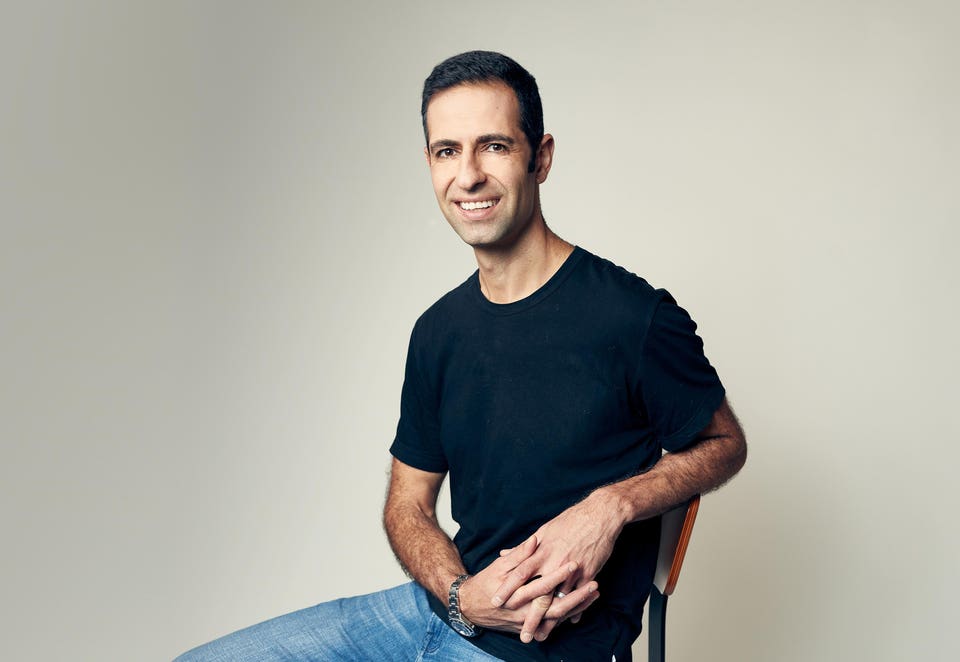
On August 5, Adam Foroughi told analysts that the biggest hurdle in AppLovin's advertising system was still making the ad.4
The revenue behind the headline
That matters for a business reporting $1.924 billion in quarterly revenue, up 53% from a year earlier. Those are AppLovin's unaudited results, released August 5; expanding beyond game advertisers is part of its next growth opportunity.1
Analysts are already discounting the story
On September 14, Morgan Stanley cut its price target from $650 to $450 while retaining its Overweight rating. Evercore had cut its target on September 1, acknowledging that its estimates of historical ecommerce advertiser spending were too high. These are reported analyst judgments, not new operating results.7,8
What an advertiser has to finish first
The useful question is what an advertiser must finish before AppLovin can earn the next dollar.
In his June 22 launch announcement, Foroughi removed the referral requirement and described approaching one-click campaign creation. AppLovin Ads uses its Axon recommendation system to connect advertisers with likely buyers inside mobile games. The platform was open to everyone.5
But in August, he said it still could not reliably hand advertisers a high-quality 30-to-60-second video out of the box. Smaller merchants also struggled to reach their return targets on limited testing budgets. Management was therefore concentrating on midsized brands. Those are company descriptions of the bottleneck, not independently measured failure rates.4
The current launch checklist makes the remaining work concrete: validate purchase tracking, fund enough conversions for the system to learn, and keep testing adapted video ads. An online shop has to supply money, material and attention before the algorithm can demonstrate its value.6
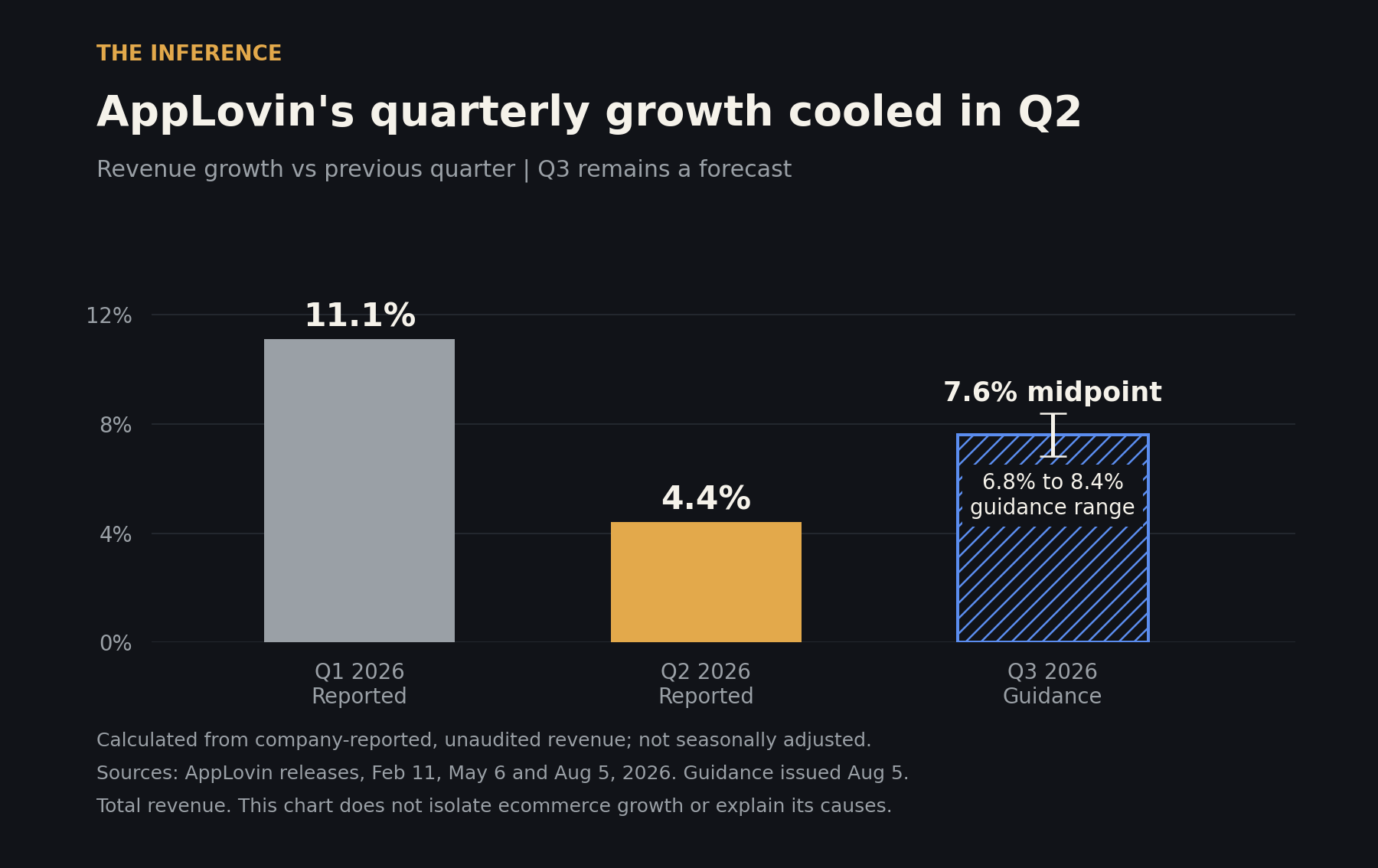
This is an expansion constraint. Management attributed Q2's weaker growth chiefly to the timing of improvements in its gaming models. Treating the entire slowdown as an ecommerce failure would overstate the evidence.4
The cost of adopting AI includes the work its customer still has to do.
The bull case has receipts
The bullish case has receipts. Triple Whale's September 3 report examined 755 AppLovin-spending shops and found higher attributed returns than its comparison channels in 61% of qualifying shops. It also reported positive, statistically significant revenue effects in five of seven geographic holdout tests.9
That is single-source evidence from a measurement provider AppLovin works with. It supports the case that campaigns can produce results, while leaving unanswered how many small businesses can successfully get started.10
Foroughi's next useful scoreboard should connect signup, campaign launch and sustained profitable spending. Watch whether better creative tools let smaller advertisers complete that journey with less outside help.
Watch how many new advertisers keep spending profitably.
How this brief was made
01Gathered & sourced236 channels · 1,485 articles▾
Agents swept 236 channels and ingested 1,485 articles, then de-duplicated and ranked them for signal.
02Verified & cross-validated10 claims · 11 data feeds▾
Every one of 10 load-bearing claims was checked against primary sources, with 11 live data feeds reconciling the figures and charts.
- 1AppLovin Q2 2026 financial results, Aug 5 2026 (company-claimed and unaudited primary disclosure: revenue of $1,923,686 thousand and Q3 guidance of $2,055M to $2,085M. The SEC copy is the same source, not a second one).
- 2AppLovin Q1 2026 financial results, May 6 2026 (company-claimed and unaudited: revenue of $1,842,449 thousand, used as a chart input).
- 3AppLovin Q4 2025 earnings exhibit, Feb 11 2026 (company-claimed and unaudited: revenue of $1,657,944 thousand, the denominator for Q1 sequential growth. Labelled unaudited, and distinct from the later audited annual statements).
- 4AppLovin Q2 2026 earnings call, Aug 5 2026 (management's own statements, read in a third-party transcription: the video-generation limitation, the focus on midsized brands, and the gaming-model explanation for slower growth. Audio was not independently transcribed).
- 5AppLovin's announcement opening the platform, Jun 22 2026 (company-claimed: the referral requirement removed and one-click creation described as an aspiration, not a completed capability. AppLovin Ads is the platform; Axon is the recommendation system).
- 6AppLovin launch checklist, accessed Sep 14 2026 (company product instructions establishing the remaining customer work: tracking, learning budget, creative adaptation and repeat testing. The video duration is guidance rather than an eligibility rule, and the documentation discloses no failure or churn rate).
- 7Morgan Stanley price-target cut to $450 from $650, Overweight retained, Sep 14 2026 (the action is corroborated across ratings trackers; the client note was not accessed, and an analyst's conclusion is not an operating result. It is a $200 reduction, not a $200 target).
- 8Evercore ISI price-target cut, reported Sep 1 2026 (single-source account of the firm describing its own historical ecommerce-spend estimates as too high; the underlying note was not accessed, and analyst estimates are not company disclosures).
- 9Triple Whale report on AppLovin advertisers, updated Sep 3 2026 (single-source provider research over a selected cohort of 755 shops: 61% of qualifying shops showed higher attributed ROAS, and five of seven geographic tests were positive and significant. Shared-channel attribution can double count credit, the tests do not all measure the same revenue, and the study does not measure signup failures).
- 10AdExchanger on AppLovin's ecommerce and consumer expansion, Aug 5 2026 (reporting of company statements; it confirms the Triple Whale relationship described on the call rather than independently verifying operating claims).
03Reviewed & edited2 human editors▾
2 editors read the draft against the evidence, tuned the framing, and signed off before it shipped.
Confidential tips
Know something about this story? We protect our sources. Reach the editor directly, or read our guide to sharing securely.
Deepdive
AI-generated from this story and its cited sources. Not investment advice.