PDD Is Bringing Temu Closer. Someone Has to Pay for the Stock.
Romania's postal service will handle Temu deliveries and returns for local sellers. Moving stock closer to the shopper only works if the merchant's economics survive the storage, the delivery and the returns.
 Vincent JiangSeptember 14, 2026 · 2 min read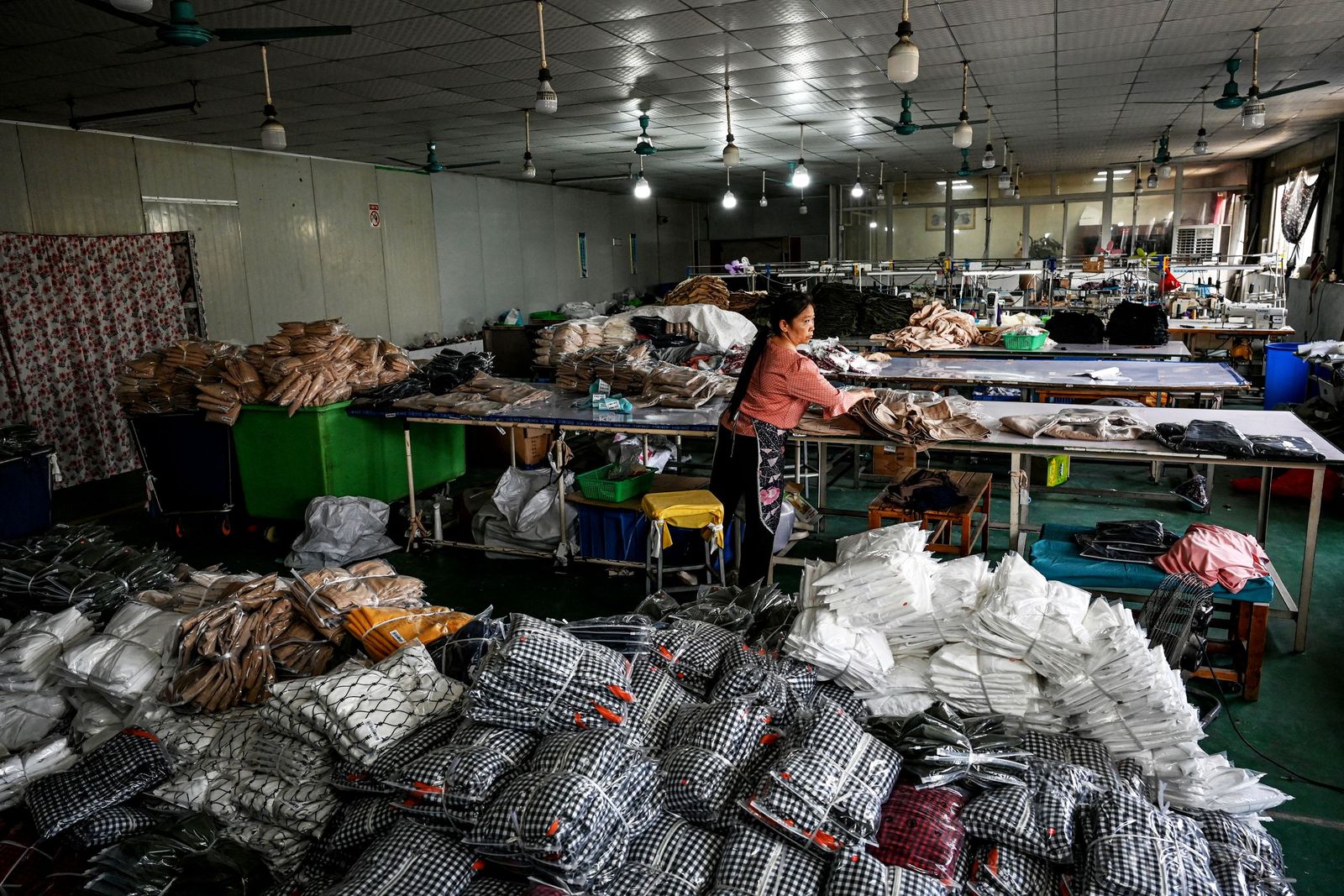
Poșta Română's director general, Valentin Ștefan, has agreed to handle deliveries and returns for local Temu sellers, under a partnership announced September 2.1
The tariff that made local stock necessary
That local parcel matters because, since July 1, the EU has imposed a temporary €3 customs duty per tariff category in qualifying small imported parcels. The seller or importer pays, adding cost before the customer opens the bag.2
But local stock needs financing before a customer clicks buy.
Temu's answer: get closer to the buyer
Temu already has a strategy for the border pressure: move more merchandise closer to the buyer. On August 24, parent PDD Holdings' co-CEO Lei Chen said the company was accelerating local warehousing and recruiting local merchants. This extends an existing strategy: DHL announced its support for local fulfillment in April 2025.3,4
Buying in bulk can lower transport costs and speed delivery, but it also requires choosing what will sell before the order arrives. Shopify's June 30 guide for US sellers describes bulk stocking and possible storage fees. The parcel travels faster because somebody committed working capital earlier.5
What the merchant now has to do
The merchant's job makes this concrete. Shopify's current Temu instructions require sellers to arrange fulfillment and answer return or refund requests within 24 hours. Miss that window and platform rules take over.6
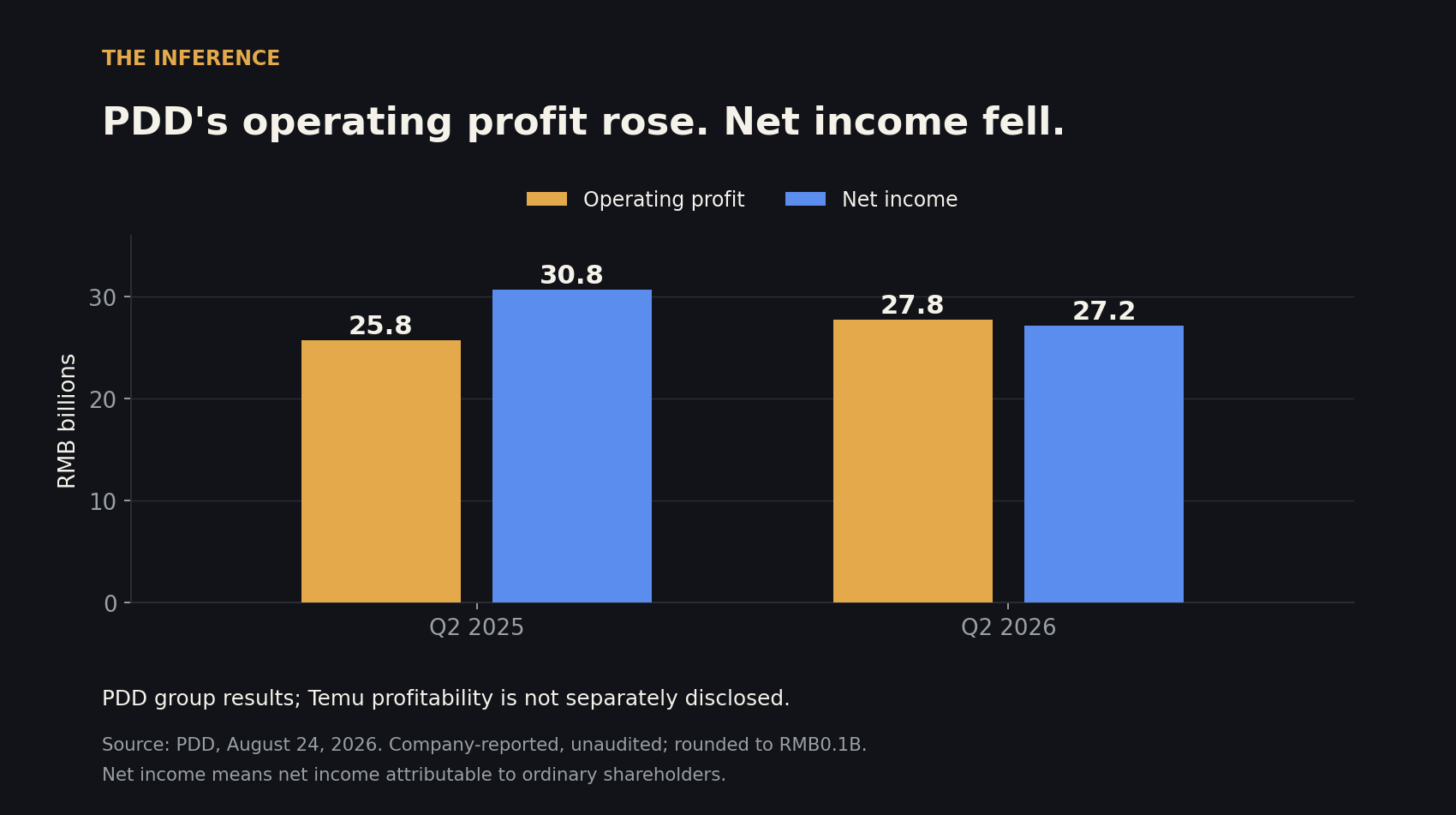
PDD has resources to support the transition. Its August 24 unaudited results show second-quarter operating profit rising while net income fell. The income statement includes a large non-operating loss, so attributing the profit decline entirely to warehouse spending would be wrong.7
The seller's margin is part of the platform's infrastructure.
The bull case: sellers already have the stock
The strongest bullish case is that local sellers already have the stock. Temu can bring them additional demand while logistics partners consolidate deliveries. ShipBob's April 17, 2025 integration explicitly offered fulfillment from merchants' existing US inventory and warehouses. That can improve utilization without requiring every seller to build another supply chain.8
But the seller still needs enough profit after storage, delivery and returns to keep supplying the platform. Local fulfillment strengthens Temu only if the merchant's economics improve alongside the shopper's experience. PDD reports one operating segment, leaving Temu's separate profitability undisclosed.9
The next pressure point
The next pressure point is Europe's separate handling fee. On September 3, the Council approved a customs overhaul targeting its introduction by November 1, with Parliament's approval still expected and the amount still to be set. Investors should seek disclosure of merchant retention and profit per locally fulfilled order.10
Watch the fee decision, then who absorbs it.
How this brief was made
01Gathered & sourced334 channels · 1,211 articles▾
Agents swept 334 channels and ingested 1,211 articles, then de-duplicated and ranked them for signal.
02Verified & cross-validated10 claims · 33 data feeds▾
Every one of 10 load-bearing claims was checked against primary sources, with 33 live data feeds reconciling the figures and charts.
- 1Romanian Post announcement of the Temu memorandum, Sep 2 2026 (single-source company statement by director general Valentin Ștefan: it establishes an agreement and an intended service, not realized volume or cost savings. The AGERPRES carry of the same release is not a second source).
- 2European Commission on the temporary customs duty, Jun 29 2026, effective Jul 1 (official policy explanation: €3 per tariff category in a qualifying low-value parcel, not per physical unit, declared and paid by the seller or importer. Separate from the handling fee in source 10).
- 3PDD second-quarter earnings call, Aug 24 2026 (company-claimed; the English interpretation is reference-only per the call itself. Supports acceleration of local warehousing and merchant recruitment; it does not establish warehouse ownership or a disclosed Temu capital-spending total).
- 4DHL Group memorandum with Temu, Apr 4 2025 (single-source partner announcement establishing that localization predates the July 2026 duty. Its 80% Europe figure is a Temu expectation rather than an actual share and is not used here).
- 5Shopify's guide for US sellers, updated Jun 30 2026 (single-source operational guide: partner fulfillment involves bulk inventory in US centres and may involve storage fees. The scope is explicitly US, used as a concrete example rather than a claim about European contracts).
- 6Shopify's Temu orders, shipping and returns documentation, checked Sep 14 2026 (single-source operational requirement: return and refund requests answered within 24 hours, with platform policy applying if unanswered. It does not establish that all returns are automatically refunded or that every cost falls on the seller).
- 7PDD second-quarter results, Aug 24 2026 (company-claimed and unaudited: operating profit RMB25,793m to RMB27,764m; net income attributable to ordinary shareholders RMB30,754m to RMB27,182m. Other income/(loss), net moved from +RMB119m to -RMB7,399m, which the release does not attribute to warehouse spending. Group figures, not Temu results).
- 8ShipBob partnership announcement, Apr 17 2025 (single-source partner release describing fulfillment from merchants' existing US inventory and warehouse footprint. Supports the utilization counterpoint, not a measured return on investment; PRNewswire is the distributor, not a second source).
- 9PDD 2025 Form 20-F, filed Apr 29 2026 (single-source company filing: the segment note states one operating and reportable segment. Neither this filing nor the quarterly release discloses standalone Temu profitability).
- 10Council of the EU on the customs reform, Sep 3 2026 (official legislative-status announcement: Council approval completed, Parliament approval expected later in September, an EU-wide handling fee targeted by Nov 1 with the amount left for the Commission to set. An announced timetable, not an effective fee).
03Reviewed & edited2 human editors▾
2 editors read the draft against the evidence, tuned the framing, and signed off before it shipped.
Confidential tips
Know something about this story? We protect our sources. Reach the editor directly, or read our guide to sharing securely.
Deepdive
AI-generated from this story and its cited sources. Not investment advice.