AppLovin Opened Its Platform. The Advertiser Still Has Homework.
Adam Foroughi says the hardest part of AppLovin's ad system is still making the ad. That is the constraint on a business growing 53% a year as it tries to expand past game advertisers.
 Vincent Jiangtwo-minute read

On August 5, Adam Foroughi told analysts that the biggest hurdle in AppLovin's−3.59% — AppLovin, down 3.59 percent today advertising system was still making the ad.4
The revenue behind the headline
That matters for a business reporting $1.924 billion in quarterly revenue, up 53% from a year earlier. Those are AppLovin's unaudited results, released August 5; expanding beyond game advertisers is part of its next growth opportunity.1
Analysts are already discounting the story
On September 14, Morgan Stanley−1.37% — Morgan Stanley, down 1.37 percent today cut its price target from $650 to $450 while retaining its Overweight rating. Evercore−0.67% — Evercore, down 0.67 percent today had cut its target on September 1, acknowledging that its estimates of historical ecommerce advertiser spending were too high. These are reported analyst judgments, not new operating results.7,8
What an advertiser has to finish first
The useful question is what an advertiser must finish before AppLovin can earn the next dollar.
In his June 22 launch announcement, Foroughi removed the referral requirement and described approaching one-click campaign creation. AppLovin Ads uses its Axon recommendation system to connect advertisers with likely buyers inside mobile games. The platform was open to everyone.5
But in August, he said it still could not reliably hand advertisers a high-quality 30-to-60-second video out of the box. Smaller merchants also struggled to reach their return targets on limited testing budgets. Management was therefore concentrating on midsized brands. Those are company descriptions of the bottleneck, not independently measured failure rates.4
The current launch checklist makes the remaining work concrete: validate purchase tracking, fund enough conversions for the system to learn, and keep testing adapted video ads. An online shop has to supply money, material and attention before the algorithm can demonstrate its value.6
This is an expansion constraint. Management attributed Q2's weaker growth chiefly to the timing of improvements in its gaming models. Treating the entire slowdown as an ecommerce failure would overstate the evidence.4
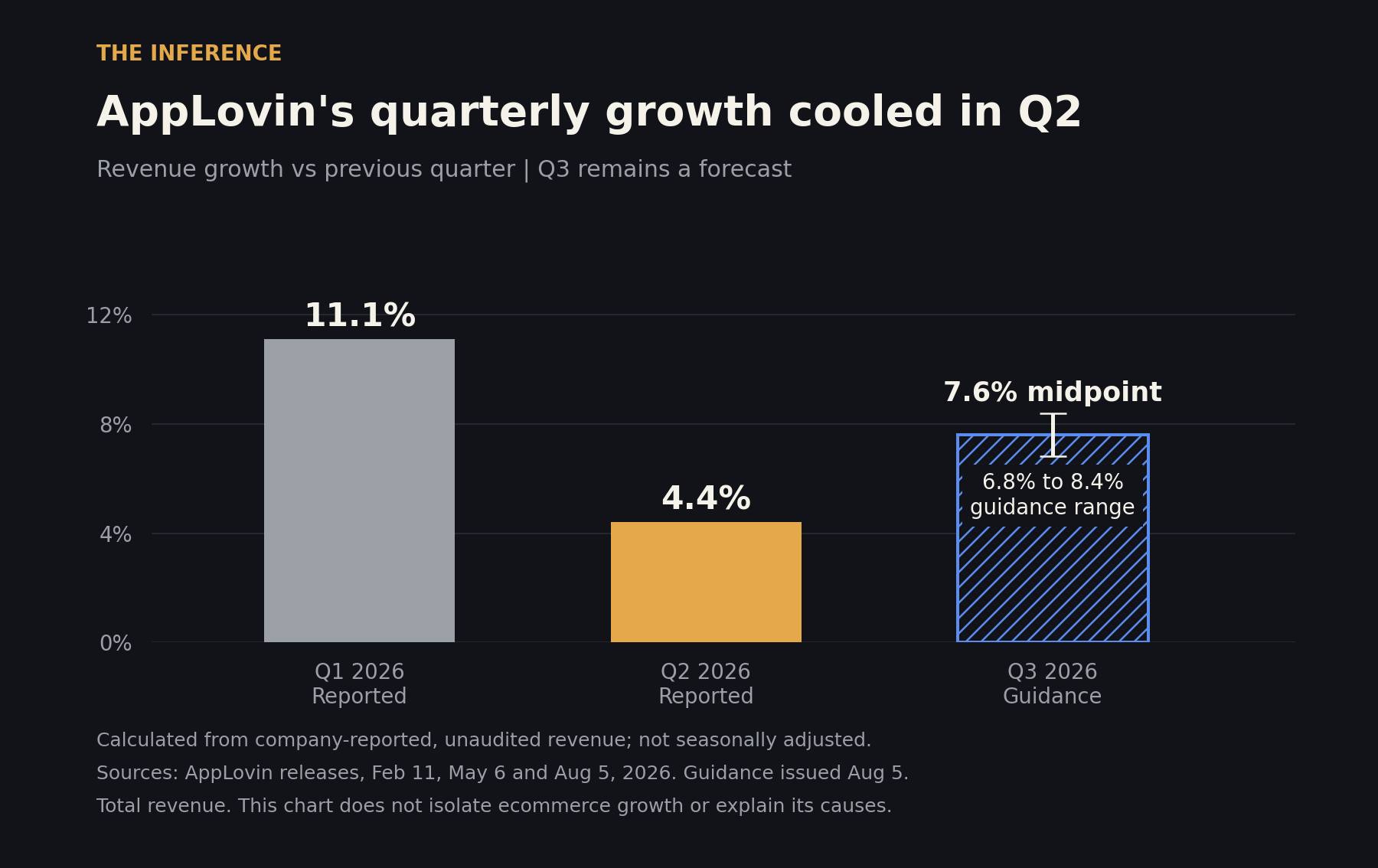
The cost of adopting AI includes the work its customer still has to do.
The bull case has receipts
The bullish case has receipts. Triple Whale's September 3 report examined 755 AppLovin-spending shops and found higher attributed returns than its comparison channels in 61% of qualifying shops. It also reported positive, statistically significant revenue effects in five of seven geographic holdout tests.9
That is single-source evidence from a measurement provider AppLovin works with. It supports the case that campaigns can produce results, while leaving unanswered how many small businesses can successfully get started.10
Foroughi's next useful scoreboard should connect signup, campaign launch and sustained profitable spending. Watch whether better creative tools let smaller advertisers complete that journey with less outside help.
Watch how many new advertisers keep spending profitably.
Get Applications by email, free
How AI is changing the software people and companies use. In our daily email, every weekday.





Reader comments
0 comments