Broadcom Backs Its AI Boom With a $29 Billion Promise
Hock Tan defended Broadcom's AI revenue targets on CNBC and refused to blink at the slowdown debate. Shareholders also carry a quieter promise: a customer-lease backstop worth up to $29 billion if it is ever called.
 Vincent JiangSeptember 14, 2026 · 6 min read
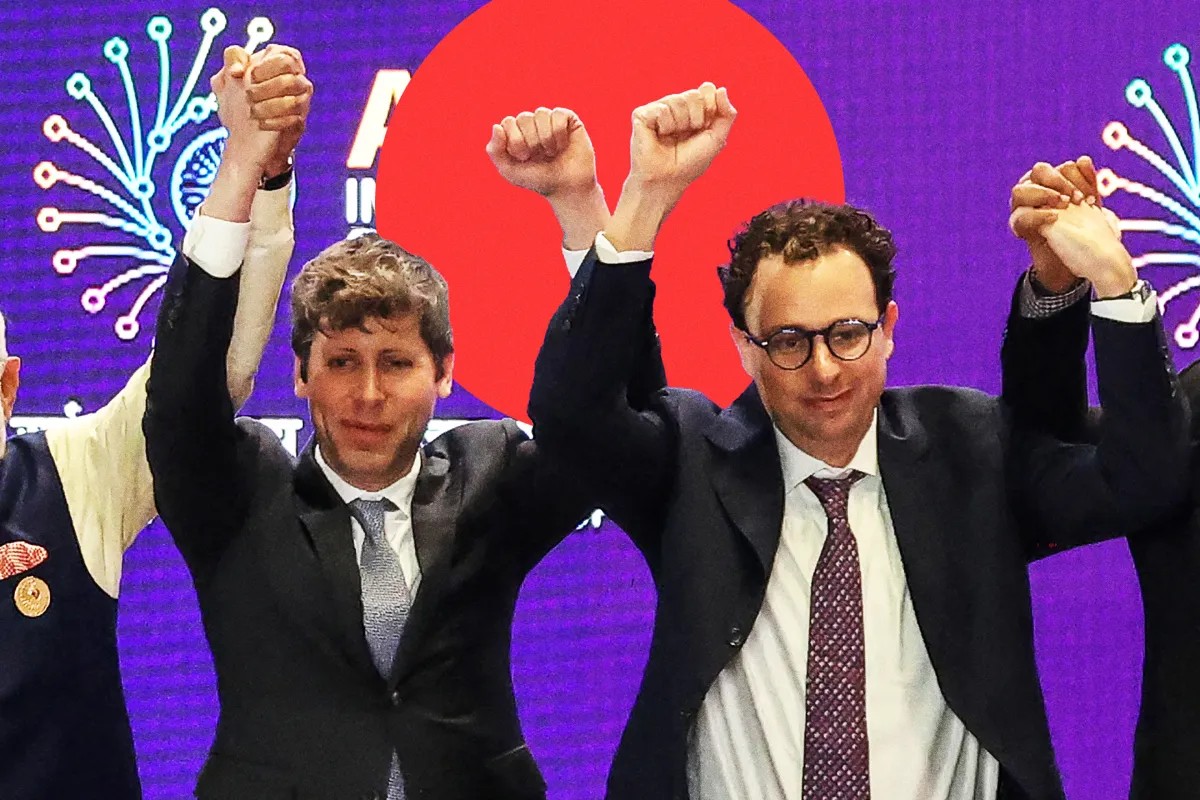
Hock Tan went on CNBC on September 14 and refused to lower his AI revenue ambitions.1
Broadcom's CEO stood by targets of $115 billion in fiscal 2027 and $230 billion in 2028, despite the debate over slowing frontier-model development. Those are management forecasts. Shareholders also own a less comfortable promise: a customer-lease backstop with maximum potential exposure of roughly $29 billion.1,2
The complication is straightforward. Broadcom earns money helping customers make AI cheaper. It is also helping finance their access to equipment. Shareholders therefore need to assess both the chips' commercial advantage and the financial obligations attached to selling them.
AI dominates the revenue increase
Broadcom's September 2 results reported $29.591 billion of quarterly revenue, including $16.7 billion from AI semiconductors: custom accelerators and networking. The comparable figures a year earlier were $15.952 billion and $5.2 billion. By subtraction, AI supplied about 84% of the revenue increase.4,5
Financing the buyer makes credit judgment part of the product.
Broadcom reported $13.665 billion of company-wide free cash flow after $532 million of capital spending, approximately 46% of sales. Current cash generation is substantial; the lifetime profitability of new financing arrangements remains unproven.4
That distinction is the investment question. A fast-growing supplier can produce excellent current cash flow while accepting obligations whose cost only becomes visible later. The relevant test is whether incremental profit adequately compensates shareholders for those obligations.
The moat is a working relationship
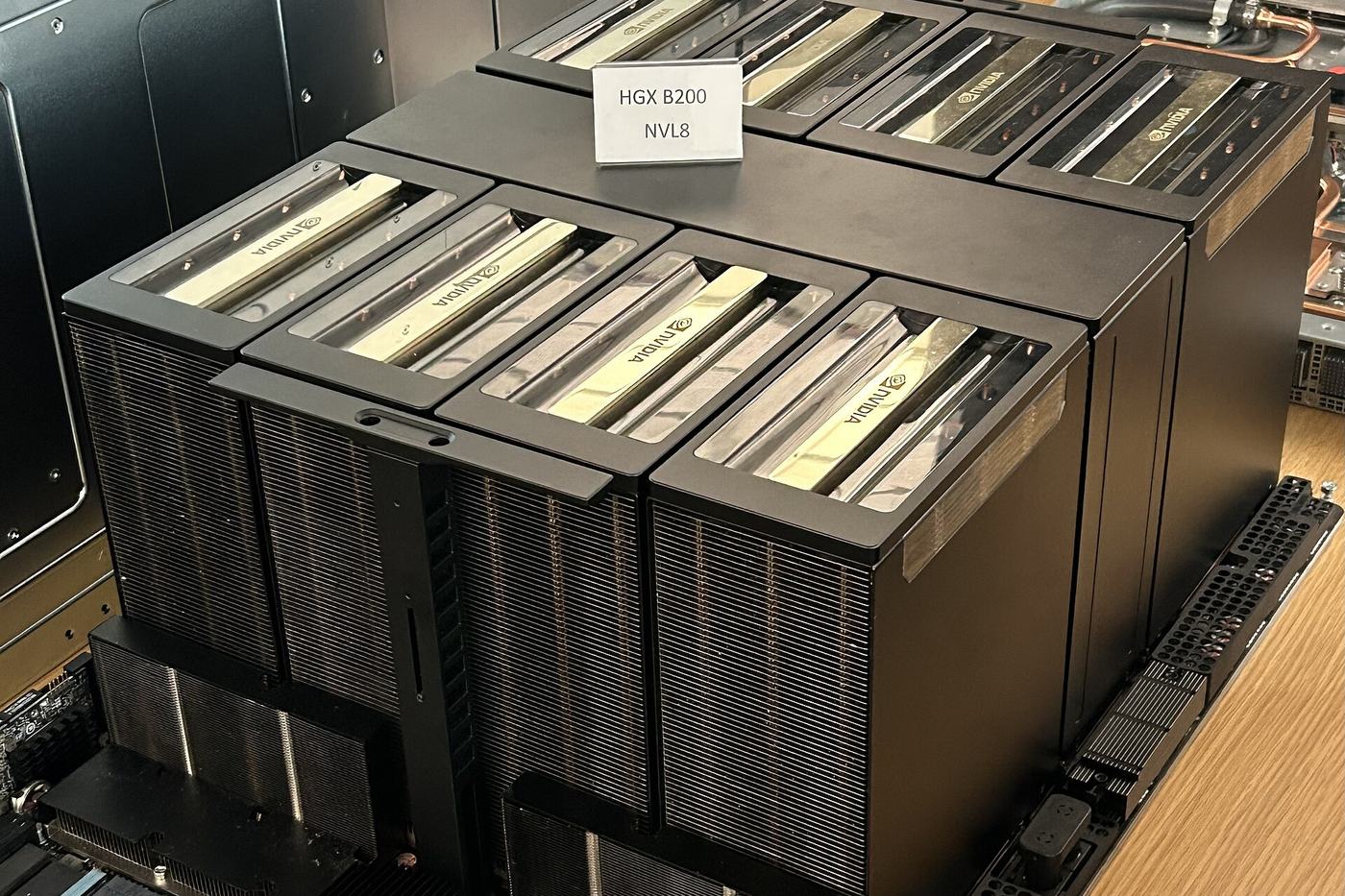
OpenAI's Jalapeño chip explains why Broadcom matters. In its June 24 announcement, OpenAI described designing the architecture around its models and serving systems, with Broadcom contributing silicon implementation and networking. The customer understands the workload; Broadcom helps turn that knowledge into producible hardware.6
This relationship can be difficult to replace because the engineering decisions are connected. Memory movement, software, networking and chip design must work together. A competing component is insufficient if adopting it delays the complete system. The inference: Broadcom's strongest protection comes from its role in repeated development cycles and successful deployments, not any single component.
OpenAI's August 25 tests reported better throughput per watt across three public models. Yet production qualification and software preparation were continuing, with initial deployment planned by year-end. Working silicon is meaningful evidence; profitable operation at scale remains a separate milestone.7
Customers also preserve alternatives. Marvell's August 19 filing describes an expanded Google partnership covering custom chips around the TPU ecosystem, including inference accelerators and controllers. It does not establish that Broadcom lost an existing design. It does establish that customers can cultivate additional suppliers while expanding custom computing.8
Financing brings customer risk back to Broadcom
In June, Apollo announced a $35 billion initial financing solution for Broadcom's AI XPV platform, alongside Blackstone and banks. The financing supports more than one gigawatt of Anthropic capacity through a multiyear draw schedule. That is financing capacity, not $35 billion of Broadcom revenue.9
Broadcom's June filing disclosed support for five-year customer leases. Exposure rises as racks deploy and falls as lease payments arrive. The September filing specifies approximately $29 billion of maximum potential liability after all racks deploy, undiscounted. At August 2, the backstop's fair value was immaterial and no payments had been made.3,2
Following default, exposure depends on the shortfall between 85% of outstanding backstopped lease amounts and rack-sale proceeds. Other remedies include assuming leases and conditional fixed-price resale. The maximum is neither current debt nor an expected loss.2
The economic concern is that repayment stress and weaker equipment values could arrive together. If an AI customer's economics deteriorate, other buyers might also demand lower prices for the same generation of hardware. That would weaken a source of recovery precisely when it matters. This is a risk mechanism, not evidence that a default is approaching.
Google's April 22 announcement makes the tension concrete. It claims its TPU 8i offers up to 80% better inference performance per dollar than Ironwood. Faster improvement can stimulate demand while pressuring older equipment's rental economics. Google's claim does not establish a resale price or prove that older chips become unusable.10
The strongest bull case survives slower training
Tan's September 14 defense focused on inference: using trained models to complete work. Slowing the release of more capable frontier models would not automatically stop businesses from serving existing ones. More usage can require more capacity even without an equally rapid training race.1
There is commercial evidence behind that argument. Anthropic's May 28 financing announcement said its annualized revenue run rate had exceeded $47 billion earlier that month and disclosed a $65 billion funding round. Those are company claims, and run rate is neither realized annual revenue nor profit. They nevertheless show a customer with substantial sales and access to capital.11
Amazon separately said in April that more than 100,000 customers were running Claude on AWS. It also announced additional Trainium capacity for Anthropic. Demand for useful AI can therefore be real while spending is divided across competing hardware platforms.12
Financing support is becoming part of that competition. AMD's July agreement paired planned Anthropic deployments with up to $5 billion of future equity investment. Nvidia's March partnership with Marvell also sought a role in custom-chip systems. Broadcom competes for the customer's infrastructure budget across engineering, commercial terms and capital support.13,14
The bull case is credible: financing removes a bottleneck, deployments grow, and customers repay from expanding businesses. It does not eliminate the need to price the risk Broadcom retains.
What $344.72 already requires
AVGO closed September 14 at $344.72. Using approximately 4.774 billion shares outstanding on August 28 implies an equity value of $1.646 trillion. The earlier share-count date makes this a valuation snapshot, not an exact current market capitalization.15,2
Trailing four-quarter free cash flow was $39.403 billion, putting that valuation at roughly 42 times actual cash generation.16,2
Annualizing the latest quarter's free cash flow gives $54.66 billion. The estimated equity value is about 30 times that pace, equivalent to a 3.3% cash-flow yield. This is neither trailing annual cash flow nor a forecast: it assumes four quarters matching the latest result. It also leaves stock compensation and any future backstop payments outside an owner-cost adjustment.4
A simple sensitivity shows why growth alone is insufficient. If annual cash flow rose 25% from that pace, but investors paid 25 times cash flow, equity value would increase only about 4%, before dividends and assuming unchanged shares. These are illustrative assumptions, not a price target. A lower valuation multiple can absorb much of the operating improvement.
The bar before treating the revenue targets as shareholder returns should be durable cash generation per share. The business has earned credibility; the valuation still requires continued execution.
What Tan needs to show next
The next disclosures should connect chip shipments to customer deployments, cash receipts and retained financing exposure: Jalapeño's production rollout, the amount of backstop actually outstanding as racks deploy, and whether future transactions require similar or greater support.
Cash per share deserves the same attention as revenue. Broadcom can meet ambitious sales targets while shareholders receive a less attractive bargain if financing exposure grows faster than the profits compensating for it.
Tan has defended the demand forecast. The next test is how much risk Broadcom must carry to fulfill it.
How this brief was made
01Gathered & sourced246 channels · 1,543 articles▾
Agents swept 246 channels and ingested 1,543 articles, then de-duplicated and ranked them for signal.
02Verified & cross-validated16 claims · 23 data feeds▾
Every one of 16 load-bearing claims was checked against primary sources, with 23 live data feeds reconciling the figures and charts.
- 1CNBC interview with Hock Tan, Sep 14 2026 (Tan defends the $115B fiscal 2027 and $230B fiscal 2028 AI revenue targets against the frontier-slowdown debate; a reproduction exists elsewhere and counts as the same report, not a second source).
- 2Broadcom Form 10-Q for the quarter ended Aug 2, filed Sep 10 2026 (primary issuer filing, unaudited: the roughly $29B maximum backstop exposure, the 85%-of-outstanding-lease-amount default mechanic, approximately 4.774 billion shares outstanding at Aug 28, and nine months of cash flow).
- 3Broadcom Form 10-Q for the quarter ended May 3, filed around Jun 9 2026 (primary issuer filing: the original disclosure of five-year customer-lease backstop support, before the September update quantified the maximum exposure).
- 4Broadcom third-quarter fiscal 2026 results, Sep 2 2026 (company-reported, unaudited: $29.591B revenue including $16.7B AI semiconductor revenue, and $13.665B free cash flow after $532M of capital spending).
- 5Broadcom third-quarter fiscal 2025 results, Sep 4 2025 (company-reported, unaudited prior-year comparison: $15.952B revenue including $5.2B AI semiconductor revenue).
- 6OpenAI's Jalapeño chip announcement, Jun 24 2026 (primary customer and partner account of the engineering split: OpenAI on architecture and serving systems, Broadcom on silicon implementation and networking).
- 7OpenAI's Jalapeño first results, Aug 25 2026 (company-tested throughput-per-watt results across three public models; production qualification and software preparation remained prospective, with initial deployment planned by year-end).
- 8Marvell Form 8-K, Aug 19 2026 (primary competitor filing describing an expanded Google partnership across custom chips in the TPU ecosystem, including inference accelerators and controllers).
- 9Apollo's announcement of a $35B capital solution for Broadcom's AI XPV platform, Jun 9 2026 (primary financing participant account, alongside Blackstone and banks, supporting more than one gigawatt of Anthropic capacity on a multiyear draw schedule).
- 10Google's TPU 8t and TPU 8i technical explanation, Apr 22 2026 (vendor performance claim of up to 80% better inference performance per dollar than Ironwood; a hardware-economics claim, not an independent resale valuation).
- 11Anthropic's Series H financing announcement, May 28 2026 (company-reported: annualized revenue run rate exceeding $47B earlier that month and a $65B funding round; run rate is neither realized annual revenue nor profit).
- 12Amazon's announcement of additional Anthropic investment and Trainium capacity, Apr 20 2026 (primary cloud-provider account: more than 100,000 customers running Claude on AWS).
- 13AMD's strategic partnership announcement with Anthropic, Jul 22 2026 (primary competitor account: planned deployment of up to 2 gigawatts of AMD Instinct MI450-series GPUs, paired with up to $5B of future equity investment).
- 14Nvidia's announcement of Marvell joining the NVLink Fusion ecosystem, Mar 31 2026 (primary competitor account of a custom-chip systems partnership; not a measured share gain against Broadcom).
- 15Stock Analysis historical prices for AVGO, Sep 14 2026 close (market data: $344.72, cross-checked against Google Finance's live quote).
- 16Broadcom fourth-quarter and fiscal-year 2025 results, Dec 11 2025 (company-reported, unaudited prior fourth-quarter free cash flow, combined with the September 10-Q's latest nine months for the trailing four-quarter calculation).
03Reviewed & edited2 human editors▾
2 editors read the draft against the evidence, tuned the framing, and signed off before it shipped.
Confidential tips
Know something about this story? We protect our sources. Reach the editor directly, or read our guide to sharing securely.
Deepdive
AI-generated from this story and its cited sources. Not investment advice.