Cellebrite's 154 European police contracts total €69.4 million, and the EU Ombudsman is probing the secrecy
A Statewatch map counts 154 public contracts worth €69.4 million across Europe, EU funds included, while the Ombudsman probes EU secrecy over the company. CLBT reports Q3 on November 12.
 Vincent Jiangthree-minute read

Cellebrite−2.73% — Cellebrite, down 2.73 percent as of its last quote, the Israeli maker of phone-hacking tools, has quietly become standard equipment for European police. A Statewatch investigation published on November 3 maps 154 public contracts active between January 2023 and July 2026: 114 across 17 EU countries, 39 in the UK, one in Norway, worth €69.4 million in total 1. The buyer list runs from the London Metropolitan Police to the police of Saxony-Anhalt, and some of it is paid for with EU funds.
The Met's £7.9 million unlocking deal
The Met alone signed a three-year "Digital Forensic Tool Enterprise Agreement for unlocking" worth £7.9 million (€9.2 million) in 2023 1. In plain terms, that is a fleet license: the whole force can use Cellebrite's systems to open and copy seized phones 1.
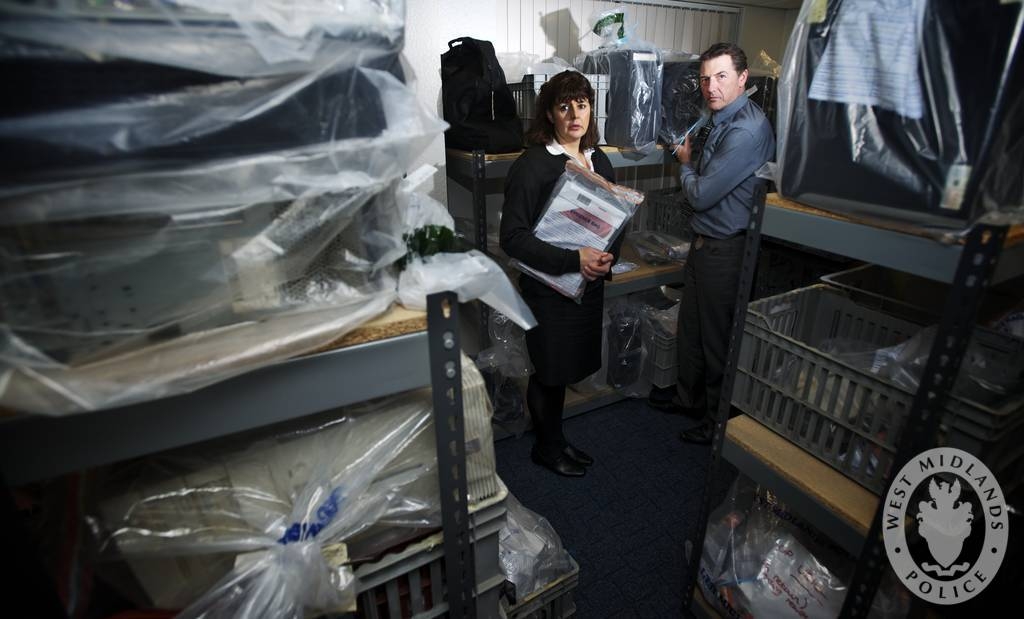
Germany's largest disclosed deal is a €4.2 million contract with Saxony-Anhalt police signed in April 2026, and several German agencies, including the BKA federal police, refused to disclose what they pay at all 1. Statewatch traced €4.25 million of EU money, from the Internal Security Fund and the EU Anti-Fraud Programme, into national Cellebrite purchases in Italy, France and Romania 1.
154 Cellebrite contracts mapped across Europe, most in the EU
Data
| Value | |
|---|---|
| 17 EU countries | 114 |
| United Kingdom | 39 |
| Norway | 1 |
The numbers make Cellebrite a European infrastructure company, not a scandal footnote. Its revenue nearly doubled from $246.2 million in 2021 to $475.7 million in 2025, with 5,300 law-enforcement clients in about 100 countries per its 2025 filings 1. Analysts expect Q3 revenue of $145.9 million, up 15.8% year over year, when results land on November 12 2.
Cellebrite revenue kept climbing as growth eased toward the Q3 consensus
- Revenue ($M)
- Estimate
Data
| Revenue ($M) | |
|---|---|
| Q1 '24 | $89.58M |
| Q2 '24 | $95.71M |
| Q3 '24 | $106.86M |
| Q4 '24 | $109.05M |
| Q1 '25 | $107.55M |
| Q2 '25 | $113.28M |
| Q3 '25 | $126.03M |
| Q4 '25 | $128.82M |
| Q1 '26 | $128.3M |
| Q2 '26 | $131.14M |
| Q3 '26* (estimate) | $145.9M |
The cutoffs that did not dent the growth
Documented abuse has already cost Cellebrite clients. It cut ties with Russia, Belarus, China and Hong Kong after the 2020-21 crackdowns, and trimmed Serbian contracts after Amnesty International's 2024 report 1. Revenue kept climbing anyway, because cutoffs are decided client by client: the restrictions that bit in Serbia came from the company itself after public reports, while in the EU the real gatekeepers are national police agencies signing contracts and the Commission applying funding rules to grants such as the Internal Security Fund 1.
EU funds have even equipped Moldova's new Cybercrime Laboratory with Cellebrite software, a country where the Commission's own enlargement report flags gaps in safeguards against surveillance of assemblies 1.
The transparency clock now ticking
The EU's diplomatic service, the EEAS, refused to confirm even whether it uses Cellebrite, citing public security, and the European Ombudsman opened an inquiry into that refusal in October 2026, with a ruling expected in early-to-mid 2027 1. A forced disclosure would put exact EU-level spending on the record for the first time.
What CLBT holders should count on November 12
For CLBT holders, what to watch on November 12 2 is whether the European line grows or shrinks: compare the print and any guidance commentary against the Statewatch map of €69.4 million in contracts 1. Security budgets are expanding, so the growth leg is priced in; the swing factor is a rights scandal triggering the same kind of cutoff Serbia's did.
Expectations are already trimmed. As The Inference reported on October 11 (/article/doj-charged-a-cellebrite-rival-with-hiding-russian-ownership-as-cellebrite-missed-its-own-arr-forecast), the stock is down sharply this year after Cellebrite missed its own ARR forecast 2. The November 12 consensus, $145.9 million in revenue and $0.094 in earnings per share, is the first print where the European exposure mapped by Statewatch can be measured against the company's own numbers 2.
A note on sourcing: our earlier coverage of the Serbia cutoff and of the rival vendor charged over hidden Russian ownership rests on reporting that could not be re-fetched for this piece; the Serbia facts here come from Statewatch's account 1.
Get Security by email, free
The breaches, flaws and security vendors AI is putting to the test. In our daily email, every weekday.