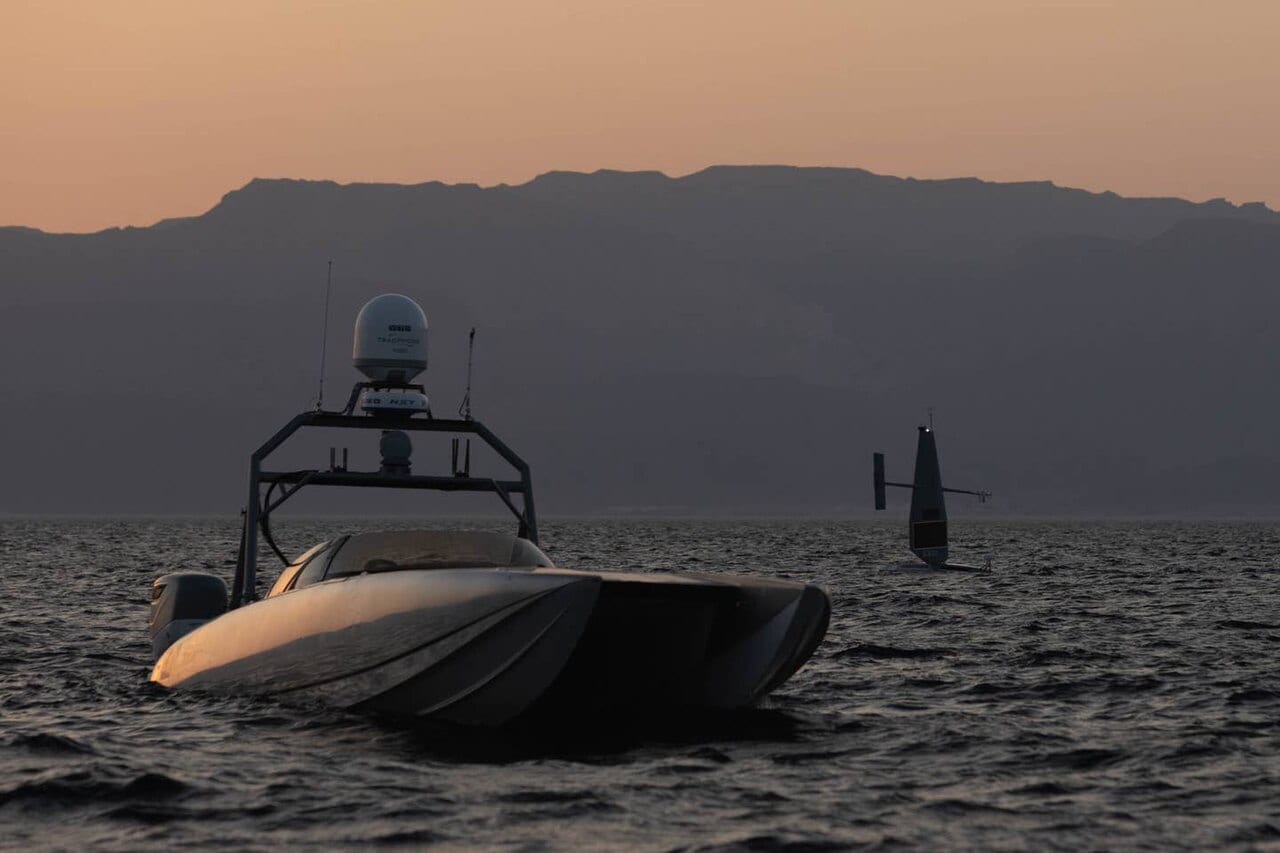
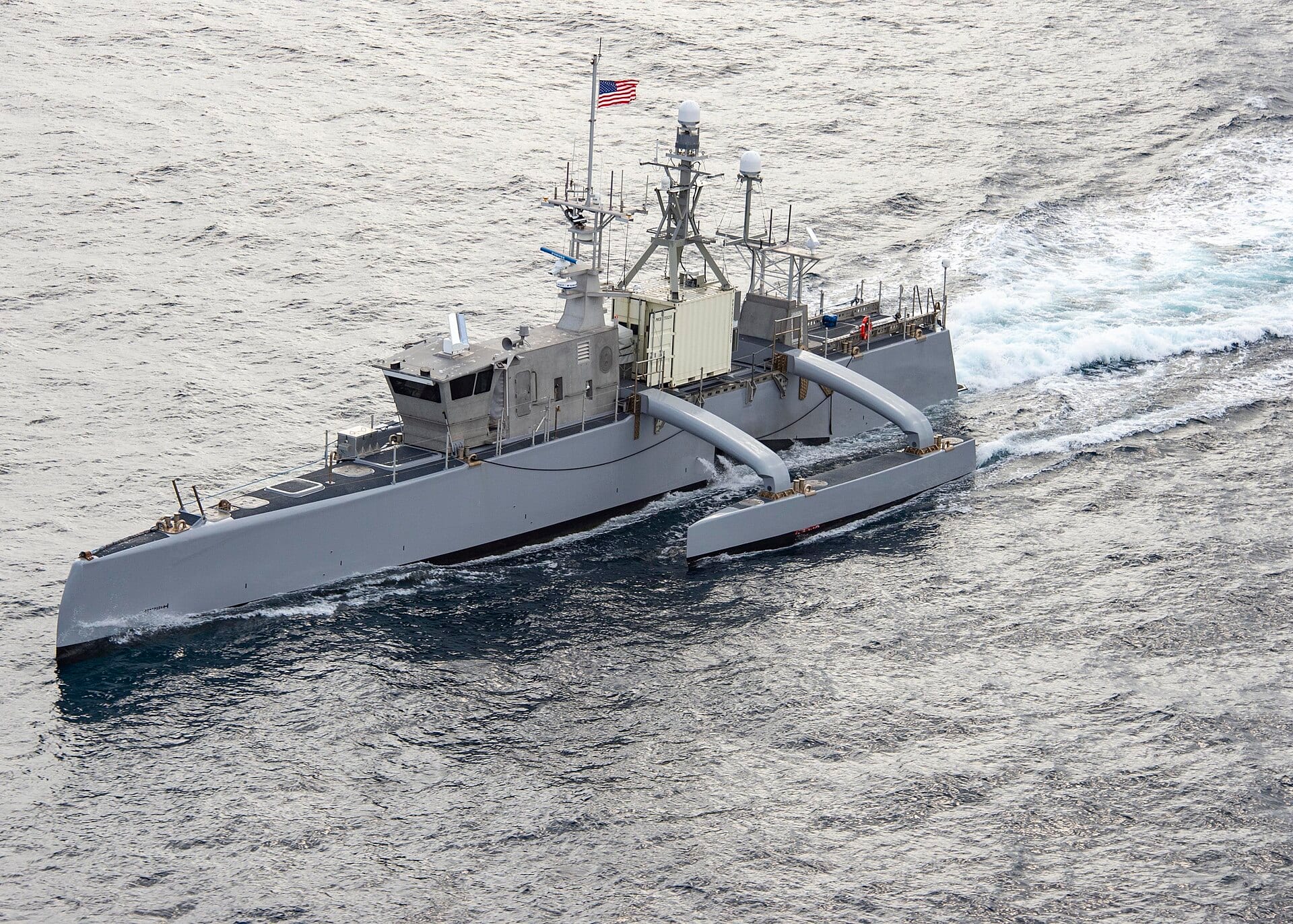
CENTCOM confirms Saronic's Corsair as the first American sea drone used in combat; Greece wants over 30
CENTCOM's confirmation makes the Corsair the first American sea drone used in combat, and Greece has already asked to buy more than 30. The money that would fill Saronic's new $3.3 billion Texas yard, though, is arriving in prize-challenge and allied-request portions, not Navy appropriations.
 Richard Tang · 4 min read
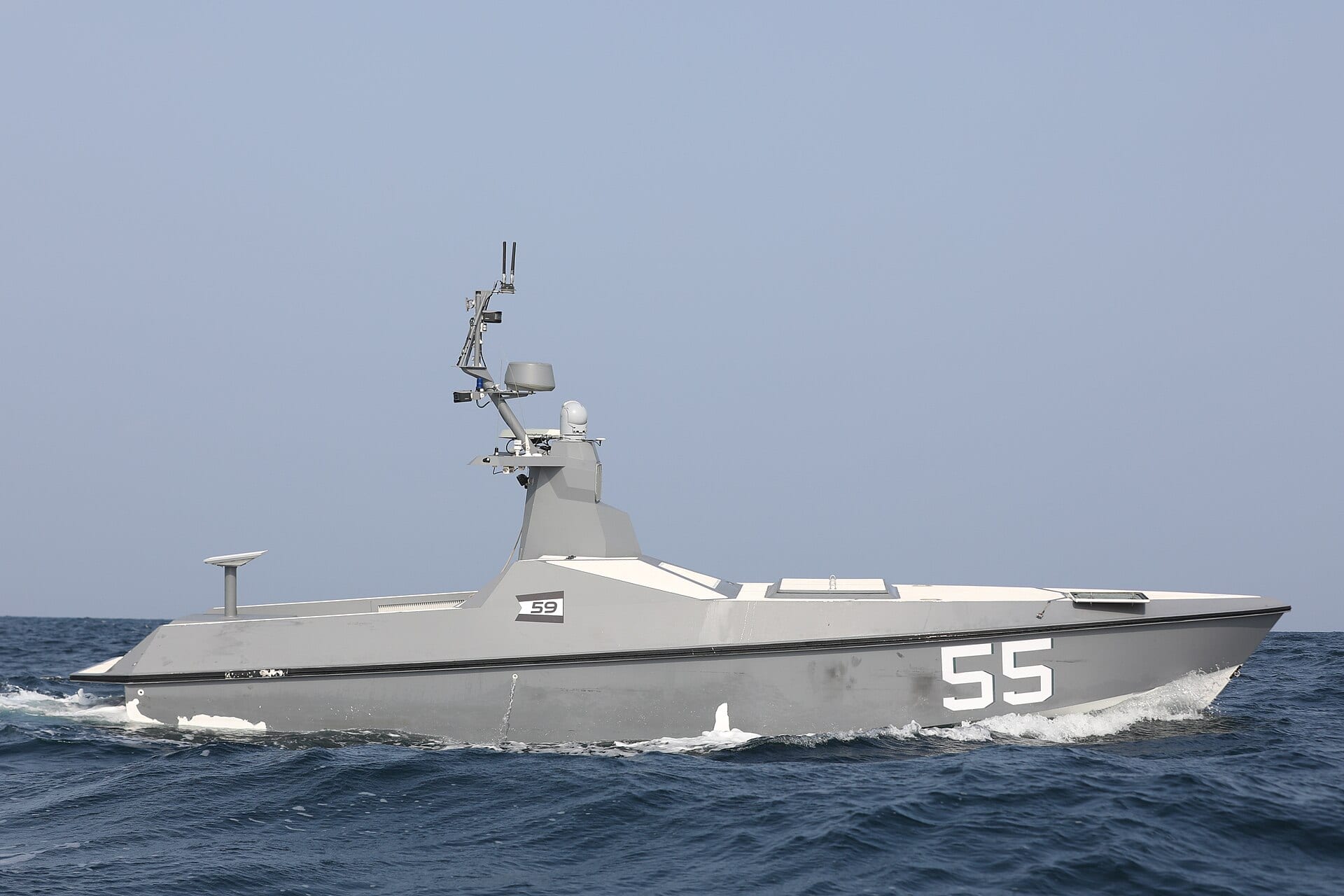
CENTCOM confirmed this week that three of Saronic's$12.31B — Saronic, private, latest valuation $12.31B Corsair sea drones struck a submarine and ship-maintenance facility at Iran's Bandar Abbas naval base on July 12, the first combat use of sea drones by American forces 1. The strike settles the question of whether the boats work. It leaves open the question that decides who profits, because the Pentagon's funded channel for buying them in numbers is a prize competition, while the first fleet-scale requests are arriving from allied navies.
The Corsair now has a combat record
The record has two firsts. In June, a Corsair in search-and-rescue mode pulled two crew members from an Army Apache helicopter that went down near the Strait of Hormuz, a recovery run by Task Force 59, the Navy's unmanned formation in the region 2. Weeks later, three military-variant boats converged on a jetty at Bandar Abbas, and the video CENTCOM released shows all three explode 1. Each strike consumes the hull, so the durable asset is the autonomy software, which Saronic has already re-tasked across surveillance, rescue and strike missions 1. The war this happened in began in March 1. A ceasefire had held from April 8 until Washington revoked an oil-sale license on July 7, and the strike followed days later 2.
The yard is being built ahead of its order book
Saronic is building for the fleet that would buy these boats. Port Alpha, its shipyard at Brownsville, Texas, has moved from plan into construction, with roughly $3.3 billion of private capital on 835 acres and operations expected from 2028 3. Its first phase is anchored by a recently awarded Navy contract for Landing Craft Utility vessels, crewed logistics ships rather than drones 4. Opening capacity of about 150,000 gross tons a year is said to more than double current US commercial shipbuilding output, in a facility laid out to build destroyers as well as small craft 3. That is a bet on volume, and for the strike boats the volume buyer has not appeared.
The first customers are allied navies
Greece's Hellenic Navy has evaluated the Corsair alongside its own warships, and the government has filed a foreign military sales letter of request for more than 30 vessels, with a US response expected within 2026 5. A letter of request opens the sales case; no contract or payment has moved on it yet 5. Australia has run two Corsairs in its waters since January, covering more than 2,800 nautical miles, for a defense force that owns no USVs of this type 1. The Pentagon's funded channel, meanwhile, is the Defense Innovation Unit's prize challenge: Sprint 2 submissions are due November 30, with up to $40 million in prize money per sprint and a separate $200 million earmarked for prototype or follow-on production contracts 6. DIU's solicitation says the current force lacks the persistent capability to defeat low-cost threats "at an economically sustainable cost" 6.
The Pentagon's funded USV channels are small next to Saronic's yard bill
Data
| Value | |
|---|---|
| Sprint 1 prize | $40M |
| Sprint 2 prize | $40M |
| Sprint 3 prize | $20M |
| Production earmark | $200M |
| Port Alpha yard | $3,300M |
Who pays, and who carries the risk
CENTCOM operations pay for the boats that get used up; allied buyers would pay for the ones that arrive in numbers; prize money pays for prototypes. The bill for the yard sits on private capital: Saronic raised a $1.75 billion Series D in March at a $9.25 billion valuation, led by Kleiner Perkins 7. The company is private, so there is no listed stock to trade, and the exposure runs through private markets and through the supplier base and workforce now forming around Brownsville 4. Among listed companies, the touchpoint is the incumbent shipbuilders that share the Navy classes Port Alpha is sized to build 3.
The caution is fair, and the Navy's own guidance answers it
The sharpest caution comes from Joshua Tallis, who directs ally and partner security affairs at the Center for Naval Analyzes: open-source estimates put a Corsair at about $1.1 million, and he reads the war's examples as "an iterative learning moment, not a fully formed vision of the future fight" 8. That caution earns its place. A seven-figure hull is not cheap by drone standards, and one strike against a docked target does not settle how naval warfare changes. But the Navy's February 2026 Fighting Instructions call for attritable, easily replenishable unmanned surface vessels, built for scouting, screening and striking 8. The service has stated what it wants, the technology has shown it exists, and what has not moved is an appropriation that buys these boats by the hundred.
The open question is whether anyone buys at scale
Saronic has proved the boats work. Its backers are now betting on the bureaucracy to buy them. What no source yet shows is absorption at scale: whether an appropriation, or a stack of allied sales, arrives in time to fill the yard when it opens. If neither does, private capital carries a fleet-sized bet on a request book measured in dozens of boats. If one does, Saronic holds the combat record, the newest large yard, and first claim on the demand that follows.
Deepdive
AI-generated from this story and its cited sources. Not investment advice.