Saronic's robot boats just rescued two human pilots
Saronic's Corsair drone boat rescued two downed aviators and struck an Iranian base in the first U.S. combat use of sea drones. The same week, the Navy handed the venture-backed startup a share of $280.5 million in landing craft work averaging $40 million a hull against a $25 million target, on authority that skipped the standard competition and the public contract wire.
 Vincent Jiang · 3 min read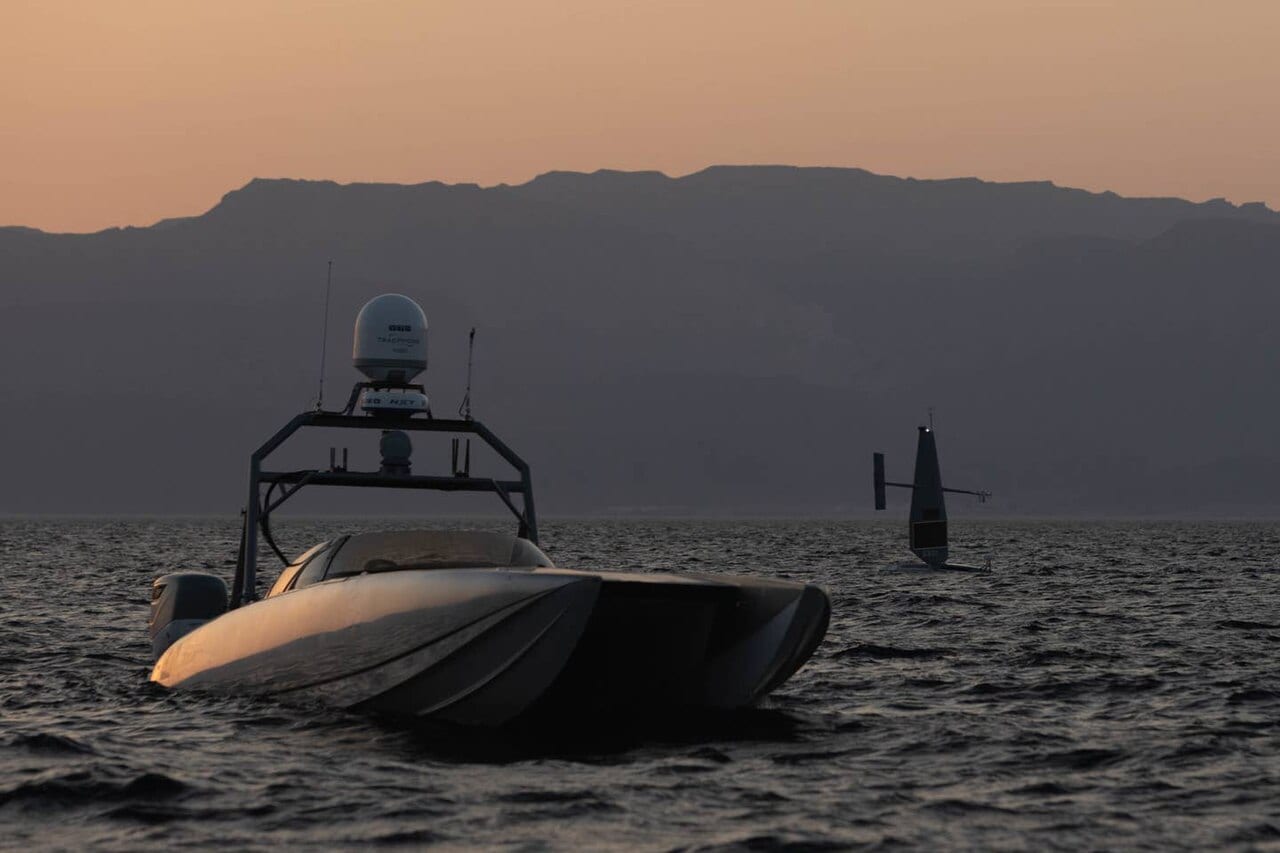
A robot boat pulled two pilots from the water
An Army AH-64 Apache went down off Oman in June. A Corsair, the 24-foot autonomous boat built by Austin startup Saronic, picked up the two aviators and carried them to a hoist 1. In July, three Corsairs attacked a submarine and ship maintenance facility at Iran's Bandar Abbas Naval Base, the first combat employment of sea drones in U.S. military operations 2. Secretary of War Pete Hegseth brought the applause to Saronic headquarters on 18 September: "Those pilots are alive today because of the incredible innovation under this very roof" 1.
The applause and the award landed the same week
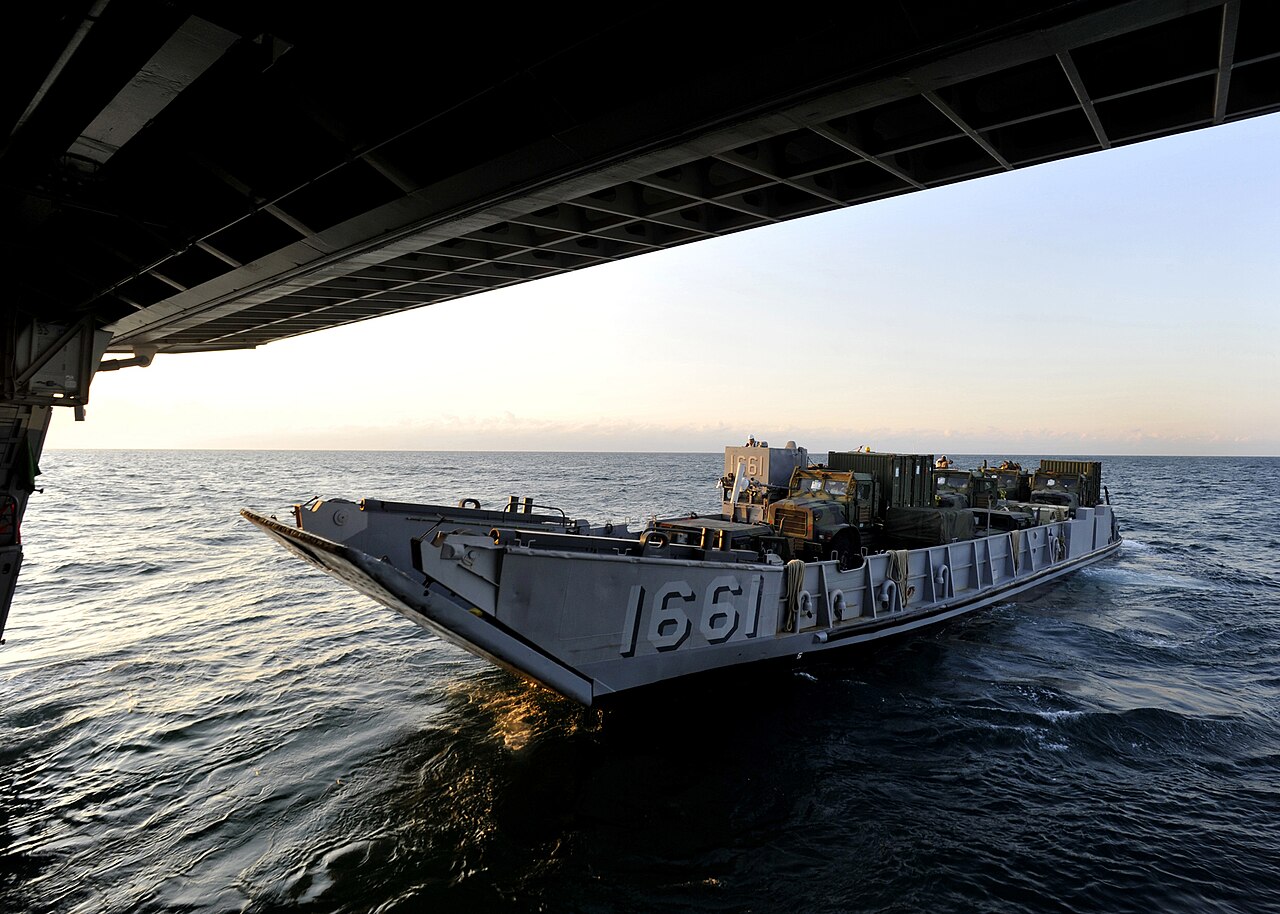
Days earlier, the Navy obligated $280,521,389 for seven LCU-1700 landing craft split among three Gulf Coast yards, Saronic's Brownsville operation included. The deals used other transaction authority, outside the standard contract competition process, and never appeared in the Pentagon's daily contract announcements 3. The Navy's own 2026 budget documents price that hull at $25 million. The award averages about $40 million, roughly 60 percent above target 3. Congress is otherwise engaged: House leaders sent members home early that week, postponing an impeachment vote over the Iran war 4.
Data
| Value | |
|---|---|
| Navy FY26 budget target | $25M |
| Austal 2023 award, implied | 30.5 est. |
| September OTA award, average | $40M |
The old builder is bankrupt; the new one is worth $9.25 billion
Swiftships held this work until the Navy terminated its 2018 contract in 2024; the Louisiana yard sued, then declared bankruptcy in March 3. Saronic raised $1.75 billion in March at a $9.25 billion valuation, led by Kleiner Perkins, with Andreessen Horowitz and Joe Lonsdale already aboard 25. It carries roughly $500 million in government contracts 2, a $392 million Corsair production deal signed late last year 4, a $300 million Louisiana expansion that just topped out 6, and Port Alpha, a planned $3 billion Brownsville shipyard meant to open from 2028 7.
Data
| Committed outlays | |
|---|---|
| Corsair production deal, late 2025 | $392M |
| Louisiana expansion, 2026 | $300M |
| Port Alpha shipyard, planned | $3,000M |
The Navy's case, in its own words
Three yards create a resilient second source, and the premium buys prototypes that validate the design for high rate production, funded through the One Big Beautiful Bill Act 8. "Other Transaction prototype authority allows the Navy to move at the speed of relevance," said William Mahan, performing the duties of the Navy's acquisition chief 3. The program of record is 32 hulls, and Austal delivered the first in August 3.
The tell is the unit price
The Navy did not break out the awards by yard, so Saronic's slice is unknown 3. The Navy is buying ships the way a venture fund buys startups: quickly, expensively, and off the daily contract wire. If hulls cost $25 million once production scales, the model works. If they stay near $40 million, the Pentagon bought an industrial base and called it a boat order.
How this brief was made
01Gathered & sourced262 channels · 1,617 articles▾
Agents swept 262 channels and ingested 1,617 articles, then de-duplicated and ranked them for signal.
02Verified & cross-validated8 claims · 19 data feeds▾
Every one of 8 load-bearing claims was checked against primary sources, with 19 live data feeds reconciling the figures and charts.
- 1Defence Industry Europe, "Hegseth says Saronic sea drone rescued U.S. pilots and struck Iranian naval facility in first American combat deployment," 19 September 2026
- 2Fast Company, "Inside the $9 billion Texas startup building a drone armada for the U.S. Navy," July 2026
- 3USNI News, "3 New Shipyards Tapped to Build LCU-1700s in $280M Deal," 15 September 2026
- 4Austin American-Statesman via Yahoo News, "Pete Hegseth visits Austin startup behind autonomous military vessels," 18 September 2026
- 5CNBC, "Autonomous ship startup Saronic raises $1.75 billion in race to modernize U.S. military," 31 March 2026
- 6Associated Construction Publications, "JE Dunn, Alberici Celebrate Topping Out of $300M Saronic Technologies Expansion Project," October 2026
- 7Naval News, "Saronic Selects Texas to Build $3 Billion 'Port Alpha' Shipyard for Autonomous Vessels," 16 July 2026
- 8WorkBoat, "Navy orders seven LCU 1700s from three new shipyards," 16 September 2026
03Reviewed & edited2 human editors▾
2 editors read the draft against the evidence, tuned the framing, and signed off before it shipped.
Become a contributor
Reporting on the business of AI and want it read? We take pitches from outside contributors who bring primary sources and a number worth arguing about.
Deepdive
AI-generated from this story and its cited sources. Not investment advice.