Chegg lost 40 percent of its revenue and stopped reporting subscribers
AI wiped out the homework-help business and now builds its replacement cheaply. But the pivot is measured in site visits, the subscriber count has vanished, and a stock at $0.61 now faces two listing clocks.
 Richard Tangthree-minute read

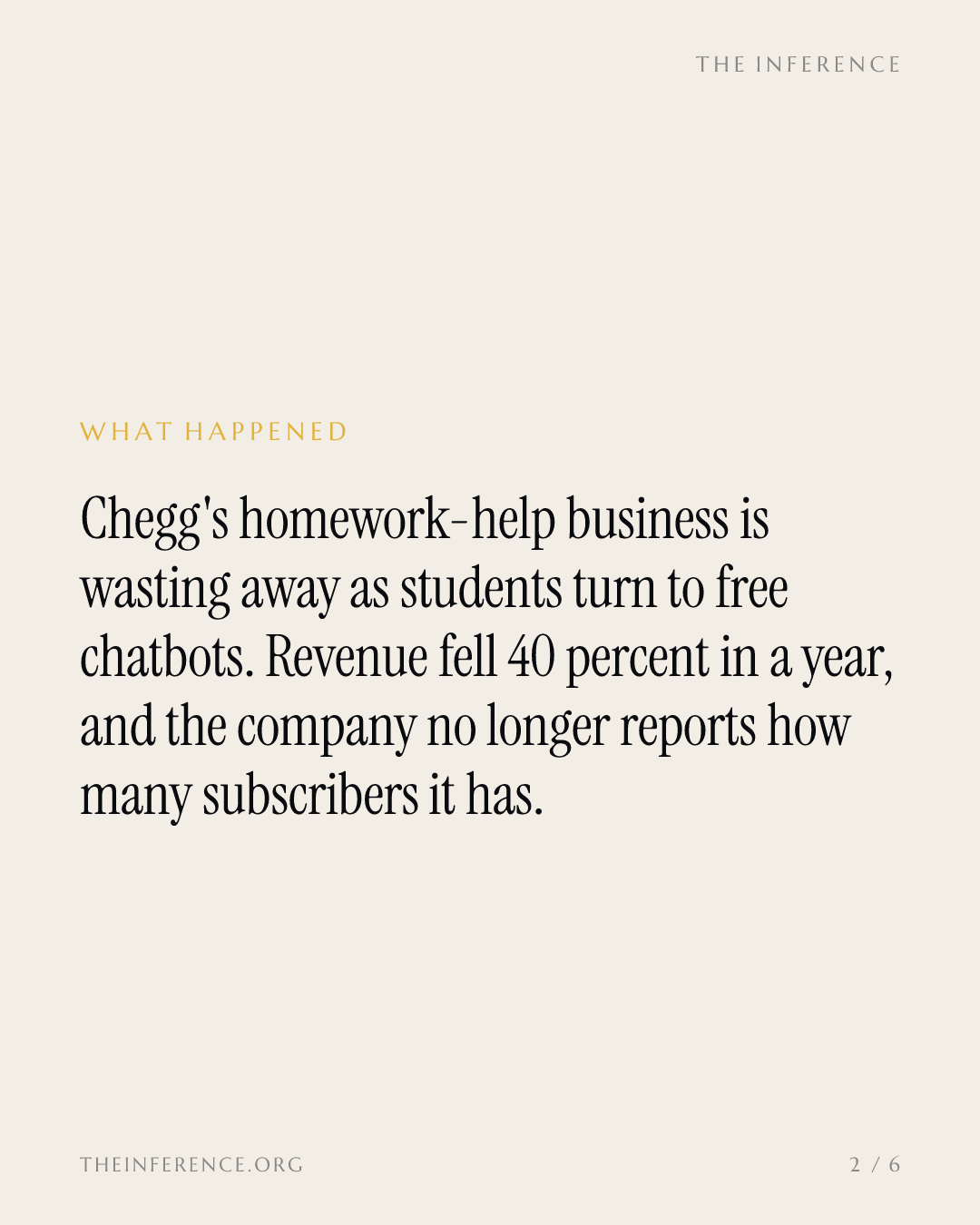
Chegg−1.25% — Chegg, down 1.25 percent as of its last quote reported its third quarter on November 3 with revenue down 40 percent from a year earlier, and with no subscriber count at all 1. That missing line is the story. In October we wrote that Chegg had parked the reverse split that could save its NYSE listing; since then the shares have slipped to $0.61, the price recorded on the chief financial officer's Form 4 on November 11, a tax withholding on vesting rather than a sale 2. The quarter confirms the company AI is dismantling, while the replacement is still measured in visitors 3.
AI is dismantling the old business and building the new one
Chatbots commoditized homework answers, and the subscription business is wasting away quarter by quarter (chart). The same technology is doing the rebuilding. Operating expenses fell by more than a third over the year, management credits AI for streamlining operations, and Chegg repaid its remaining convertible debt, ending the quarter debt-free with $43.6 million in cash and investments 1.
The replacement counts visitors, not customers
The replacement is live: the employability platform on internships.com, launched in September, drew over 100,000 visitors in eight weeks, and Chegg signed pilots at three colleges plus eleven distribution partners for its skills business, which it expects to pass $65 million of revenue this year 14. Daily traffic on the new site is up roughly tenfold since launch, and engagement shows up as resume uploads 4. But those are traffic and contract counts, not customers. Management itself dates the payoff to 2027, when the platform is to contribute "more meaningfully" 1, and EdTech Current notes the company dropped the subscriber metric that would show whether visitors convert 3.
Revenue has declined in ten of the last eleven quarters
The decline has continued through the quarter Chegg calls its reinvention
Data
| Total net revenue | |
|---|---|
| Q4 '23 | 188M |
| Q1 '24 | 174.4M |
| Q2 '24 | 163.2M |
| Q3 '24 | 136.6M |
| Q4 '24 | 143.5M |
| Q1 '25 | 121.4M |
| Q2 '25 | 105.1M |
| Q3 '25 | 77.7M |
| Q4 '25 | 72.7M |
| Q1 '26 | 63.3M |
| Q2 '26 | 51.9M |
| Q3 '26 | 46.5M |
Investors pay almost nothing for the pivot, and the delisting clock got shorter
The market capitalization was about $78 million at the print, not far above the cash the company says it holds, so investors are paying almost nothing for the reinvention 56. Fourth-quarter guidance calls for roughly $1 million of adjusted EBITDA, a fraction of the third quarter's 1.
The stock sits below the $1 level where NYSE's continued-listing standard turns on, a risk Chegg's own release flags, and traders count down to a mid-January deadline no filing we could reach confirms 127. What changed in November is the rulebook: the SEC approved a NYSE requirement, effective July 2027, under which any close below $0.25 brings immediate suspension and delisting with no cure period, while the older $1 standard still allows one 8.
Cash is the business until the number comes back
The cash buys Chegg time to prove the pivot. Nothing published this quarter shows the pivot earning money. A reverse split resets the share price, not the business. The test is simple and the company can meet it by reporting again what it stopped reporting: paying users on the new platform. Until that number returns, the cash is the business and the rest is a promise dated 2027.
Get Applications by email, free
How AI is changing the software people and companies use. In our daily email, every weekday.





Reader comments
0 comments