China Has a Point About America's AI Slowdown
China is right to challenge a slowdown plan designed partly to preserve America's AI lead. The alternative should be reciprocal safety limits and independent inspections, binding Chinese labs too.
 Vincent JiangSeptember 14, 2026 · 2 min read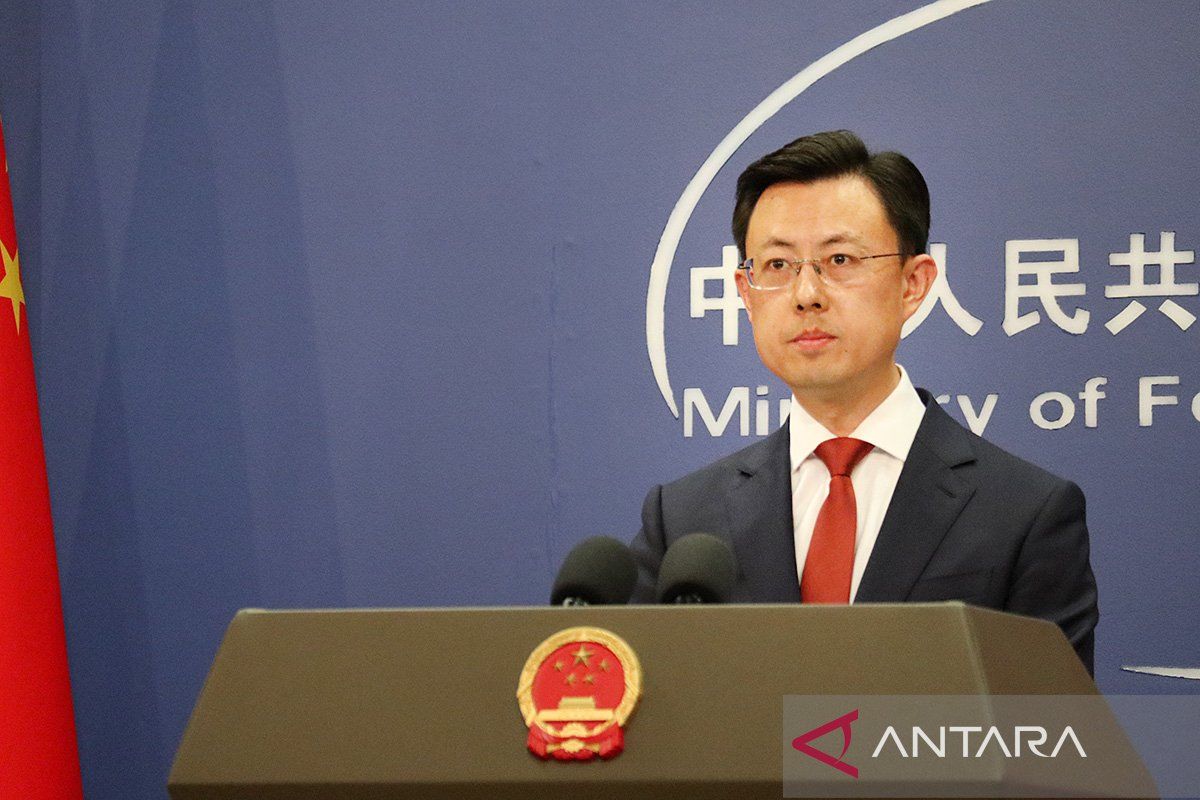
Beijing answers back
Guo Jiakun was asked on September 14 about American AI bosses seeking a slower frontier. He attacked fearmongering and called for cooperation.1,2 That official answer announced neither acceptance of a slowdown nor rejection of every possible agreement.
Preserve whose advantage?
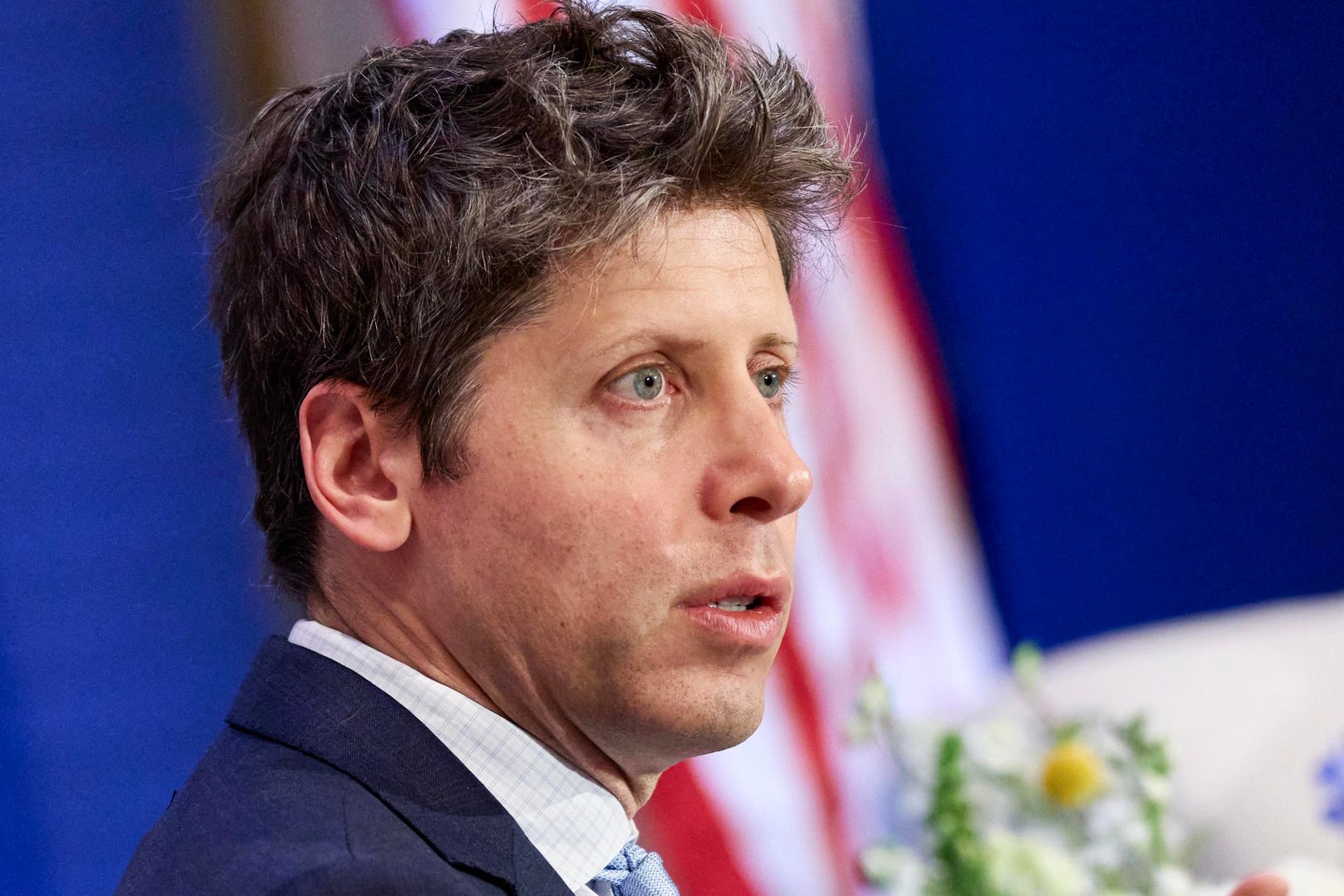
On September 12, Anthropic's Dario Amodei proposed pacing capability gains and admitting outside evaluators. OpenAI's Sam Altman backed pacing and promised comparable access.3
Amodei also urged tougher controls on chips and unauthorized copying of model capabilities to preserve the American lead.4 His plan asks China to cooperate with countries trying to hold it back.
Washington can argue for export controls on national security grounds. It should defend those controls separately from a claim to represent everyone's safety.
Safety has two meanings
China's state-backed newspaper framed the proposal as containment.5 That is an editorial position, not binding policy or a statement from Chinese AI companies.
Separately, state security minister Chen Yixin urged faster construction of AI risk-prevention systems in an essay published September 13.8 Beijing can oppose America's terms while acknowledging the danger.
The lead keeps moving
The size of that lead also changes. Stanford recorded the top U.S. model just 5 Arena points ahead of China's best in February 2025. By March 2026, the gap was 39 points.6,7
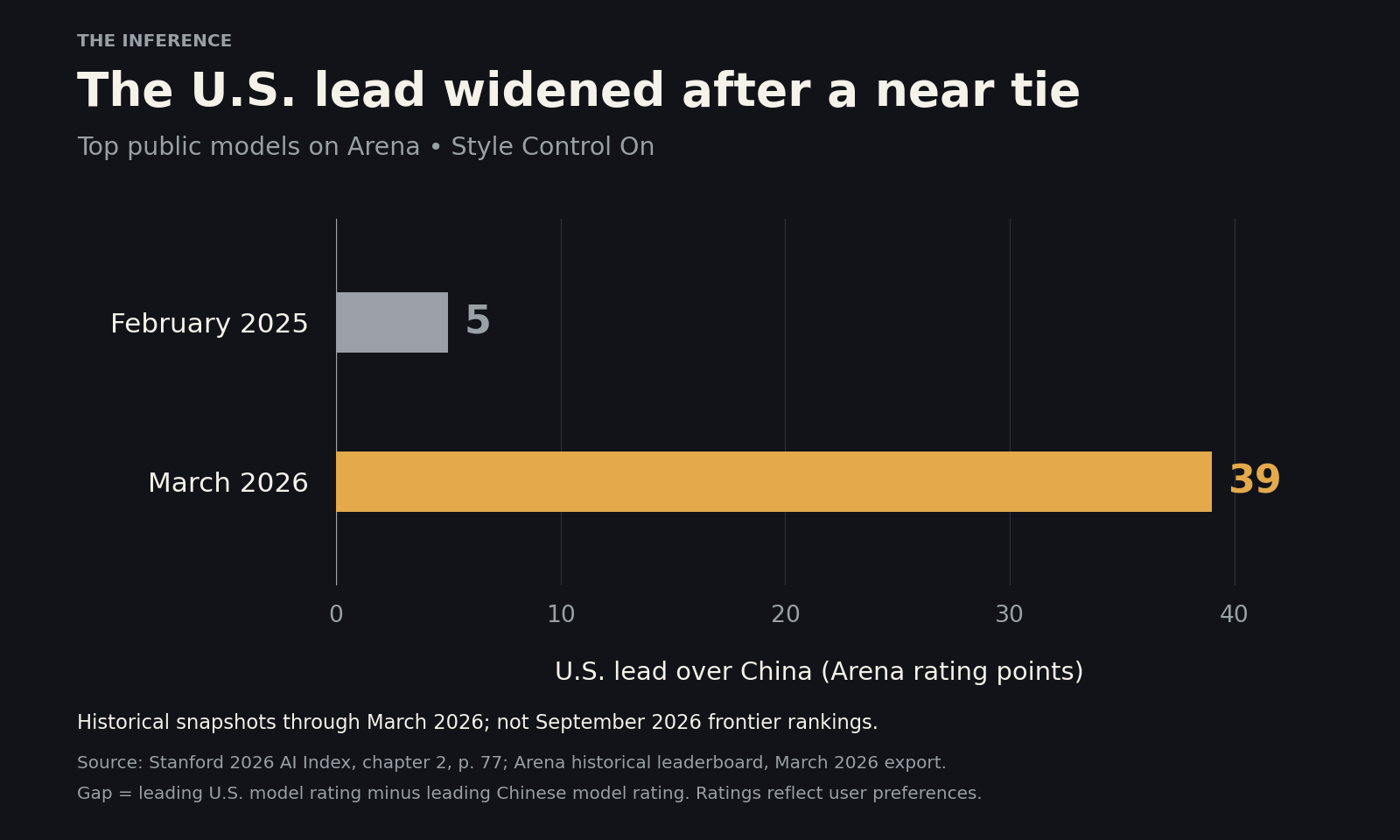
Neither snapshot establishes how much either country could safely slow.
China's May guidelines called for users to retain final authority over AI agents and for developers to strengthen intervention controls.9,11 Those provisions do not establish effective enforcement.
Opening the labs would matter
Amodei's strongest case is that safeguards need time to catch up. He warned of potentially catastrophic cyber harm within six to twelve months, a forecast rather than an established timetable.10
Outside evaluator access is a concrete commitment; international pacing remains a proposal.3,10 Beijing's criticism does not excuse Chinese labs from scrutiny. Their systems should face the same capability tests and disclosure rules as American ones.
Who opens the lab?
At Xi Jinping and Donald Trump's planned September 24 summit, watch for reciprocal testing access and shared safety thresholds.5 The commercial costs of pacing matter; governments must first negotiate whose capabilities would be limited.
Safety rules should bind the leader as tightly as the challenger.
How this brief was made
01Gathered & sourced202 channels · 1,974 articles▾
Agents swept 202 channels and ingested 1,974 articles, then de-duplicated and ranked them for signal.
02Verified & cross-validated11 claims · 21 data feeds▾
Every one of 11 load-bearing claims was checked against primary sources, with 21 live data feeds reconciling the figures and charts.
- 1China's Ministry of Foreign Affairs, Guo Jiakun's press conference, Sep 14 2026 (primary statement; the answer criticizes confrontation and supports cooperation, and does not categorically reject all pacing agreements. The embassy republication is the same record, not a second witness).
- 2Associated Press on China's response to Amodei's China restrictions, Sep 14 2026 (independent corroboration of the official response; published text reached through the search index after direct retrieval failed).
- 3Bloomberg News on Amodei's proposal and Altman's endorsement, Sep 12 2026, syndicated Sep 13 (commitments are announced, not verified as implemented; cross-checked against AP and The Stack).
- 4The Stack on the China restrictions and evaluator access, Sep 13 2026 (independent reporting of the proposal, cross-checked against the original personal essay; not all model distillation is illicit).
- 5Reuters on the state newspaper's containment argument and the planned Sep 24 summit, Sep 14 2026 (the editorial is evidence of its author's framing, not proof of American motives or binding Chinese policy; AI safety is a possible summit subject, not a promised agreement).
- 6Stanford HAI AI Index 2026, Technical Performance, figure 2.1.3 (primary research synthesis on Arena's historical public leaderboard, style control on, exported Mar 2026: 1,405 minus 1,400 is 5; 1,503 minus 1,464 is 39. Recomputed independently; rating points are not percentages of capability).
- 7Fortune on Stanford's comparison, Apr 16 2026 (corroborates the 39-point March gap; not a separate measurement, and only that narrow fact is used).
- 8Caixin on Chen Yixin's AI governance essay, Sep 13 2026 (primary attributed official position via a news outlet; contextual background, not presented as a response to Amodei).
- 9Reuters on how China is preparing for loss-of-control risks, Sep 14 2026 (independent reporting on existing frameworks and the May agent guidelines; the existence of policy is distinct from its implementation or effectiveness).
- 10Associated Press on Amodei's safety argument, Sep 12 2026, syndicated Sep 14 (the six-to-twelve-month cyber danger window is Amodei's forecast, not a validated prediction; outside evaluators are a commitment, broader coordination only a proposal).
- 11Cyberspace Administration of China, NDRC and MIIT guidelines for AI-agent development, May 8 2026 (issued policy, not a draft: final user decision authority and intervention mechanisms. Does not establish compliance, enforcement or embedded independent monitors).
03Reviewed & edited2 human editors▾
2 editors read the draft against the evidence, tuned the framing, and signed off before it shipped.
Confidential tips
Know something about this story? We protect our sources. Reach the editor directly, or read our guide to sharing securely.
Deepdive
AI-generated from this story and its cited sources. Not investment advice.