China's phone prices catch the AI memory squeeze: Huawei adds 400 yuan, Xiaomi 1,000
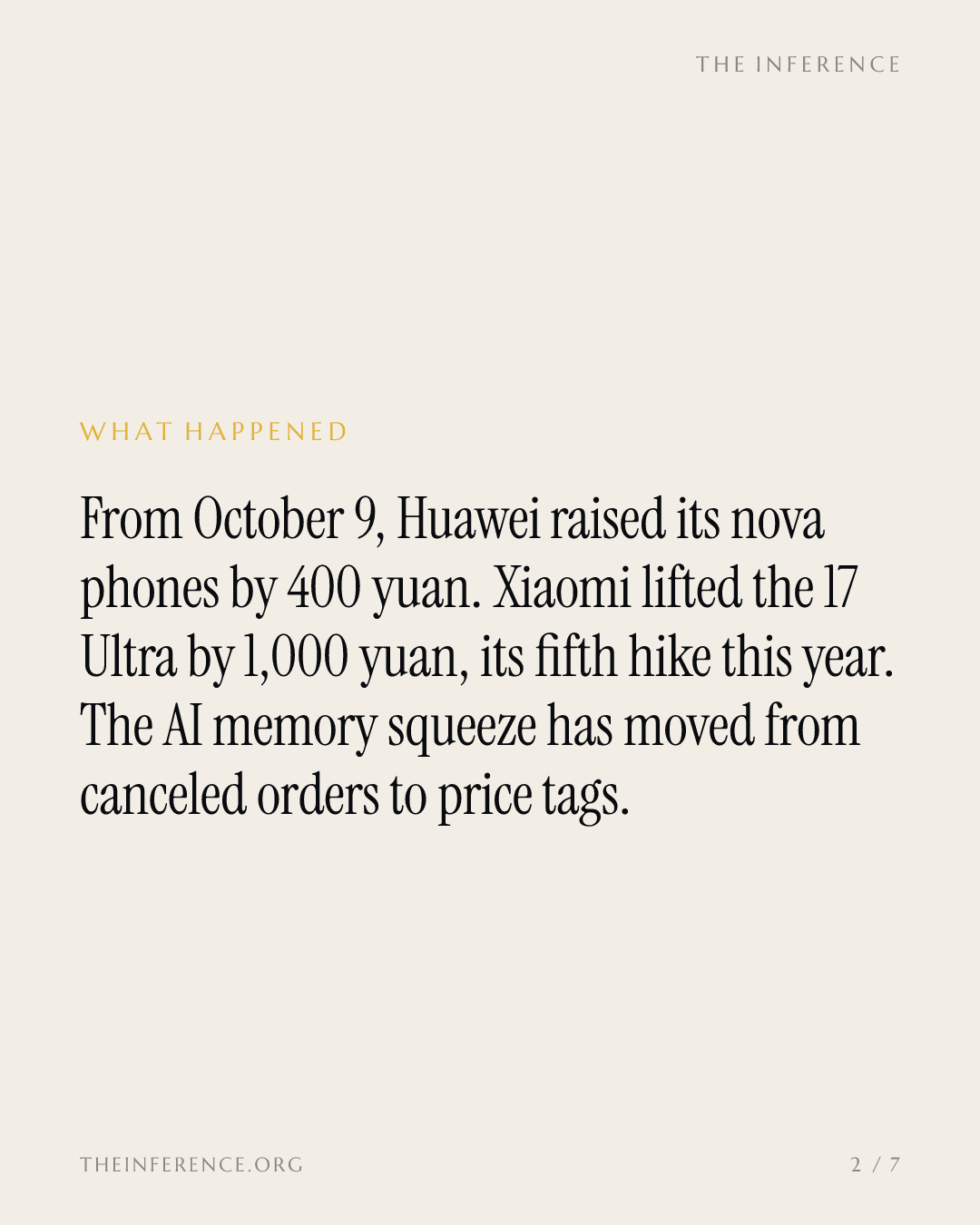
On October 9, 2026, the AI memory squeeze landed on Chinese price tags: Huawei raised its volume nova line and Xiaomi lifted the 17 Ultra by 1,000 yuan, its fifth hike of the year. HP's 7% fall the same day is the control case: pass-through did not save the margin.
 Vincent Jiang · 4 min read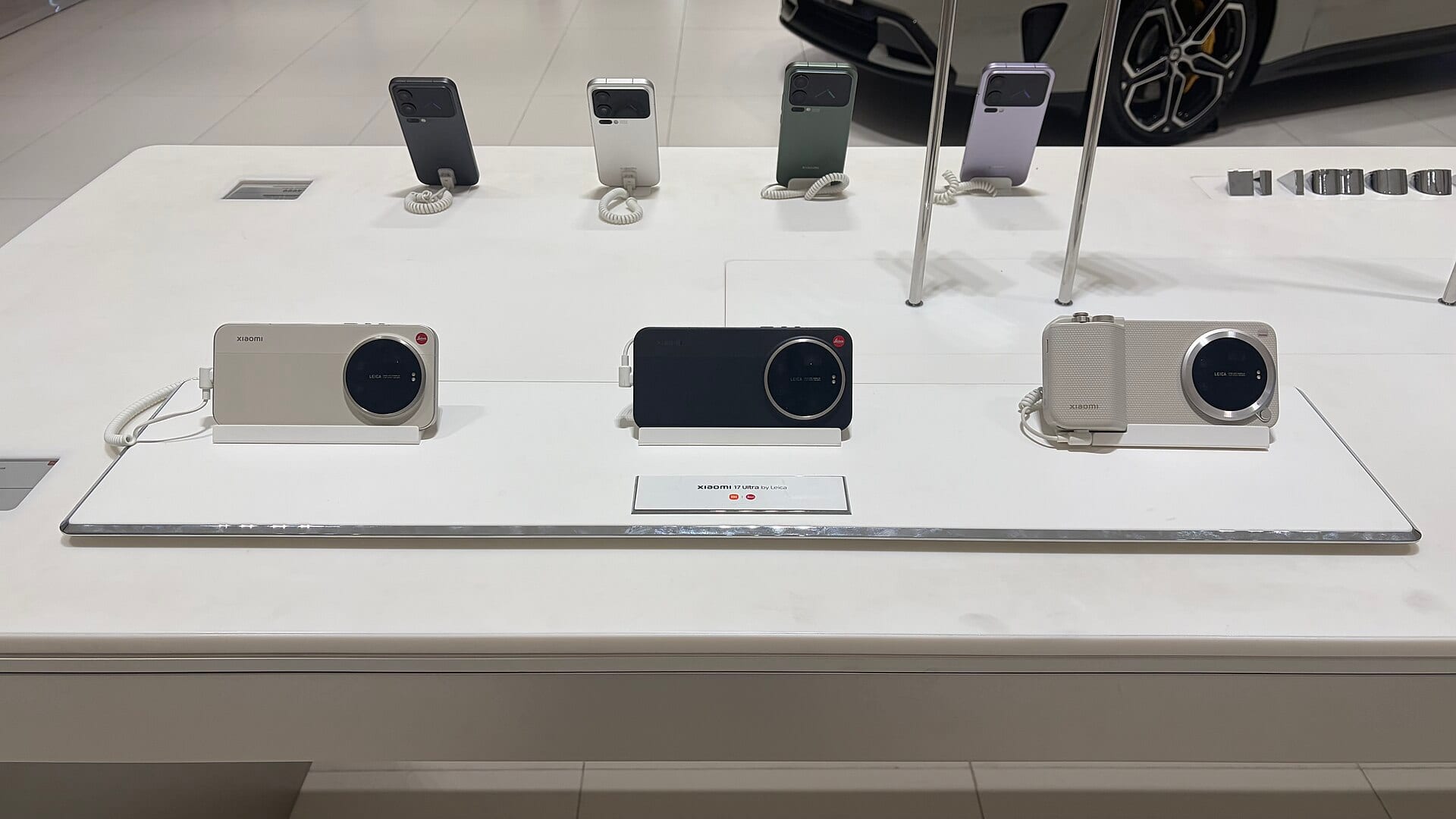
A 400-yuan hike lands on China's volume phone
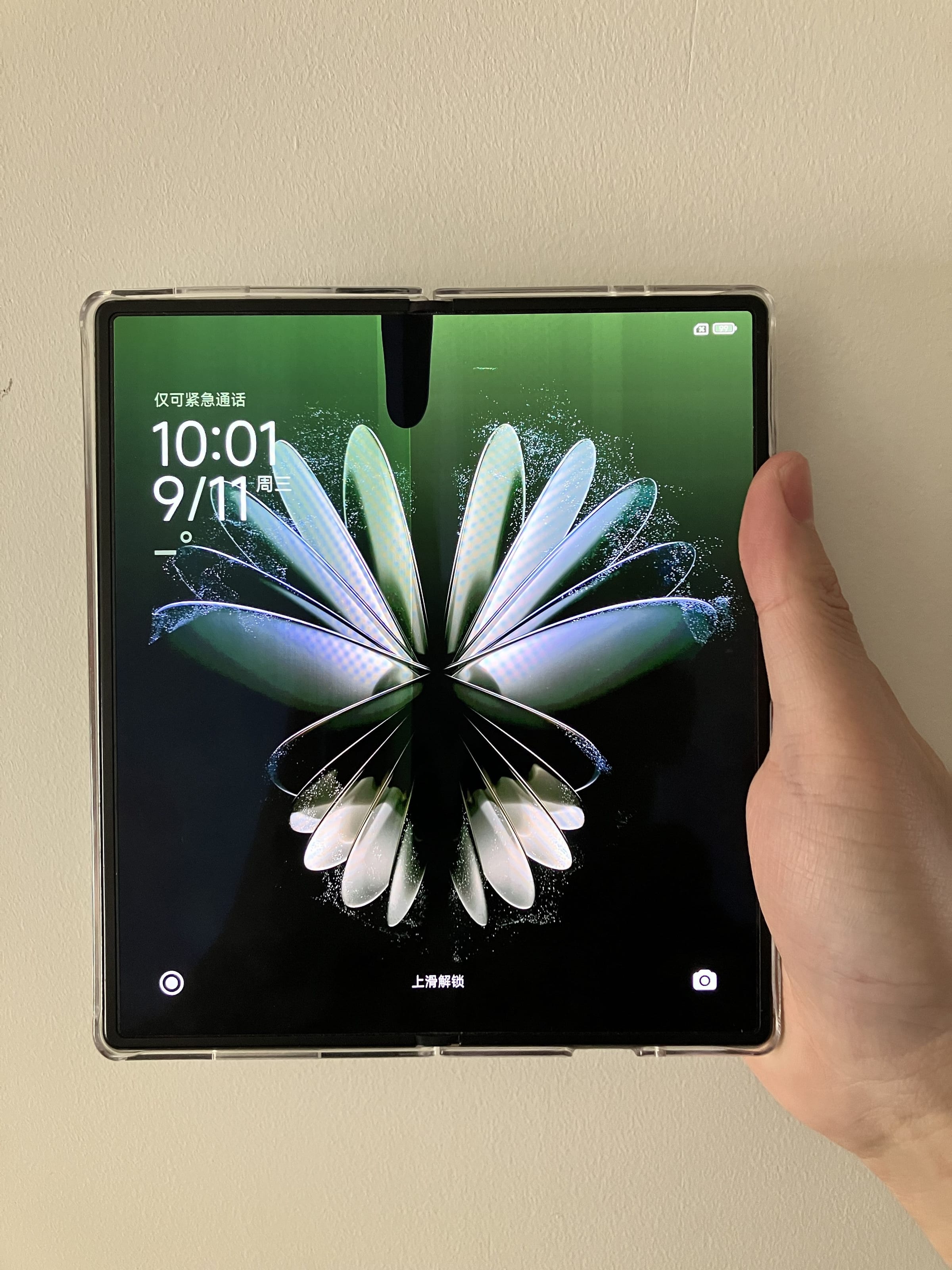
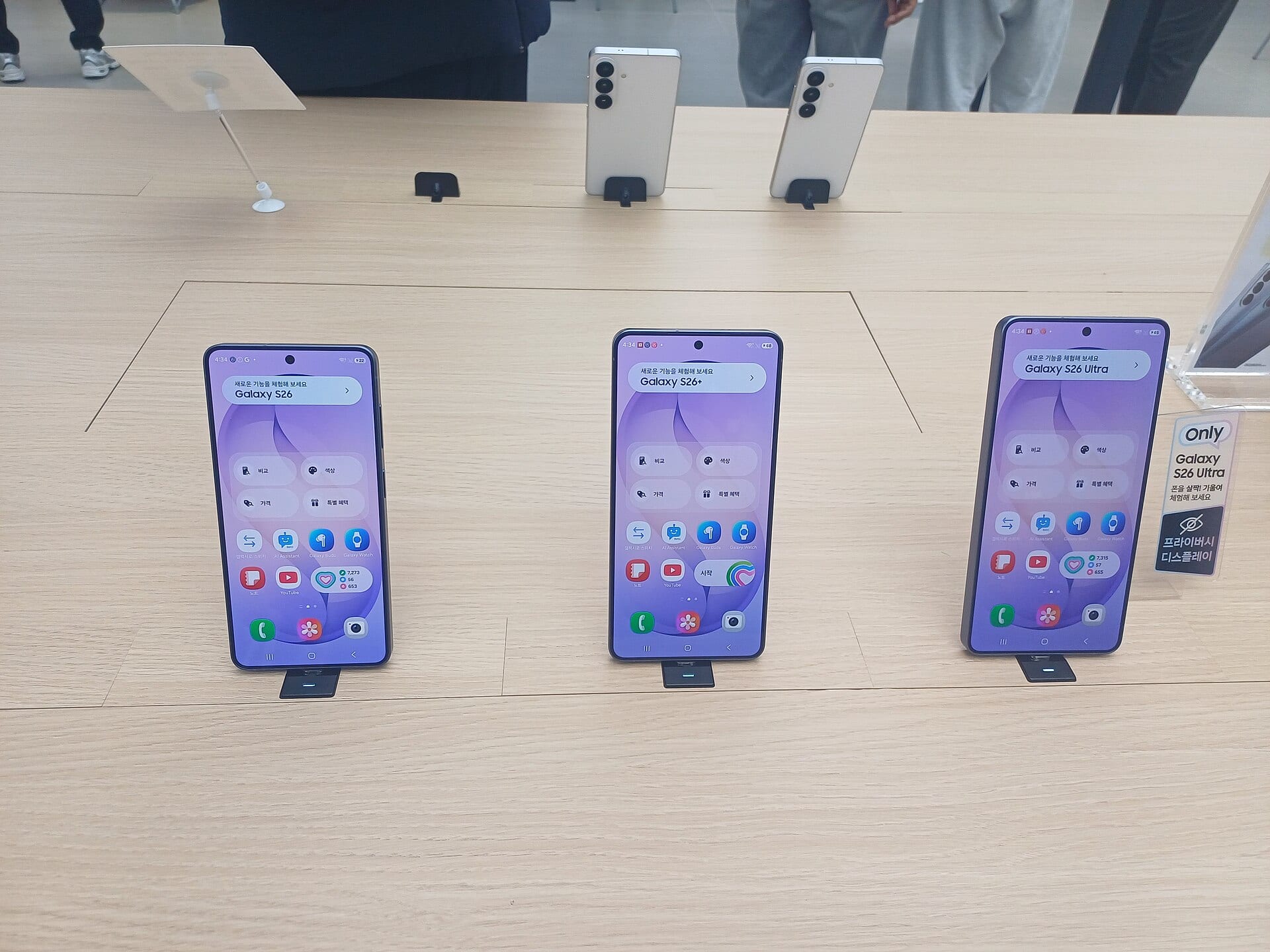
From midnight on October 9, 2026, Huawei raised the suggested retail prices of its mid-range nova 16 and 16 Pro by 400 yuan, and the nova 16 SE by 200 1. The nova line is the volume engine: about 2.2 million units sold by the week ending September 6, leading China's domestic mid-range on the digital blogger RD's tally 1. The nova 16 went on sale in June at 2,999 yuan; the rise adds about 13% 12.
Xiaomi+9.72% — Xiaomi, up 9.72 percent today moved the same day, lifting the entire 17 Ultra line by 1,000 yuan, its fifth price adjustment of 2026 1. A September 1 wave had reportedly already taken Huawei's Mate 80, Xiaomi's Mi 17 and Honor's models up by several hundred yuan to more than 1,000 3. Until now the squeeze had surfaced as canceled orders and dead products, the $399 console among them, as The Inference charted; on October 9 it crossed to the price tag.
Memory is now a third of the phone
Richard Yu, Huawei's consumer chief, puts the added hardware cost at more than $200 a phone: "It's hurting our profitability very badly" 14. BofA's Simon Woo tracks third-quarter DRAM contract prices up 20 to 30% month-on-month, NAND up more than 15% 1. Memory has climbed from 10 to 15% of a phone's bill of materials in 2024 to 30 to 40% now; on a 1,000-yuan phone, storage costs more than a third of the device 1. The pass-through scales with the gigabyte: Xiaomi's 18 Pro launched in September at 1,000 to 3,000 yuan over its predecessor, a 50% jump on the one-terabyte model 5.
Xiaomi's flagship hike scales with storage, up to 3,000 yuan
Data
| Value | |
|---|---|
| 12GB+256GB | ¥1,000 |
| 12GB+512GB | ¥1,700 |
| 16GB+512GB | ¥2,400 |
| 16GB+1TB | ¥3,000 |
HP already ran this experiment
The same day, HP fell 7.08% 6. IDC and Omdia put global PC shipments down 20.1% and 21.2% year-on-year, HP's−6.91% — HP, down 6.91 percent today down about 31%, the steepest fall among the majors 67. Personal Systems operating margin still compressed to 4.6% despite HP's own price increases, and management withheld fiscal 2027 guidance 6. IDC's Jitesh Ubrani says channels are "worried about carrying too much inventory into a market where high prices are suppressing demand" 7.
Eight quarters of filings show the same: margin below its 2024 level even as July-quarter revenue grew 12.5% 8.
HP's operating margin has not recovered its 2024 level
Data
| Operating margin | |
|---|---|
| Q3 '24 | 7.1% |
| Q4 '24 | 6.3% |
| Q1 '25 | 4.9% |
| Q2 '25 | 5.1% |
| Q3 '25 | 6.6% |
| Q4 '25 | 5.3% |
| Q1 '26 | 4.2% |
| Q2 '26 | 5.7% |
Raise the price and lose the volume, or hold the price and lose the margin: that is the whole menu the memory market now sets.
The shortage is booked into 2028
Samsung, SK Hynix and Micron−0.64% — Micron, down 0.64 percent today have pointed nearly all new capacity at AI data centers, leaving consumer-grade supply no near-term refill 1. Micron has committed more than 75% of its 2027 output, much of it under multiyear take-or-pay contracts, and Mehrotra sees supply and demand "much tighter in calendar 2027 and 2028" than in 2026 9. TrendForce sees fourth-quarter DRAM contract prices up another 10 to 15%, NAND up 15 to 20% 19.
UBS dates the DRAM shortage to at least the second quarter of 2028 1. The rent is already in Micron's numbers: a record fiscal 2026 closed September 3, Mehrotra expects "an even stronger fiscal 2027", and the unit that sells memory into phones and PCs ran an 88% operating margin in the September quarter, up from 29% a year earlier 10. Kioxia has forecast July-September net profit at 31 times a year earlier, about 1.27 trillion yen 5.
The other bet, and the bill
The split runs straight through the tape: memory suppliers hold scarcity rent contracted into 2028 9, while consumer OEMs, HP first and China's mid-range next, hold the demand-destruction side 6. Yu's counter is that the squeeze helps Huawei: budget brands bleed first, and its shipments are expected to grow about 8% this year while rivals fall as much as 34% 4.
The optimists' clock says memory prices stabilize in the second half of 2027 1; the suppliers' clock says 2028 9. Counterpoint has China's weekly phone sales down by double digits since July 4, and nova guide prices have usually been ceilings, subsidies pulling real transaction prices below list 1. The guide price is the tell: if the new stickers stick, the shopper pays; if they fold, the phone makers eat a memory bill their suppliers booked through 2028.
Deepdive
AI-generated from this story and its cited sources. Not investment advice.