The Galaxy S26's $100 Hike Is a Memory Invoice With the Buyer's Name on It
Samsung lifted every Galaxy S26 by 149,600 won in Korea and $100 a model in the US on 1 October. Memory is now 43% of a premium phone's cost, and the three firms that set those prices hold 87% of world DRAM revenue.
 Vincent Jiang · 3 min read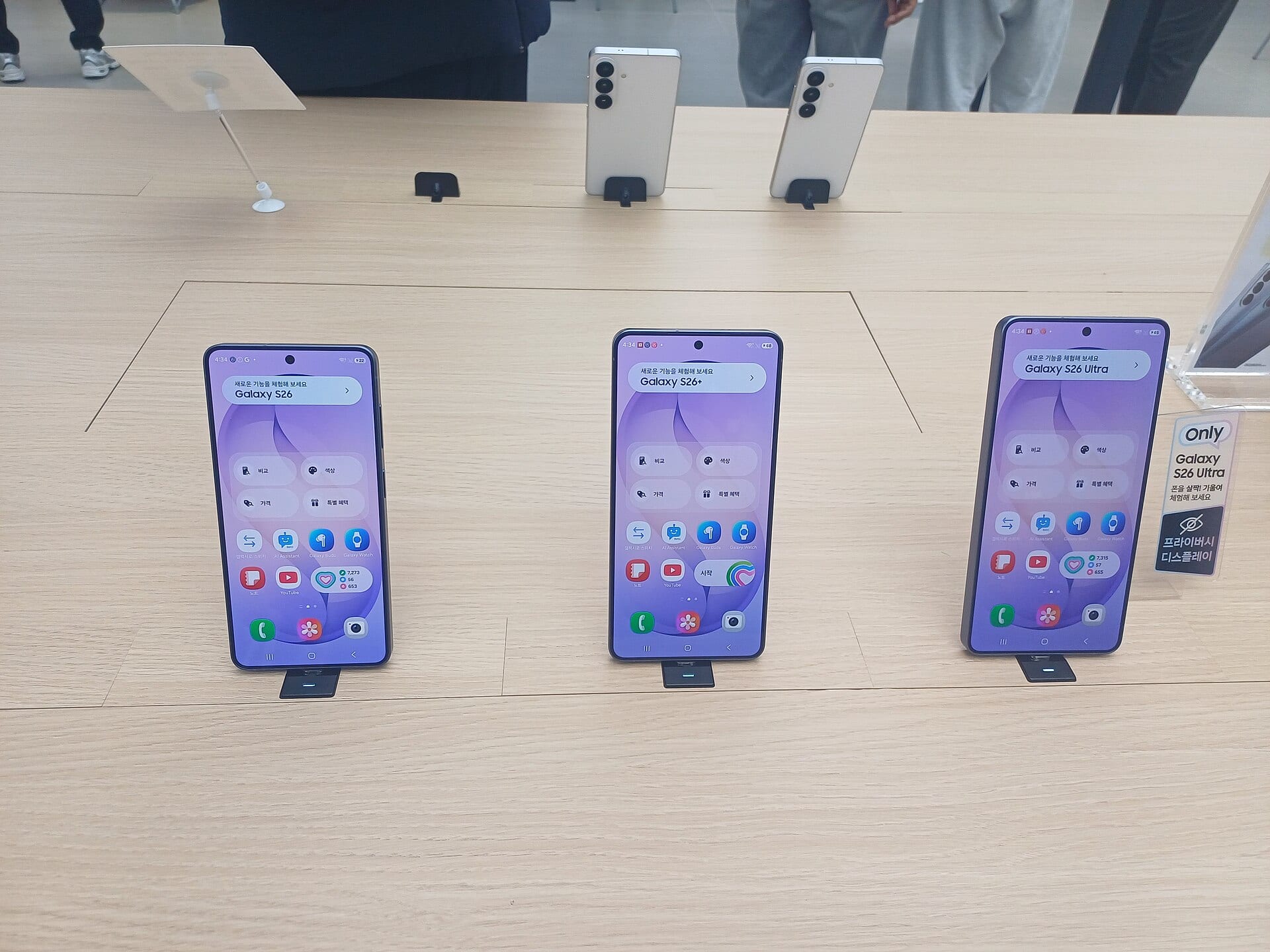
The memory bill reached the sticker on 1 October
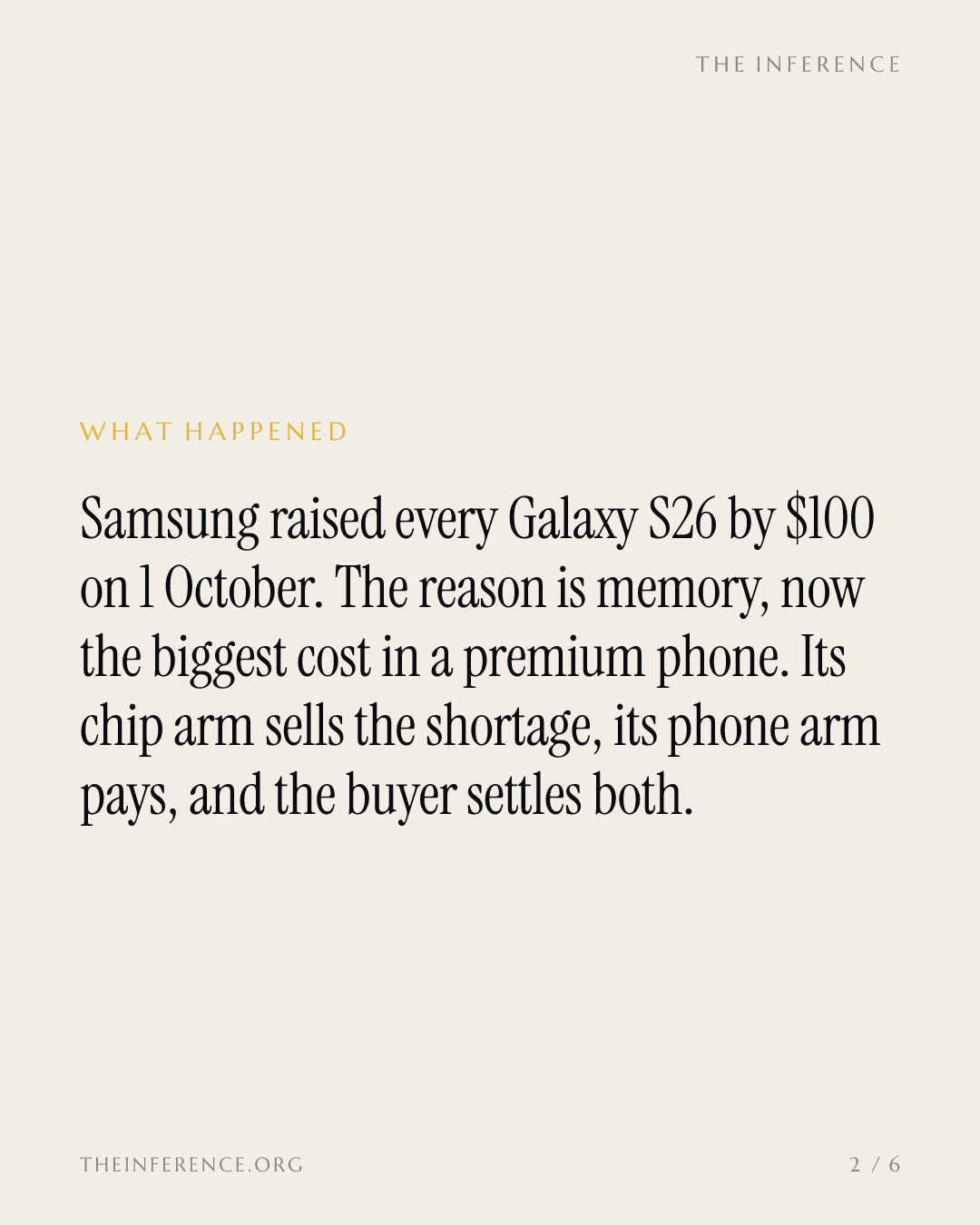
Samsung raised the price of every Galaxy S26 on 1 October: 149,600 won more in Korea for each 256GB model, lifting the base handset to 1,403,600 won and the Ultra to 1,947,000 won 1. In the US every model went up $100, and the 1TB Ultra rose $200 to $1,999 16. The stated reason is one line item: memory, the largest single cost in a smartphone 1.
Six months from $13 DRAM to a first-ever loss
The S26 launched in March, when average DRAM prices stood at $13; by the end of September they were $26, per DRAMeXchange 1. Counterpoint now counts memory at 43% of a premium phone's production cost, up from 27% at launch 1. Samsung's handset arm absorbed that curve into a 700-billion-won second-quarter operating loss, its first ever 13, even as the group printed a record 89.5 trillion won in quarterly operating profit 5. Its own half-year filing puts the squeeze in one pair of numbers: the device division paid 211% more than the 2025 average for externally bought mobile memory, 5.04 trillion won in six months, while the chip division's memory prices ran about 220% higher 3. Samsung's chip arm sells the shortage; its phone arm buys it; from 1 October the customer pays for both.
Every Galaxy S26 in Korea now costs about 150,000 won more
- March launch price
- From 1 October
Data
| March launch price | From 1 October | Change | |
|---|---|---|---|
| S26 256GB | ₩1.254M | ₩1.404M | +11.9% |
| S26+ 256GB | ₩1.452M | ₩1.602M | +10.3% |
| S26 Ultra 256GB | ₩1.797M | ₩1.947M | +8.3% |
The firms that set the price hold 87% of the market
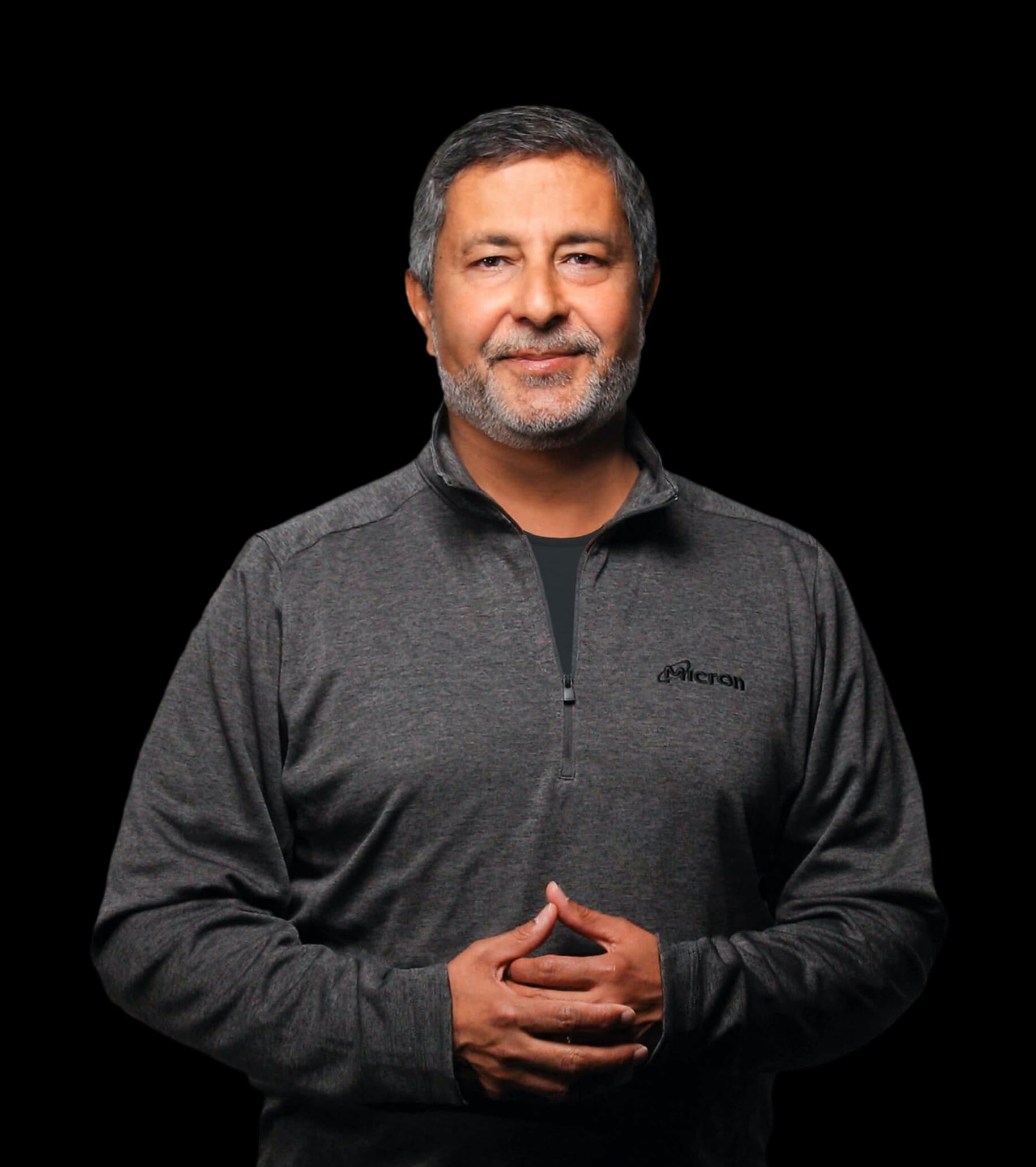
Between them, Samsung at 38%, SK hynix at 25% and Micron at 24% hold 87% of world DRAM revenue, with China's CXMT at 10% 7. Micron's quarter to 3 September booked $54.23 billion of revenue at an 86.8% gross margin, and the unit that sells phone makers their memory, Mobile and Client, ran at 90% 4. More than 75% of Micron's 2027 output is already under contract 7. Samsung, per Korean media reports relayed on 2 October, is asking a mid-to-high $4 a gigabit for HBM4 against roughly $1.5 for HBM3E 2.
Three firms hold 87% of world DRAM revenue
Data
| Value | |
|---|---|
| Samsung | 38% |
| SK hynix | 25% |
| Micron | 24% |
| CXMT | 10% |
Micron's gross margin tripled as the memory shortage deepened
Data
| GAAP gross margin | |
|---|---|
| Q2 '24 | 26.9% |
| Q3 '24 | 35.3% |
| Q4 '24 | 38.4% |
| Q1 '25 | 36.8% |
| Q2 '25 | 37.7% |
| Q3 '25 | 44.7% |
| Q4 '25 | 56% |
| Q1 '26 | 74.4% |
| Q2 '26 | 84.6% |
| Q3 '26 | 86.8% |
Consumers kept buying through the first round
The counterpoint is demand. Counterpoint counted Samsung's second-quarter phone shipments up 9% with flat average selling prices, enough to retake the top spot at 24% share while the industry's average price rose 17% 3. Apple had already tested the water, raising the iPhone 16 and 17 by $100 apiece in September 1. So far the buyer keeps paying.
The fourth quarter decides the next invoice
TrendForce guides conventional DRAM contract prices up another 10 to 15% this quarter, with mobile allocations tight as suppliers favour server chips 8, and Samsung's own executives warn HBM will eat nearly a third of DRAM wafer capacity by 2027 2. Micron guides $61.5 billion for its next quarter 4. Watch Samsung's late-October results: the phone arm's bill is set by the same market its chip arm is rationing, and the chip arm shows no sign of a family discount.
Deepdive
AI-generated from this story and its cited sources. Not investment advice.