Cities cancel Flock Safety but the cameras stay up; replacement deals flow to Axon
Plymouth's council voted to cancel Flock and the company never acknowledged it, so the police chief unplugged the cameras himself. Cancellation is slower than the headlines say, and the replacement money is flowing to Axon.
 Richard Tangfour-minute read
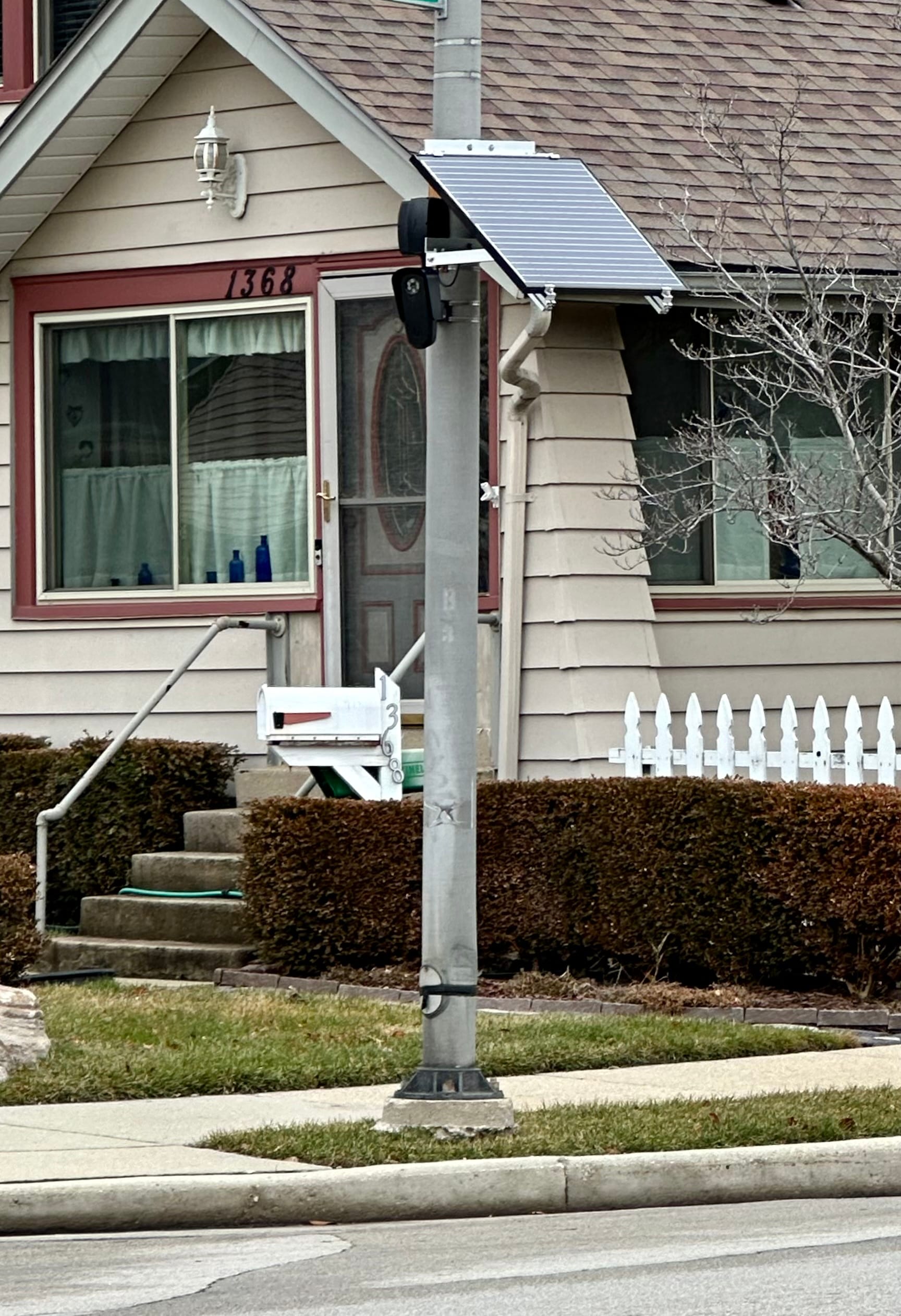
Cities are voting to drop Flock Safety, the Atlanta-based surveillance company worth more than $8 billion 8, faster than the company is letting them leave, and the replacement contracts are going to Axon+3.88% — Axon, up 3.88 percent as of its last quote. The exits are slower and messier than the votes suggest, and the plate-reader demand is moving to Axon rather than disappearing.
Our Oct 21 article covered the votes to cancel; this is what happens after them.
The canceled city had to unplug the cameras itself
The sharpest case is Plymouth, Michigan. Its council voted Sept. 22 to discontinue the Flock cameras, and the police department suspended its accounts the next morning and mailed a formal cancellation 1. Flock never acknowledged it. After more than a week of silence, Police Chief Eric Fadden ordered the power cords pulled so the company-owned cameras could not record plates, and they remain on the poles with no removal timeline.
Plymouth is not the first customer to find the door locked from the outside. Elgin Community College in Illinois told Flock in October 2025 it wanted out; Flock rejected the request within a day, and only removed the cameras when the contract expired in April 8. Flock did not answer The Drive's questions about how cancellations are supposed to work 1. A city can end the subscription, but the hardware belongs to the vendor, so leaving requires the company's cooperation.
The buyers did not know who was reading their data
In Lansing, a council member produced a Flock "Sharing Snapshot" email for July showing the city's plate data went to 141 organizations, after Police Chief Robert Backus had told the council twice in April that the data was not being shared 2. The department now calls it "a change in the settings" 2. Flock's default architecture is a national sharing network, and a city's visibility into it is thinner than its contract suggests.
Add Cornell University, the last of five Flock holders in its county to leave 4, and the churn looks broad. It is not broad enough to dent the installed base: about 120,000 Flock cameras operate nationwide, nearly 900 of them in Iowa alone, so the more than 60 entities that have canceled since January are a thin slice 3.
The demand survives; it changes vendors
Most departing cities keep the cameras, just under a different name. Reno just approved an eight-year, $21.8 million Axon contract that includes plate readers 5, and Cedar Rapids' $14.5 million, 10-year Axon deal already includes 20 of them 3.
The replacement contracts Axon is winning run from $14.5 million to $153 million
Data
| Value | |
|---|---|
| Reno | $21.8M |
| Cedar Rapids | $14.5M |
| Baltimore | $153M |
Breckenridge, Colorado is switching from Flock to Axon even though the Axon rig costs more per year, because it keeps the data inside the police department instead of shared with 67 other agencies 9. The same trade appears in bigger budgets: Baltimore's 10-year, $153 million Axon contract includes more than 200 plate cameras, and Axon does not make records searchable across a nationwide network by default 10.
Axon's revenue keeps compounding while Flock's customers churn
Data
| Revenue | |
|---|---|
| Q3 '24 | 544.27M |
| Q4 '24 | 575.15M |
| Q1 '25 | 603.63M |
| Q2 '25 | 668.54M |
| Q3 '25 | 710.64M |
| Q4 '25 | 796.72M |
| Q1 '26 | 807.35M |
| Q2 '26 | 904.39M |
What the two facts do to the price
For Flock's owners, the mark has to absorb both: exits it cannot process cleanly, and its own documents showing the data network was broader than its buyers understood. For Axon, the tradeable read-through, the same demand base is intact, growing in the mid-30s percent 7, and now arriving with contracts that give the city the data. The winners in a consent backlash are the vendors who make ownership and control explicit.
Cities that intend to stay are already writing those terms down. North Liberty, Iowa cut the agencies with access to its plate data from 60 to 28 and shortened retention from 30 days to 7 3.
Watch what cities stop paying for, and when the hardware comes down
Flock's sharing network, not its camera count, may be what cities actually stop paying for. If they leave replacement deals the way they left Reno, the private mark reprices; if they stay where sharing is tightened, churn was noise. The next readable signal is whether cities that cancel get hardware off the poles on any timeline at all.
Get Policy & Labor by email, free
The rules governments write for AI, and what AI does to jobs. In our daily email, every weekday.