Court hands the Pentagon a vendor kill switch weeks before Anthropic's $2 trillion IPO
A 2-1 appeals panel ruled that Claude's built-in refusals make Anthropic a "manipulation" risk under a law written for hostile suppliers. The decision leaves a court-blessed hole in the company's defense revenue, weeks before a listing that targets about $2 trillion.
 Vincent Jiangthree-minute read
A refusal, ruled a risk
A divided US Court of Appeals for the District of Columbia Circuit ruled 2-1 on Friday that the Pentagon had "ample support" to blacklist Anthropic$350B — Anthropic, private, latest valuation $350B as a supply chain risk under a 2018 statute aimed at hostile firms tied to foreign adversaries 13. Because Anthropic openly programs Claude to refuse certain tasks, Judge Gregory Katsas wrote for the majority, the manipulation the law fears is a "certainty" 23. The panel had "no reason to doubt" Anthropic's "noble intentions"; the statute turns on "what Anthropic does, not why" 2.
That holding travels. Politico calls this the first appellate reading of the 2018 designation power, extended to US companies because the statute reaches a risk that "any person may sabotage": authority to bar domestic vendors "based on their internal ethical or product safety limitations" 3. That is the kill switch, court-tested: no malice required, only a product built to refuse. Refusing to build the weapon is, under this law, the security risk.
The contract fight became a revenue hole
The fight grew from a roughly $200 million deal to run Claude on military work 9. Defense Secretary Pete Hegseth insisted the contract allowed "all lawful use"; Anthropic refused two uses, lethal autonomous weapons and mass domestic surveillance 9. In March he designated Claude a supply chain risk, cancelling the military contracts and barring Pentagon contractors from its products 45. Anthropic answered with two lawsuits on 9 March 1.
The label reaches the Pentagon and its contractors, not the rest of the federal government 2. Anthropic says the blacklisting has cost billions in lost business, a company-claimed figure with no number attached, and damaged its reputation weeks before an October Nasdaq listing that targets about $2 trillion 47.
Anthropic asks public investors for more than double its May valuation
- Valuation
- Estimate
Data
| Valuation | |
|---|---|
| March 2026 round | $183B |
| May 2026 Series H | $965B |
| October 2026 IPO target (estimate) | $2,000B |
Two courts, opposite answers
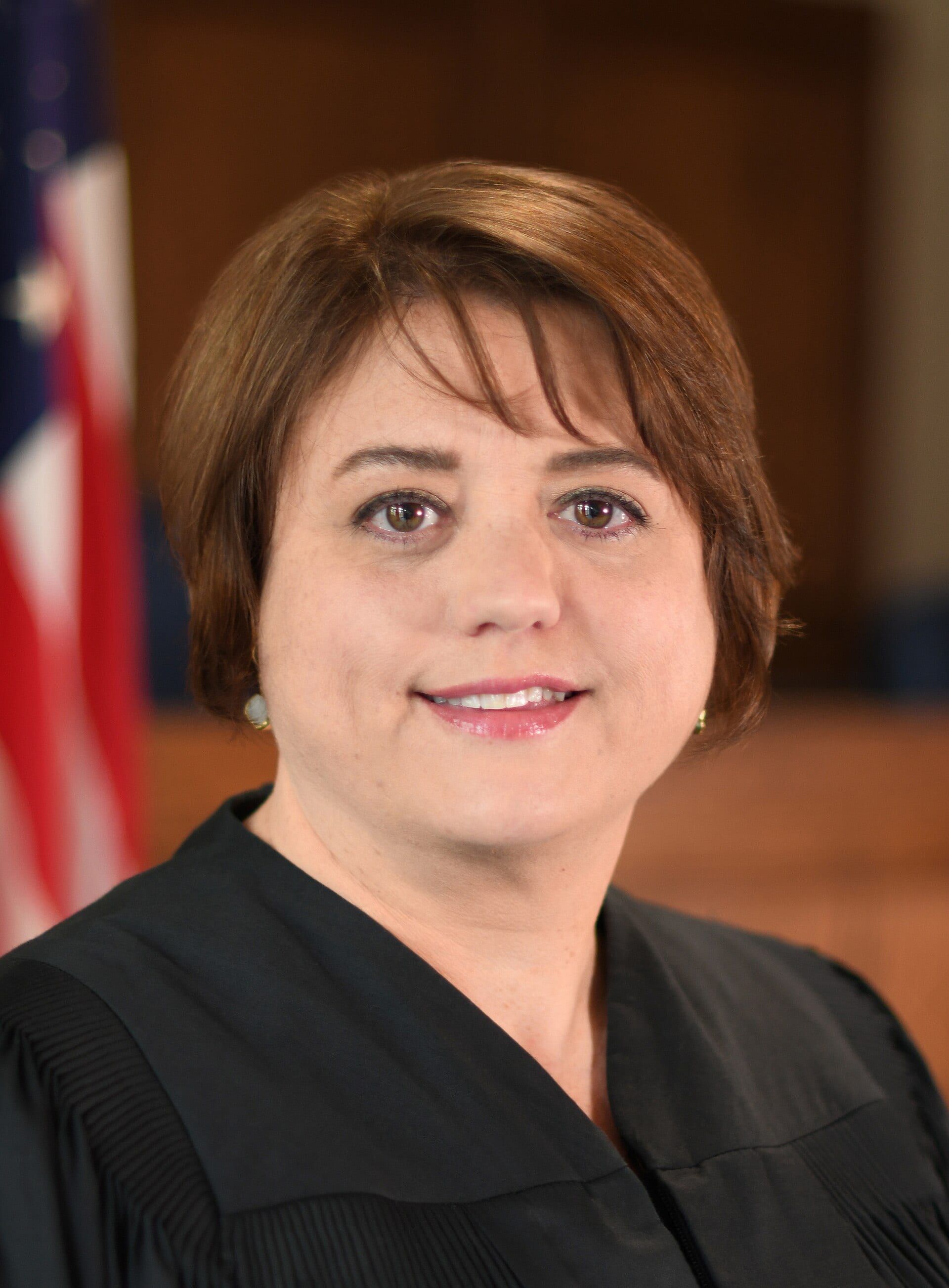
On 27 August, Judge Rita Lin in California vacated the parallel designation as "unlawful retaliation in violation of the First Amendment," a permanent injunction lifting penalties across nine agencies 8910. "The empty invocation of national security is not a blank check to punish and retaliate against government critics," she wrote 8.
The department kept the label anyway: Undersecretary of War Emil Michael confirmed on 3 September that Anthropic "is still a designated Supply Chain Risk" for the department and its industrial base 10. The DC panel reconciled the rulings on text, "an adversary" versus "any person," with bad motive not required under the 2018 law 3. Anthropic's First Amendment claim failed on the same ground: the exclusion turned on contract terms, not speech 1.
The military's fear is not imaginary
Claude had been running inside classified and sensitive systems, including the January operation that captured Venezuelan leader Nicolás Maduro 45. Katsas closed by placing the balance with "the President and the Secretary of War," not the vendor 3. Pentagon spokesman Sean Parnell said the ruling "completely validates the Department's position" 2.
En banc, the Court, or the S-1
Anthropic is "considering all options, including further review": in practice, the full DC Circuit or the Supreme Court 23. The public prospectus still had not reached EDGAR as of 26 September, four months after the confidential 1 June draft 6.
No source names which vendors inherit the classified workloads Claude was running, and the lost billions carry no figure. Whoever buys this listing underwrites the refusals along with the revenue.
Get Policy & Labor by email, free
The rules governments write for AI, and what AI does to jobs. In our daily email, every weekday.
Reader comments
0 comments