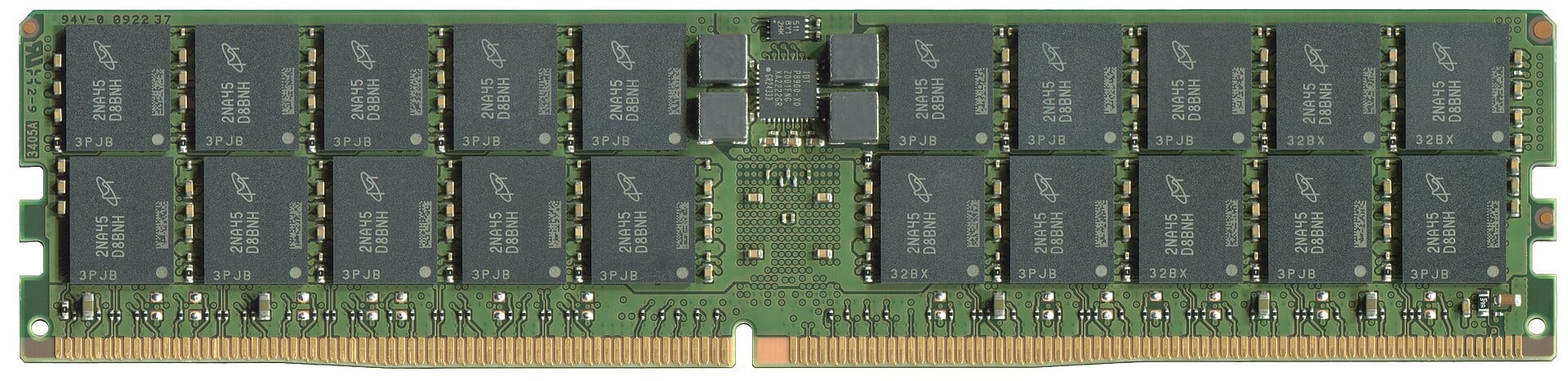
CXMT targets 4F² DRAM years ahead of Samsung, and NAURA collects the tool bill
CXMT says DDR5 server modules built on a 4F² cell ship by year-end; Samsung is not expected to sell the design before 2028. Export rules and Beijing's domestic quota steer the tool bill toward NAURA, though no supply contract between the two is disclosed, and its October 30 results test whether the ramp turns into profit.
 Richard Tang · 3 min read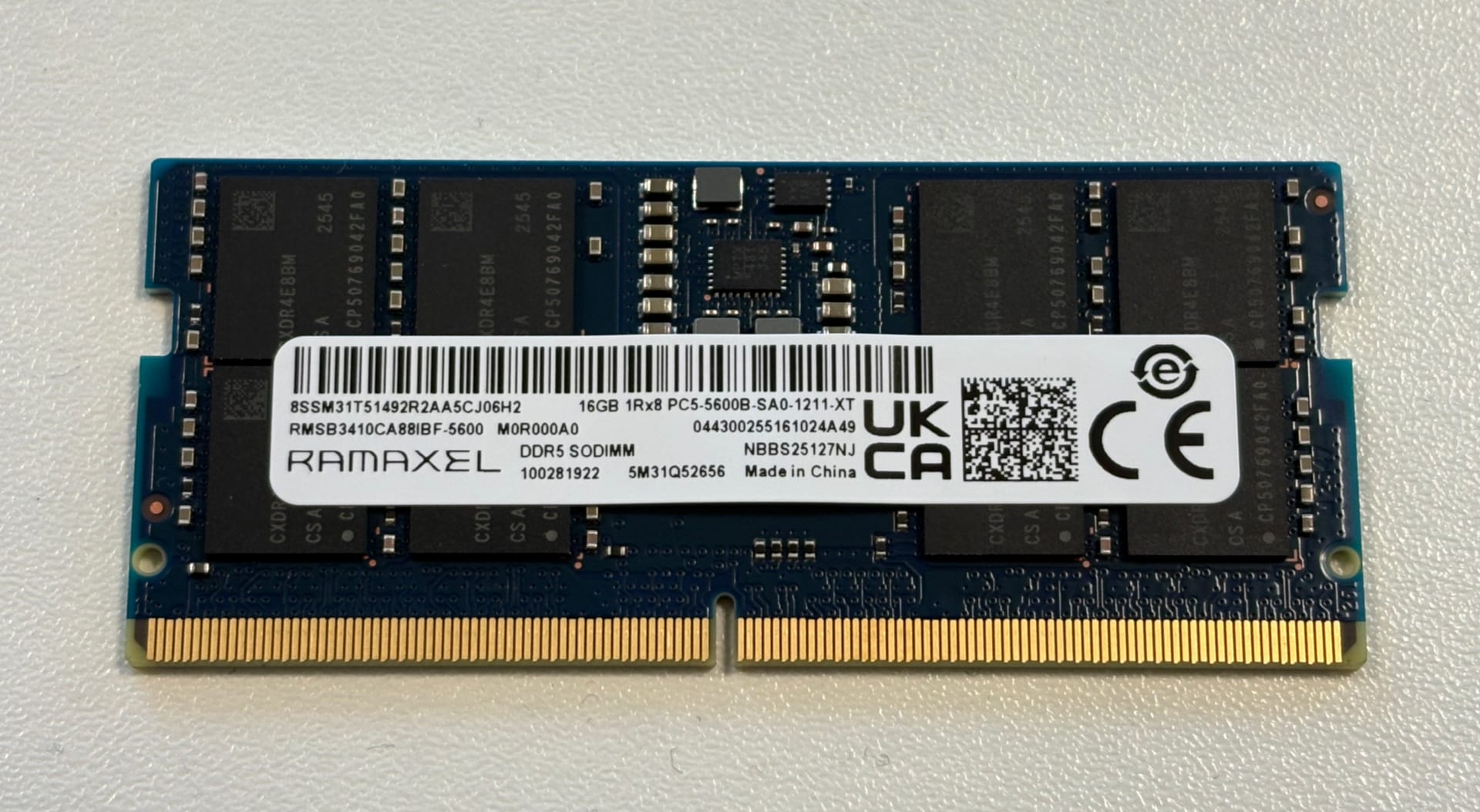
ChangXin Memory Technologies, the Chinese memory maker known as CXMT−2.11% — CXMT, down 2.11 percent today and now fourth in world DRAM revenue, unveiled a 4F² memory cell on October 10 and says the first DDR5 server modules built on it ship by year-end 1. Samsung Electronics0.00% — Samsung Electronics, unchanged today, the world's largest memory maker, is not expected to sell the same cell design before 2028 1. The new cell adds etch and bonding steps to every wafer, and two sets of rules point the tool bill at NAURA−0.71% — NAURA, down 0.71 percent today, China's largest chip-equipment maker 25.
CXMT's DRAM revenue share hit 9.5% in 2Q26, up from 7.6% a quarter earlier
Data
| DRAM revenue share | |
|---|---|
| Samsung | 39.4% |
| SK hynix | 24.9% |
| Micron | 23.3% |
| CXMT | 9.5% |
A smaller cell means more etch and deposition work
A DRAM cell today occupies 6F², six times the square of the smallest feature a fab can print; the 4F² design cuts that footprint to four and lifts memory density by 30–50% 1. The transistor stands upright, its gate wrapped around a silicon pillar, and the dense memory array is built on a separate wafer from the chip's logic, then bonded 1. CXMT is scaling from about 290,000 wafer starts a month, blank silicon wafers begun, toward 350,000 by year-end, and every wafer carries more etch and deposition work than the generation before 2.
Export rules and Beijing's quota steer CXMT's tool spend to domestic makers
US export rules bar tool sales for DRAM at or below an 18-nanometre half-pitch, the spacing of the smallest repeated features on a chip 2. CXMT's current G4 process runs near 16 nanometres, inside the restricted band, which keeps the US toolmakers Applied Materials−4.25% — Applied Materials, down 4.25 percent today and Lam Research−4.74% — Lam Research, down 4.74 percent today out of its advanced lines 2. Beijing adds its own rule: new fab capacity must draw at least half its equipment from domestic makers, or the project is denied approval 2.
No supply contract between CXMT and NAURA is disclosed; the link runs from those rules and from penetration estimates, which put domestic tools at 40–50% of CXMT's installed base and above 60% in etch, NAURA's strongest segment 2. Applied Materials guides to a $600 million export-control headwind this fiscal year, while NAURA, now the world's fifth-largest equipment maker, holds the listed claim on the spending US firms cannot take 25.
Seoul repriced the server-memory market in two days
South Korea's stock index, the KOSPI, fell 3.5% on the first trading day after the announcement, with SK Hynix−2.99% — SK Hynix, down 2.99 percent today, the world's second-largest memory maker, down 2.6% and Samsung 2.3% 3. The next session, October 13, was the index's worst of 2026: SK Hynix lost a tenth of its value, Samsung fell 7.4%, and foreign funds pulled $3.38 billion out of Seoul in a day 4.
Day two of the selloff tripled day one's losses for Korea's memory makers
- First session
- October 13
Data
| First session | October 13 | |
|---|---|---|
| KOSPI | -3.5% | — |
| SK Hynix | -2.6% | -10% |
| Samsung | -2.3% | -7.4% |
The order book has not reached the profit line
NAURA's first half shows the lag between tools shipped and profit booked. Revenue grew about 25%, profit 5%, with research spending absorbing the difference 56. Nomura, the Japanese brokerage, started the stock at Buy on October 8 with a 900-yuan target; the shares closed at 591 yuan on October 13 67. The third-quarter report due October 30 is the first reading on whether CXMT's ramp arrives as margin rather than research spend 7.
NAURA is also building the next product hop. It has demonstrated a selective etch process on a 64-layer 3D DRAM stack, work DIGITIMES calls CXMT's path around extreme-ultraviolet lithography, the printing technology behind leading-edge chips 58.
NAURA's sales growth is outrunning its profit growth
- Revenue growth
- Net profit growth
Data
| Revenue growth | Net profit growth | |
|---|---|---|
| Q1 2026 | 26% | 3.4% |
| H1 2026 | 25% | 5% |
Korea's remaining lead is in stacked AI memory
Analysts put CXMT three to five years behind in high-bandwidth memory, the stacked chips that sit beside the AI accelerators Nvidia−1.89% — Nvidia, down 1.89 percent today sells, where the hard problems are stacking yield and bonding quality 4. Samsung and SK Hynix keep that premium business. The commodity server-memory franchise is what Seoul just repriced.
NAURA's work is turning a designed cell into wafers a fab can run at volume, and that is where the money in this story sits. The first evidence on whether it earns a margin lands on October 30 7.
Deepdive
AI-generated from this story and its cited sources. Not investment advice.