Dan Loeb sold Amazon and set AI's payback at $2-3 trillion of new revenue a year
The Third Point founder's letter and his fund's latest 13F rank the AI spenders by one rule: who can fund the wait for revenue that does not exist yet. Friday's rout applied the same ranking as the Nasdaq erased its 2026 gains.
 Richard Tangthree-minute read
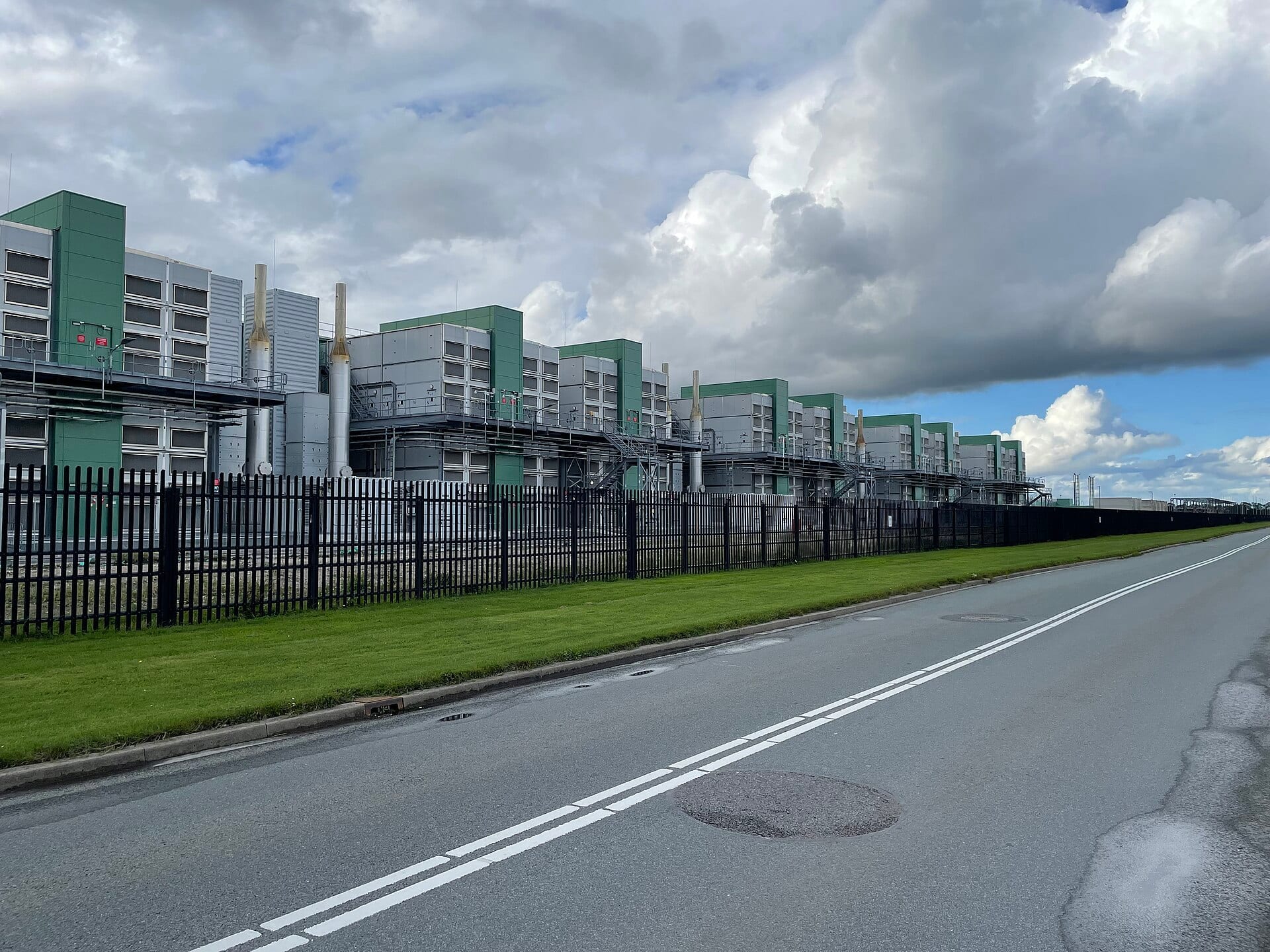
Dan Loeb has turned the AI payback debate into arithmetic, and then into a trade. In his latest letter to investors, the Third Point founder wrote that the $5-7 trillion consensus spend by hyperscalers and frontier labs between 2025 and 2030 requires $2-3 trillion of new AI revenue every year, against roughly $6 trillion of total global IT spending today 1.
The 13F his fund filed on November 16 shows the conclusion he drew: all 1.75 million Amazon−2.75% — Amazon, down 2.75 percent today shares sold by September 30, and about $1.05 billion of new positions in Meta−4.82% — Meta, down 4.82 percent today, Microsoft−1.86% — Microsoft, down 1.86 percent today and Nvidia−10.86% — Nvidia, down 10.86 percent today 12. The Nvidia purchase says the buildout continues. The Amazon sale says the wait for revenue has a cost, and not every balance sheet can carry it.
The bottleneck is the revenue, not the compute
Loeb's own scale check is stark: the two leading frontier labs bring in well over $100 billion of combined run-rate revenue, a fraction of the annual target 1. Follow the chain and the constraining link is easy to name. The spending buys capability: chips, buildings, power. The payback requires products people pay for, and nothing in the letter says those exist at anything like the required scale.
AI must find $2-3 trillion a year, a third to a half of all IT spending
- Estimate
Data
| Value | Range | |
|---|---|---|
| Total global IT spending today | $6T | — |
| New AI revenue required each year (estimate) | $2-3T | 2–3 |
| Two leading labs' combined run-rate revenue | over $0.1T | — |
The squeeze is already measurable. The Inference's reinvestment-burden index, the share of the hyperscalers' cash generation consumed by capital spending, reached 94.8% in the September quarter 3. Compute is arriving on schedule. Revenue is the unfinished middle, and whoever builds it is doing the work the trillions are betting on.
The trade ranks the spenders by who can wait
The ranking rule is free cash flow. Microsoft still produced $18.6 billion of it in the September quarter 4. Amazon's September quarter was a $33.5 billion outflow 5. Its chief executive, Andy Jassy, expects roughly $220 billion of capital spending this year 1.
Oracle−6.58% — Oracle, down 6.58 percent today has burned cash in seven of the past eight quarters 6. It sold $20 billion of stock to keep building 1. OpenAI$1.18T — OpenAI, private, latest valuation $1.18T, by S&P's reading, stands behind about half of Oracle's $664 billion backlog 1.
Oracle's capex has outrun operating cash flow in seven of eight quarters
- Operating cash flow
- Capex
Data
| Operating cash flow | Capex | |
|---|---|---|
| Q4 '24 | $1.3B | $3.97B |
| Q1 '25 | $5.93B | $5.86B |
| Q2 '25 | $6.16B | $9.08B |
| Q3 '25 | $8.14B | $8.5B |
| Q4 '25 | $2.07B | $12.03B |
| Q1 '26 | $7.15B | $18.64B |
| Q2 '26 | $14.62B | $16.49B |
| Q3 '26 | $23.1B | $28.5B |
Meta, now Third Point's largest reported holding at $475 million, is the qualified yes: its own September quarter slipped just below zero, and analysts see the burn deepening into 2027 178. The 13F gives no reason for the Amazon sale; the cash-flow pattern is the visible one 1.
Microsoft and Meta still fund the build; Amazon's cash gap hit $33.5 billion
- Microsoft
- Meta
- Amazon
Data
| Microsoft | Meta | Amazon | |
|---|---|---|---|
| Q4 '24 | $6.49B | $13.56B | — |
| Q1 '25 | $20.3B | $11.09B | — |
| Q2 '25 | $25.57B | $9.02B | — |
| Q3 '25 | $25.66B | $11.17B | — |
| Q4 '25 | $5.88B | $14.83B | $15.99B |
| Q1 '26 | $15.8B | $13.23B | -$17.2B |
| Q2 '26 | $19.64B | $1.75B | -$7.69B |
| Q3 '26 | $18.63B | -$1.16B | -$33.46B |
Nvidia is the tell that the orders keep coming
Owning the chip seller into the spenders is a bet the orders keep arriving, and they are. Nvidia's October quarter brought about $115 billion of revenue 1. Management guided the next quarter near $130 billion 1. But the seller has joined the financing chain: days sales outstanding rose to 64 as Nvidia extended payment terms for investment-grade customers, one more balance sheet carrying the wait 8.
Friday forced the same test on everyone at once. Anthropic$350B — Anthropic, private, latest valuation $350B, the largest IPO in history at $81 billion raised, gave back much of its first-day pop 9. The Nasdaq 100 fell 5.7% in The Inference's index, and the Composite erased its 2026 gains 109.
Nvidia dropped 10.7%, a fall compounded by the scandal that ended Jensen Huang's run as chief executive 92, and markets price a December rate rise above 95%, which lifts the very hurdle rate the bear math rests on 9.
The dates that will settle it
Oracle reports December 10, Amazon guides 2027 capital spending in early February, and Third Point's next 13F lands in mid-February 1. None of that changes the direction: the buildout will not stop because the payback runs late, and the cost of the wait will keep moving to the balance sheets least able to carry it.
The larger reading is an opportunity. A $2-3 trillion annual revenue gap is a demand signal, the largest in software history 1. The capability is bought and paid for; the revenue still has to be built, and whoever builds it earns the payback everyone else is waiting for.
Get Economy by email, free
How AI moves rates, banks, payments and the wider economy. In our daily email, every weekday.

Reader comments
0 comments