DOJ demands Nvidia's Groq files: was the $20 billion license a merger in disguise?
The Justice Department has sent Nvidia a formal demand for information about its Groq deal, a license-and-hire structure that never faced merger review. The answer could re-price every acqui-license in AI, and sharpen the review of Nvidia's pending $12.93 billion Hugging Face buyout.
 Vincent Jiang · 3 min read
Groq kept its name and lost its founder
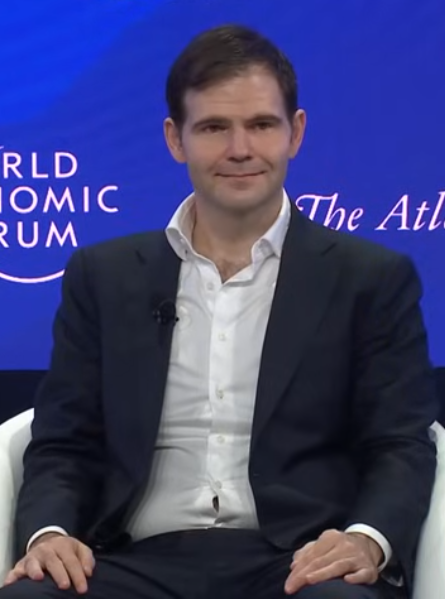
Groq still sells fast inference, and says it operates as an independent company 12. Its founder does not. Jonathan Ross, the ex-Google TPU designer who built Groq as an inference-chip challenger to Nvidia, has worked at Nvidia since the deal was announced on 24 December 2025 1; president Sunny Madra and other staff went with him, Simon Edwards became chief executive, and GroqCloud kept running 2.
No merger notice was ever filed, and on paper none was due 3. The structure gained a formal examiner when the inquiry surfaced in September: opened shortly after the December announcement, the Justice Department has sent Nvidia a formal demand for information, and has not commented 45.
A $20 billion deal that never filed as a merger
Nvidia's filings show $13 billion at closing, $4 billion payable within a year and a $2.5 billion developed-technology intangible, and no purchase of Groq's customer contracts, products or equity 6. Press totals run $17 billion to $20 billion, unreconciled 3. A merger must be reported and can be blocked; a license plus a hiring spree looks, on paper, like two ordinary business decisions 3.
Two licenses cost more than the acquisition
The question antitrust lawyer David Pearl puts to the structure is whether it is "an acquisition in sheep's clothing" 6. Senators Warren and Blumenthal pressed the same point in March, after urging both agencies with Ron Wyden to police "reverse acquihire" deals 6.
The pattern is bigger than one deal: in August, Nvidia paid $6 billion to license Poolside's model factory and hired 109 staff, its third license-and-hire arrangement 7. Those two licenses top the $12.93 billion Hugging Face acquisition announced on 3 September, which, unlike them, triggers mandatory merger review 8.
Two license deals cost Nvidia more than the merger now facing review
- Estimate
Data
| Value | Range | |
|---|---|---|
| Groq (license, 2025, reported) (estimate) | $20B | $17–20B |
| Hugging Face (acquisition, 2026) | $12.93B | — |
| Poolside (license, 2026) | $6B | — |
Nvidia's defense: the system worked
"The Groq story is a prime example of the American system working as designed to promote innovation, reward entrepreneurs, and benefit consumers," Nvidia says 3. Groq has kept operating independently, raised $650 million in June and targets about 200 megawatts by the end of 2027 6. The soft spot is Pearl's test: if Groq exists mainly to serve Nvidia, regulators would read a de facto acquisition 6.
Who pays if the workaround dies
Force merger-review discipline onto license-and-hire, and the bill lands on two desks: Nvidia's dealmakers, who under the settlement Pearl describes would owe both agencies advance notice of future acquihire-like deals 6, and any startup that copies a workaround that must now be filed. Across the table, AI companies that feared being acqui-licensed out of existence, and anyone negotiating against Nvidia, gain a buyer that can no longer quietly absorb a challenger 3.
Fines, not unwinding
If the DOJ finds fault, a fine is the penalty on the table; unwinding is unlikely 43. The likelier ask, in one antitrust lawyer's assessment, is a settlement requiring Nvidia to flag future acquihire-style deals to both agencies for several years 6.
The probe lands mid-review of Hugging Face, with the Groq file as ammunition. A de facto-acquisition finding would hand the DOJ a pattern and a lens for the $12.93 billion review, which FTCWatch says the probe could sharpen without directly threatening the deal 98.
The evidence already ships either way: Groq 3 LPX racks are in full production for the neocloud Nebius 10. The chips arrive regardless; what is being priced now is the paperwork that bought them.
How this brief was made
01Gathered & sourced330 channels · 1,887 articles▾
Agents swept 330 channels and ingested 1,887 articles, then de-duplicated and ranked them for signal.
02Verified & cross-validated10 claims · 17 data feeds▾
Every one of 10 load-bearing claims was checked against primary sources, with 17 live data feeds reconciling the figures and charts.
- 1Wikipedia, Groq, entry current to 6 August 2026
- 2Mashable, Nvidia strikes $20 billion deal to acquire Groq assets, 25 December 2025
- 3The Next Web, The Justice Department is investigating whether Nvidia structured its Groq deal to avoid antitrust review, 10 September 2026
- 4The New York Times, Regulators Are Investigating Nvidia's Licensing Deal With Groq, 9 September 2026
- 5Noah Intelligence, US Justice Department investigates whether Nvidia's licensing deal with Groq conceals a takeover, 20 September 2026
- 6TechTarget, DOJ reportedly probes Nvidia-Groq deal for antitrust concerns, 11 September 2026
- 7The Next Web, Nvidia pays Poolside $6bn to license its model factory and hire 109 staff, 21 August 2026
- 8Yahoo Finance, NVIDIA's $12.93B Hugging Face Acquisition Becomes Definitive, 7 September 2026
- 9FTCWatch, Nvidia's reported Groq scrutiny could sharpen review of Hugging Face deal, 22 September 2026
- 10CNBC, Nvidia says Groq racks will be online this year following $20 billion purchase, 24 August 2026
03Reviewed & edited2 human editors▾
2 editors read the draft against the evidence, tuned the framing, and signed off before it shipped.
Become a contributor
Reporting on the business of AI and want it read? We take pitches from outside contributors who bring primary sources and a number worth arguing about.
Deepdive
AI-generated from this story and its cited sources. Not investment advice.