DOJ takes DoorDash's $17 billion Instacart deal while Sequoia partners sit on both boards
The Justice Department took the merger on November 16, and it is the same agency probing venture board interlocks at Andreessen Horowitz. For holders of DoorDash and Instacart, the risk runs through Section 8 arithmetic nobody had run and a $1.25 billion break fee.
 Vincent Jiangthree-minute read
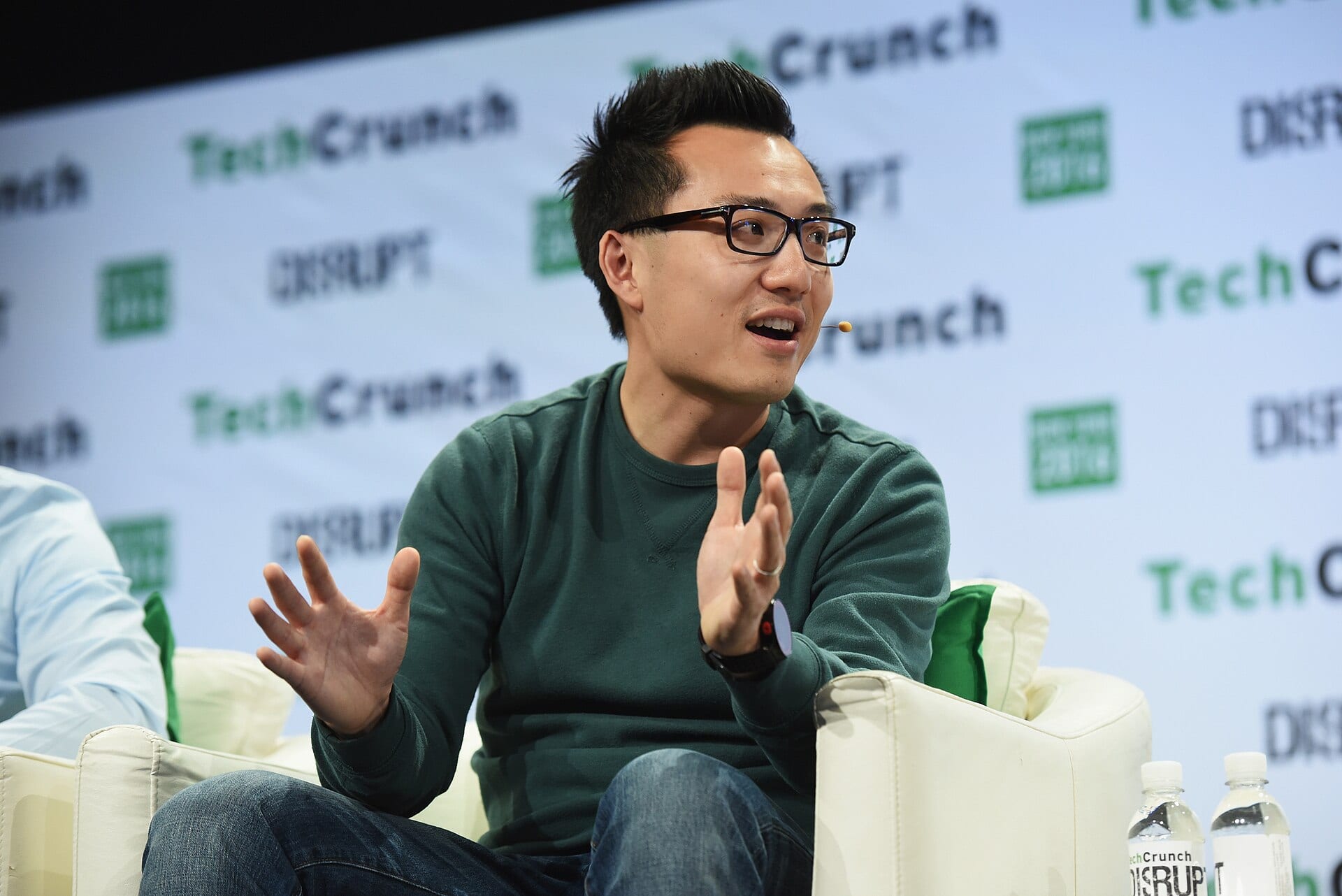
The Justice Department will review DoorDash's+1.77% — DoorDash, up 1.77 percent today $17 billion purchase of Instacart, Reuters reported on November 16, citing two people familiar with the matter 1. The Federal Trade Commission usually takes retail mergers; the Justice Department took this one under its jurisdiction over transportation and agriculture, Bloomberg reported 2.
Two Sequoia partners, two boardrooms, one $17 billion deal
Two days later, Fortune put faces on the conflict. Alfred Lin, a Sequoia Capital partner, sits on DoorDash's board, and Ravi Gupta, also a Sequoia partner and Instacart's former chief financial officer, is Instacart's lead independent director 3. DoorDash has paid Lin more than $1.3 million in cash and stock since its 2020 listing; Gupta has collected $925,000 in three years 3.
It is the same investor-level interlock the department has probed for about a year at Andreessen Horowitz, where co-founder Ben Horowitz sits on Databricks'$218.01B — Databricks, private, latest valuation $218.01B board and partner Martin Casado on Fivetran's 3.
A $1.25 billion fee prices the antitrust risk
The terms concentrate the risk on one side. DoorDash agreed to pay $65 a share, a 26% premium to Instacart's October 22 close, with at least 75% in cash 34; The Inference covered the terms when they landed. If antitrust defeats the deal, DoorDash owes Instacart a $1.25 billion termination fee, on a clock of 12 months plus four automatic three-month extensions, a buyer planning for a long fight 45. Instacart closed at $58.13 on November 16, $6.87 below the cash price 4.
DoorDash holds 65.1% of delivery orders to Instacart's 9.1%
Data
| Value | |
|---|---|
| DoorDash | 65.1% |
| Uber Eats | 25.8% |
| Instacart | 9.1% |
The arithmetic nobody has run
Section 8 of the Clayton Act, a 1914 statute, makes shared directors at competitors illegal per se, with no proof of harm required 6. The exemptions turn on competitive sales, the revenue each firm earns against the other: exempt below about $5.4 million, below 2% of either firm's sales, or below 4% of each 3. Against 2025 revenue of $13.72 billion at DoorDash and $3.74 billion at Instacart, per SEC filings 7, the practical ceilings compute to about $274 million, 2% of DoorDash, and about $150 million, 4% of Instacart.
DoorDash's quarterly revenue is now 4.2 times Instacart's, up from 3.2 times two years ago
- DoorDash
- Instacart
Data
| DoorDash | Instacart | |
|---|---|---|
| Q2 '24 | $2.63B | $0.82B |
| Q3 '24 | $2.71B | $0.85B |
| Q4 '24 | $2.87B | $0.88B |
| Q1 '25 | $3.03B | $0.9B |
| Q2 '25 | $3.28B | $0.91B |
| Q3 '25 | $3.45B | $0.94B |
| Q4 '25 | $3.96B | $0.99B |
| Q1 '26 | $4.04B | $1.02B |
| Q2 '26 | $4.45B | $1.04B |
| Q3 '26 | $4.62B | $1.1B |
Neither company discloses the overlap. The direction is not in doubt. Instacart's business is grocery, DoorDash's grocery and retail orders grew more than twice as fast as restaurant orders last quarter 8, and DoorDash says it handled more grocery and retail orders in 2025 than any food-delivery rival, citing YipitData payment-card research 5. DoorDash even benchmarked its executive pay against Instacart through July 2025 3.
A seat resigns; a merger does not
The interlock and the merger travel on separate dockets. A Section 8 violation is cured by resignation, and directors historically step down when regulators ask rather than litigate 3. Whether the statute's definition of "person" covers two partners of one firm has never been settled, the murk the Andreessen Horowitz probe is testing 3. Mark Lemley, the Stanford law professor who co-authored the Columbia Law Review study, wrote of the DoorDash-Instacart overlap: "I suspect it is illegal" 3. Sequoia, DoorDash and Instacart all declined to comment 3.
A second request is the tell
That study counted 2,309 individuals sitting on competitors' boards and investor-level interlocks reaching 2,927 companies, and its authors walked their findings through Justice Department officials in 2025 and again in July 2026 6. For this deal, the tell is a second request, the demand for documents that lengthens the review clock; the companies expect closing in late 2027 or the first half of 2028 93. A board seat can be vacated in an afternoon. A merger that folds an 18% share of delivery-platform spending into a 59% one 4 cannot be un-bought.
Get Deals by email, free
The acquisitions, rounds and contracts that move AI money. In our daily email, every weekday.


Reader comments
0 comments