EPAM's answer to Engine Capital's $750 million buyback demand: sell training data to the AI labs
Five weeks after Engine Capital demanded a $750 million buyback or a sale process, EPAM launched a service selling training data and model testing to the frontier AI labs. On November 5, with quarterly growth guided to 1.7 percent, the pivot has to show up in revenue.
 Vincent Jiang · 3 min read
A launch lands five weeks after a demand for cash
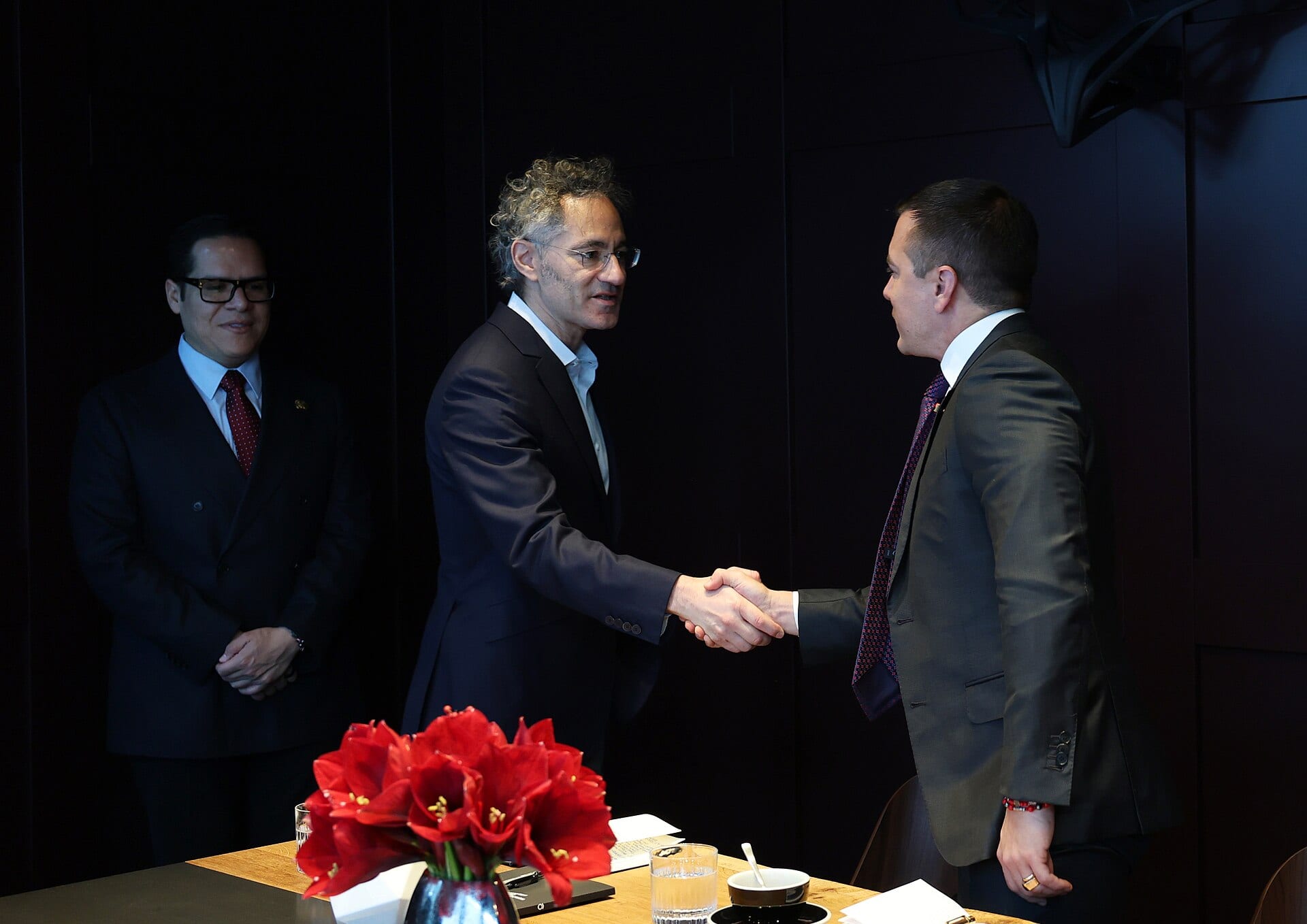
On October 5 EPAM opened a new front: a service selling high-fidelity training data, model evaluation and custom reinforcement-learning environments to frontier AI labs, with Anthropic$350B — Anthropic, private, latest valuation $350B, OpenAI$1.18T — OpenAI, private, latest valuation $1.18T, Google and Microsoft+2.33% — Microsoft, up 2.33 percent today named as partners 1. Behind it the company claims nearly 10,000 Claude-certified architects, more than 3,000 OpenAI-certified engineers and 5,000-plus Gemini-certified specialists, and attaches no revenue figure to any of it 1.
The launch's stated firepower: 18,000 certified engineers, no revenue attached
Data
| Value | |
|---|---|
| Claude-certified architects | 10,000 |
| Gemini-certified specialists | 5,000 |
| OpenAI-certified engineers | 3,000 |
Five weeks earlier, on August 31, Engine Capital, which owns about 1.5 percent of the stock, told the board to return $750 million through an accelerated repurchase funded with "idle cash, free cash flows, and potential leverage," or to run a sale process instead 2. Shares rose 3.4 percent on the news 3 and closed October 9 at $113.03 4, down roughly 47 percent in 2026 from a 52-week peak near $223 5.
February's promise, August's cut
The year reads as one sequence. In February, chief executive Balazs Fejes said AI-native revenues, which passed $105 million in the fourth quarter of 2025, would top $600 million this year; chief financial officer Jason Peterson guided 2026 to 4.5 to 7.5 percent growth 6. August brought second-quarter revenue of $1.41 billion, up 4.5 percent, and a cut to 3.2 to 4.2 percent 75.
Goldman Sachs+1.73% — Goldman Sachs, up 1.73 percent today, Jefferies, Deutsche Bank and JPMorgan all lowered their views on one thesis, that generative AI lets clients build in-house the software EPAM bills for; JPMorgan went Neutral late in August 5. Then the letter, then the launch.
Growth peaked at 19.4 percent a year ago and has slid every quarter since
- Revenue growth YoY
- Estimate
Data
| Revenue growth YoY | |
|---|---|
| Q3 '23 | -6.1% |
| Q4 '23 | -6% |
| Q1 '24 | -3.8% |
| Q2 '24 | -2% |
| Q3 '24 | 1.3% |
| Q4 '24 | 7.9% |
| Q1 '25 | 11.7% |
| Q2 '25 | 18% |
| Q3 '25 | 19.4% |
| Q4 '25 | 12.8% |
| Q1 '26 | 7.6% |
| Q2 '26 | 4.5% |
| Q3 '26 (estimate) | 1.7% |
The pivot spends the money Engine wants back
The launch is EPAM's first substantive public move since the letter; the company has not publicly answered Engine's demand. The filings frame the conflict as a fight over cash. Cash and equivalents fell from $1.3 billion in December to $789 million at June 30, and operating cash flow ran slightly negative across the first half 8. A $750 million repurchase would take nearly every dollar on hand, or borrowed ones, to retire roughly an eighth of a $5.84 billion market value 9.
The pivot's outside support, cited in the release, is a Gartner projection that simulation environments spread from under 25 percent of agent platform providers this year to 99 percent by 2028 1. That is a market forecast, not an order book.
Two paths, one date
Engine's path is arithmetic. Management's is the $600 million promise. Both are judged on November 5 at 8 a.m. Eastern, when EPAM reports against consensus of $3.40 a share on $1.42 billion of revenue, 1.7 percent growth, having beaten estimates in seven of the last eight quarters 4.
The number that matters is not the beat. It is whether AI-native revenue shows up in the reported line at all, and nothing disclosed so far prices the new service 1. That leaves the choice the sequence sets up: buy the pivot before the print, or wait to see whether the board runs the sale process Engine demands 2. Engine wants the cash back; EPAM's plan is to spend what remains teaching the models that made the buyback necessary.
Deepdive
AI-generated from this story and its cited sources. Not investment advice.