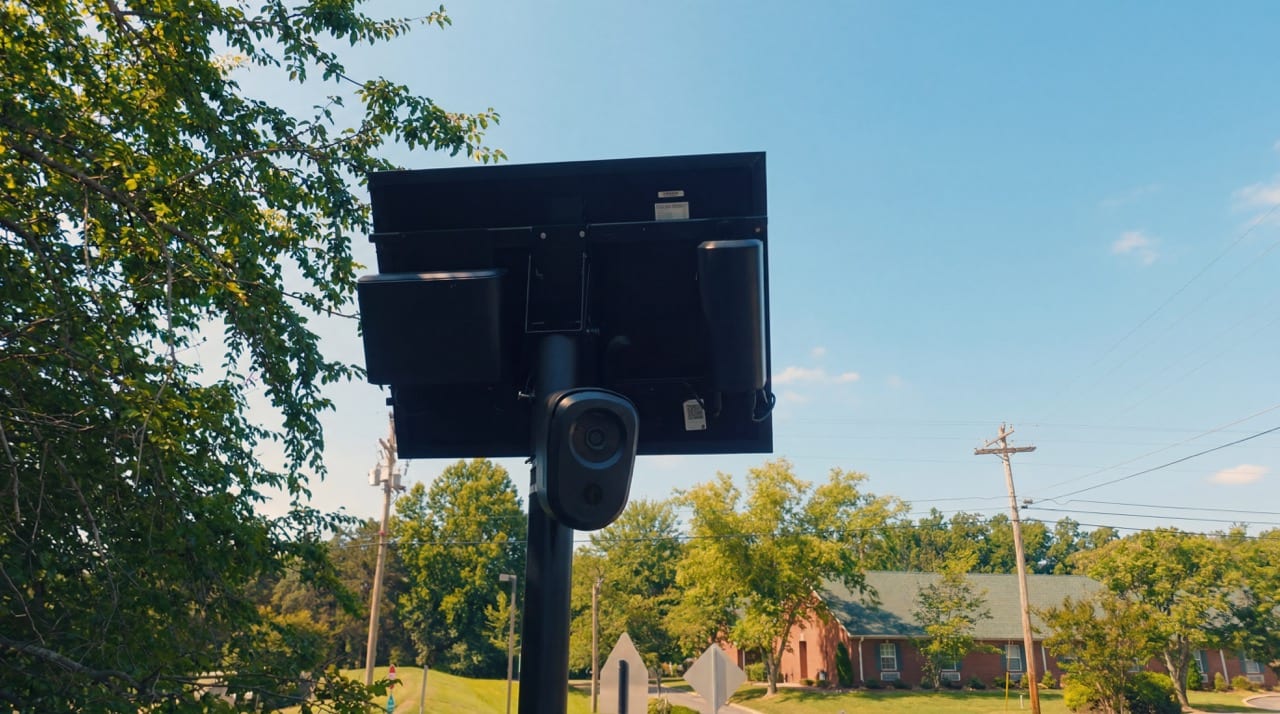
Flock will not pay to remove the 128 cameras Henrico pulled out itself
The company says its contracts set no removal deadline, so Henrico County's weekend teardown stays on the county's budget. League City and York voters threw the cameras out at the ballot in the same week, and the bill for leaving lands on the towns.
 Vincent Jiang · 3 min read

Flock says the removal bill belongs to Henrico
Flock Safety said on November 4, 2026, that it will not reimburse Henrico County, Virginia, for the cost of taking down its cameras 1. The county's public works crews, 25 to 30 of them, unbolted all 128 leased readers on October 31 after Flock let a October 21 deadline pass; the company says that date was a request, not an obligation, and its contracts promise removal only "within a commercially reasonable time period" 12.
The county had posted that Flock would cover its costs, then said on November 3 it would not seek reimbursement, and it has not disclosed what the operation cost 2. Flock spokesperson Andrew Smith said the crews "went ahead and chose to do that on their own" 2.
Voters have started canceling the cameras themselves
League City, Texas, rejected its Flock program at the ballot on November 3, 25,021 votes to 21,412 with 54 percent against, and a October 13 council resolution orders every fixed camera removed or covered within 72 hours of the canvass, the official vote count 3. York, Maine, passed a ban the same night and must now remove or shut off its cameras 4. Anderson County, South Carolina, barred county funds and property from supporting the readers, ending a $30,000-to-$40,000 annual subscription on 10 cameras 5.
Renton, Washington, let an $80,000-a-year contract lapse on November 2, a year after University of Washington researchers showed federal immigration authorities had searched its data without the city's knowledge 6. Springfield, Massachusetts, is drafting a ban its police superintendent resists: "Absolutely we want to keep it," Lawrence Akers said 7.
Henrico's do-it-yourself exit dwarfs the other camera removals
One Virginia county unbolted more cameras than the other exits combined, on its own budget
Data
| Value | |
|---|---|
| Henrico County, Va. | 128 |
| Renton, Wash. (~24, reported as two dozen) | 24 |
| Anderson County, S.C. | 10 |
Toledo could not quit, and the towns pay to leave
Toledo, Ohio, tried and failed on November 4: a vote to terminate lost, a revote tied, and the cameras stay live pending an audit until Mayor Wade Kapszukiewicz breaks the tie on November 17 8. Flock owns its devices and leases them to customers 12, so the exit costs land on the town. Collegedale, Tennessee paid $500 per camera to remove five units 9, and Anderson County will send sheriff's deputies where its cameras stood 5.
In Plymouth, Minnesota, a Flock-hired contractor replaced on November 4 a camera the police chief had ordered unplugged; Flock calls it a missed maintenance order, and The Drive, the automotive outlet that watched the install, found the new unit plugged in 10. Dayton, Minnesota says two cameras were reinstalled after it told Flock to stop work 9.
Axon picks up the switches while the scorecard stays hidden
Axon−15.52% — Axon, down 15.52 percent today Enterprise, the listed Taser and body-camera maker, is picking up the cities that keep plate readers: Reno, Nevada voted 5 to 2 on October 21 for an eight-year, $21.8 million package that includes them, and Sparks signed a nearly $1 million deal in June 11. At least 214 cities and counties have ended Flock relationships, 90 of them in a single month, and Flock says new partnerships outpace non-renewals 10 to 1 12.
If exits run this slowly, with Toledo's cameras live and Plymouth's pole getting a replacement Flock unit rather than a rival's, Axon's conversion of the churn is likely slower than the switch headlines suggest. Flock has raised $950 million in total, at a $7.5 billion valuation, and reduced its staff by about 270 in October after a voluntary buyout 12. Net logo retention, logos added minus logos lost, is the number that prices the churn, and no side publishes it.
Two dates decide the pace
League City's resolution gives staff 72 hours from the canvass to remove or cover every camera 3, and Toledo's mayor breaks the council's tie on November 17 8. A town can vote the cameras out and still find the bill, and sometimes a new camera, on the same pole.
Get Policy & Labor by email, free
The rules governments write for AI, and what AI does to jobs. In our daily email, every weekday.