Glean Is Selling the Part of AI Nobody Wants to Do
Arvind Jain's startup has reported $300 million in annual recurring revenue. Its next test is turning messy company knowledge into reliable work without handing the cleanup bill back to customers.
 Vincent JiangSeptember 18, 2026 · 6 min read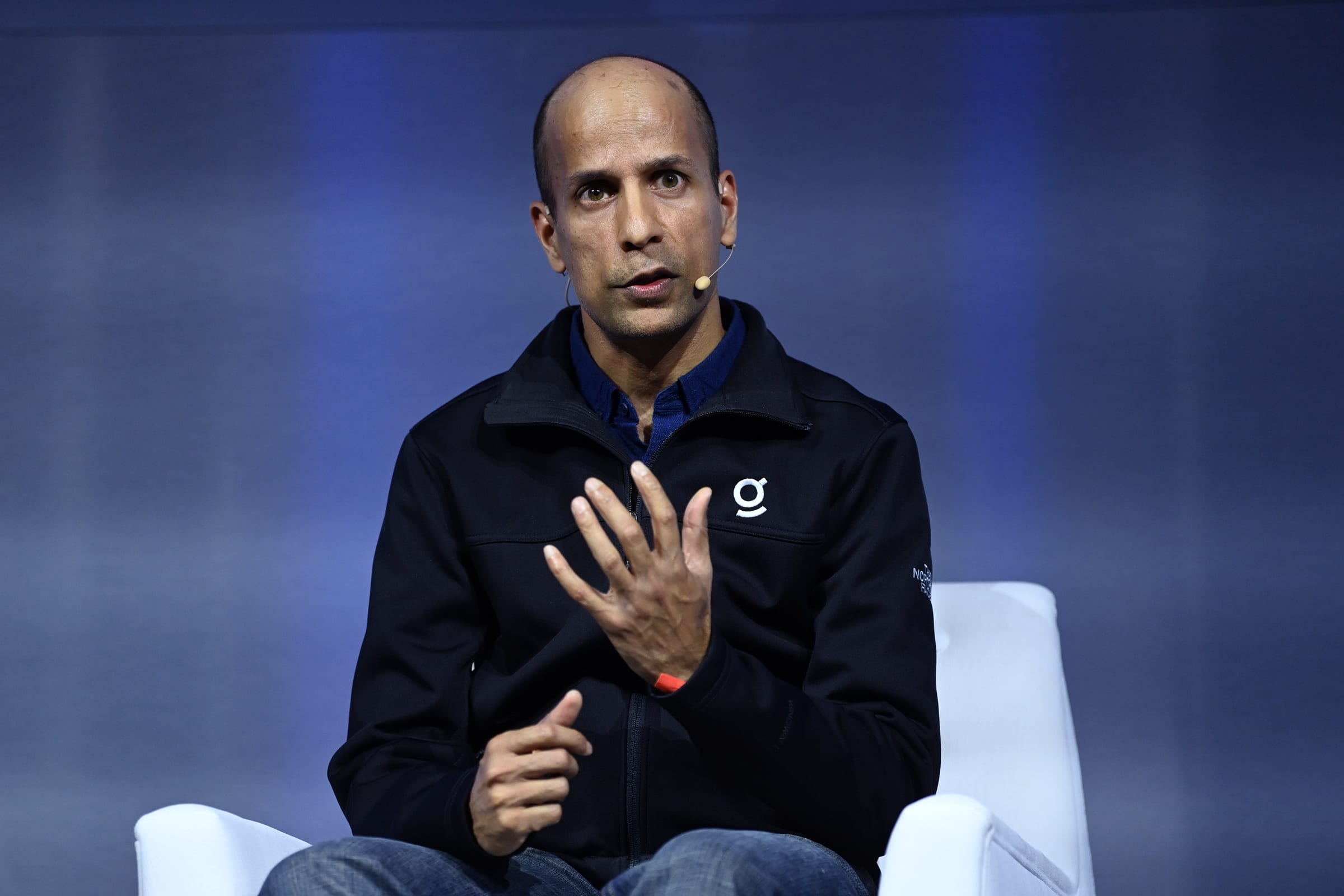
Arvind Jain declined to put a date on a billion dollars in annual sales. Asked at August's Glean:GO conference when his company would reach that threshold, the Glean founder pointed instead to the speed and competitiveness of the AI industry. 1
He already had a substantial number to defend. In May, Glean reported $300 million in annual recurring revenue. Its pitch is that AI becomes useful at work when it understands the company asking the question. 12
That is also the complication. A company is a moving collection of documents, conversations, access rules and exceptions. Better models can make sense of more of it. They do not automatically make it accurate, accessible to the right person or cheap to maintain.
The growth is real evidence, with an accounting boundary
Glean announced $100 million in ARR in February 2025, $200 million in December and $300 million in May 2026. Those are company-reported milestones, not audited annual revenue. The dates identify announcements, rather than the precise day each threshold was crossed. 2347
Data
| Reported ARR | |
|---|---|
| Feb 2025 | $100M |
| Dec 2025 | $200M |
| May 2026 | $300M |
Investors had already assigned a large price to that trajectory: Glean's June 2025 financing raised $150 million at a $7.2 billion valuation. That was a private financing valuation, not a current public-market price. 5
The charging model matters as much as the milestone. Glean's Enterprise Flex documentation describes per-user licenses, pooled usage credits and additional charges above the allocation. Its developer products use consumption pricing. 6
That can create expansion revenue when more work flows through the platform. It also makes contracted commitments, actual consumption and delivery costs important to understanding revenue quality. The headline ARR figure alone does not reveal those economics.
The product is the work between the applications
Glean's connectors retrieve content and permissions from business systems and make the information searchable together. The intended benefit is straightforward: employees should spend less time assembling the background an AI needs before it can help. 910
Consider a hypothetical account review. The customer record holds the renewal date, support tickets explain the complaints, and an internal document records a promised exception. Finding each file is only the first step. A useful answer must connect them, recognize what is current and respect who may see what.
That accumulated integration work could survive changes in the underlying model. A customer can prefer a different model next quarter and still need the same company's knowledge organized. This is Glean's strongest strategic case: maintaining the connections can be worth paying for even when access to intelligence becomes cheaper.
Cheaper tokens are not a cheaper bill
At its August 26 launch, Glean claimed an internal benchmark of Glean Assistant delivered 81% lower token costs than Claude Cowork. It also announced a desktop workspace called Tau, which was forthcoming at the announcement, rather than generally available. 89
The benchmark supports a company claim about selected workloads. It does not establish an 81% reduction in a customer's entire AI bill. Subscription fees, deployment, supervision and fixing mistakes still belong in that calculation.
Permissions still need an owner
Glean's Salesforce documentation supplies a concrete example of the work hiding behind the pitch. It says indexed search enforces record-level access but does not enforce field-level security at query time. A user allowed to see a record may therefore receive an indexed field that Salesforce itself restricts. Glean recommends excluding sensitive fields or entire objects. Its live-fetching path separately uses the requesting user's Salesforce permissions. 10
This is a documented connector limitation, not evidence of a breach. Its business significance is that connecting a source and reproducing every protection inside it are different accomplishments.
The customer evidence points the same way
The customer evidence is equally instructive. GitLab's public Glean guide, last modified June 1, says some Salesforce report permissions are still being debugged. It describes an integration more useful for locating some reports than querying their underlying data. Adding custom actions or connectors requires internal review. 11
None of that makes the product useless. It makes administration part of the product's real cost. Someone still has to decide which information belongs in the system, test access and resolve exceptions when the answer is missing or incomplete.
“Enterprise AI earns its keep when the work it removes exceeds the work it creates.”
The competition already knows the customer
The strongest argument against Glean is that larger vendors are building the same organizational understanding closer to the applications employees already use.
Microsoft's Work IQ documentation describes an intelligence layer spanning Microsoft 365 and external systems, with permissions and governance. OpenAI's Company Knowledge documentation describes organization-specific answers through connected sources. The capability Glean sells is becoming an explicit target for its larger rivals. 1213
Their distribution advantage is an economic threat. A buyer already paying a major platform needs a reason to add another subscription, another administrative surface and another deployment. Glean must make the improvement worth that extra cost.
The counterargument has a real customer behind it. GitLab's AI handbook assigns Glean a role in knowledge management and personal automation while also using Claude and other automation tools. Its Glean guide explains how Claude can use Glean's company context. The products can coexist rather than compete for every task. 1114
That offers Glean a route to relevance even when another assistant owns the conversation. It still has to show that its contribution cannot be replaced cheaply by the platforms around it.
A partner network can move the bottleneck
Glean's August partner-program launch acknowledges that enterprise adoption involves more than a software download. Partners can handle implementation, build connectors and agents, support adoption and operate services. 15
This could improve distribution while sparing Glean from staffing every customer project itself. Specialist partners may also know an industry's systems better than a general platform vendor does.
But moving work to a partner does not remove it from the customer's bill. The right comparison includes software, implementation, ongoing administration and the human review that remains. A lower model bill is valuable only as part of that larger outcome.
The next milestone should measure the work left over
Jain has a credible business because the problem is real: companies need a dependable way to connect AI with their own information. The revenue milestones and named customer deployments support demand for that work. They do not settle its long-term profitability or defensibility.
The evidence to watch now is expansion after the first deployment, renewals after customers try competing platforms, and delivery costs as integrations multiply. Customer reports showing fewer escalations and less manual preparation would be stronger proof than another broad time-savings estimate.
Jain can announce another revenue milestone. His customers will judge Glean by how much work is still waiting afterward.
How this brief was made
01Gathered & sourced204 channels · 1,506 articles▾
Agents swept 204 channels and ingested 1,506 articles, then de-duplicated and ranked them for signal.
02Verified & cross-validated15 claims · 27 data feeds▾
Every one of 15 load-bearing claims was checked against primary sources, with 27 live data feeds reconciling the figures and charts.
- 1IT Europa, Original Glean:GO interview with Arvind Jain and Zubin Irani, August 28, 2026. Independent on-site reporting; financial and operating figures remain company claims.
- 2Glean, Announcement of $300 million ARR, May 28, 2026. Primary company press release, corroborated as a disclosure by source 1; unaudited milestone, not recognized revenue.
- 3Glean, Announcement of $100 million ARR, February 5, 2025. Primary company press release; announcement date differs from the period in which the threshold was achieved.
- 4Glean, Announcement of $200 million ARR, December 8, 2025. Primary company press release; no continuous growth rate inferred from announcement intervals.
- 5Reuters, Glean's $150 million financing at a $7.2 billion valuation, June 10, 2025. Independent reporting by Ateev Bhandari and Arasu Kannagi Basil, syndicated by KFGO; historical private financing valuation.
- 6Glean documentation, Enterprise Flex pricing. accessed September 17, 2026. Primary pricing mechanics; does not disclose ARR methodology, dollar rates or gross margins.
- 7Futurum, Analysis of Glean's $200 million milestone and knowledge graph, April 3, 2026. Analyst corroboration by Nick Patience; Futurum discloses advisory relationships with technology companies mentioned. The underlying ARR remains a company claim.
- 8SiliconANGLE, Glean's Tau announcement and token-cost claims, August 26, 2026. Independent reporting of an internal company benchmark and product availability; no independent reproduction claimed.
- 9Glean / Business Wire, Glean:GO product and efficiency announcement, August 26, 2026. Primary company announcement syndicated by StreetInsider; model-cost benchmark is not total customer ROI.
- 10Glean documentation, Salesforce connector behavior and limitations. updated August 14, 2026, accessed September 17. Primary technical documentation; field-level limitation concerns indexed content, while live fetching uses the user's Salesforce authorization.
- 11GitLab handbook, Glean End User Guide. last modified June 1, 2026, accessed September 17. Primary customer operating evidence; issues describe GitLab's documented implementation, not every Glean deployment.
- 12Microsoft Learn, Work IQ overview. updated June 17, 2026. Primary technical documentation; availability and capability should not be generalized to every preview integration.
- 13OpenAI Help Center, Company Knowledge documentation. accessed September 17, 2026. Primary product documentation; connected-source access does not establish equivalence to Glean's implementation.
- 14GitLab handbook, Enterprise AI platform roles. last modified June 1, 2026, accessed September 17. Primary customer evidence of multiple platforms in use; not a general market-share estimate.
- 15ITPro, Glean's global partner program, August 27, 2026. Independent reporting of commercial, technical and services pathways.
03Reviewed & edited2 human editors▾
2 editors read the draft against the evidence, tuned the framing, and signed off before it shipped.
Become a contributor
Reporting on the business of AI and want it read? We take pitches from outside contributors who bring primary sources and a number worth arguing about.
Deepdive
AI-generated from this story and its cited sources. Not investment advice.