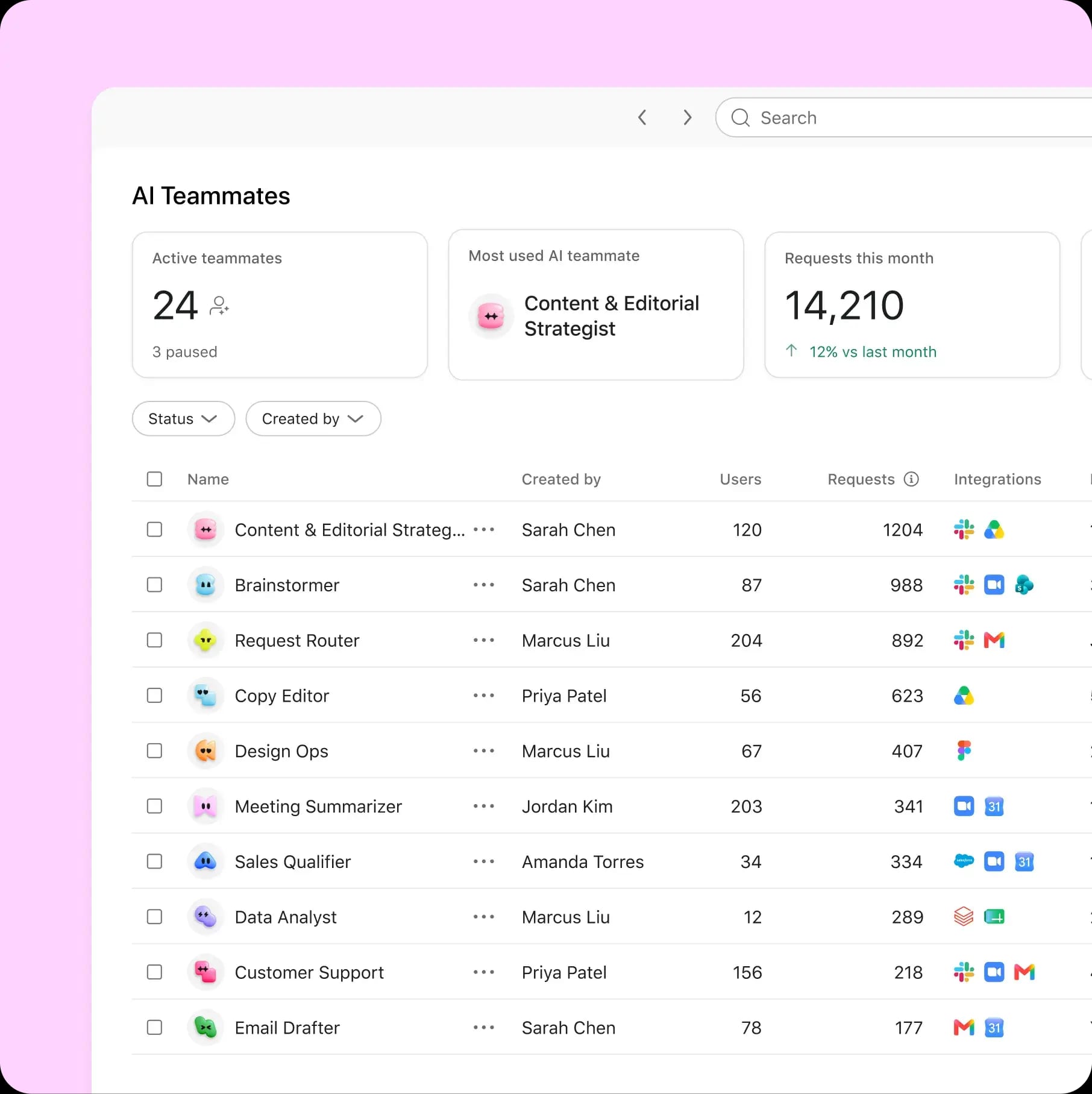
ServiceNow Bundled the AI. It Did Not Bundle the Bill.
Now Assist ships inside all three of the new tiers and meters against a pool. The top-up rate is unpublished, and negotiable only before the signature.
 Vincent Jiang · 3 min read
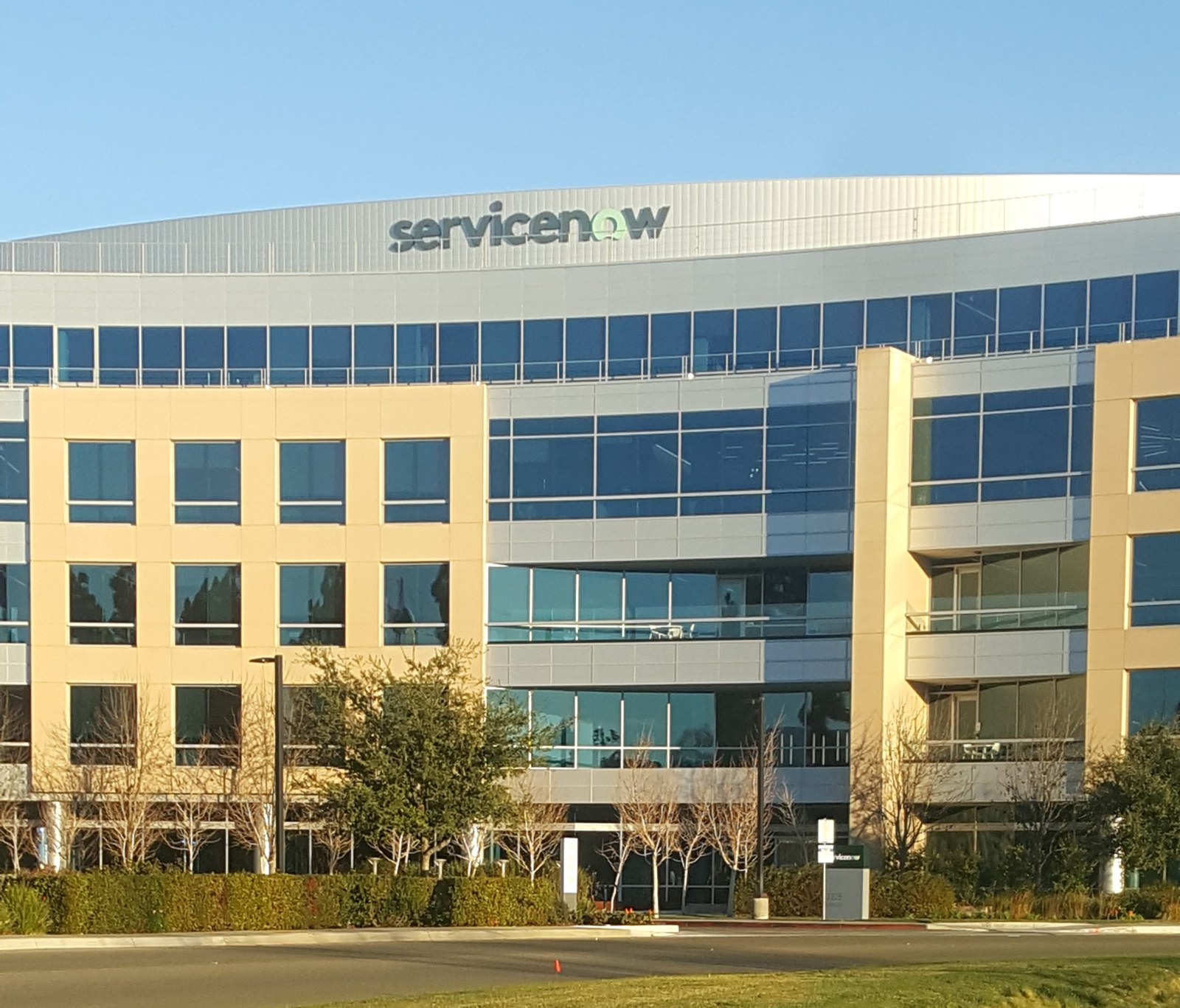
The tier that names a job
A Level 1 service desk seat is now a line item on a price list. Prime, the top of the three tiers ServiceNow−3.86% — ServiceNow, down 3.86 percent today began selling on April 9, is sold on agents that take whole roles, and the service desk is the role it names.1
What the meter is already worth
The AI business crossed $1 billion in annual contract value in the June quarter, inside subscription revenue of $3.877 billion growing 24.5%.2 On September 9 the target for the year rose to $1.5 billion.3
Included is not the same as free
The five old packages became three, and Now Assist went into all of them rather than sitting beside them as an add-on.1 Each tier carries a pool of assists. Work past the pool bills as top-up, and an agent run draws far more than a summary does.4
Advisers put the pools at 1,500 to 6,000 assists per fulfiller, and the top-up rate is negotiable at renewal and not after: leave it out of the paperwork and the supplier sets it when a pool empties.4,5 No public dollar figure exists for either.4
Bundled is not free. Bundled is metered.
The cost lands on both sides of the contract
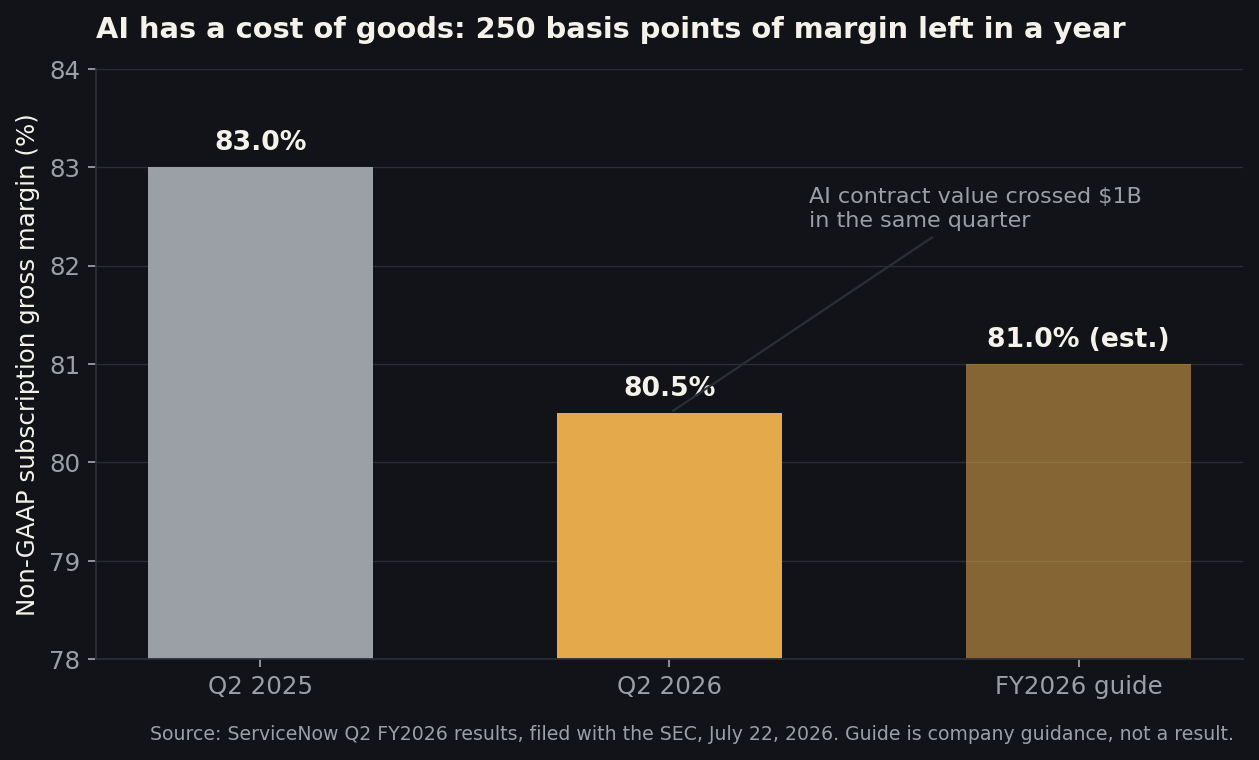
What an assist costs to serve shows in the platform's own margin. Non-GAAP subscription gross margin fell to 80.5% in the June quarter from 83.0% a year earlier, and the full-year guide sits at 81.0%.2 The company attributes the decline to hyperscaler usage and AI adoption.6,10
The buy side moves the same way: unit prices up 8 to 12% at renewal and 3% compounding uplift clauses, before a single assist is counted.5,7,11 The agent doing the drawing was bought, not built: $2.85 billion for Moveworks$2.85B — Moveworks, private, latest valuation $2.85B, closed in December, now shipping inside the same bundle.8
The case for the meter
Metering has a real argument. A pool a customer never exhausts costs nothing extra, and one analyst reads the structure as a try-before-you-buy path rather than a toll.1 Investors have spent the year pricing the opposite risk, marking the shares roughly 51% below their 52-week high on the theory that agents hollow out seat-based software.9,12 Bill McDermott reports no drag on sales cycles.10
Both can hold. Neither tells a buyer what an overage costs, and the exposure starts the day after the signature.
What to watch
Watch the first renewal cohort under the three tiers, and whether the 81% guide survives the quarters when pools run dry. The number that decides this is not what the AI is worth.
It is what the meter reads.
Get Applications by email, free
How AI is changing the software people and companies use. In our daily email, every weekday.