GlobalFoundries May Run a $19 Billion Fab It Never Has to Build
Japan's $550 billion tariff-agreement fund may finance a $12.8 billion to $19.3 billion US logic fab that GlobalFoundries would operate, a plant roughly 11 times its annual capital spending. Whether Tokyo's money comes back as equity, loans or grants is still being negotiated.
 Vincent Jiang · 3 min read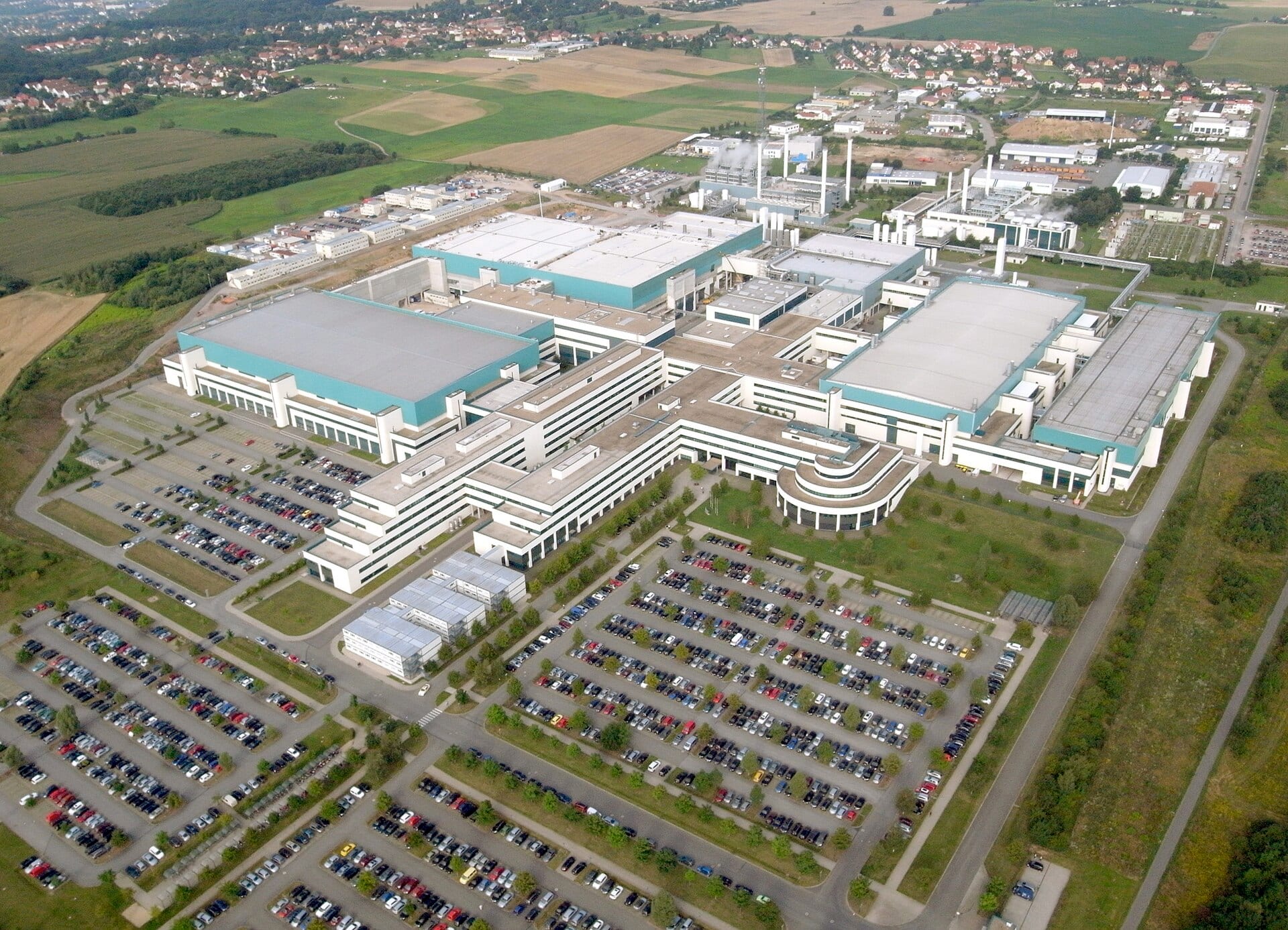
A fab someone else would pay for
Washington proposed the plant, Japan's $550 billion tariff-agreement fund would finance it, and GlobalFoundries would operate it, officials briefed on the working-level talks told Nikkei 12. The project is priced at 2 trillion to 3 trillion yen, $12.8 billion to $19.3 billion 12, in scale alongside TSMC's Arizona expansion 1.
Japan's tariff-pact money has so far gone to power projects; this would be its first semiconductor bet 1. For chief executive Tim Breen, the plant would extend the two fabs he already runs on American soil, in Malta, New York and Essex Junction, Vermont 18.
A $19 billion plant on $1.1 billion of annual capex
The filings explain why the company wants a partner. The second quarter delivered $1.786 billion of revenue, $167 million of net income 13 and a 29.9 percent non-IFRS gross margin 1, with Breen pointing to accelerating demand for optical networking inside AI data centers 1.
The balance sheet is thinner than the ambition. Capital spending ran $411 million in the quarter, up 158 percent year over year, against $1.09 billion of cash and free cash flow just below zero 3. Capex across the four quarters to June totals $1.11 billion 3. The cheap end of the proposed fab costs roughly 11 times that 13.
The proposed fab costs up to 17 times what GlobalFoundries spends on plants in a year
- Estimate
Data
| Value | |
|---|---|
| Proposed fab, high end (estimate) | $19.3B |
| Proposed fab, low end (estimate) | $12.8B |
| GF capex, trailing 4 quarters | 1.11 |
Capital spending has more than tripled from its 2024 low while revenue holds near $1.8 billion a quarter
- Revenue
- Capex
Data
| Revenue | Capex | |
|---|---|---|
| Q3 '24 | $1.74B | $0.16B |
| Q4 '24 | $1.83B | $0.12B |
| Q1 '25 | $1.59B | $0.17B |
| Q2 '25 | $1.69B | $0.16B |
| Q3 '25 | $1.69B | $0.19B |
| Q4 '25 | $1.83B | $0.2B |
| Q1 '26 | $1.63B | $0.31B |
| Q2 '26 | $1.79B | $0.41B |
Three capitals, one operator
The pattern predates this deal. GlobalFoundries has drawn more than $2 billion from the CHIPS program since its $1.5 billion award in February 2024, the act's first major one 58; a $375 million quantum award was finalized on 8 September 4; a $300 million silicon photonics letter of intent followed in July 6. Germany and Saxony are co-funding a €1.1 billion expansion in Dresden 8.
Washington took equity for the privilege: 9,907,399 shares at $37.85, about 1 percent of the company, worth roughly $79 million more on paper within days 5. On 15 September, Commerce filed to sell the stake, twelve days after the agreement that issued it 7. The one equity-recoupment Washington has already tried is being unwound before Japan's is written.
The clause nobody has priced
No document prices the risk. Officials are still negotiating how Japan's investment "could be recouped", and whether the money arrives as equity, loans or grants; a formal agreement would likely need legislative sign-off in both countries 1.
The demand case is real: communications-infrastructure and data-center revenue grew 62 percent year over year last quarter 1, and the photonics program counts Nvidia, Microsoft and Meta among its customers 6. The stock is up more than 23 percent this year on a deal with no site and no timeline 1.
The recoupment clause decides who paid
Read the recoupment clause before the site. If Japan is repaid from wafer revenue, Tokyo carries mature-node demand risk into the 2030s; if it takes equity, its co-investor is Mubadala, Abu Dhabi's sovereign fund, which still owns 82 percent of GlobalFoundries 8. One clause will decide who actually paid for American chip capacity.
How this brief was made
01Gathered & sourced411 channels · 1,219 articles▾
Agents swept 411 channels and ingested 1,219 articles, then de-duplicated and ranked them for signal.
02Verified & cross-validated8 claims · 37 data feeds▾
Every one of 8 load-bearing claims was checked against primary sources, with 37 live data feeds reconciling the figures and charts.
- 1GCN, Japan and US discuss $12.8 billion to $19.3 billion semiconductor plant for GlobalFoundries to operate, 29 September 2026
- 2Reuters (via MSN), Japan, US discussing chip factory construction as part of $550 billion investment talks, Nikkei reports, 17 September 2026
- 3Sharadar quarterly fundamentals, from GlobalFoundries's SEC filings, retrieved 30 September 2026
- 4GlobalFoundries press release via Markets Insider, GlobalFoundries and U.S. Department of Commerce finalize $375M R&D award to advance American quantum leadership, 8 September 2026
- 5Times Union, Commerce finalizes $375 million grant to GlobalFoundries for quantum chip business, 10 September 2026
- 6Datacenter Dynamics, GlobalFoundries awarded $300m by US gov't for silicon photonics R&D, 30 July 2026
- 7Crypto Briefing, US Commerce Department files to sell 9.91M GlobalFoundries shares, 15 September 2026
- 8Wikipedia, GlobalFoundries, retrieved 30 September 2026
03Reviewed & edited2 human editors▾
2 editors read the draft against the evidence, tuned the framing, and signed off before it shipped.
Become a contributor
Reporting on the business of AI and want it read? We take pitches from outside contributors who bring primary sources and a number worth arguing about.
Deepdive
AI-generated from this story and its cited sources. Not investment advice.